
The Silent Anxiety Behind the Appraiser's Clipboard
Let us be honest, having a stranger walk through your house with a clipboard feels a lot like getting graded on your entire life. You spend hours scrubbing floors that do not even matter, terrified that a single scratch will tank your property value. But here is the secret nobody tells you—these evaluators do not care about your dusty ceiling fans or unmade beds. I learned this the hard way, and once you know exactly what they actually look for, the panic completely disappears.
I was completely convinced that a single scuff mark on the wall was going to ruin my home's value. I followed the appraiser around like a nervous shadow, over-explaining every little detail about the house. Looking back now, I realize how funny and completely unnecessary my panic was.
Millions of homeowners go through this exact same stressful experience every single day. You put your heart, soul, and hard-earned money into your home, and suddenly a stranger with a clipboard gets to decide what it is all worth. It feels incredibly unfair and intimidating.
But you do not have to live with this anxiety anymore. The truth is, these professionals are not there to judge your personal taste or your housekeeping skills. They follow a very specific, logical checklist that is entirely based on measurable data.
Quick Takeaways: What Actually Matters
- Structural Health Wins: Roofs, solid foundations, and working HVAC systems hold way more weight than fresh paint or trendy living room decor.
- Clutter Does Not Count: Evaluators ignore messy rooms and unmade beds; they only care about the physical bones and layout of the property.
- Comps Rule Everything: Your final number is heavily tied to what similar homes in your specific neighborhood just sold for recently.
- Documentation is Your Friend: Handing over a printed list of your recent upgrades and repair dates makes their job easier and directly protects your home's worth.
Decoding the Mystery: How Your Home is Actually Valued
To stop the panic, we first need to understand the main goal of a routine inspection. The person evaluating your home is acting as the eyes and ears of the bank or lender. The bank just wants to know one simple thing: if you stop paying your mortgage tomorrow, can they sell this house to get their money back?
This means they are looking for solid, long-lasting value, not temporary beauty. They are checking the permanent bones of the house. Let us break down exactly what captures their attention the moment they step onto your property.
The First Impression: Curb Appeal and Exterior Health
Before they even knock on your front door, the evaluation has already begun. They park their car, look at the street, and immediately start taking notes about your lot. But they are not judging your beautiful rose bushes or your expensive lawn ornaments.
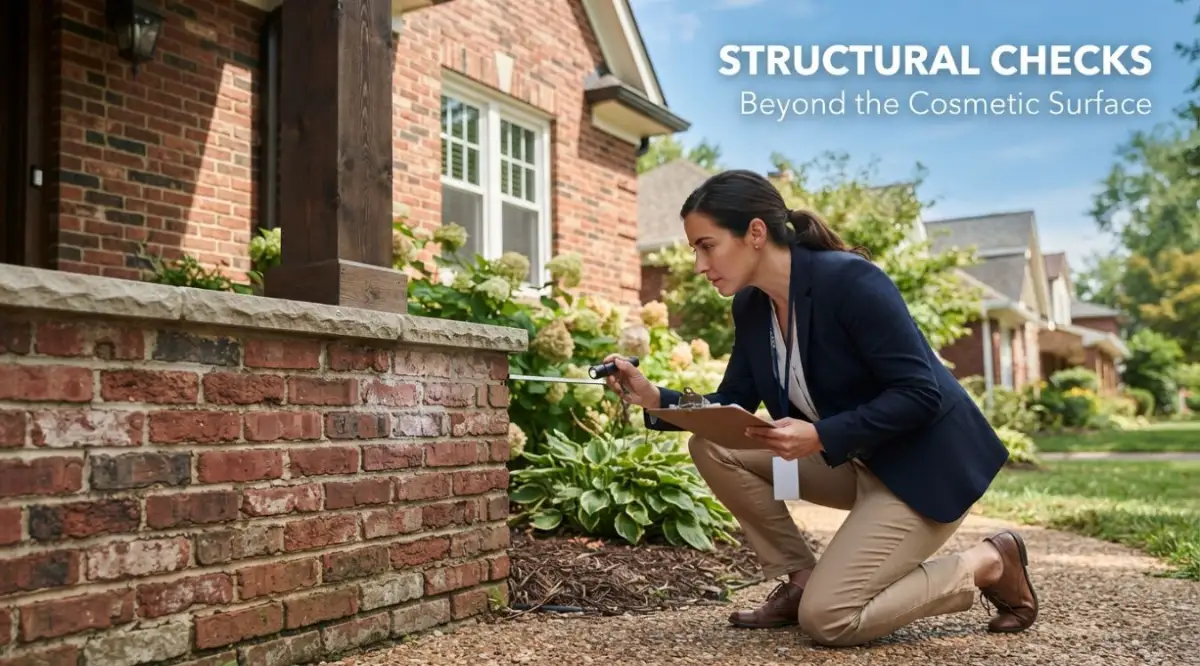
They are looking at the overall condition of your exterior structure. The roof is one of the biggest ticket items on their list. They will visually check if your roof is sagging, missing shingles, or showing obvious signs of water damage.
They also look very closely at the foundation. A strong foundation means a safe home. If they spot large, jagged cracks in the concrete or brickwork, it immediately raises a red flag. Small hairline cracks are usually normal settling, but wide gaps suggest serious structural shifting.
Next, they evaluate your siding, exterior paint, and windows. Peeling paint might seem like a small cosmetic issue to you, but for certain loan types, it is a massive health and safety hazard. They want to ensure the house is sealed tight against the weather.
Real-Life Lesson: The $5,000 Paint Job Trap
My neighbor recently spent a fortune repainting their perfectly fine vinyl siding right before their inspection, thinking it would add massive equity. The result? Zero dollars added to the final report. The evaluator only noted that the siding was "adequately maintained." Save your cash for fixing broken window seals or foundation cracks instead!
Myth vs Reality: What Really Matters Inside
There is a huge misconception that you need a perfectly clean, magazine-ready house to get a good valuation. Let us clear this up right now with a quick comparison.
Myth: Leaving dirty dishes in the sink or toys on the floor will lower your home's value.
Reality: Clutter does not affect the actual value. They are looking at the walls, floors, and layout, not your personal belongings.
Myth: Painting your living room a trendy new color will boost your appraisal.
Reality: Paint is considered a basic cosmetic preference. It does not add measurable value to the underlying property.
When they walk inside, their primary focus shifts to the overall layout and the gross living area. They will physically measure the dimensions of your home to confirm the total square footage. Every single square foot matters because it directly impacts your final number.

They check the total number of bedrooms and bathrooms. A three-bedroom, two-bathroom house will always be compared to other three-bedroom, two-bathroom houses in your specific neighborhood. If you converted a garage into a bedroom without the proper permits, they might not legally be able to count it.
Inspecting the Unseen: The Core Systems of Your Home
While beautiful countertops are nice, the hidden systems running through your walls hold the real power. The appraiser will check to see if your plumbing, electrical, and HVAC systems are functioning correctly.
They will likely turn on the faucets to check the water pressure and look under the sinks for active leaks. A small drip might seem harmless, but long-term water leaks cause mold and rot. They want to verify that the home is a safe and sanitary environment to live in.
Strong Advice on Heating and Cooling
They will test your heating and cooling systems to ensure they actually turn on and operate. If a house does not have a working heat source, it is often considered uninhabitable by strict lending standards. You must make sure your HVAC is running smoothly before the visit.
Electrical systems are another major priority. They will look at the electrical panel to see if it is updated and safe. Exposed wiring, missing outlet covers, or outdated fuse boxes are instant safety violations that will negatively impact the final report.
Understanding Upgrades: What Really Pays Off?
This is where so many homeowners get confused and frustrated. We often assume that every dollar we spend on upgrading our home will come back to us during an evaluation. Unfortunately, the real estate market does not work like a simple savings account.
I made a huge mistake with my own home a few years ago by pouring thousands of dollars into a custom, high-end swimming pool. I assumed it would easily double my home's equity. I quickly learned that depending on where you live, pools can actually turn away buyers and offer a very poor return on investment. Always research your specific local market before making massive outdoor changes.
Upgrades are only valuable if they match the expectations of your surrounding neighborhood. If you live in a middle-class suburb, installing a $50,000 professional chef’s kitchen is considered an over-improvement. The appraiser cannot give you full credit for it because the surrounding homes do not support that price point.
However, updating old, worn-out materials does help. Replacing heavily stained carpets with durable hard floors, or updating ancient bathroom fixtures to modern standards, will positively influence the overall condition rating. They categorize your home’s condition on a specific scale, usually ranging from completely renovated to needing major repairs.
Health and Safety: The Ultimate Dealbreakers
If you are dealing with government-backed loans, the rules become significantly stricter. The appraiser transforms from a simple value estimator into a strict safety inspector. They must ensure the home meets minimum property requirements.
Watch out for these common safety hazards:
· Missing handrails on staircases with more than three steps.
· Windows that are painted shut or refuse to open in bedrooms.
· Water pooling near the foundation of the house.
· Missing smoke detectors or carbon monoxide alarms.
My Quick 3-Minute Pre-Walkthrough Check
Before they arrive, I always do a fast lap around the house. I flush every single toilet, turn on the hot water in the sinks to check the pressure, and test the smoke alarms. If you catch a slow drain or a dead battery right now, you save yourself the massive headache of a paused loan application later.
If you are still feeling unsure about what exactly triggers a safety violation, check out this quick video where a real pro walks you through a house to point out the hidden red flags. It will help you spot these expensive issues and fix them before anyone ever steps foot on your property!
The Power of Comparables: The Neighborhood Effect
You can have the most beautiful, structurally sound, and perfectly upgraded home in the world. But your final number is still heavily controlled by your neighbors. This brings us to the concept of "comparables" or "comps."
The appraiser does not just look at your house in a vacuum. After they leave your property, they sit down at a computer and look for at least three similar homes that have recently sold near you. They use these recent sales as a baseline to figure out your exact worth.
If your neighbor recently sold their house for a terribly low price because they were in a rush, it will negatively impact your evaluation. This is entirely out of your control. However, the professional will make adjustments based on differences.
If your home has a brand new roof and the neighbor's home had a twenty-year-old roof, they will add value to your side of the equation. This is a complex mix of math and deep market knowledge. It is like comparing apples to apples, but adjusting the price if one apple is slightly shinier.
Location, Location, Location: The Unchangeable Factor
We hear this phrase all the time in real estate, but how does it actually apply during an inspection? The person evaluating your property is looking at the physical location of your lot.
Do you back up to a busy, noisy highway? Are you located right next to a commercial gas station? Or are you nestled quietly at the end of a safe, private cul-de-sac? These external factors are called functional or external obsolescence.
You cannot change where your house sits, but the market reacts to it. A home on a quiet street is naturally more desirable, and the data reflects that. They will factor your specific lot location into their final grid when comparing you to other recent sales.
How Appraisers vs. Home Inspectors Differ
Many people confuse these two professions, which leads to a lot of unnecessary stress. Let us look at a clear breakdown of who does what so you know exactly what to expect.
As you can see, the person valuing your home is taking a much broader view. They are not going to tear apart your drywall to look for termites, but they will note if the floor is actively sagging under their feet. Understanding this difference alone should help lower your blood pressure before they arrive.
Preparing Your Documentation: The Smart Homeowner's Advantage
One of the best things you can do is take control of the narrative. Do not just let them walk around silently guessing about your home. You can actually prepare a helpful information packet for them.
I learned the hard way that assuming the appraiser knows everything is a huge mistake. During my first inspection, I completely forgot to mention the brand-new plumbing we installed under the house, and I lost out on thousands of dollars in added value. Now, I always leave a friendly, printed list of exact upgrade dates and costs right on the kitchen counter for them to take.
Make a clear, easy-to-read list of all the major improvements you have made over the last few years. Include the exact dates and the total costs. Did you replace the HVAC system three years ago? Write it down. Did you install new energy-efficient windows last spring? Add it to the list.
Handing them this physical paper shows that you are a responsible homeowner who maintains their property. It also ensures they do not accidentally miss a major hidden upgrade, like a brand new water heater tucked away in a dark utility closet.
Dealing with Unique Property Features
Sometimes, you might have something completely unique on your land. Maybe you have a massive detached workshop, a custom greenhouse, or a secondary mother-in-law suite. These are called accessory dwelling units or outbuildings.
The professional has to figure out how the local market reacts to these features. Do buyers in your area actually want a giant greenhouse, or is it considered a waste of yard space? They will have to search for other homes with similar unique features to justify adding extra value.
If you have highly unusual features, it is totally fine to politely share information about them. Just keep the conversation friendly and professional. Give them the facts, hand them your upgrade list, and then step back to let them do their job.
They appreciate a helpful homeowner, but they do not want someone hovering over their shoulder arguing about the price of imported Italian bathroom tiles. Keep it simple, keep it factual, and trust the process.
(Continuing to expand the educational guide naturally...)
The Reality of Market Conditions
It is also important to realize that an appraisal is just a snapshot of a single moment in time. The number they give you today might be completely different six months from now. Why? Because the housing market is constantly shifting based on interest rates, local job markets, and buyer demand.
When there are very few houses for sale but hundreds of eager buyers, prices naturally shoot up. The professional evaluator must look at these current market trends. If homes in your zip code are selling in less than two days for way above asking price, they will note that the market is rapidly increasing.
This means they might give more weight to a house that sold yesterday compared to a house that sold five months ago. They are constantly analyzing the economic heartbeat of your specific neighborhood.
Navigating the Final Report
Once the physical walkthrough is complete, the hard work really begins for them behind a computer screen. They will take their photos, measurements, and notes, and combine them with the public tax records and recent sales data.
They use a standardized form provided by the major lending institutions. This form forces them to be incredibly objective. They have to prove, with hard math, exactly how they arrived at your final number.
If they deduct money because your home only has a one-car garage instead of a two-car garage, they must show exactly how much that extra garage space is worth in your specific town. It is a highly regulated, deeply analytical process designed to remove human emotion from the equation entirely.
By understanding this logical, step-by-step process, you can finally stop stressing over the tiny, unimportant details. You can focus your energy on the big picture: maintaining a safe, structurally sound, and comfortable home.
Insider Strategies to Maximize Your Property’s Evaluation
Now that we understand the basic mindset of the person walking through your front door, it is time to take proactive control. You do not have to just sit back and hope for the best. There are specific, highly effective strategies you can use to influence the final report in your favor.
The biggest secret in the real estate world is that preparation always beats luck. Most homeowners simply clean their house and cross their fingers. But if you want to protect your home's equity, you need to think like a professional data analyst.
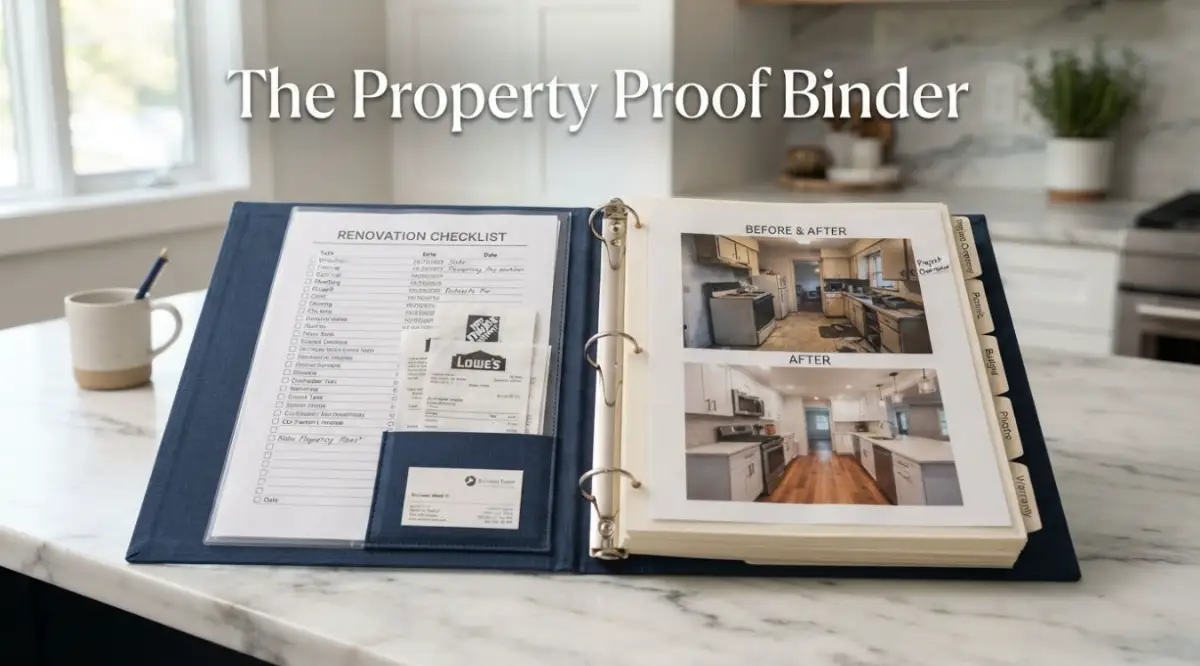
One of the smartest moves you can make is creating what I like to call a "Property Proof Binder." This is a physical folder you leave on the kitchen counter for the evaluator to take with them. Instead of hoping they notice your recent upgrades, you hand them the exact proof they need to justify a higher number to the bank.
Inside this binder, you should include before-and-after photos of any major renovations. Add copies of the paid invoices for your new roof, the updated electrical panel, or the high-efficiency HVAC system. When they have hard documentation, it makes their job significantly easier and directly supports your home's worth.
The Golden Rule of Gross Living Area
We briefly touched on square footage earlier, but we need to look closer at how it is actually calculated. Not all space in your house is treated equally. Many homeowners are shocked when their finished basement is not counted the same way as their upstairs bedrooms.
Understanding this difference is incredibly important. Any space that is entirely above the natural ground level is considered part of your gross living area. This is the premium square footage that carries the most weight in the final mathematical equation.
If any part of a floor is below ground level, even just a few inches, that entire level is usually considered a basement. A beautifully finished basement certainly adds value to the home, but it is calculated at a much lower rate than above-grade space. You should never assume your 1,000-square-foot finished basement will double your overall living area calculations.
Mastering the "Comps" Before They Arrive
You do not have to wait for the final report to see which neighboring houses are being used to judge yours. You can actually do your own neighborhood research ahead of time. Look up recent home sales in your immediate subdivision over the last three to six months.
If you notice that a neighbor sold their house for a terribly low price because it was a messy divorce or a sudden job relocation, write that down. You can politely point out this context in your property binder. Professionals rely on standardized lending guidelines, but they appreciate local context that might not show up on a computer screen.
This kind of proactive research is similar to managing your personal credit. You would never walk into a bank blind without checking your numbers first. If you are preparing for a major financial move, knowing exactly how to improve a low credit score before applying for a home loan is just as important as prepping your house for an inspection.
Q&A: What About Energy Efficient Upgrades?
Question: Do solar panels or smart thermostats really boost my evaluation?
Answer: It depends heavily on your local market trends. If you live in a sunny state where buyers demand solar energy, it can certainly help. However, you must completely own the solar panels. If they are leased, they are technically not part of your real estate and usually add zero measurable equity.
Energy efficiency is becoming more popular, but it rarely offers a dollar-for-dollar return. Focus on functional efficiency first. A brand new, reliable water heater is often viewed more favorably than an expensive, complicated smart home system that might break in two years.
The Most Dangerous Traps Homeowners Fall Into
Even with the best intentions, it is incredibly easy to make expensive mistakes during this process. Emotion often takes over when we are dealing with our own homes. We see the memories and the hard work, while the person with the clipboard only sees building materials and math.
The most common and destructive mistake I see is the trap of over-improving for the neighborhood. Imagine you live in a quiet, modest neighborhood where most homes are worth a very average, middle-class price. You decide to spend an absolute fortune importing luxury Italian marble for your kitchen floors.
You might think you just created the most valuable house on the block. But the reality is much harsher. The professional is forced to compare your home to the other modest homes around you. Because buyers in that specific price range are not willing to pay extra for imported marble, you will lose a massive amount of the money you invested.
If you are planning to spend cash on renovations, you should always check the National Association of Realtors' data on remodeling returns to see what actually pays off. Usually, basic maintenance and fresh exterior paint offer much better returns than extreme luxury additions.
The "Cover-Up" Disaster
Another massive pitfall is trying to hide obvious structural damage. I have heard stories of people painting directly over black mold or stacking heavy boxes in front of a badly cracked foundation wall. This is a terrible idea that will almost certainly backfire.
Evaluators are trained to spot these exact cover-ups. When they catch you trying to hide a major defect, they instantly become suspicious of the entire property. They will start looking much closer at every tiny detail, assuming you are hiding other dangerous secrets.
Honesty is always the safest policy. If your roof has a small leak, acknowledge it. Trying to quickly patch over serious issues without professional repair can lead to major loan denials. If you are struggling to afford these sudden repairs, it is much smarter to learn about budgeting to handle unexpected home repairs rather than hiding the problem from the bank.
The Perils of Hovering and Arguing
We naturally want to defend our territory. When a stranger is walking through your bedrooms taking photos, it feels incredibly invasive. But following them around and pointing out every single feature is a massive mistake.
· Don't: Argue about the price of materials or tell them how much you spent on a ceiling fan.
· Don't: Block their access to the attic, crawlspace, or utility rooms.
· Do: Give them a friendly greeting, hand them your prepared information binder, and give them plenty of space to work.
· Do: Make sure all pets are safely secured in a crate or taken for a walk so they do not distract the inspector.
When you hover over their shoulder, you make them feel rushed and uncomfortable. Let them do their job in peace. A relaxed, unbothered evaluator is much more likely to have a positive overall impression of your property.
Ignoring the Appraisal Gap
This trap mostly applies to people trying to buy or sell a home in a hot market. Sometimes, a buyer will offer a huge amount of money to beat out other offers. But when the professional evaluates the home, the number comes in much lower than the accepted offer.
This creates what is known as an appraisal gap. The bank will only lend money based on the official evaluated number, not the inflated purchase price. If you do not have a plan to cover this gap with cold hard cash, the entire sale can fall apart in a single afternoon.
Understanding the financial mechanics of real estate is just as important as the physical property itself. Whether you are dealing with a stressful appraisal gap or trying to figure out navigating loan types and interest rates, staying educated is your best defense against unexpected money problems.
What Happens When You Disagree With the Number?
Sometimes, despite your best efforts and preparation, the final report comes back shockingly low. It feels like a punch to the gut. Your first reaction might be anger, but you need to stay entirely calm and analytical.
You actually have the right to challenge the report, but you cannot just say "I feel my house is worth more." You have to prove that they made a factual error. This process is called a Reconsideration of Value.
How to carefully review the final report:
· Check the basic facts first. Did they correctly list the number of bedrooms and bathrooms?
· Did they accurately calculate your total square footage?
· Look at the "comps" they selected. Did they use a home located on a busy highway to compare against your quiet cul-de-sac home?
If you find a genuine, provable mistake, you can submit evidence to your lender and request a correction. It is a tough battle, but if you have solid data backing you up, you can successfully get the number adjusted. For deeper insights into how the experts are trained to select these comps, you can always review the Appraisal Institute's consumer resources.
Navigating Strict Government Loan Rules
If you are dealing with an FHA, VA, or USDA loan, the rules of the game change entirely. These government-backed loans are incredibly strict about the physical condition of the property. The evaluator is required to look for highly specific safety issues.
For example, if your home was built before 1978, they will look very closely for any peeling or chipping paint. This is because old paint often contains lead, which is a major health hazard for children. If they spot even a tiny amount of peeling paint on a window sill, the loan will be paused until you scrape and repaint it.
They will also check to ensure your water runs hot, your toilets flush properly, and there are no exposed electrical wires anywhere. You can read more about these exact safety standards by looking through Fannie Mae's strict property eligibility guidelines. It is always better to fix these small safety hazards a month before the visit.
Your Game Plan for a Stress-Free Valuation
At the end of the day, you have to accept that you cannot control everything. You cannot magically change the recent sales data in your neighborhood, and you cannot force the market to behave the way you want it to.
However, you have complete control over how your home is presented. You control the cleanliness, the basic maintenance, and the documentation you provide to the professional. When you shift your focus entirely to the things you can control, the anxiety naturally begins to fade away.
Remember that this inspection is just a mathematical process designed to protect the bank's investment. It is not a personal attack on your taste in furniture or your lifestyle. By treating this event like a standard business transaction, you remove the heavy emotional burden. Keep learning and expanding your financial knowledge by exploring more helpful resources for managing your personal finances.
I used to lose sleep over the thought of someone judging my home. But once I realized they were just looking for solid structural bones and accurate data, the entire experience became incredibly easy and stress-free. Take a deep breath, fix those leaky faucets, organize your paperwork, and trust that you have done everything in your power to succeed. You have got this!
Common Questions About Property Valuations
How long does a routine home appraisal take?
Usually, the physical walkthrough of your home only takes about 30 to 60 minutes. The real heavy lifting happens later when they spend several hours at their desk analyzing neighborhood data and writing the official report.
Does a messy house lower the appraisal value?
No, everyday clutter like unmade beds or laundry on the floor will not lower your property's mathematical worth. However, excessive mess that blocks access to walls, doors, or major utility systems can delay the inspection process.
Do appraisers check inside cabinets and closets?
They generally will not dig through your personal belongings or open small kitchen cabinets. They might peek into large walk-in closets just to confirm the overall size and layout of the bedroom space.
Will bad landscaping hurt my home's value?
Overgrown grass or a few dead bushes will not drastically tank your overall number. But if tree roots are actively destroying your concrete foundation or causing drainage issues, that will definitely be noted as a severe physical defect.
Can I dispute a low property valuation?
Yes, you can formally request a Reconsideration of Value through your lender. You will need to provide hard evidence, like alternative recent home sales in your area or proof that they missed a major structural upgrade.
Going through my last home evaluation taught me that good preparation simply removes the fear. I stopped worrying about the market trends I cannot change and just focused on handing over clear, honest information about my property. You have already done the hard work of caring for your home, so take a deep breath and trust that you are completely ready for this next step!
Disclaimer: The information provided in this article is for educational and informational purposes only and should not be construed as official financial, legal, or real estate advice. Real estate markets and lending guidelines fluctuate frequently. Always consult with a licensed real estate agent, appraiser, or financial advisor regarding your specific property and personal situation before making any major financial decisions.