
Why Guessing a Home's Worth Almost Cost Me Everything
Staring at a glowing screen that says your house is worth $40,000 less than what you paid is an absolute gut punch. That happened to me just a few years ago. I honestly thought my biggest investment was going down the drain, all because I trusted a random online calculator instead of doing the actual math. If you want to stop guessing and figure out exactly what a property should cost without getting ripped off, let me show you the exact math real appraisers use.
I remember sitting at my kitchen table, staring blankly at a stack of printed neighborhood property listings. I was trying to figure out how much my first small home was actually worth before putting it on the market. Every single website I checked gave me a completely different number, and my anxiety was entirely through the roof. I literally lost sleep wondering if I was about to lose thousands of dollars by pricing it completely wrong.
This is a massive struggle that average people face every single day when dealing with real estate. You find a dream home, or you decide it is finally time to sell your current one, and suddenly you hit a massive wall of confusion. The fear of being ripped off by a smooth-talking agent or a hidden market trend creates a heavy weight on your shoulders. People are making thirty-year financial commitments based on automated online estimates that are often terribly inaccurate.
The truth is, understanding how to price a building is not some magical secret reserved for wealthy investors. It is just basic math mixed with a little bit of human psychology, and anyone can learn it. Once you remove the heavy curtain of real estate jargon, the entire process becomes incredibly clear and predictable.

Fast Track: What You Will Learn Today
- Why those popular online home price estimators often lie to you.
- How to compare local neighborhood homes like a professional appraiser.
- The three sneaky types of damage that quietly eat away your home's value.
- Why forcing your personal design choices on a house might actually lower your final sale price.
Decoding the Hidden Language of Property Pricing
To completely remove the stress from buying or selling, we need to look at how professional appraisers actually do their jobs. They do not just walk into a house, look at the nice kitchen cabinets, and guess a number out of thin air. They use specific, proven formulas to find the absolute most accurate number possible. Let us break down the exact steps you can use to protect your money right now.
The Neighborhood Spy Method: Mastering Real Estate Comps
The absolute most common way to figure out what a home is worth is by looking at what similar homes have recently sold for. This is widely known as the Sales Comparison Approach, or simply "running comps" in the industry. Think of it exactly like buying a used car from a local dealership.
If you want to buy a specific model of a sedan, you naturally look at what other people in your town paid for that exact same car last week. You would not compare a ten-year-old rusty sedan to a brand-new luxury sports car. Real estate works exactly the same way, but people often forget this simple logic when they get emotional about a house.
To do this correctly, you must find three to five properties in the exact same neighborhood that have sold very recently. These houses need to be as similar to your target house as humanly possible. They should have the same number of bedrooms, similar square footage, and be built around the exact same time.
Pro Tip from My Own Experience:
My biggest mistake early on was comparing my fully updated home to a completely ruined, abandoned house just down the street. I quickly realized that you always have to look at properties with the exact same condition and lot size, otherwise your final numbers will be completely useless and dangerous.
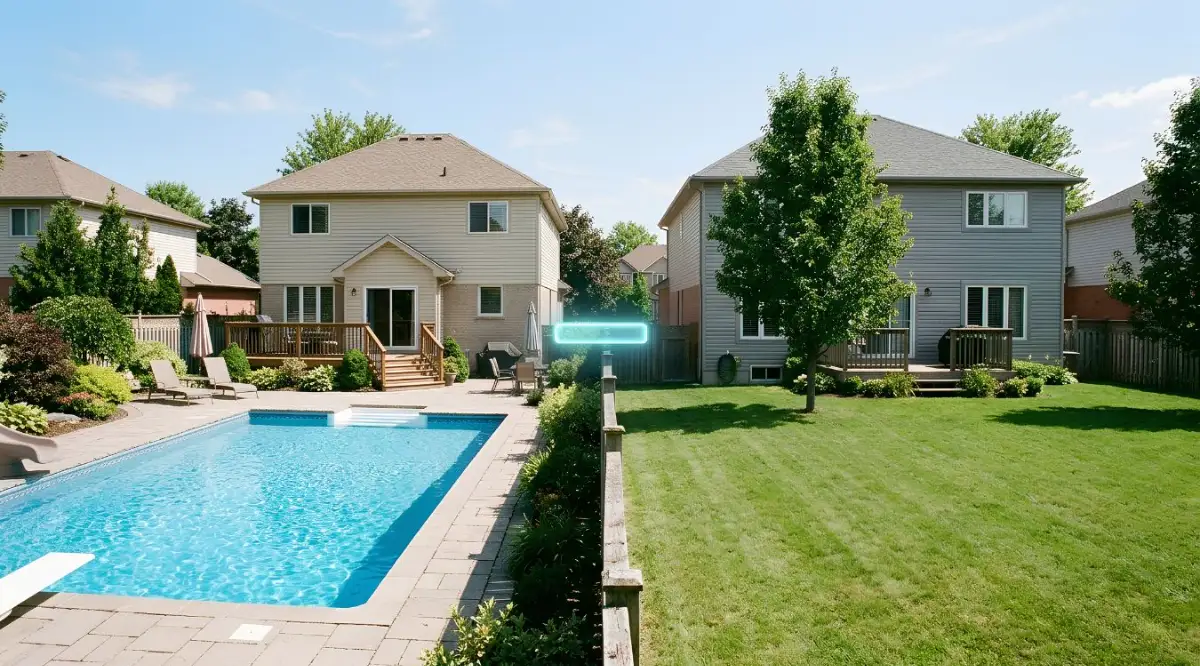
If a neighbor's house sold for $300,000, but it has a beautiful in-ground swimming pool and yours does not, you cannot use that $300,000 number directly. You have to subtract the estimated value of that pool from their sale price to find out what their house would be worth if it looked exactly like yours. This takes a little bit of practice, but it becomes very easy once you understand the pattern.
Want to see exactly how professionals calculate these exact price adjustments in real time? Watch this quick breakdown below to see the math in action, and then keep reading to discover the hidden financial traps that ruin average homebuyers every single day!
The Ground-Up Formula: Calculating Raw Replacement Costs
Sometimes, you cannot simply compare one house to another because the property is incredibly unique or brand new. This is exactly where the Cost Approach comes in to save the day. The logic here is beautifully simple: a rational buyer should never pay more for a property than it would cost to buy an empty lot and build that exact same house from scratch.
Imagine you are deciding whether to buy a pre-made cake from a bakery or bake one yourself at home. If the bakery charges fifty dollars, but you can buy all the ingredients and bake it perfectly for twenty dollars, the bakery cake is overpriced. The real estate cost approach uses this exact same thought process for buildings.
First, you have to figure out exactly what the dirt itself is worth. You look at recent sales of empty land in the same area to find the base value of the lot. Then, you calculate exactly how much money it would take to buy the lumber, concrete, roofing, and labor to construct the building today.
However, older houses are not worth the same as brand-new houses, because things slowly fall apart over time. This brings us to a very powerful concept called depreciation. There are actually three different types of depreciation that drain value from a home, and you need to know all of them.
The first is physical deterioration, which is simply normal wear and tear on the house. If the roof is leaking, the carpets are destroyed, and the paint is peeling off the walls, the house loses value. You have to subtract the cost of fixing those specific items from your total building cost.
The second type is functional obsolescence, which is a fancy way of saying the house has a terrible design. For example, imagine a house with five bedrooms but only one tiny bathroom located entirely in the basement. Even if the house is in perfect physical condition, modern buyers will hate that layout, which heavily lowers the final value.
The third type is external obsolescence, which involves things completely outside of your control. If a beautiful house is located directly next to a noisy factory or a major highway, it will always be worth less than the same house on a quiet street. You cannot fix the noisy highway, so you have to permanently deduct value from the property.
A Quick Look at Depreciation in the Real World
To keep things simple, here is a quick breakdown of how these three value killers actually work:
| Type of Depreciation | What It Looks Like | Can You Fix It? |
| Physical Deterioration | A badly leaking roof or smashed windows. | Yes, if you have the cash. |
| Functional Obsolescence | A five-bedroom house with one tiny bathroom. | Very hard, usually requires major remodeling. |
| External Obsolescence | A loud train track built right behind the fence. | No, the value loss is permanent. |
The Money Maker: Evaluating Monthly Cash Flow
If you are looking at a property purely as a way to make passive money, the previous two methods might not be enough for you. Investors use the Income Approach to determine value based entirely on how much cash the building produces every month. To an investor, a building is just a big wooden box that prints money, and they value it based on the speed of that printer.
Let us say you are looking at a small apartment building that generates $20,000 entirely in rental income every single year. You would not care as much about the fancy kitchen countertops; you only care about the return on your initial investment. The income approach helps you figure out how much you should pay today to get that $20,000 every year without taking on too much risk.
One common way to measure this is by using a capitalization rate, commonly called a "Cap Rate" by professionals. A cap rate is simply the expected rate of return on a property based on the income it generates. If a building makes $10,000 in net profit a year and you buy it for $100,000, you have a 10 percent cap rate.
Real Estate Myth vs. Reality
Let us take a quick break to clear up some very common misunderstandings that trap beginners every day. People hear a lot of rumors from their friends and family about housing prices, and most of it is entirely wrong.
Myth: The amount of money you spent on a kitchen renovation automatically gets added to the home's final sale price.
Reality: You rarely get a dollar-for-dollar return on renovations. Spending $50,000 on a kitchen might only add $30,000 to the total value of the home, depending entirely on the neighborhood standards.
Myth: The tax assessment value sent by your local government is the true market value of your home.
Reality: Tax assessments are often heavily outdated and are purely used to calculate property taxes. They almost never reflect what a real human being would pay for the house on the open market today.
A Simple Comparison Breakdown
To make these concepts even easier to digest, I have created a very quick reference guide. You can use this mental map whenever you are looking at a new property.
By understanding these three core pillars, you immediately protect yourself from terrible financial deals. You stop guessing and start looking at buildings through the clear lens of logic and math. When you walk into an open house now, you will not just see pretty walls and nice furniture.
You will see the square footage, the neighborhood comparables, and the physical depreciation right before your eyes. This simple shift in mindset gives you massive confidence when submitting an offer or setting a listing price. You take back total control of your money, and nobody can trick you into a bad deal ever again.
We have covered the heavy foundational rules, but there is still so much more practical advice to uncover about real estate pricing. In the next sections, we will look at how human emotion artificially drives prices up, and how you can spot hidden red flags during your own property inspections. It is time to sharpen your skills even further.
Moving Beyond the Basics: Pro-Level Pricing Strategies
Once you understand the basic mathematical formulas, you need to look at the invisible factors that drive housing prices up or down. Real estate is heavily influenced by human behavior, local government plans, and hidden economic shifts. Average buyers completely ignore these details, but professional investors obsess over them.
You must learn to read the local environment like a detective reading a crime scene. A house is never just an isolated box of wood and bricks. Its value is entirely tied to what is happening on the streets surrounding it. Let us look at some highly effective ways to spot hidden value that most people completely miss.
Reading the Micro-Market Like an Insider
Many beginners make the massive mistake of looking at national housing news and applying it to their local street. National news is practically useless when you are trying to price a specific property. Real estate is hyper-local, meaning the rules change dramatically from one zip code to the next.
You can have a neighborhood where houses sell in three days for top dollar, while a street just two miles away has houses sitting empty for months. You need to focus entirely on your specific "micro-market" to get accurate numbers. Pay attention to how many days similar homes stay active on the market before they sell.
If you notice houses selling instantly, you are dealing with a hot seller's market. In this scenario, you might actually need to value the home slightly higher than past sales data suggests, because demand is pushing prices upward. Conversely, if houses are sitting unsold, the true value is likely dropping, and you should adjust your expectations downward.
To really master this, you should look at resources from organizations like the National Association of Realtors to understand how to properly read localized housing data. They offer excellent insights into tracking regional buyer traffic. When you know exactly how many buyers are active in your specific town, you hold all the negotiating power.
The Hidden Power of City Zoning and Future Development
The biggest secret to protecting your property value is understanding what will happen to the neighborhood tomorrow. You might find a beautiful house on a quiet street and think you have found the perfect deal. However, if the empty field behind that house is zoned for commercial use, a noisy shopping mall could be built there very soon.
Commercial development right next to a residential home will instantly destroy its resale value. You must always check the local city planning office to see exactly what future construction is approved nearby. Sometimes, a simple phone call to the city clerk can save you from a massive financial disaster.
On the positive side, if you find out a new high-end grocery store or a prestigious public school is being built nearby, the property value will likely skyrocket. Smart investors look for these upcoming community improvements and buy homes before the actual construction begins. You can often find these public development plans freely available on your local government websi