The Hidden Threat Lurking Above Your Ceiling
Winter is beautiful until you hear that first drip of water hitting your floorboards in the middle of a storm. Most home makeovers focus on aesthetics, but the most vital part of home protection is often hidden right above your head. Learning how to stop ice dams on roof surfaces is the single most effective way to save yourself from costly repairs and keep your living space dry when the temperature drops.
That single oversight cost me thousands of dollars in ruined drywall, damaged insulation, and emergency contractor fees. Dealing with water leaking through your walls while ice freezes solid outside strips away your peace of mind entirely. Instead of enjoying a cozy winter evening by the fireplace, I was running around with buckets and towels, watching my hard-earned savings drip onto the floor.
Most homeowners face this exact stressful nightmare every single year without realizing how close they are to disaster. Your daily routine gets completely disrupted when you have to worry about structural water damage instead of your job or family. It steals your sleep, triggers constant anxiety, and turns your peaceful home source into a constant headache.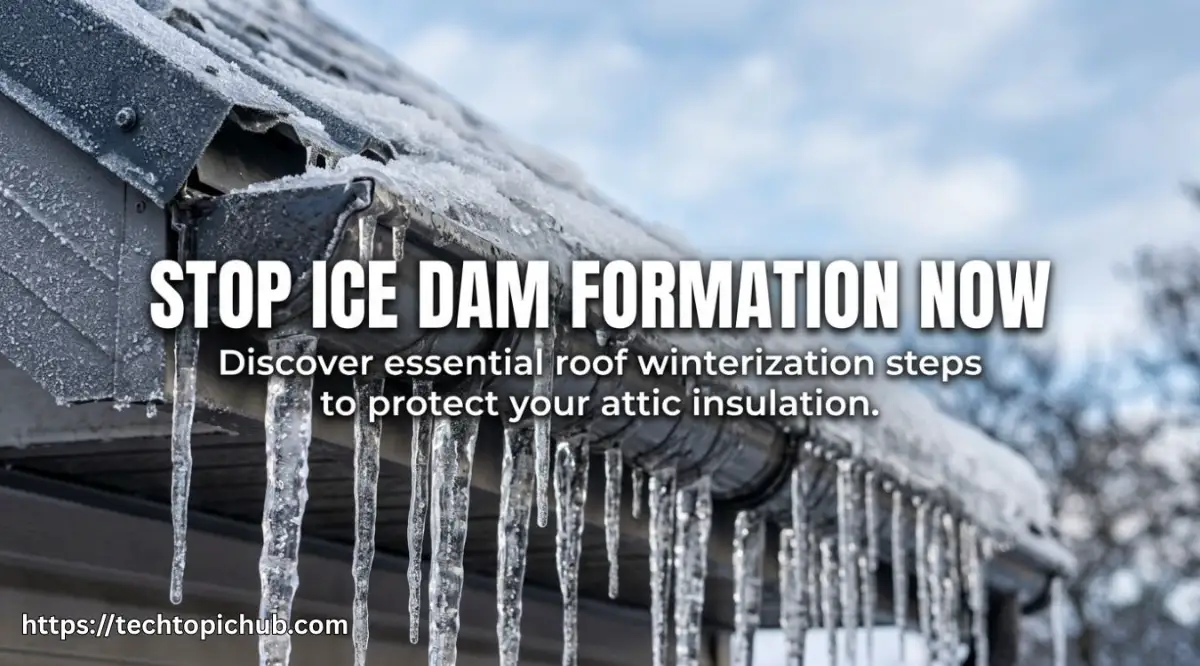 Understanding Why Ice Dams Form on Your Roof
Quick Summary: Your Winter Roof Defense
- Insulation & Ventilation: Balancing your attic temperature is the #1 defense in your roof winterization steps.
- Air Sealing: Block warm air leaks from your living space to prevent the snow-melt cycle.
- Clear Gutters: Clean gutters ensure water has a path to escape instead of pooling into an ice dam removal nightmare.
- Professional Inspection: Always prioritize a roof replacement or professional check if you notice chronic water stains.
To stop this destructive cycle, you have to understand the science behind how these frozen barriers actually develop. It all starts with heat escaping from your living spaces up into the attic space above. When your attic gets too warm, it heats the main roof deck, except for the cold outer edges near the gutters.
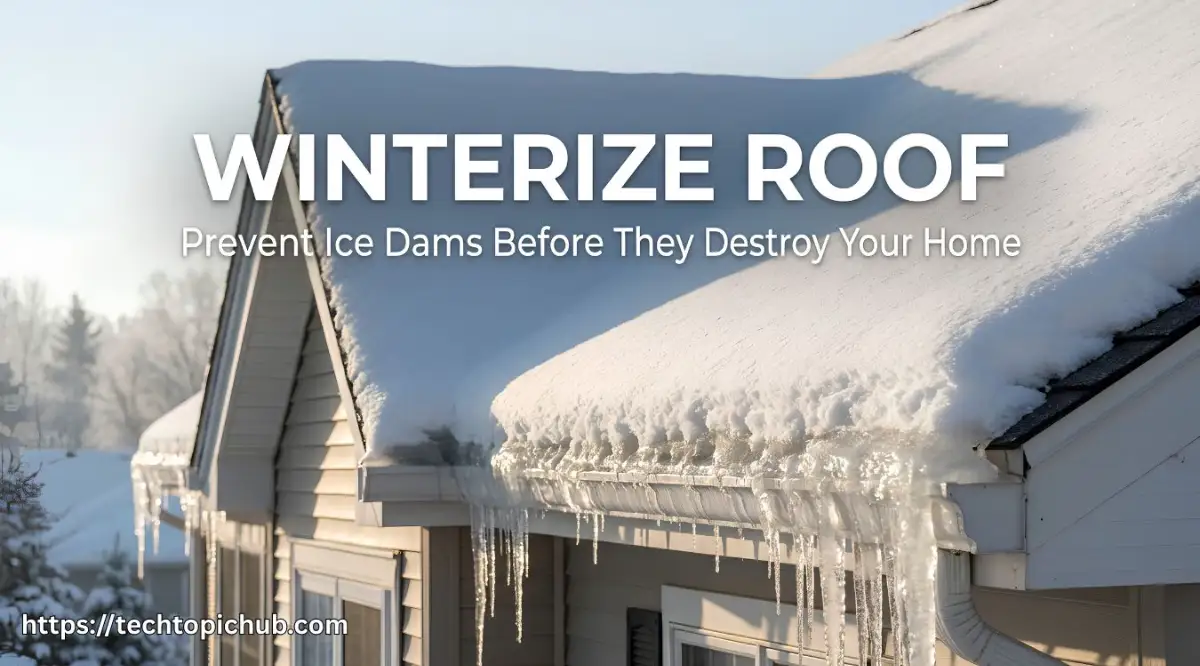
Snow sitting on the upper part of the roof melts because of that escaping attic heat. That melted water runs down your roof slope until it hits the freezing cold overhangs near your gutters. Once that water reaches the cold zone, it freezes solid, creating a growing wall of ice known as an ice dam.
Once that blockage forms, any further melting snow gets trapped behind the ice wall with nowhere to go. Trapped water quickly pools up, finds tiny gaps beneath your shingles, and leaks directly into your house. It is a vicious cycle driven by poor attic insulation and bad ventilation rather than just heavy snowfall alone.
By taking action early to prevent ice dams, you break this chain reaction before the cold weather sets in. You save yourself from emergency headaches and protect the structural integrity of your entire roofing system. Let us look at the practical actions you can take right now to secure your home.
| Winter Hazard | Why It Happens | Pro-Tip for Prevention |
| Ice Dams | Uneven roof heat | Ensure your attic is at least 15°F cooler than outside |
| Attic Condensation | Poor ventilation | Keep soffit vents clear of insulation |
| Gutter Overflow | Clogged debris | Install gutter guards before the first freeze |
Systematic Guide to Proper Roof Winterization
Seal Every Attic Air Leak Immediately
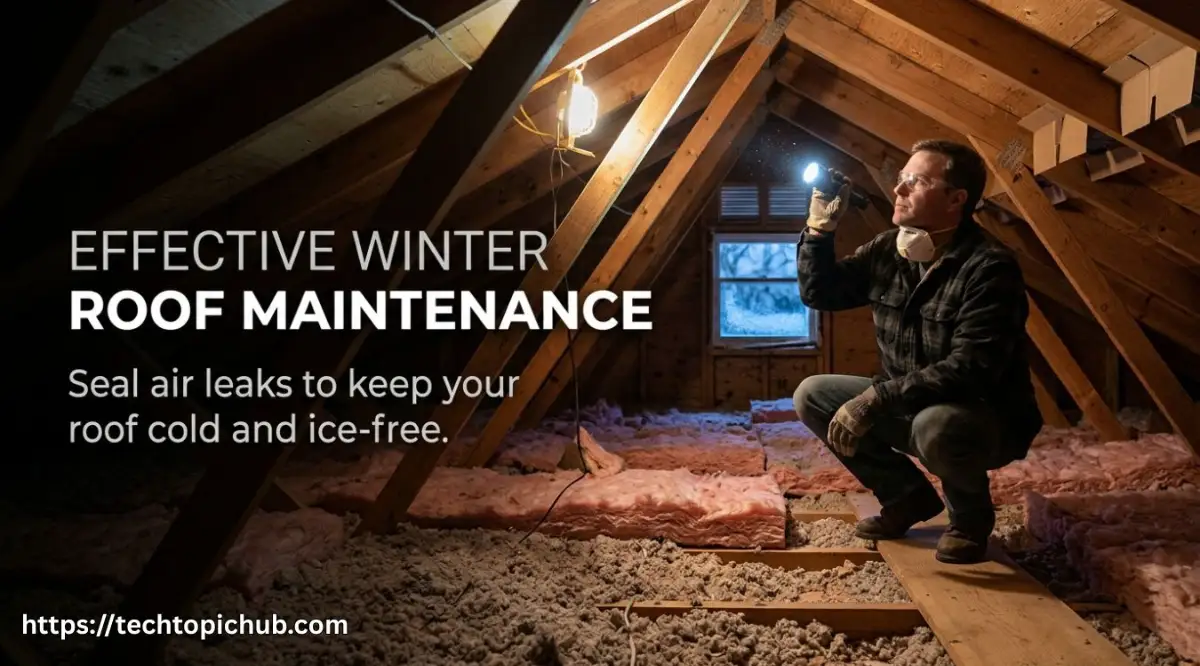
Warm indoor air always rises, and if your attic floor has tiny gaps around pipes, wires, or hatches, that heat escapes straight upward. That escaping heat is the primary fuel source that melts snow on your roof and triggers ice dam formation. Grab a flashlight and a tube of high-grade caulk or expanding foam to seal every visible gap you can find.
I remember crawling into my dusty attic last autumn and feeling drafts blowing right through unsealed light fixture boxes. I spent a Saturday afternoon sealing those tiny gaps, and the difference in my home heating bills was immediate. Blocking that warm air from entering the attic is the most effective step in your overall roof winterization steps.
Trust me, learning how to properly handle winter roof maintenance is something you do not want to skip. When I finally stopped ignoring my drafty attic and sealed those tiny air gaps myself, I realized how small fixes can completely stop the nightmare of winter home care issues.
Watch this quick step-by-step video guide to learn how to properly seal your attic and protect your home before the first major snowstorm hits!
Upgrade and Balance Your Attic Insulation
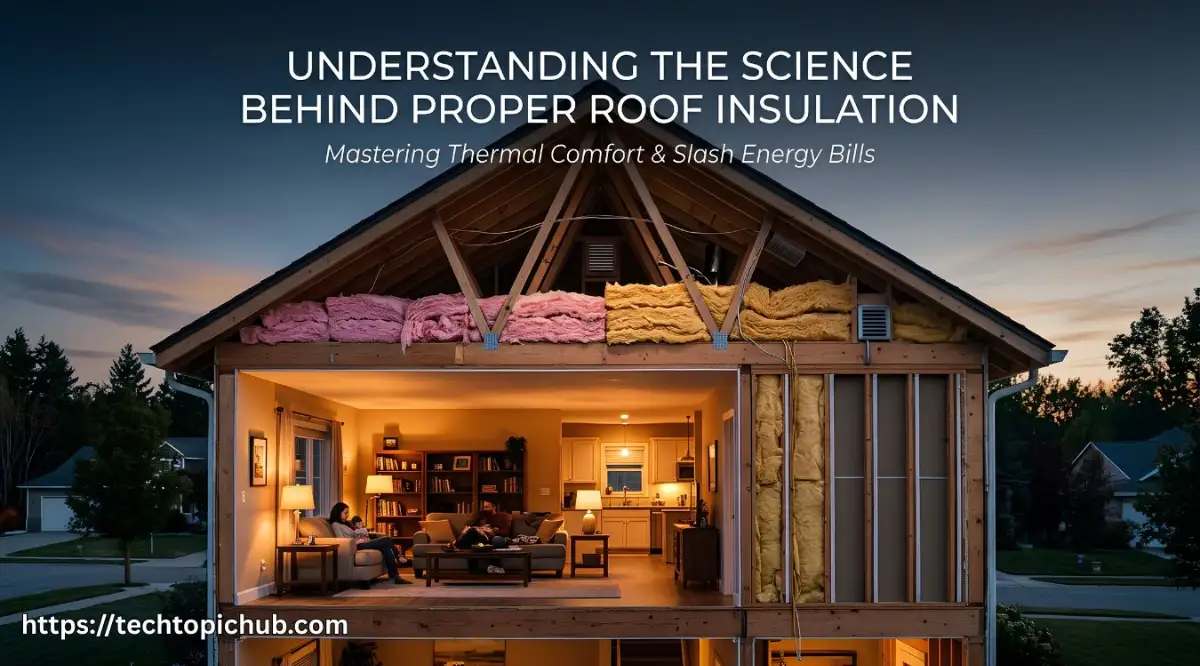
Having enough insulation keeps the heat where it belongs—inside your actual living space, not up in the roof rafters. Check your local building codes to see the recommended R-value for insulation depth in your specific climate region. If your insulation is compressed, old, or lying below the floor joists, it is time to add more material.
Make sure you do not block the vital air channels near the eaves when you add new insulation material. Proper insulation acts as a thermal blanket that keeps your roof deck uniformly cold during freezing weather. This simple upgrade stops the uneven melting and refreezing process entirely.
Ensure Unrestricted Attic Ventilation
Your attic needs a steady flow of outdoor air circulating constantly to keep the roof deck cold and balanced. Check your soffit vents along the lower roof overhangs to make sure they are not blocked by insulation or dust. Pair those lower intake vents with ridge vents or gable vents near the top to create natural airflow.
When cool outside airflows freely through your attic space, it neutralizes any trapped heat pockets. This continuous ventilation is a core pillar of proper winter roof maintenance that every homeowner must prioritize. If your attic breathes properly, your roof stays cold, and ice blocks cannot form.
Clear and Protect Your Gutters and Downspouts
Before the first autumn leaves completely drop and winter snow arrives, your gutters must be spotless and clear. Leaves, twigs, and debris trap standing water, which freezes quickly and creates solid anchor points for ice dams. Clean out your gutters thoroughly and check that your downspouts direct water far away from your foundation.
Installing sturdy gutter guards can also save you hours of grueling manual labor during late autumn weekends. When water drains smoothly away from your roofline, you eliminate the stagnant moisture that feeds growing ice sheets.
Install a Waterproof Ice and Water Shield Membrane
If you are planning a roof replacement or major renovation soon, make sure your contractor installs a waterproof membrane. This self-sealing rubberized membrane is applied directly to the roof deck underneath the shingles along the lower eaves. It acts as an absolute waterproof barrier, ensuring that even if an ice dam forms, water cannot leak inside.
While this step requires upfront investment during construction or remodeling, it provides ultimate peace of mind for decades. A proactive defense mechanism protects your vulnerable roof edges against the worst winter storms nature can throw your way.
Maintain Proper Indoor Humidity Levels
Sometimes the moisture causing issues inside your attic comes from your daily household activities like cooking, showering, and drying clothes. If your home air is too humid, it can find its way into the attic and condense or frost up. Use exhaust fans in your bathrooms and kitchen consistently to vent excess moisture directly outside.
Keeping your indoor humidity balanced protects your home from mold growth and reduces frost accumulation in hidden structural spaces. Simple lifestyle habits combined with good ventilation create a resilient home environment ready for any winter freeze.
Mastering Advanced Strategies to Keep Your Roof Safe All Winter Long
Once you handle the basics of attic sealing and insulation, you enter a completely new level of property protection. Advanced strategies focus on managing thermal balance across complex roof structures, valleys, and shady architectural overhangs. When you want to winterize roof systems permanently, you have to think like an engineer and look at how sunlight and wind interact with your shingles.
Many houses have hidden thermal pockets where heat collects unevenly, especially around complex dormers, skylights, and chimney bases. I spent hours inspecting my own roof junctions with a digital thermometer gun on a freezing morning to find hidden heat leaks. Discovering where the warm air sneaks out allows you to apply targeted patches long before heavy snowfall blankets your neighborhood.
Another advanced technique involves managing solar radiation load on southern-facing slopes versus cold northern shadow zones. Uneven sun exposure causes daytime melting even when outdoor temperatures remain well below freezing. That midday melt water flows down into cold gutters and instantly freezes solid, creating stubborn overnight blockages.
You can counter this by applying specialized reflective roof coatings or ensuring your upper attic space stays hyperventilated. Taking these proactive steps transforms a vulnerable roof into a fortress against harsh weather conditions. To dive deeper into advanced building science, you can review guidelines provided by the Building Science Corporation for expert thermal management insights.
Smart Monitoring and Automated Thermal Defense Systems
Modern technology offers incredible tools to help homeowners monitor their attic temperatures and humidity levels in real time. Placing a wireless smart sensor in your attic lets you track temperature spikes directly from your smartphone. If your attic air temperature rises too far above freezing while outside, you get an instant warning alert.
This early notification gives you time to turn on auxiliary attic fans or adjust your home heating vents. Monitoring your environment closely is a core part of advanced winter roof maintenance that saves you from surprise leaks. You no longer have to guess whether your insulation is holding up during a massive blizzard.
Another pro-level secret is using heated cable systems along vulnerable eaves and gutters as a last resort backup. While heating cables do not fix the root cause of poor insulation, they provide active channels for water drainage. Running these low-voltage cables along problem areas ensures that melting snow always finds a clear path off your roof.
For additional home improvement insights, you can check out resources on Tech Topic Hub to optimize your property management checklist. Combining smart tech sensors with physical insulation upgrades creates a bulletproof system that protects your investment year after year.
 Dangerous Traps and Costly Mistakes Homeowners Often Make
Even with the best intentions, many property owners fall into common traps that actually make ice dam problems much worse. One major mistake people make is climbing up onto a slippery, snow-covered roof with a metal shovel or sharp pickax. Chipping away at ice with heavy metal tools almost always punctures your fragile shingles and tears up the rubber underlayment.
I once watched a neighbor try to smash an ice dam with a baseball bat, only to crack several expensive tiles. That impulsive action led to an interior ceiling collapse inside his bedroom during the next rainstorm. Never use sharp metal tools or brute force to clear frozen water blocks from your delicate roof edges.
Another frequent error is dumping heavy bags of chemical ice melt directly onto your shingles to clear channels. Harsh chemical salts can corrode your metal flashing, ruin your gutters, and destroy nearby landscaping plants when they runoff. Instead of using corrosive chemicals, rely on safe roof rakes with long extension handles from the solid ground below.
Ignoring proper attic ventilation while just adding extra fiberglass insulation creates another hidden disaster zone. If you pack insulation all the way to the edge of your roof deck, you block the soffit intake vents entirely. That lack of airflow traps moisture, rots your wooden roof rafters, and accelerates structural decay from the inside out.
To explore more about managing property upgrades efficiently, you can read about speeding up the home selling process if you ever plan to move. Avoiding these common pitfalls keeps your roof structure healthy, dry, and structurally sound for decades to come.
Securing Long-Term Peace of Mind through Proactive Care
Protecting your home from winter weather damage comes down to maintaining consistent habits and staying ahead of seasonal changes. When you take the time to inspect your attic, clear your gutters, and seal air leaks, you take back control. You no longer have to live in fear of winter storms or unexpected indoor water leaks dripping through your ceilings.
Building a reliable routine ensures your family stays warm, safe, and comfortable through the coldest months of the year. It feels amazing to sip hot coffee by the window while a blizzard rages outside without a single worry. For more tips on managing household finances while keeping up with maintenance, check out guides on building an emergency fund.
Taking care of your house is a journey of small, daily choices that add up to massive long-term security. I learned my lesson the hard way years ago, and now my proactive autumn routine saves me endless stress. You have all the knowledge you need right here to protect your property and prevent ice dams effectively.
I still look up at my roof every single autumn with a sense of quiet confidence knowing my preparation paid off. My family stays warm, my ceilings stay completely dry, and my winter season remains entirely peaceful. You can achieve this exact same peace of mind by starting your maintenance checklist today.
Common Questions about Winter Roof Care
How do I know if my attic has proper ventilation for winter?
You can check your attic by looking up at the roof overhangs from the outside to ensure soffit vents are open. Inside the attic, you should feel a steady movement of fresh air and see clear channels leading up to the ridge vents. If the space feels stuffy or smells damp, your airflow is restricted.
Is it safe to use salt to melt ice dams on my roof?
No, using standard rock salt or harsh chemical ice melts on your roof is a bad idea. These chemicals corrode aluminum gutters, ruin metal flashing, and destroy grass or plants when runoff hits the ground.
What should I do if an ice dam has already formed on my roof?
If an ice dam is already leaking water inside, stay off the icy roof and call a professional roofing contractor immediately. You can use a long-handled roof rake from the ground to gently pull loose snow off the lower edge. Never use hammers, axes, or metal tools to chop at the ice.
How often should I clean my gutters before winter arrives?
You should clean your gutters at least twice a year, with the most critical cleaning happening late in autumn. Once all the leaves have fallen from nearby trees, clear out any debris so melting snow flows freely.
Looking back at my early struggles, taking action early to winterize roof edges has given me total peace of mind every time a blizzard rolls in. You do not have to wait for a disaster to happen start your winter roof maintenance checklist today and enjoy a safe, dry home all season long.
Disclaimer: The information provided in this article is for educational and informational purposes only and does not constitute professional roofing, engineering, or financial advice. Always consult with a licensed local contractor or certified home inspector before performing major structural modifications or roof repairs on your property.