
The Nightmare Hiding Behind Our Beautiful Tiles
Let us be honest, dreaming up exciting home makeovers is the fun part, but nobody ever warns you about the gross secrets hiding behind your shower walls. I found out the hard way that planning safe Bathroom Renovations takes a lot more than just picking out pretty tiles and trendy mirrors. If you are gearing up for a big construction project, let me share what actually happened when I knocked down my walls and how you can avoid turning your home into a toxic mess.
I still remember the exact moment my stomach dropped and my heart started racing. My husband and I were finally tearing down the outdated shower tiles for our dream bathroom project. We had saved up for months, picking out the perfect fixtures and planning the ultimate aesthetic upgrade.
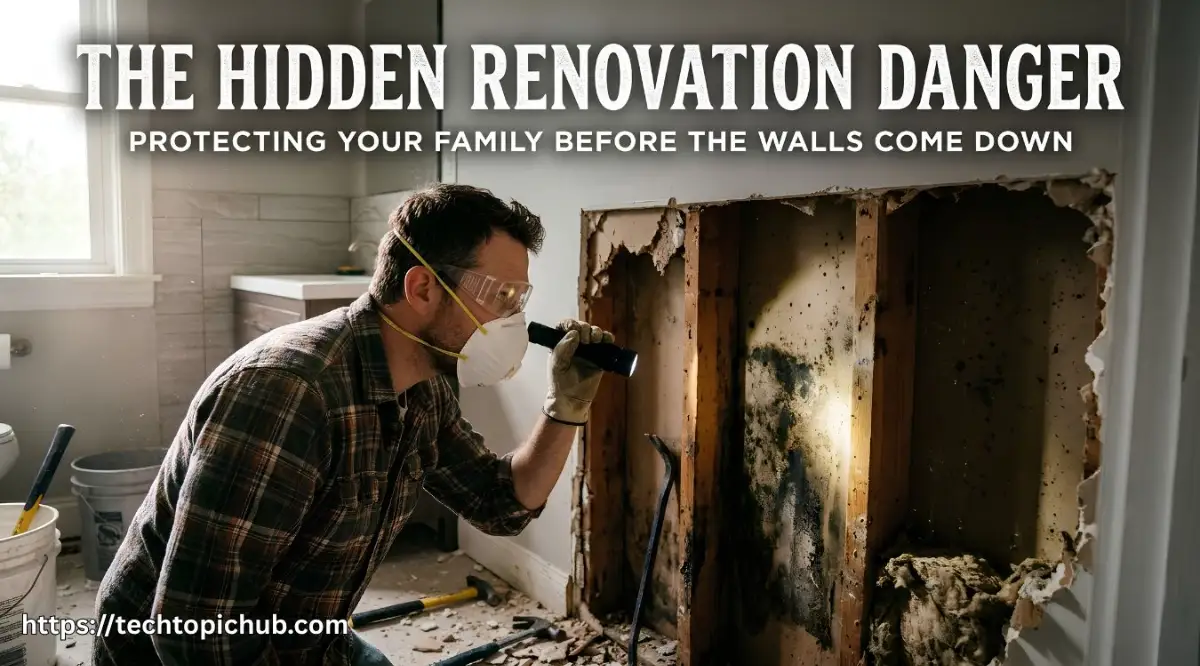
However, as the third row of ceramic tiles came crashing down, a foul, earthy smell hit my face instantly. I shined my phone flashlight into the dark wall cavity and gasped. The wooden studs were completely covered in a thick, slimy layer of dark green and black fuzz.
What was supposed to be a fun and exciting weekend project suddenly felt like I had unleashed a toxic hazard into my own home. I immediately thought about my young daughter sleeping in the next room, breathing the same air. That single moment completely changed my understanding of home safety.
Whenever people plan exciting home Makeovers, they usually worry about picking the right paint color or staying under budget. Nobody tells you about the silent, toxic enemy lurking just behind the drywall.
Families dive into Bathroom Renovations with pure excitement, completely unaware that a tiny, invisible water leak has been feeding a massive mold colony for years. When the demolition hammers start swinging, millions of microscopic toxic spores are violently released into the indoor air.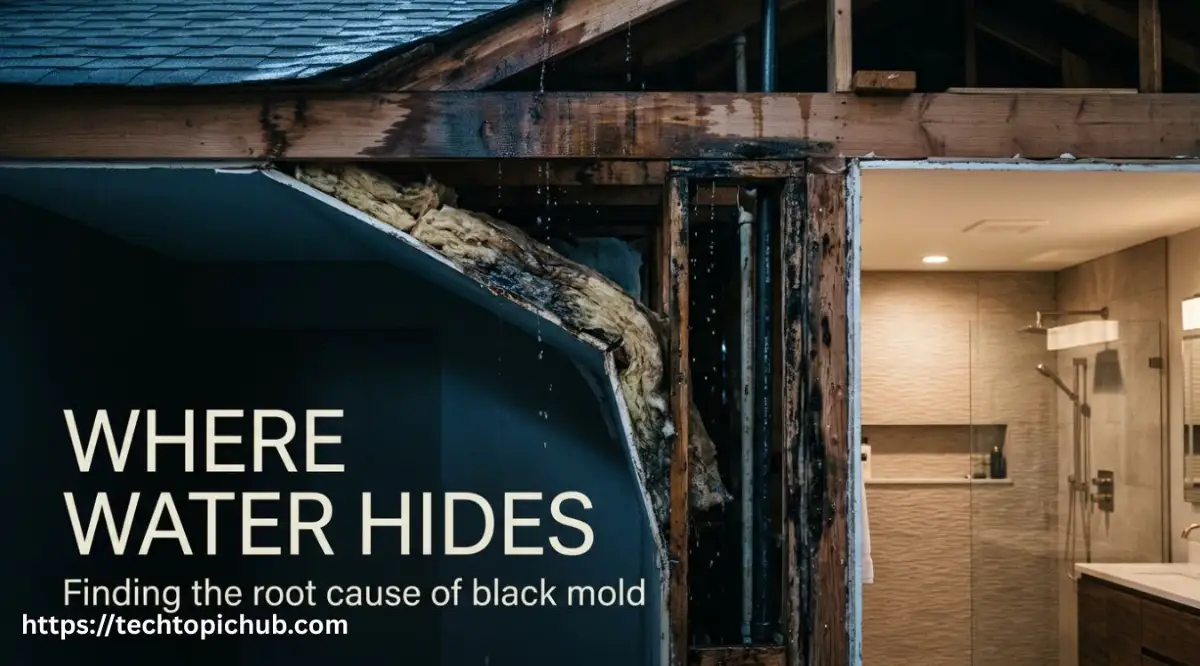 Quick Survival Guide for Your Remodel:
- Fix Outside Leaks First: Never start interior home makeovers until you rule out the need for a roof replacement.
- Seal the Zone: Always use heavy plastic and negative air pressure to keep toxic dust out of your living areas during construction.
- Ditch the Paper: Only use inorganic materials like cement board for a safe bathroom.
- Ventilate Properly: Good bathroom maintenance means letting your exhaust fan run long enough to completely dry the room after every shower.
The Biology of an Unseen Enemy: Why Demolition Day is Dangerous
To truly protect your loved ones, you need to understand exactly what you are fighting. Black mold, scientifically known as Stachybotrys chart arum, is not just a simple stain on the wood. A living, breathing organism thrives in dark, damp, and warm environments.
Your bathroom is the absolute perfect incubator for this organism. Every time you take a hot shower, dense steam fills the room and searches for a place to settle. If your exhaust fan is weak, that moisture pushes its way behind baseboards, through cracked grout, and into the raw wooden skeleton of your house.
Over time, this trapped moisture feeds the spores. They grow silently, eating away at the paper backing of your drywall and the structural wood. They create a massive, hidden network of roots that you cannot see from the outside.
When you start a Renovation and swing a sledgehammer into that infected wall, you instantly shatter that hidden ecosystem. It is like kicking a dry dandelion flower. The impact forces millions of invisible, toxic seeds directly into the air you breathe.
These microscopic particles are so incredibly small that they bypass your body's natural defense systems. When inhaled, they travel deep into the lungs, triggering severe allergic reactions, asthma attacks, and chronic sinus issues.
Pro Tip: I learned the hard way that wiping down a moldy wall with regular household bleach is a massive mistake. I tried spraying bleach on a small patch I found under the sink, only to realize later that bleach just bleaches the color out of the mold, leaving the invisible roots alive to grow back stronger.
Myth vs. Reality: The Truth about Mold Removal
There is a lot of dangerous misinformation on the internet regarding household mold. Let us break down a few common myths that can actually put your family at risk.
Myth: If you cannot see the mold, it is not there.
Reality: Most toxic mold colonies grow entirely behind walls, under floorboards, or above the ceiling. You will often smell a musty odor long before you ever see a dark spot.
Myth: You can just paint over mold with a heavy primer.
Reality: Paint acts as a temporary blanket. The mold will continue to eat the wood beneath the paint, eventually bubbling through the new surface and destroying your expensive Bathroom makeover.
Myth: A quick spray of vinegar fixes the problem forever.
Reality: While vinegar can kill surface-level spores on non-porous surfaces like glass, it cannot penetrate deep into wooden wall studs where the actual root system lives.
Stopping the Threat before the Hammers Swing
Before you grab a sledgehammer and start knocking down walls, you absolutely need to watch this short video to see exactly how the pros find hidden water damage. It will save you from a costly disaster and help you easily follow the rest of my step-by-step safety guide below!
A Bulletproof Protocol for Safe Construction
If you are planning to tear apart your house, you must act like a scientist preparing a clean room. Proper preparation is the only barrier standing between toxic spores and your family's lungs.
You cannot simply trust a standard repair person to handle a potential biological hazard. You need to establish a strict, uncompromising safety protocol before the first tool is ever plugged in.
Step 1: Creating a True Containment Zone
Never start tearing down walls without sealing off the area first. You must treat the renovation zone like a completely separate environment from the rest of your house.
Go to your local hardware store and purchase heavy-duty, thick plastic sheeting. Use strong painter's tape to seal this plastic over the bathroom door, creating a physical wall between the dusty work zone and your clean hallways.
Do not forget about your air conditioning and heating vents. If mold spores get sucked into your HVAC return vent, they will be instantly blown into your bedrooms, kitchen, and living room. Tape plastic firmly over every single vent in the bathroom.
Next, you need to create negative air pressure. Place a large box fan in the bathroom window, facing completely outward. When turned on, this fan will constantly suck the dusty, potentially contaminated air out of the room and blow it safely outside into the yard.
Step 2: The Full Structural Moisture Inspection
Sometimes, the water destroying your bathroom walls is not actually coming from your shower. Water is incredibly tricky, and it loves to travel along the easiest path possible.
You might have a tiny, unnoticed leak in your attic. Rainwater can seep through damaged shingles, travel down the wooden rafters, and pool directly above your bathroom ceiling. If this is the case, fixing the bathroom is useless until you address the main source of the problem.
This is why a proper roof Replacement or targeted roof repair is often the first step in a successful interior remodel. If you do not stop the water from above, your brand-new bathroom will be covered in green fuzz within a few months.
My Real-Life Tip: I almost skipped checking my attic before ripping out my shower. Thank goodness, my contractor stopped me! We found a slow drip coming from the top of the house. Trust me, you need to handle that roof replacement first. No amount of good bathroom maintenance will save a brand-new Bathroom if rainwater is still leaking in from above.
I actually made the huge mistake of ignoring a tiny ceiling stain once, thinking my new Bathroom Renovations would easily cover it up. I quickly learned that skipping a needed roof Replacement will ruin all your hard work and allow the mold to come right back. Take it from me, always fix your outside water leaks first before you spend a single penny on beautiful new walls inside!
Always hire a professional to use an infrared moisture meter on your ceilings and walls. This device can literally see hidden water trapped behind the paint, giving you a clear map of where the danger zones are located.
Step 3: Upgrading Your Defensive Arsenal
If you do uncover a small patch of mold during your Bathroom Renovations, you must wear the correct safety gear. A standard blue surgical mask will do absolutely nothing to protect your lungs from microscopic spores.
You need an N95 or P100 respirator mask that creates a tight, airtight seal around your nose and mouth. Pair this with sealed safety goggles. Mold spores can easily land in your eyes, causing severe redness, itching, and potential infections.
Wear a disposable Tyvek suit with a hood, or wear old clothes that you plan to throw directly into a hot water wash immediately after leaving the room. Never walk through your clean house wearing the shoes you wore inside the dusty renovation zone.
Step 4: Smart Material Selection for Rebuilding
Once the infected materials are safely bagged in thick contractor trash bags and removed from the property, it is time to rebuild. This is your chance to mold-proof your home for the future.
Never use standard paper-faced drywall in a wet environment. Paper is fast food for mold spores. Instead, invest in high-quality cement board or specialized mold-resistant green board for all your wall structures.
When choosing insulation, avoid standard fiberglass batts if they have paper backing. Closed-cell spray foam insulation is a much smarter choice because it acts as a dense vapor barrier, preventing warm, moist air from hitting cold exterior walls and causing condensation.
Smart Material Choices for Your Next Renovation:
My advice: Spending a little extra on these upgraded materials during your Bathroom Renovations will save you thousands of dollars later on.
Long-Term Strategies for Daily Protection
Completing the physical renovation is only half the battle. The real secret to keeping your family safe is consistent, smart bathroom maintenance.
You must install a high-powered exhaust fan that is correctly sized for the square footage of your room. Many builders install cheap, weak fans that only make noise but fail to actually pull the heavy moisture out of the air.
Make it a strict family rule to run the exhaust fan for at least thirty minutes after every single shower. If you have trouble remembering, install a smart timer switch on the wall that automatically shuts the fan off after the designated time.
Keep a small, inexpensive digital hygrometer on your vanity counter. This simple device measures the humidity level in the air. You always want to keep your indoor humidity below fifty percent to ensure spores cannot activate and grow.
By taking these thoughtful, proactive steps, you transform a scary situation into an empowering journey. You are not just building a beautiful new space; you are actively fortifying your home and fiercely protecting the health of the people, you love the most.
Next-Level Strategies for a Permanently Safe Home Environment
Taking control of your indoor air quality requires more than just running a fan for a few minutes. If you want to ensure your expensive home Makeovers stand the test of time, you need to think like a building scientist. The true secret to long-term success lies in controlling the invisible moisture that travels through your home every single day.
Warm air naturally holds significantly more water vapor than cold air. When you take a steaming hot shower, that humid air aggressively expands and looks for a way to escape. If it hits a cold exterior wall that lacks proper insulation, it instantly turns back into liquid water droplets inside your wall cavity.
This hidden condensation is exactly what feeds dormant spores. To prevent this, professional builders now rely on smart ventilation ecosystems. Instead of a basic on-and-off switch, they install humidity-sensing exhaust fans that monitor the room twenty-four hours a day.
These brilliant devices automatically kick on the moment moisture levels rise above fifty percent. They stay on until the room is completely dry, removing human error from your daily bathroom maintenance routine. You never have to worry if your kids forgot to turn the fan on after their shower.
Another massive upgrade is installing a continuous vapor retarder behind your new cement board. This special membrane stops warm, wet indoor air from ever reaching the cold wooden skeleton of your house. It acts like an invisible shield for your structural framework.
However, you must be extremely careful about where your exhaust fan actually sends that wet air. Many older homes have fans that simply dump the damp air directly into the dark attic above the ceiling. This is a catastrophic building error.
Dumping shower steam into your attic creates a massive mold farm right under your shingles. The moisture rots the wooden roof decking from the inside out. Eventually, this completely compromises your roof structure, forcing you into an extremely expensive roof Replacement just to save your house.
Always ensure your contractor runs a rigid, insulated metal duct all the way from the fan housing to a dedicated vent on the outside of your roof or exterior wall. By venting the moisture completely out into the open atmosphere, you keep your attic bone-dry.
For even more advanced protection, consider reading the National Institute of Building Sciences guidelines on moisture control to understand exactly how water moves through building materials. Educating yourself is the best defense against bad contracting work.
You should also invest in a smart home water leak detector. These tiny, wireless sensors sit quietly under your bathroom sink, behind your toilet, and near your shower pan. If even a single drop of water pools where it should not, the sensor immediately sends a loud alert straight to your smartphone.
Catching a tiny drip on day one prevents it from becoming a massive biological hazard by day thirty. This small investment brings incredible peace of mind. It allows you to enjoy your beautiful new space without constantly worrying about what might be breaking behind the scenes.
 The Most Dangerous Remodeling Traps You Must Avoid
Watching home improvement shows makes tearing down walls look like a fun, weekend game. In reality, diving into major construction without a clear safety strategy is the fastest way to put your family in danger. People make the exact same mistakes every single day, and the consequences are heartbreaking.
The single biggest mistake homeowners make is ignoring the root cause of a water stain. They see a brown ring on their ceiling, assume it is an old plumbing issue, and immediately start patching and painting. They never stop to investigate if a slow leak is still actively dripping from above.
If water is actively leaking from missing shingles or cracked flashing, your interior work is completely pointless. You are essentially putting a fresh bandage on a wound that is still bleeding. Before you spend a single dollar on interior aesthetics, you must secure the exterior envelope of your house.
Failing to prioritize a necessary roof Replacement means the next heavy rainstorm will flood your newly painted walls. The trapped moisture will instantly revive any dormant spores you missed. Within weeks, your gorgeous new tiles will start popping off the walls as the wood behind them swells and rots.
Another massive pitfall is using cheap, organic building materials in high-moisture zones. Standard drywall is wrapped in thick paper, and mold absolutely loves eating wet paper. Installing standard drywall directly behind your shower tiles is a guaranteed recipe for future disaster.
Always insist on inorganic materials like fiberglass-faced panels or solid cement board for your wet zones. They cost slightly more upfront, but they simply do not provide a food source for dangerous organisms.
Financial unpreparedness is another trap that destroys families during big projects. Finding hidden toxic growth immediately halts your project and forces you to hire specialized abatement professionals. This unexpected cost can completely drain your renovation budget overnight.
If you are forced to pause work because you ran out of cash, you end up living in a hazardous construction zone for months. This is exactly why building a solid financial safety net before you start swinging a hammer is so incredibly important. You need extra funds specifically reserved for these nasty surprises.
Many people also make the terrifying mistake of thinking they can handle toxic abatement with just a trash bag and a bottle of bleach. As we discussed earlier, bleach is mostly water. When you spray it on porous wood, the chemical evaporates quickly, but the water soaks in deep.
This actually feeds the hidden roots, causing the colony to grow back far more aggressively than before. For scientifically proven methods on how to handle toxic indoor environments, you should review the safety protocols from the Asthma and Allergy Foundation of America. Their research shows exactly how improper cleaning methods trigger severe respiratory attacks.
Finally, do not try to cover up a known issue just to sell your house faster. Some sellers paint over dark stains, hoping the buyer's inspector will not notice. This is not just unethical; it can lead to massive legal trouble down the road.
Buyers today are incredibly smart and often hire inspectors who use infrared cameras to see right through your fresh paint. If you want a smooth transaction, fixing the issue permanently is the only proven method for speeding up your property sale without facing future lawsuits.
Taking shortcuts during Bathroom Renovations always costs you more in the end. Do it right the first time, protect your family's lungs, and build a space that is truly as safe as it is beautiful.
Your Blueprint for a Healthy, Beautiful Space
Transforming an outdated, dark space into your bright, personal sanctuary should be an incredibly joyful experience. By acknowledging the hidden risks and tackling them head-on, you remove all the fear from the equation. You are no longer just guessing; you are making smart, educated decisions.
Remember that true home improvement goes far deeper than picking out the perfect-brushed nickel faucet or the trendiest floor tiles. It about deeply understands how your home breathes, moves, and manages daily moisture.
Whether you are saving up for future Bathroom Renovations or actively dealing with a messy demolition phase right now, you have the power to control the environment. Demand proper containment, insist on inorganic materials, and prioritize high-quality ventilation.
If you want to stay updated on the best modern materials and smart building techniques, exploring trusted modern home improvement resources can keep you ahead of the curve. Knowledge is your absolute best tool on any job site.
Every single step you take to seal a vent, check a roof, or monitor a humidity gauge is an act of love for your family. You are creating a fortress that protects their health, ensuring that your beautiful new space brings nothing but happiness for decades to come.
My husband and I learned the hard way that true home safety means looking beyond the pretty surface. I promise you that spending a little extra time and money on proper moisture control today will give you the most incredible peace of mind tomorrow.
Smart Questions Homeowners Always Ask
Can I stay in my house while the walls are open?
If the affected room is properly sealed off with thick plastic sheeting and negative air pressure is maintained, you can usually stay safely in the rest of the house. However, if your central air system is compromised or someone in your family has severe asthma, it is always safer to stay with family or friends for a few days.
Does a standard home inspector always find hidden water damage?
Not necessarily, because a standard visual inspection cannot see directly behind sealed drywall or underneath heavy bathroom tiles. To find hidden moisture, you need a specialized inspector who uses advanced tools like thermal imaging cameras and deep-probing moisture meters.
How quickly can a colony start growing after a pipe leaks?
Under the right conditions, toxic spores can activate and start spreading in as little as twenty-four to forty-eight hours. This is why immediately drying out any accidental water spill or plumbing leak is the most critical step in protecting your Bathroom.
Should I run a dehumidifier during the demolition phase?
Yes, running a high-capacity dehumidifier is an excellent strategy to pull excess moisture out of the raw, exposed wooden framing. Just make sure you are also running your negative air fan to push the actual airborne dust out of the window simultaneously.
Does my homeowners insurance cover structural damage from a leaky roof?