

The Suffocating Reality of Living under Your House
Let us be very honest staring at a dark, windowless basement can make you feel like you bought a concrete box instead of a house. I used to hate walking down those stairs, thinking my only option was expensive construction just to make the space usable. However, after a lot of testing with different home Makeovers, I figured out how to turn that spooky underground basement into a bright, welcoming room without going broke.
I still remember walking down the creaky stairs into my new underground basement for the very first time. The heavy, damp air hit my face instantly, and the complete darkness felt almost suffocating. I tried turning on a small desk lamp I brought down with me, but the harsh shadows only made the empty room look scarier.
My big dream of creating a cozy family game room instantly turned into a nightmare of feeling trapped in a concrete cave. I felt a heavy, physical weight on my chest just thinking about spending my evenings down there. It was right then I promised myself I would figure out how to completely transform this windowless basement. I knew I needed real, actionable home makeovers to fix this gloomy space.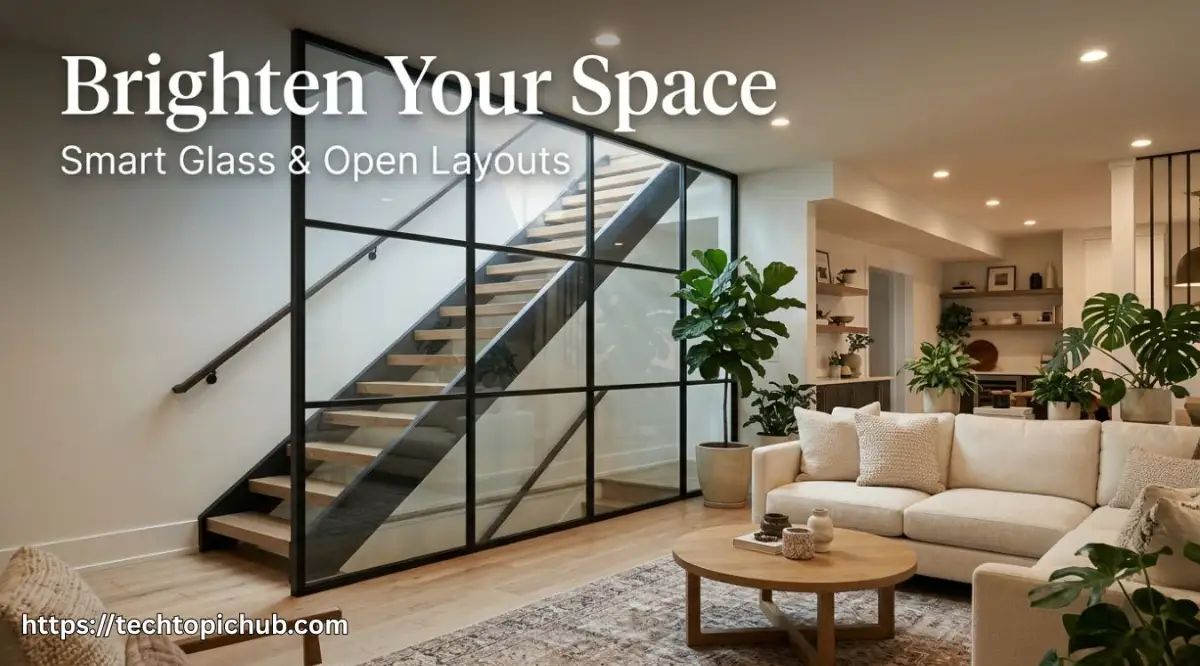
Quick Action Guide for Your Basement:
- Ditch the heavy drywall: Use glass partitions to let light flow freely across your basement.
- Bounce the light: Glossy floors and large floor mirrors are your best friends in a windowless basement.
- Skip the stark white: Soft, warm paint colors look much better under artificial lights.
- Layer your lighting: Mix ceiling lights with hidden LED strips to avoid expensive construction while creating a high-end look during your home Makeovers.
Clever Architectural Hacks to Steal the Sun
Stop Relying on Basic Overhead Bulbs
Most people try to fix a dark room by simply throwing more lightbulbs at the ceiling. This is the fastest way to make your beautiful home look like a cheap discount warehouse. Flat, harsh artificial lighting creates aggressive shadows that remind your brain you are stuck underground.
To truly change the feeling of the room, you need to mimic how the sun actually behaves in nature. Real sunlight hits surfaces indirectly, bouncing off walls and floors to create a soft, glowing environment. We have to use specific architectural tricks to recreate that exact same bouncing effect inside your home.
The Magic of Tubular Daylighting Devices
If your basement extends beyond the main footprint of your upper house, you have an amazing opportunity. You can install something called a solar tube or a light tunnel directly into the ground above. These highly reflective metal tubes capture real sunlight from your yard and funnel it straight down into your ceiling.
Inside the tube, the sunlight bounces off a continuous mirror finish, traveling down into your dark room without losing intensity. Once it reaches your ceiling, a special diffuser spreads the real sunshine evenly across your living space. It literally looks like you have a bright, glowing skylight, even though you are underground.
Pulling Sunshine down the Staircase
Your basement staircase is often the only physical connection between your dark lower level and your bright upper floors. Older homes feature narrow, enclosed staircases surrounded by heavy solid walls that block all the light. Tearing down these walls is one of the most effective construction tricks you can ever use.
By opening up the staircase, you create a massive funnel for natural light to spill down from your main hallway. You can replace solid drywall with beautiful glass railings or open timber slats. This immediately changes the entire flow of the house and makes the lower level feel connected to the rest of your home.
I Learned This the Hard Way (My Personal Realization)
Here is a massive mistake I made early on: I bought six expensive, ultra-bright lamps thinking they would magically fix my windowless basement, but they just made the room feel like a harsh police interrogation cell. I quickly realized that successful home Makeovers are not about adding more light, but about bouncing the right kind of soft light off your walls and floors. Save your money on buying a million bulbs, and focus on exactly how the light bounces around your space instead.
I spent way too much money trying to fix my dark room with expensive paint before fixing the actual light sources. I learned the hard way that even the brightest white paint will look dull and gray if there is no light to reflect off it. My biggest realization was that I had to bring light into the room first, and only then use paint and mirrors to amplify it.
Simulating Daylight with Smart Tech
Before we jump into the amazing trick of building fake windows, watch this quick video to see how a dark, creepy underground room actually transforms into a bright living space in real time. Seeing this visual proof will totally change your mind about what is possible, so check it out and keep reading below for my favorite light-bouncing secrets!
The Illusion of Windows through Light Boxes
Since you cannot punch a hole in your foundation for a real window, you can just build a fake one. Architects often create "faux windows" by building a shallow wooden box into the wall framing. They line the back of this box with highly powerful, daylight-balanced LED strip lights.
Over the lights, they install frosted glass or an acrylic diffusion panel that blurs the LED strips into a solid glowing sheet. When you frame this box with standard window trim and hang some light curtains over it, your brain is easily tricked. You will genuinely feel like you are standing next to a frosted window with bright morning sunshine pouring in.
Reflective Surface Strategy (The Bounce Effect)
Think of a beam of light exactly like a bouncing tennis ball. When a tennis ball hits a soft, dark pillow, it completely stops moving and loses all its energy. Dark, matte walls and heavy carpets act just like that pillow, absorbing every ounce of light in your room.
To keep the light bouncing around the space, you need hard, shiny surfaces that act like trampolines. Adding a massive floor-to-ceiling mirror on the longest wall instantly doubles the visual space and reflects any available light. Positioning this mirror directly opposite your open staircase will catch the light coming down and throw it deep into the room.
Myth vs Reality: Dealing with Basement Lighting
The Myth: You should paint a dark basement bright yellow to make it feel sunny and warm.
The Reality: Yellow paint in a room with no natural sunlight often ends up looking muddy, sickly, and dated. Without real sunlight to balance it out, the artificial lights make the yellow tones look cheap and aggressive. You are much better off using a soft, crisp white or a pale warm gray.
The Myth: Glossy paint on the walls will make the room look perfectly bright.
The Reality: High-gloss paint on large walls highlights every single drywall flaw, bump, and dent in your house. It creates harsh, blinding glares when you turn on lamps, making the space feel like a sterile hospital. You should use a flat or eggshell finish on walls, and save the glossy finishes for your floors and furniture.
My Quick Paint Reflection Guide for Basements:
- Warm Off-White: Bounces 80% of light (Highly recommended)
- Pale Gray: Bounces 60% of light (Good for modern looks)
- Bright Yellow: Bounces 70% of light (Usually looks muddy without real sun)
- Dark Blue/Green: Absorbs 90% of light (Avoid for a windowless basement)
Choosing the Perfect Flooring to Throw Light Upwards
We always think about ceiling lights, but we completely forget about the massive surface area under our feet. Your flooring choice plays a massive role in how bright your room ultimately feels. Dark hardwood or heavy gray carpets will swallow up your lighting and make the ceiling feel extremely low.
Flooring Material Comparison for Light Reflection
|
Flooring Type |
Reflection Level |
Vibe & Feeling |
Best Use Case |
|
Matte Dark Carpet |
Very Low |
Cozy but heavy |
Home theaters |
|
Natural Matte Oak |
Medium |
Warm and earthy |
Bedrooms |
|
Glossy White Tile |
Extremely High |
Modern and very bright |
Open living areas |
|
Polished Concrete |
High |
Industrial and sleek |
Gyms or modern spaces |
If you want maximum brightness, polished concrete or glossy light-colored luxury vinyl planks are your best options. These materials catch the light shining down from the ceiling and bounce it right back up into your eyes. This upward bounce eliminates those creepy shadows that normally hide in the corners of your room.
Using Glass Partitions Instead of Drywall
Sometimes you need to divide your basement into separate rooms, like a home office and a gym. Building standard solid walls will completely block the light flow and leave one of those rooms sitting in total darkness. This is a very common mistake in many modern home makeovers.
Instead of drywall, you can install beautiful glass partition walls with black metal framing for an industrial look. These glass walls give you the physical separation and soundproofing you need without blocking a single ray of light. You get all the privacy of a separate room while still enjoying a massive, bright, open-concept feel.
Architectural Dropped Ceilings and Cove Lighting
A low basement ceiling makes the room feel cramped and heavily restricts your lighting options. You can create a brilliant optical illusion by using something called architectural cove lighting. This involves building a slightly lowered edge around the perimeter of the ceiling.
Behind this dropped edge, you hide powerful LED strips that point directly straight up into the center of the ceiling. The light washes smoothly across the ceiling drywall and bounces softly down into the room. This makes the ceiling look like it is floating, immediately making the entire room feel much taller and incredibly bright.
Hiding Lights behind Large Furniture
You can also use your existing furniture to create beautiful layers of indirect brightness. Pushing a large bookshelf slightly away from the wall allows you to hide cheap LED strips behind it. The light glows warmly out from the edges, creating a cozy halo effect against the blank wall.
You can do the exact same thing behind your television, your sofa, or even under your cabinets. This prevents the light from shining directly into your eyes and instead makes the walls themselves appear to glow. A very cheap trick adds massive depth and luxury to any tight space.
Tricking the Brain with Indoor Plants
Our brains are hard wired to believe that green, healthy plants can only survive where there is plenty of natural sunshine. Placing a few large, beautiful indoor plants around your windowless basement is a massive psychological trick. Even if you use high-quality fake plants, your mind immediately associates the greenery with an airy, sunlit environment.
If you want to use real plants, you can easily set up a few small, stylish grow lights hidden above them. These lights keep the plants thriving while adding a very crisp, natural-looking white light to that specific corner. It adds life, color, and a feeling of fresh air to an otherwise dead concrete box.
The Power of Cool-Toned Artificial Light
We often buy "warm white" or "soft white" bulbs because they make a living room feel cozy and relaxing in the evening. However, using only warm, yellow-toned lights in an underground basement just makes it look old and dingy during the daytime. The sun outside produces a very crisp, cool, blue-toned light at noon.
To make your underground basement feel natural, you need to mix your light temperatures smartly. Use daylight-balanced bulbs (around 4000K to 5000K) for your main ceiling fixtures to simulate the bright afternoon sun. Then, use those warm, yellow bulbs in your small floor lamps to turn on only when you want to relax at night.
Elevating Your Space: Expert-Level Lighting Secrets
Once you understand the basic physics of bouncing light, it is time to take your underground basement to an entirely new level. Professional interior designers do not just add random lamps and hope for the best. They use a specific psychological concept called "light layering" to trick the human eye.
This means you never rely on just one single light source to do all the heavy lifting. You must combine ambient ceiling lights, task lighting for specific chores, and accent lighting to highlight beautiful walls. When these three layers work together, your brain completely forgets that you are standing in a windowless basement.
One of the greatest secrets to long-term success is paying attention to something called the Color Rendering Index, or CRI. This is a scientific measurement of how accurately a lightbulb reveals the true colors of objects around you. Cheap bulbs have a very low CRI, which makes your skin look weirdly gray and makes your expensive furniture look dull.
If you want your home Makeovers to look incredibly expensive and bright, only buy LED bulbs with a CRI rating of 90 or higher. You can check out the official guidelines on understanding lighting facts and CRI labels to see exactly what to look for on the box. High CRI bulbs replicate the full spectrum of natural sunshine, making your paint colors pop and making the room feel alive.
The Smart Home Sunrise Simulation
Another amazing trick is synchronizing your basement lighting to the actual rhythm of the sun outside. Living in a dark space can really mess with your body's natural sleep cycle over time. You can easily fix this by swapping your standard light switches for smart dimmers and tunable white LED bulbs.
You can program these smart lights on your phone to slowly fade on with a crisp, cool white light in the morning. As the afternoon rolls around, the lights can automatically shift to a warmer, softer glow. According to experts studying the effects of light on human circadian rhythms, this natural shifting of light temperatures keeps your energy levels stable.
This simple piece of smart home technology completely removes the stagnant, frozen feeling of an underground room. Your lighting will physically change throughout the day, just like real sunlight passing through a real window. It makes the space feel connected to the outside world, which is a massive relief for your mental health.
Real-Life Scenario: The Ceiling Bounce Strategy
Let me share a brilliant strategy that completely changed how I look at ceiling height. Most dark cellars have very low, oppressive ceilings that make you feel like you are walking through a tunnel. To fix this, you should paint the ceiling a bright, flat white, but paint the upper two inches of your walls the exact same white color.
This creates an optical illusion that blurs the harsh line where the wall meets the ceiling. When you point a stylish floor lamp upward, the light washes over that blurred edge seamlessly. The ceiling instantly appears much higher than it actually is, giving the room a highly sought-after airy feeling.
You do not need to spend a massive fortune on structural construction to make a room feel taller. Simple visual tricks like this save you thousands of dollars while delivering incredible results. If you are worried about funding your upcoming renovation, you should focus on the secret to building an emergency fund before you start ripping down drywall. Smart financial planning keeps your stress levels low while you upgrade your house.
 The Most Expensive Pitfalls You Must Run From
The "Hospital Asylum" Paint Disaster
One of the absolute worst things you can do to a dark room is paint every single surface stark, blinding white. People assume that pure white paint is the magical cure for a lack of sunshine. However, without real natural light to soften it, stark white creates scary, aggressive shadows everywhere.
Your cozy family room will suddenly feel like a sterile, unwelcoming hospital cafeteria. The walls will look flat, cold, and completely devoid of any personality or warmth. Instead of pure white, you should use soft off-whites, warm creams, or very pale taupe to add subtle depth to the room.
Pro Tip from my own experience: I tested a warm cream shade called "Swiss Coffee" on one wall and a stark white on the other. The stark white looked completely dead and shadowy, while the cream actually made my underground basement feel like a cozy, natural living room.
Blocking the Natural Airflow
We get so obsessed with lighting that we completely forget about how the room actually smells and breathes. A room with zero windows usually has zero natural ventilation, leading to stale, heavy, and damp air. If a room smells like a wet dog, no amount of brilliant lighting will make it feel comfortable.
You must prioritize proper HVAC airflow and use high-quality dehumidifiers to keep the air crisp and dry. Breathing fresh, moving air sends a signal to your brain that you are in a healthy, open environment. The American Society of Heating, Refrigerating and Air-Conditioning Engineers heavily emphasizes that clean indoor air quality is just as important as visual design.
Ignoring the Corners (The Cave Effect)
If you only install recessed lights right in the middle of your ceiling, you are making a massive mistake. The center of the room will be incredibly bright, but all four corners will fade off into deep, dark shadows. This aggressive contrast tells your brain that the room is actually much smaller than it really is.
This is famously known as the "cave effect," and it makes people feel incredibly claustrophobic. To avoid this, you must push your lighting outwards to the very edges of the room. Place small accent lamps in the dark corners, or angle your ceiling lights to wash directly down the walls.
When buyers walk into a poorly lit room with dark corners, they immediately want to turn around and leave. If you are thinking about moving soon, a bright and welcoming lower level is a proven way to speed up the home selling process in any market. People pay premium prices for spaces that feel safe, open, and full of life.
Do's and Don'ts of Dark Room Renovations
- Do use massive floor mirrors to double the visual space and bounce your artificial light around.
- Do not buy heavy, dark mahogany furniture that acts like a black hole for your lighting.
- Do use sheer, breezy curtains over faux windows to create a soft, highly realistic diffusion effect.
- Do not install cheap fluorescent tube lights that flicker and give everyone a massive headache.
- Do plan your electrical outlets before starting any major construction, so you can easily plug in hidden lamps.
Your Immediate Action Plan for a Brighter Space
You do not need to wait for a massive budget to start changing how your dark space feels right now. Start this weekend by simply evaluating the lightbulbs you already have installed in your fixtures. Throw away those harsh, yellow, low-CRI bulbs and replace them with high-quality daylight-balanced LEDs.
Next, look at your furniture layout and see if you are accidentally blocking the flow of light. Move tall, dark bookshelves away from the center of the room and place them flat against the walls. Bring in a few inexpensive floor mirrors from a local discount store and angle them toward your brightest lamps.
You can find tons of creative inspiration for modern setups on various technology and home innovation platforms online. Small, intentional changes compound very quickly, turning an intimidating concrete box into a warm, inviting sanctuary. You just have to be willing to experiment with different angles and layers until the space feels exactly right.
A beautifully finished basement is like finding a hidden treasure chest right underneath your feet. It gives you the freedom to create a quiet home office, a wild playroom for the kids, or a private movie theater. By respecting how light naturally behaves, you can easily force the sun to shine exactly where you want it.
My Personal Final Thought on Lighting
I know exactly how overwhelming it feels to stand in a dark, empty room and wonder how you will ever fix it. My biggest piece of advice is to just take a deep breath and start with one single, bright lamp in the corner. You have the absolute power to change the energy of your home today, and I promise you will love the results.
Common Questions about Brightening Dark Lower Levels
Can you legally call a room without windows a bedroom?
In most local building codes, you cannot legally list a windowless room as a bedroom for safety reasons. A legal bedroom usually requires a proper egress window so people can safely escape during an emergency fire. However, you can still beautifully design these spaces to be used as home theaters, gyms, or private offices.
How do you fix the heavy, damp smell in a closed room?
You need to attack the moisture in the air by running a continuous-drain dehumidifier around the clock. Make sure your central air conditioning vents are fully open to keep fresh air circulating constantly. Using an air purifier with a heavy-duty carbon filter will also help destroy those musty, stale odors.
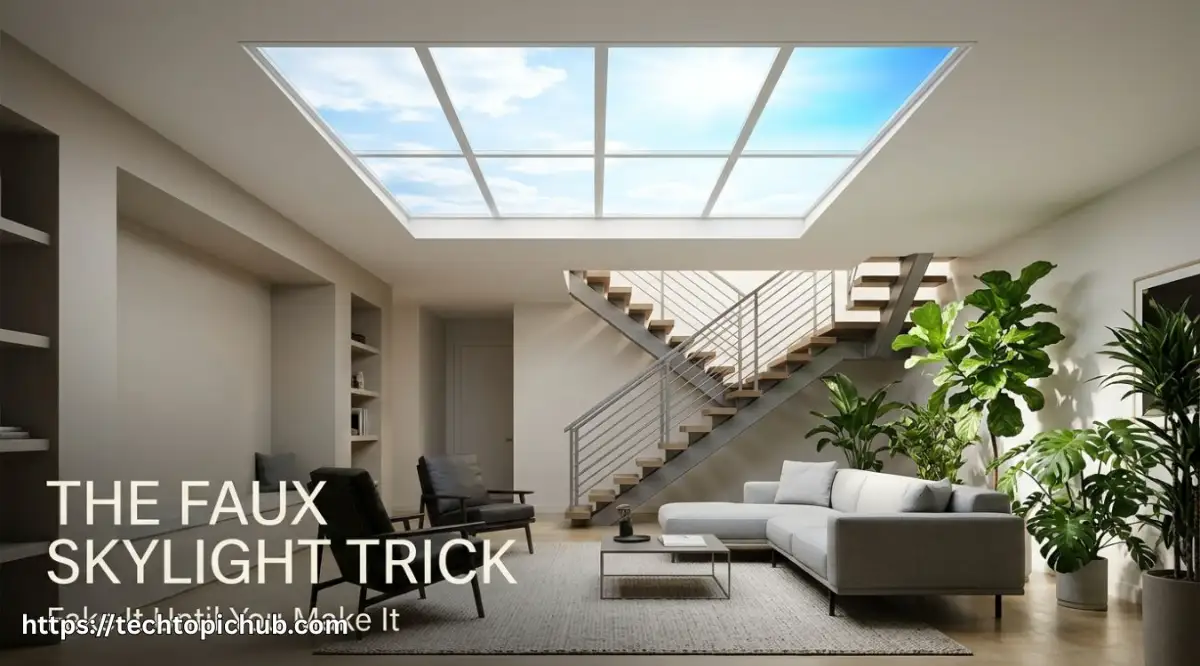
Are fake LED skylights actually worth the money?
Yes, high-quality faux skylights are completely worth the investment because they brilliantly trick your brain. They use specialized LED panels that perfectly mimic the depth and color temperature of a real blue sky. When installed correctly, your guests will genuinely believe there is a real glass skylight above their heads.
What is the best flooring for a room with no sunlight?
You should always choose smooth, light-colored flooring that has a slight sheen or glossy finish to it. Light oak luxury vinyl planks or polished light gray concrete are amazing options for bouncing light upwards. Avoid dark carpets at all costs; as they will aggressively absorb the light and make the ceiling feel terribly low.
Does hanging curtains on a blank wall really work?
Hanging floor-to-ceiling sheer curtains on a solid, blank wall is a fantastic psychological design trick. When you hide a few warm LED light strips directly behind the fabric, the curtains softly glow from within. Your mind instantly assumes there is a real, sunny window hiding right behind those breezy drapes.
Looking back at my own journey, turning my scary underground basement into a cozy hangout spot was the most rewarding project I ever took on. You do not need a background in construction to make these simple changes, so just pick one small lighting trick today and see how it completely shifts the energy of your space. I promise that if I could turn my scary dark cave into a bright, happy room, you can absolutely do it too!
Disclaimer: