
My Personal Encounter With the Confusing Legal System
Opening a letter with bold legal words on it is terrifying. Your mind instantly races to the worst-case scenario—jail time, a ruined reputation, or losing your life savings over a simple misunderstanding. But before you panic, lose sleep, and spend thousands on a lawyer you might not even need, let's figure out exactly what kind of fight you are actually facing. I have been down this confusing road myself, and I want to show you exactly how to read these papers so you can take your power back today.
At that time, I honestly had no idea what the complicated jargon inside meant. Was I going to jail, or was someone just asking me for money over a misunderstanding?
I spent three totally sleepless nights staring at the ceiling, convinced I was about to lose everything I owned over a simple misunderstanding with a local vendor. My stomach stayed in knots because I was too embarrassed to ask anyone for help, and I felt completely alone in a scary legal maze. I wasted hours frantically searching Google, only to find messy lawyer websites that made me panic even more.
Like most ordinary people, my entire knowledge of courtrooms came from dramatic television shows. I felt completely lost, terrified, and overwhelmed by the confusing words printed on those pages.
Finding a clear answer online felt like searching for a needle in a giant haystack. Every website I visited seemed to speak in a complex language designed to confuse me even more.
I just wanted someone to sit down with me, grab a cup of coffee, and explain it all in plain English. That deeply frustrating experience forced me to learn how the legal system actually works from the ground up.
Today, I want to be that helpful friend for you. I will break down exactly what sets these two legal paths apart so you never have to feel that same paralyzing fear.
Ordinary people face immense stress just trying to figure out if their problem is a private dispute or a serious state offense. That dark uncertainty can ruin your appetite, strain your personal relationships, and severely impact your daily performance at work.
So many folks end up spending their hard-earned savings on expensive consultations just to get a basic translation of their problem. The legal machine can feel incredibly cold, unforgiving, and completely detached from our everyday human emotions.
I am here to change that narrative for you right now, step by step. By the end of this practical guide, you will have total clarity, immense relief, and real peace of mind.
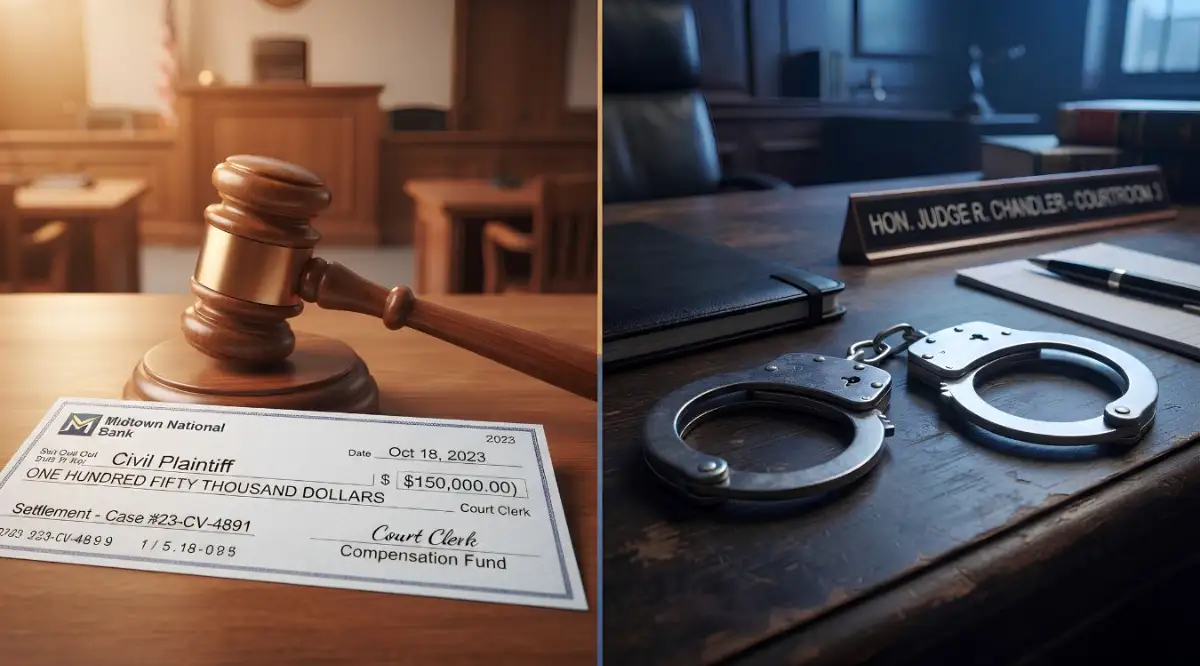
The "Skip the Panic" Summary Box
- Know who is fighting: Private disputes (civil cases) are between everyday folks, while state offenses (criminal cases) are started entirely by the government.
- Check the stakes: Only state cases can actually result in jail time or probation. Private lawsuits just deal with exchanging money or fixing a broken promise.
- Zip your lips online: Whether it is a private suit or a state charge, keep your complaints entirely off social media to protect your defense.
- Save absolutely everything: Screenshots, text messages, and clear emails are your best friends in any private money argument.
Breaking Down the Core Purpose of Each Legal Path
To truly understand how courts work, we first need to look at why these rules exist in the first place. Every single law falls into one of two main buckets depending on who is harmed and what the outcome should be.
Think of the legal system as a hospital with two entirely different emergency rooms. One room is for fixing private broken agreements, while the other is for treating injuries against the entire community.
If we keep this simple picture in mind, the heavy legal terms suddenly start to make perfect sense. Let us look closely at how each specific path operates in the real world.

How a Private Dispute Actually Works
A private dispute is all about balancing the scales between two everyday people or businesses. If someone wrongs you and costs you money, this is the path you take to make things right again.
Common Everyday Private Disputes Include:
- A landlord refusing to fix your leaky roof or return your deposit.
- An independent contractor taking $500 upfront and never finishing the job.
- A neighbor's dog completely tearing apart your expensive backyard fence.
- Notice the pattern? No police, no handcuffs. It is strictly about making the wronged person financially whole again.
The main goal here is not to punish anyone with jail time or harsh state penalties. Instead, the focus is entirely on getting financial compensation for the person who suffered a loss.
For example, imagine you hire a contractor to fix your roof, but they take your money and do a terrible job. You would file a private claim to force them to return your cash or finish the work properly.
I learned this the hard way when dealing with a minor property issue a few years back. My biggest mistake was ignoring the initial warning letters, thinking the silly dispute would just naturally go away on its own. I quickly realized that taking early communication seriously can save you thousands of dollars and months of endless headaches.
The Heavy Weight of State Offenses
On the completely opposite side, we have offenses that harm the safety of the general public. These are actions that break the rules set by the government to keep our communities safe and peaceful.
When someone commits this type of act, the law views it as an attack on society itself, not just an attack on one person. Because the community is threatened, the state government steps in to handle the messy situation.
The primary goal here is to punish the wrongdoer, rehabilitate them, and keep dangerous people off the streets. This is exactly where police officers, handcuffs, and prison sentences come into the picture.
Before you read any further, watch this quick video to see exactly what happens inside a real courtroom during these two totally different situations. It will make the rest of this guide so much easier to understand, and I promise it will instantly calm your racing nerves!
[Insert YouTube Video Link Here]
The Big Question: Who Actually Starts the Fight?
One of the easiest ways to tell these two situations apart is to look at who is pointing the finger. The person or group who officially starts the paperwork tells you exactly what kind of case it is.
If you understand who holds the steering wheel, you can easily predict how the rest of the journey will go. Let us see who steps up to the microphone in both scenarios.
The Role of the Everyday Citizen
In a private dispute, an everyday citizen or a private company must start the entire process. The government will not step in to fight your personal battles over a broken contract or a noisy neighbor.
The person who feels wronged is called the plaintiff, and they must hire their own lawyer to file the paperwork. They are completely in charge of pushing the case forward or deciding to drop it.
If you get hit by a careless driver and their insurance refuses to pay, you have to initiate the lawsuit yourself. You hold all the power to negotiate a peaceful settlement behind closed doors at any time.
When the Government Steps In
When a public rule is broken, you as a citizen do not actually file the formal charges. Even if you are the direct victim of a robbery, the government is the one who officially takes the suspect to court.
A government lawyer, often called a prosecutor, takes full control of the entire legal process. The victim simply becomes a very important witness to help the state prove its case.
This means even if the victim wants to drop the charges later, they usually cannot do it alone. The state prosecutor holds the final power to decide if the case moves forward or gets completely dismissed.
Myth vs Reality: Clearing Up Common Confusions
Because of Hollywood movies, we all carry around some seriously incorrect ideas about how judges and juries work. These common myths cause a lot of unnecessary panic for ordinary people facing minor disputes.
Let us bust a few of these popular misconceptions right now so you can breathe a little easier. Knowing the truth will instantly lower your stress levels.
Myth: You Can Send Someone to Jail in a Regular Lawsuit
Many people believe that if they win a huge private lawsuit, the loser will be locked up behind bars. This is completely false and legally impossible in a standard private dispute.
Reality: Only a judge in a state-run trial can ever hand down a prison sentence or jail time. Private lawsuits strictly deal with exchanging money or forcing someone to complete a specific promised action.
Myth: The Police Will Help You Collect Your Owed Money
If your friend borrows two thousand dollars and refuses to pay it back, you might think calling the cops is the right move. You might expect them to show up at your friend's house and demand your cash.
Reality: Police officers do not handle private debt collection or everyday broken promises. To get your money back, you must take the person to a specialized small claims court yourself.
Your 3-Step Action Plan Instead of Calling 911 for Debt:
- Send a final written demand: Keep it strictly polite and give them a clear 14-day deadline to pay up.
- Gather your exact proof: Screenshot every text message, Venmo request, or paper IOU right now.
- Head to Small Claims: Walk into your local courthouse and file a simple form. You usually don't need a lawyer, and filing fees often cost less than $50.
The Burden of Proof: How Hard Is It to Win?
Whenever you accuse someone of doing something wrong, you have to prove it to the judge or jury. However, the amount of proof you actually need changes drastically depending on the type of courtroom you are standing in.
This specific rule is called the burden of proof, and it is the absolute backbone of our entire justice system. It protects innocent people from losing their money or their precious freedom unfairly.
Tipping the Scales in a Private Dispute
In a private money dispute, the bar you have to jump over is actually quite low. You just need to show that your side of the story is more likely to be true than the other person's story.
Think of this like a playground seesaw. If you can tip the scale just 51% in your favor with emails or photos, you win the entire case.
You do not need absolute perfection or a mountain of bulletproof evidence to get your money back. You just need to be slightly more believable than the person sitting across from you.
Leaving Absolutely No Room for Doubt
Taking away a human being's freedom is the most serious action a government can ever take. Because the stakes are incredibly high, the proof required here is heavily stacked against the state.
To put someone in prison, the prosecutor must prove their guilt beyond a reasonable doubt. This means the jury must be nearly 100% certain that the person committed the act.
If there is even a tiny, logical explanation that shows the person might be innocent, the jury must let them go. This strict rule exists to ensure we never accidentally lock away an innocent neighbor.
The Final Outcomes: What Happens When the Judge Bangs the Gavel?
The finish line for these two paths looks completely different once the final verdict is read out loud. The consequences handed down by the judge are custom-tailored to fix the specific type of problem that occurred.
Understanding these potential outcomes helps you prepare for the absolute worst-case scenario. It also helps you realize that many legal threats are just empty words meant to scare you.
Financial Restitution and Court Orders
When you lose a private dispute, your wallet is usually the only thing that takes a direct hit. The judge will order you to pay a specific amount of money to fix the damage you caused.
Sometimes, the judge will also issue a strict order telling you to stop doing something annoying. For example, they might legally order your business to stop using a copied logo or brand name.
You will not get a permanent public record that ruins your chances of getting a normal job. You simply pay your financial debt, learn a valuable lesson, and move on with your daily life.
Fines, Probation, and Losing Your Freedom
Losing a state-level case brings entirely different and much heavier consequences to your doorstep. The judge has the ultimate power to take away your freedom and lock you in a cell.
Even if you avoid actual jail time, you might face heavy state fines or years of strict probation. Probation means a government officer will constantly watch your behavior and restrict where you can travel.
Worst of all, you receive a permanent mark on your public record. This heavy mark can make it incredibly difficult to rent a nice apartment or find a good-paying job in the future.
Can a Single Event Trigger Both Actions at Once?
Now, you might be wondering if these two legal worlds ever violently crash into each other. The surprising answer is yes, a single bad decision can absolutely trigger both types of cases at the exact same time.
When an action harms an individual and also breaks a massive public safety rule, both systems wake up. You can face the harsh government penalties and a private demand for money simultaneously.
A Real-Life Dual Scenario
Imagine a terribly reckless driver gets behind the wheel after drinking heavily and crashes directly into your living room. The state police will immediately arrest them for driving under the influence, which is a massive public offense.
The government will prosecute them to suspend their driver's license and potentially put them in jail. They do this to protect other innocent drivers on the road from facing the same terrifying fate.
At the exact same time, you have the full right to sue that driver privately in a completely different courtroom. You can demand they pay out of pocket to rebuild your broken walls and replace your ruined family furniture.
The driver has to fight the government for their personal freedom while fighting you for their bank account. It is a dual nightmare for the wrongdoer, but it ensures you get the fair justice you truly deserve.
A Quick Side-by-Side Comparison
To make things incredibly easy to digest, I have put together a simple cheat sheet for you. You can quickly scan this table anytime you feel confused by the heavy legal terms on the news.
Why Knowing This Saves You From Costly Mistakes
Having this basic foundational knowledge completely changes how you react to stressful situations. Instead of freezing in panic, you can calmly look at a document and know exactly what kind of fight you are entering.
When you understand the rules of the game, nobody can easily intimidate you with fake legal threats. You will immediately know when someone is just blowing hot air and when you actually need to call a professional lawyer.
Your mental health is way too valuable to let confusing legal terms keep you awake at night. By learning these simple differences, you take back your personal power and protect your family's emotional wellbeing.
Whenever you face a challenging dispute, always ask yourself who is actually involved and what they truly want. That simple question will always point you directly toward the right legal path and the safest possible solution.
Expert Strategies for Handling Unexpected Legal Battles
When you suddenly find yourself pushed into a courtroom dispute, panic is your absolute worst enemy. You might feel like the entire world is collapsing on your shoulders right now. However, taking a few incredibly smart steps early on can completely change the direction of your journey.
The people who walk away from these stressful situations with a massive smile on their face do not just rely on blind luck. They quietly follow a specific set of rules that most ordinary folks never even think about. I want to share these highly effective, real-world secrets with you so you can build a solid defense from day one.
Build an Unbreakable Paper Trail
Your memory is an incredibly fragile thing, especially when you are living under extreme emotional stress. You might think you will perfectly remember exactly what the contractor said to you last Tuesday. The harsh truth is that details fade quickly, and judges almost never make decisions based purely on spoken promises.
If you want to win a private money dispute, you need to write absolutely everything down immediately. Start treating every single email, text message, and written receipt like a piece of pure gold. Whenever you have an important phone call, immediately send a polite email summarizing exactly what you both discussed.
I actually lost nearly two thousand dollars a few years ago simply because I trusted a friendly handshake deal and did not save my text messages. That painful mistake taught me to quickly screenshot every single conversation and save them in a special folder on my phone the exact moment they happen. Trust me, spending two easy minutes backing up your chats today will save you from months of angry tears later.
This simple habit creates a powerful timeline that clearly proves your side of the story to a judge or jury. If you are dealing with unfair treatment at your job, this habit becomes your strongest shield. You can learn exactly how to do this by reading through a complete blueprint for documenting workplace discrimination before seeking legal help to protect your career.
Understand the Ticking Legal Clock
Every single legal claim has a strict expiration date firmly attached to it. The system calls this rule the statute of limitations, and it completely blocks old, dusty complaints from entering the courtroom.
If you wait too long to file your private money demand, the court doors will slam shut and lock forever. Even if you have a mountain of perfect evidence, the judge will not even look at your documents. You lose your right to fight entirely just because you sat on the problem for too long.
Never assume you have endless time to negotiate privately with the person who wronged you. You can check the specific time limits for different situations on highly trusted academic resources like the Legal Information Institute at Cornell Law School to stay safely informed.
Control Your Emotional Reactions
When someone officially accuses you of doing something wrong, your blood instantly boils with anger. Your immediate human instinct is to call them up and loudly defend your personal honor. This natural reaction is totally understandable, but it is also the fastest way to ruin your chances of winning.
Anything you say in anger can easily be twisted and used directly against you later in front of a jury. Opposing lawyers are highly skilled at taking your emotional outbursts entirely out of context.
If you receive formal court papers, you must take a deep breath and bite your tongue completely. Channel all of that frustrated energy into quietly gathering your facts and calmly organizing your personal folders instead.
Find the Right Guide for Your Journey
Trying to navigate the massive maze of courtroom rules by yourself is like walking blindfolded through heavy traffic. You need an experienced professional who understands the specific language of the judge you are facing.
However, you should never just hire the very first flashy billboard advertisement you see on the highway. You want someone who specializes exactly in the type of problem sitting on your kitchen table right now.
Take your time to interview a few different professionals and ask them hard questions about their past results. You can often find highly vetted, trustworthy professionals by checking official directories like the American Bar Association public resources for reliable guidance.

Dangerous Traps That Will Destroy Your Court Case
Walking through the legal system is incredibly tricky because there are hidden landmines planted everywhere. Good, honest people lose entirely winnable arguments every single day purely because they make silly, avoidable mistakes.
These common blunders usually happen when fear completely takes over and replaces clear, logical thinking. I want to shine a bright light on these dangerous traps so you can step right over them safely.
If you fall into these deep pits, you could easily drain your family savings or completely ruin your public reputation. Let us walk through the most common ways people accidentally sabotage their own journey to justice.
The Ostrich Strategy: Ignoring Formal Papers
The absolute worst thing you can possibly do with official court papers is hide them in a bottom drawer. Far too many people think that if they simply ignore a private lawsuit, the problem will magically disappear.
They incorrectly believe that the legal machine will stop moving if they simply refuse to participate. The exact opposite is true, and the results are completely devastating for the person hiding.
If you do not reply by the strict deadline, the judge will automatically give the other side exactly what they want. You will lose the argument by default, and your bank account could easily be frozen without you even being in the room.
The Social Media Confession Trap

In our modern society, we have a terrible habit of broadcasting every single thought directly to the internet. When people feel wronged, they immediately run to Facebook or Twitter to loudly vent their frustrations to friends.
This is an absolute goldmine for the lawyers working on the opposing side. They will instantly screenshot your angry posts and present them directly to the judge to destroy your personal credibility.
If you claim to be suffering from extreme physical pain from a car crash, but you post a picture of yourself hiking, your case is dead. Many high-profile cases have been entirely ruined by simple social media updates, a fact heavily documented by legal industry analysts at the National Law Review. Keep your private life completely offline until the entire dust settles.
Fighting Purely Out of Spite
Courtrooms are designed to fix actual financial damage, not to heal your deeply bruised ego. Sometimes, a business partner might betray you, and you want to sue them just to make their life totally miserable.
This emotional revenge strategy is a massive trap that will completely drain your mental energy and your wallet. You will end up spending tens of thousands of dollars just to win a meaningless argument over a few hundred bucks.
Before you start any aggressive legal action, you must look at the cold, hard math of the situation. Ask yourself if the expected financial reward is actually worth the heavy years of stress you will endure.
Building up your personal financial safety net should always take priority over fighting petty legal battles. If you want to protect your family safely, you can learn the secret to building an emergency fund without ignoring your debt to stay secure.
Hiding Ugly Truths From Your Own Team
When you finally hire a professional to help you, you must treat them exactly like a doctor. If your stomach hurts, you cannot lie to the doctor and expect them to give you the right medicine.
Many people feel deeply embarrassed about their past mistakes, so they try to hide important details from their own legal team. They quietly hope the other side will simply never find out about the bad text message or the unpaid bill.
The other side always finds out eventually. When your team gets blindsided by bad news in the middle of a hearing, they cannot protect you. Give your team the absolute truth from day one so they can successfully build a proper shield around your weak spots.
Misunderstanding Medical and Financial Paperwork
A huge number of everyday legal problems actually start with confusing bills from a hospital or a clinic. People ignore a letter from a billing department because the terms are way too hard to read.
Before long, that simple unpaid medical bill turns into a highly aggressive private lawsuit from a scary debt collector. By understanding your basic paperwork early on, you can stop these nasty problems long before they ever reach a judge.
Taking the time to read through the ultimate beginner's blueprint to understanding health deductibles and co-pays can literally save you from facing a courtroom disaster. Always tackle confusing financial documents head-on instead of letting them pile up on your desk.
Your Blueprint for Moving Forward With Confidence
We have covered a massive amount of important ground today, and I know your head might be spinning just a little bit. The legal system is incredibly dense, but you now have a solid map to help you navigate through the heavy fog.
You officially know exactly how to tell the difference between a private money argument and a serious state-level penalty. More importantly, you know how to completely protect yourself from the silly mistakes that trap so many ordinary folks.
Let us turn all of this powerful knowledge into a super simple action plan you can use right now. By following these clear steps, you will replace all of your lingering anxiety with strong, calm confidence.
Take Immediate Ownership of Your Situation
The very first step is to simply look your current problem right in the eye without flinching. Grab a fresh cup of coffee, sit down at your kitchen table, and read every single word on those official papers.
Look closely to see who exactly is sending the letter and what specific action they are demanding from you. Is it a private neighbor asking for repair money, or is it a local state office demanding a heavy penalty?
Once you clearly identify the exact nature of the beast, it immediately becomes much less terrifying. You can then quickly gather all your related emails, receipts, and photos into one neat, organized physical folder.
Keep Pushing Forward Without Fear
You do not need to become a brilliant legal scholar overnight to effectively protect your family or your business. You just need to stay perfectly organized, keep your deep emotions in check, and ask for reliable help when things get complicated.
Remember that the courtroom is just a structured process designed to peacefully resolve difficult human problems. It is not a magical monster hiding under your bed to ruin your life without reason.
If you take smart, measured actions today, you can absolutely weather any legal storm that comes your way. Keep your chin held high, trust the organized facts, and tackle your challenges step by step.
My best personal advice is to treat every legal challenge like a giant messy closet you need to clean out. If you just take it one shelf at a time, slowly organizing the facts and tossing out the emotional junk, I promise you will easily find your way to a clean, peaceful resolution.
Everyday Questions People Also Ask About Court Cases
Can a private dispute naturally turn into serious state charges later?
Yes, this absolutely can happen if new evidence suddenly reveals a major public safety violation during your private argument. For example, if a standard business contract dispute uncovers massive intentional tax fraud, the government will quickly step in. The local state prosecutor will then take over and officially launch their own separate investigation against the wrongdoer.
Do I always have to hire a very expensive lawyer for a small money claim?
No, you definitely do not need an expensive professional for very minor financial disagreements. Most areas have a specialized small claims division built entirely for everyday people to represent themselves easily. The rules there are specifically designed to be extremely simple, fast, and completely free of complicated legal jargon.
How long do these heavy court battles usually take to completely finish?
A simple private dispute over a broken fence might wrap up peacefully in just a few short weeks. However, serious state-level cases or highly complex business arguments can easily drag heavily on for multiple years. The actual timeline completely depends on how quickly both sides are willing to compromise and settle the messy issue.
Will a private money loss permanently show up on my criminal background check?
Absolutely not, because a private financial argument has nothing to do with breaking state safety laws. When you apply for a normal job or rent an apartment, employers are strictly looking for state-level convictions. Losing a private lawsuit might slightly lower your credit score, but it will never brand you as a dangerous person.
Can I just privately pay someone to completely drop their state charges against me?
No, you can never legally buy your way out of a government prosecution by quietly paying off the victim. Once the state prosecutor officially decides to move forward, the original victim loses all power to cancel the process. Trying to secretly pay a witness to drop the issue will easily land you in even deeper trouble with the government.
Looking back, facing that initial scary legal letter was actually a blessing in disguise because it forced me to finally understand my personal rights. You already took the absolute hardest step today just by reading this guide, so take a deep breath and start organizing your papers with a clear mind. You are so much stronger than you think, and you have exactly what it takes to handle this bump in the road and get your peace of mind back today.
Disclaimer: The highly detailed information provided in this article is meant purely for educational and general informational purposes only. It does not constitute formal legal advice, financial advice, or official attorney consultation. Every single legal situation is deeply unique and strictly governed by highly specific local laws. You should always consult directly with a qualified, licensed attorney in your specific area before making any major legal or financial decisions based on this content.