The Silent Heavy Burden We Carry Every Day
Have you ever checked your bank app through half-open eyes, just hoping the number isn't as bad as you think? That was my morning routine for years. My wallet was stuffed with maxed-out plastic, and I felt completely stuck in a loop of endless minimum payments. Let's talk about how I finally stopped dodging debt collectors and actually built a realistic system to pay off what I owed—without losing my mind.
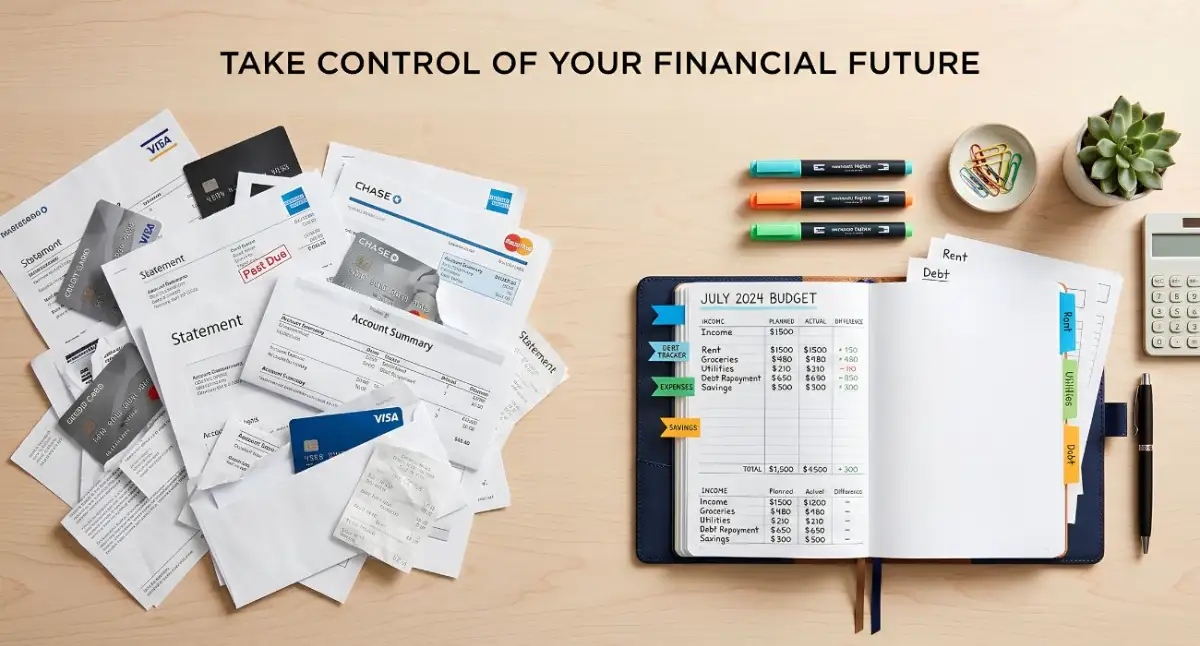
I remember sitting on my living room floor, surrounded by a mountain of unopened envelopes and printed loan statements. My heart was racing, and a heavy knot rested in my stomach because the due dates were piling up faster than my paycheck could handle. I had three different credit cards, a personal loan, and a car payment demanding my attention all at once. Every time my phone buzzed with an email notification, I assumed it was another lender reminding me of a missed deadline. I felt completely trapped by my own financial decisions.
Living with multiple debt obligations feels like carrying a heavy backpack that gets heavier with every step. You wake up thinking about minimum payments, and you go to sleep worrying about interest charges. This constant state of anxiety ruins your mental peace and slowly damages your relationships.
When you have too many separate payments, simple math becomes incredibly complicated. You might accidentally skip a payment simply because you lost track of the specific due date. This single mistake can instantly trigger late fees and damage your credit score, making your financial situation even harder to manage.
The worst part is the feeling of running on a treadmill but never actually moving forward. You send money to five different lenders every month. Yet, when you check the balances, they barely seem to drop.
This happens because most of your hard-earned money is secretly being eaten up by interest charges. Without a clear map of where your money is going, lenders will gladly keep you in the minimum payment trap forever.
I eventually realized that ignoring the numbers would not make them magically disappear. I had to face the reality of my borrowing habits and understand exactly how these financial products worked against me.
Facing the Numbers and Mapping the Terrain
The very first action you must take is gathering every single piece of information about what you owe. You cannot fix a problem if you refuse to look at it directly. Grab a simple pen and a blank sheet of paper, or open a basic spreadsheet on your computer.
Quick Action Plan (What You’ll Learn):
- Stop the bleed: Why making only minimum payments mathematically guarantees you stay stuck.
- Pick your attack plan: Comparing the psychological 'Smallest Balance' win vs. the math-heavy 'Highest Interest' strike.
- Automate the defense: How setting up auto-pay on payday removes the mental weight of remembering due dates.
- Find hidden leverage: The simple phone call script that can instantly lower your credit card interest rate.

You need to write down the name of the lender, the total amount you owe, and the minimum monthly payment for each account. Most importantly, you must find the exact interest rate associated with every single loan.
Many people completely ignore the interest rate because it feels like confusing banking jargon. However, the interest rate is simply the extra price you pay the bank for holding onto their money longer.
Pro Tip from My Experience: I used to just look at the total balance and ignore everything else. My biggest mistake was not realizing that one of my smaller credit cards had a massive 24% interest rate hidden in the fine print. Once I saw how much extra money I was throwing away daily, my entire perspective shifted. I immediately changed my approach to prioritize that specific account.
When you lay all this information out in front of you, the fear actually starts to shrink. The unknown is always much scarier than a clear list of numbers on a page. Now, you have a solid bird's-eye view of your entire financial obligations.
Why Minimum Payments Are Designed to Keep You Stuck
They set the minimum payment incredibly low on purpose. They want you to feel comfortable paying just a tiny fraction of the balance each month.
If you only pay that small minimum amount, a massive chunk of your payment goes straight toward the monthly interest. Only a few dollars actually reduce the principal balance of what you originally borrowed.
Imagine trying to empty a large swimming pool using a small drinking glass. If a hose is constantly pouring new water into the pool at the same time, you will never finish the job. This is exactly how high-interest debt works mathematically.
To break out of this cycle, you must find a way to pay more than the minimum on at least one account. Even an extra twenty dollars a month can drastically change the timeline of your repayment schedule.
Real-Life Math: The $50 Difference
Let’s say you owe $2,000 on a card with a 20% interest rate.
- If you pay the $40 minimum: It will take you over 9 years to clear it, and you’ll pay roughly $2,100 just in interest.
- If you pay $90 (just $50 extra): You will be completely debt-free in less than 2.5 years, and the interest drops to just $500.
- You just saved $1,600 and nearly 7 years of stress by finding an extra $50 a month.
The Real Cost of Borrowing Money
Let's look at a realistic scenario to truly understand the mechanics of borrowing. Suppose you have a personal loan of $5,000 with an annual interest rate of 15%.
If you take five full years to pay it back by making small payments, you are not just paying back $5,000. You will end up paying hundreds or even thousands of extra dollars just for the privilege of spreading out the time.
This happens because interest is calculated based on the daily remaining balance. Every day that you hold onto the borrowed money, a tiny percentage is added to your total debt.
This is why organizing your payments is not just about keeping a neat calendar. It is a protective measure to stop your wealth from leaking out of your household.
Check out this amazing visual explanation that perfectly breaks down the hidden math behind loan interest and how banks calculate your daily charges.
Comparing Two Popular Repayment Philosophies
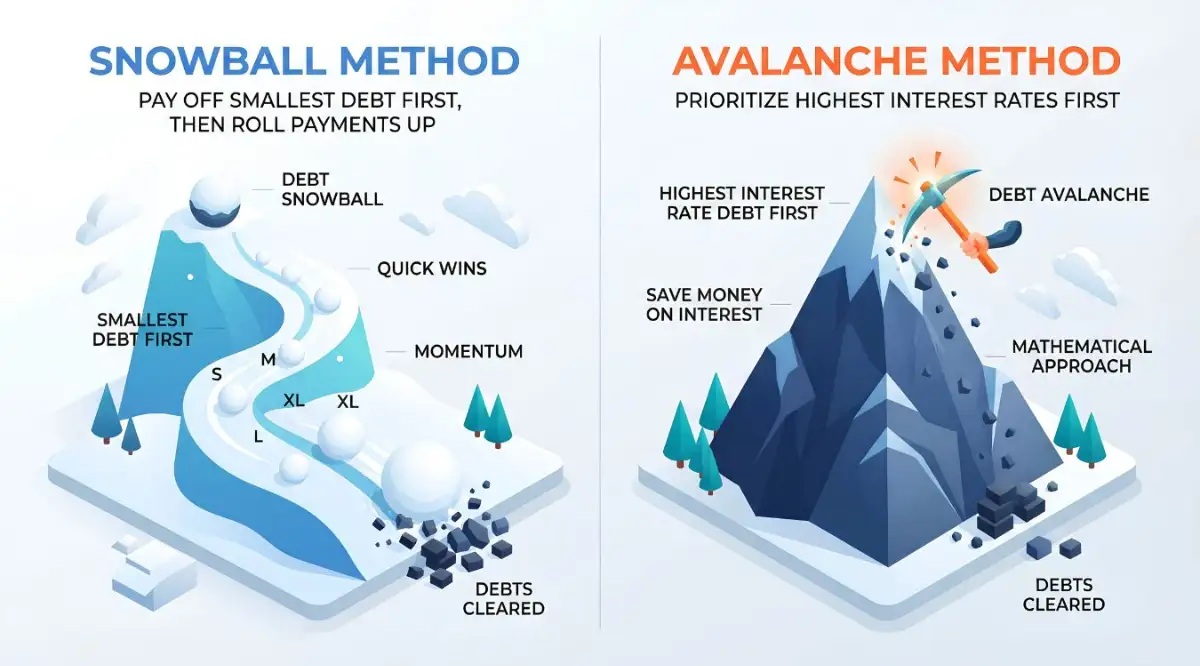
Once you have your list of debts fully organized, you need a logical method to attack them. There are two highly effective, mathematically sound strategies used by financial educators worldwide.
Neither strategy requires you to buy expensive software or hire a wealth manager. They only require your commitment and a basic understanding of your own psychology.
"If you are a visual learner like me, you really need to watch this quick video breakdown before moving on to the next step. It perfectly exposes the secret math banks use against you, and it will give you the exact motivation you need to finish reading the strategies below!"
Let's look at a simple comparison of how these two methods work in the real world:
The first method focuses on giving you quick psychological victories. By completely clearing out your smallest debt quickly, you get a massive boost of confidence.
The second method is strictly about the math and protecting your long-term wealth. You attack the highest interest rate first because it is the most dangerous leak in your financial bucket.
Both methods require you to continue making minimum payments on every other account. You channel every single spare dollar into your one chosen target account until it hits zero.
Automating Your Defense System
One of the biggest reasons people feel overwhelmed by multiple loans is the constant pressure of remembering due dates. Human memory is fragile, especially when we are stressed about our jobs or families.
You can easily remove this mental burden by setting up automatic transfers from your checking account. My biggest mistake early on was thinking I was smart enough to remember five different due dates in my head. I missed one single credit card payment because I was busy with a project at work, and that tiny slip-up hit me with a nasty late fee and dropped my credit score fast. That was the day I realized my memory was my worst enemy, and I finally forced myself to put everything on autopilot. This turns a stressful monthly chore into a silent background process that happens without your effort.
Set your automatic payments to process a few days after you typically receive your salary. This ensures the money is sent to the lenders before you even have a chance to spend it on non-essentials.
However, you must maintain enough of a cash buffer in your main account to prevent overdraft fees. If an automatic payment goes through while your account is empty, you will face severe penalties from your own bank.
Automation is a tool for convenience, but it does not replace the need for regular check-ins. You should still review your statements once a month to ensure no unauthorized charges have appeared.
Understanding Hardship Programs and Lender Communication
There might come a time when unexpected medical emergencies or job losses make it impossible to meet your minimum obligations. Many people panic in this situation and simply stop answering phone calls from their creditors.
Avoiding the problem is the absolute worst choice you can make from a legal and financial standpoint. When you ignore a lender, they assume you are intentionally trying to escape the agreement.
Most major financial institutions actually have dedicated hardship programs designed to help struggling borrowers. These programs are rarely advertised, but they exist for situations exactly like unexpected income loss.
If you proactively call the lender before you miss a payment, they are often willing to negotiate. They might offer a temporary reduction in your interest rate or allow you to pause payments for a short period.
From an educational perspective, you must understand that lenders prefer getting some money later rather than losing the entire amount. They would much rather work with a communicative borrower than spend money on legal collection efforts.
However, entering a hardship program might temporarily freeze your ability to borrow more money from that specific institution. This is a fair trade-off to protect your credit history from completely collapsing due to defaulted payments.
Redesigning Your Daily Spending Habits
Organizing your debt payments is only half of the equation for achieving financial peace. The other half involves taking a very honest look at how money leaves your hands daily.
Every time you swipe a debit card for a non-essential purchase, you are making a choice. You are choosing that temporary item over your long-term freedom from financial obligations.
This does not mean you have to stop enjoying life or eating your favorite foods. It simply means you must become highly intentional about where your resources flow.
Try tracking your daily expenses for just one week using a simple notebook in your pocket. You will likely find dozens of small, hidden expenses that add zero actual value to your life.
Redirecting those small amounts toward your main target debt can drastically speed up your repayment timeline. Small, consistent efforts eventually compound into massive financial transformations.
Protecting Yourself From Consolidation Scams
When people feel drowning in multiple payments, they often look for a magical single solution. This desperation makes them vulnerable to predatory lending practices and harmful consolidation schemes.
Debt consolidation simply means taking out one massive new loan to pay off all the smaller ones. On paper, it sounds wonderful because you only have one due date to remember.
However, the educational reality is often much darker and more dangerous for the borrower. Many of these consolidation loans come with extremely high origination fees that get quietly added to your principal balance.
Consolidation Check: Myth vs. Reality
- The Myth: Consolidation magically lowers how much money you actually owe the bank.
- The Reality: You owe the exact same amount. You just moved it to a new location, often paying a 3% to 5% "origination fee" just for the privilege. If your spending habits don't change, you will likely max out the old, empty cards within six months.
Worse yet, some predatory lenders stretch the new repayment term over a much longer period. Your monthly payment might look smaller, but you will end up paying double the interest over the next ten years.
You must read every single line of a borrowing agreement before you sign it. If a company demands an upfront fee to lower your monthly payments, it is almost certainly a scam.
True financial organization comes from understanding your current situation and changing your behavior. You cannot borrow your way out of a problem that was created by borrowing too much in the first place.
Breaking Past the Minimum Payment Barrier
Once you have all your numbers mapped out, you might still wonder how to actually speed up the repayment process. Simply knowing what you owe is a great start, but real financial freedom requires a change in your daily behavior. You need advanced strategies that shift the power away from the banks and put it back into your hands.
One of the most effective methods I have ever used is the bi-weekly payment schedule. Instead of making one large payment at the end of the month, you divide that exact amount in half. You then send that half-payment to your lender every two weeks.
Because there are 52 weeks in a year, this strategy tricks your budget into making 26 half-payments. This mathematically equals 13 full monthly payments over the course of the year instead of the standard 12.
That one extra hidden payment goes entirely toward your principal balance, not the interest. Over the lifespan of a large financial obligation, this simple trick can literally shave off years of extra payments.
Mastering the Art of Cash Flow Reallocation
You cannot outsmart a bad spending habit without giving your money clear directions. Every dollar that enters your bank account needs a specific job description before the month even begins. This is why learning to create a realistic monthly budget is the ultimate defense mechanism against overspending.
Look closely at your subscriptions, dining habits, and random online purchases. If you can find just fifty dollars of wasted money each month, you can aggressively apply it to your targeted account.
Many people think they need a massive salary increase to gain control over their financial lives. The truth is, how you manage your current income matters much more than how much you actually earn.
If you are dealing with different types of credit lines, you need to know exactly how their interest behaves. Understanding the mechanics of fixed versus variable personal loans can help you decide which account poses the highest immediate threat. Variable rates can suddenly skyrocket when the economy changes, making them highly dangerous if ignored.
Securing Your Financial Data and Credit Reports
Your credit report is essentially your financial report card, and lenders check it constantly. Unfortunately, these reports are often filled with errors, outdated information, or even fraudulent accounts you never opened.
You must take the time to pull a free copy of your credit report from the major bureaus at least once every six months. Go through every single line and verify that the balances and payment histories match your own personal records.
If you spot a random late fee that you know you paid on time, you have the legal right to fight it. Following the proper guidelines for disputing errors on your credit report through official government channels can instantly clean up your profile.
Removing a false late mark can boost your score overnight, which gives you much better leverage. A cleaner credit profile means you can eventually negotiate much lower interest rates with your current lenders.
Real-Life Scenario: The Hidden Power of Communication
Let me share a quick story about how simple communication can save you hundreds of dollars. A friend of mine was struggling with a massive credit card bill holding a 22% interest rate. He felt completely paralyzed and assumed the bank held all the power in the relationship.
I told him to simply pick up the phone, call the customer service department, and ask for a rate reduction. He was terrified they would laugh at him, but he read a script explaining his long history of on-time payments.
The representative placed him on hold for two minutes and came back with a permanently reduced rate of 14%. He did not have to pay any fees or sign any new contracts to get this massive discount.
Lenders spend huge amounts of money acquiring good customers, and they hate losing them to competing banks. If you have a decent payment history, you possess an incredible amount of hidden negotiation power.

The Hidden Traps That Keep Borrowers in Chains
When people desperately try to organize their financial lives, they often fall into emotional traps. The desire to see quick results can push you toward decisions that look great today but completely destroy your future. You must protect yourself from these common behavioral mistakes.
One of the most dangerous mistakes is completely draining your savings account to pay off a credit card. It feels amazing to see that balance hit zero, but you have left yourself entirely unprotected.
If your car breaks down the very next day, you have no cash to cover the mechanic's bill. You will be forced to swipe that exact same credit card again, starting the painful cycle all over.
This is why you must maintain a small cash buffer, even while aggressively attacking your obligations. Having cash in the bank acts as a protective shield against unpredictable life events.
The Balance Transfer Illusion
Credit card companies love to send shiny offers in the mail promising 0% interest for an introductory period. They encourage you to transfer all your existing balances onto their new card to supposedly save money.
On the surface, moving a high-interest balance to a 0% account seems like a brilliant mathematical move. However, according to the Federal Trade Commission's guide on debt relief, these offers often come with hidden balance transfer fees ranging from 3% to 5%.
The real trap is strictly psychological, and the banks know exactly how human behavior works. Once you move the balance away from your old cards, those old cards suddenly show a zero balance.
If you have not fixed your underlying spending habits, you will slowly start using those old empty cards again. Within a few months, you will have a massive balance on the new card, plus brand-new charges on the old ones.
You have essentially doubled your financial burden because the root cause of the overspending was never addressed.
Myth vs. Reality: Closing Old Accounts
The Myth: Once I finally pay off a credit card, I should immediately close the account so I am never tempted to use it again.
The Reality: Closing an old account can actually cause severe damage to your overall credit standing. A large portion of your credit score is based on your "credit utilization ratio," which is how much credit you use compared to what is available.
When you close a card, you instantly wipe out that available credit limit from your profile. This makes your remaining balances look much heavier to the scoring algorithms, causing your score to drop suddenly.
If you are trying to improve a low credit score for a future mortgage, keeping old accounts open is a smart move. Just cut the physical plastic card with scissors and delete the saved numbers from your phone to prevent accidental spending.
Misunderstanding the Risk of Secured Borrowing
When the pressure becomes too high, some homeowners consider tapping into their home equity to pay off unsecured credit cards. They see the super low interest rates offered by home equity products and think it is the perfect escape route.
This is a massive risk because you are trading unsecured risk for secured risk. If you default on a standard credit card, the bank can damage your credit score and call you endlessly. However, they cannot simply show up and take your living room couch.
If you move that exact same burden over to a home equity product and lose your job, the situation changes entirely. Now, the bank has a legal claim to your actual property.
You must fully grasp the truth about unsecured borrowing before you ever attach your personal shelter to your past spending mistakes. You should never risk your family's physical home to satisfy an angry credit card company.
Ignoring the Debt-to-Income Reality
Many people assume that as long as they can barely make the minimum payments, their financial health is perfectly fine. They ignore the larger picture of how much of their daily labor belongs to other institutions.
Your debt-to-income ratio is a strict mathematical formula that compares your monthly obligations to your gross monthly income. This is the exact metric that lenders use to judge your financial stability.
If you ever want to buy a house, you need to understand how a high debt-to-income ratio affect your mortgage approval. If more than 40% of your paycheck is already promised to various lenders, no responsible bank will give you a mortgage.
Organizing your payments is not just about feeling better today; it is about protecting your buying power for the next ten years.
Your Personal Blueprint for a Stress-Free Tomorrow
The journey to completely organizing your financial life does not happen overnight. It requires patience, honesty, and a willingness to look at numbers that might initially scare you.
You do not have to tackle every single problem in one afternoon. True progress comes from taking small, consistent, and highly intentional steps every single day.
Start by simply writing down everything you owe on a single piece of paper tonight. Tomorrow, you can start matching the interest rates to those balances to see where you are bleeding the most money.
By the end of the week, you can log into your banking app and set up just one automatic payment. These tiny actions will slowly build a powerful momentum that completely changes your mindset about money.
Planning for the Unexpected Storms
Life is entirely unpredictable, and financial emergencies will inevitably happen while you are trying to organize your accounts. Your car transmission might fail, or you might face an unexpected medical bill.
If you ever find yourself facing a sudden loss of income, do not hide from your lenders. Reading the FDIC guidelines on managing debt can show you exactly how to navigate these stressful periods safely.
You must learn how to efficiently manage your personal finances after losing a job without destroying the progress you have already made. Communication, strict budgeting, and utilizing hardship programs will keep you afloat during the storm.
Every single step you take toward organization brings you closer to a life where you control your money, instead of your money controlling you.
Common Questions About Handling Multiple Loan Payments
Should I stop saving money while paying off my accounts?
You should never completely stop saving, even when you are aggressively paying down high-interest accounts. Maintaining a small emergency fund of at least one thousand dollars protects you from relying on credit cards when unexpected expenses happen. Once you have that basic safety net, you can push all extra cash toward your highest interest rate.
Will organizing my payments hurt my current credit standing?
Simply organizing your accounts, setting up automatic transfers, and creating a budget will never hurt your credit score. Your score actually improves as you consistently make on-time payments and slowly reduce your overall credit utilization ratio. The only action that drops your score is missing a payment or closing an old account entirely.
What happens if I accidentally miss a single due date?
If you miss a due date by just one or two days, immediately call the lender and pay the amount over the phone. Most banks will happily waive the late fee if you politely ask and have a solid history of paying on time. A late payment typically does not get reported to the credit bureaus until it is a full 30 days past due.
Can I negotiate my interest rate directly with the bank?
Yes, you absolutely can call your credit card issuer and ask for a lower interest rate at any time. If you have been a loyal customer and consistently pay on time, they often have unadvertised retention offers available. Even a simple 3% reduction in your rate can save you a massive amount of money over the long term.
Looking back, facing those scary numbers on day one was the hardest part of my journey, but it completely turned my life around. You do not have to carry this heavy weight on your shoulders forever, so grab a pen today and take control of your money. I promise you, the deep peace of mind waiting for you at the finish line is worth every single ounce of effort.
Disclaimer: The information provided in this article is strictly for educational and informational purposes only and does not constitute professional financial, legal, or tax advice. Every individual's financial situation is entirely unique. You should always consult with a certified financial planner or qualified professional before making any major decisions regarding your personal loans, credit accounts, or long-term wealth strategies.
I remember the exact morning I finally sent my very last payment to the bank. My hands were shaking, and a huge weight lifted off my chest because I finally owned my future. You absolutely have the power to experience that exact same freedom, so take a deep breath and start your journey today.