The Hidden Mental Toll of Property Line Disagreements
Have you ever looked out your kitchen window and noticed your neighbor building a fence just a little too close to your garden? I completely panicked when this happened to me. Before you let your imagination run wild with thoughts of angry arguments and expensive lawyers, let me stop you right there. I want to show you exactly how I fixed a messy boundary mix-up without losing my mind, my money, or my friendly neighbor.
I never thought a simple wooden fence would cost me my peace of mind. My neighbor and I had always been friendly, exchanging warm waves every single morning. Then, he decided to build a massive new shed right on what I strongly believed was my property line.
I spent countless nights staring at my bedroom ceiling, feeling incredibly anxious about approaching him. My stomach would completely tie in knots every time I walked out my front door to check the mail. I absolutely did not want to start a massive neighborhood war over a few inches of dirt. I just wanted my property rights respected without spending thousands of dollars on expensive lawyers.
This deep anxiety is something so many homeowners face on a daily basis. When you live right next to someone, the very last thing you want is a toxic living environment. Walking out to your own backyard suddenly feels like walking through an active minefield.
Quick Action Plan: How to Handle a Boundary Mix-Up
- Find Your Proof First: Always track down your official deed or get a fresh property survey before you say a single word.
- Keep It Casual: Invite your neighbor over for a coffee to discuss the map; never start the chat when you feel angry.
- Use the Word "Our": Frame the situation as a shared puzzle to solve together, rather than pointing fingers.
- Get It in Writing: Once you agree on the exact line, sign a simple lot line agreement to protect both homes forever.
Understanding The Real Root of Neighborhood Friction
Before taking any massive steps, we need to understand why people get so defensive about their land. Our homes are usually our biggest financial investments and our safest personal spaces. When someone steps over that invisible line, our brains instantly treat it as a direct threat.
People do not usually build fences or sheds on your property just to make you angry. Most of the time, it is simply an honest mistake based on very old, outdated information. They might be looking at a completely different property map than the one you have in your file.
When we assume our neighbors are acting with bad intentions, we naturally become aggressive. This sudden aggression makes them defensive, and suddenly a small mistake turns into a screaming match. We need to completely remove the intense emotions from the situation to find a lasting fix.
Gathering Hard Facts Before Starting a Conversation
You can never win a disagreement simply based on your feelings or random guesses. If you want to fix this issue peacefully, you absolutely must gather your hard facts first. The best place to start is by tracking down your original property deed.
Reviewing Your Original Deed
Your property deed usually contains specific descriptions of where your land starts and ends. You can easily find this document in your home closing paperwork or at your local county records office. Reading this document carefully will give you a much clearer picture of your actual borders.
Quick Cheat Sheet: 3 Places to Find Your Property Deed Today
| Where to Look | How Fast Can You Get It? | What It Costs |
| Your Home Closing Folder | Instant (If you saved your paperwork!) | Free |
| County Clerk's Online Portal | 10 to 15 minutes | Usually $2 to $5 for a download |
| Your Title Insurance Company | 1 to 2 business days | Mostly free if you call your agent |
I actually spent three whole days trying to read my own property deed from 1985, getting totally frustrated because it referenced an old rusty pipe that someone dug up decades ago. I quickly realized that trying to play amateur detective only made me more stressed, so handing the job over to a professional was the best decision I ever made for my own sanity.
However, older deeds can sometimes be incredibly confusing to read. They might use old markers like "the large oak tree" which might not even exist anymore. If your deed is simply too vague, you will need to look for something far more precise.
Locating an Existing Property Survey
A professional property survey is basically a highly detailed map of your exact property lines. Check your home buying paperwork to see if a survey was completed when you originally bought the house. If you cannot find one, your local government office might have one on file from the previous owner.
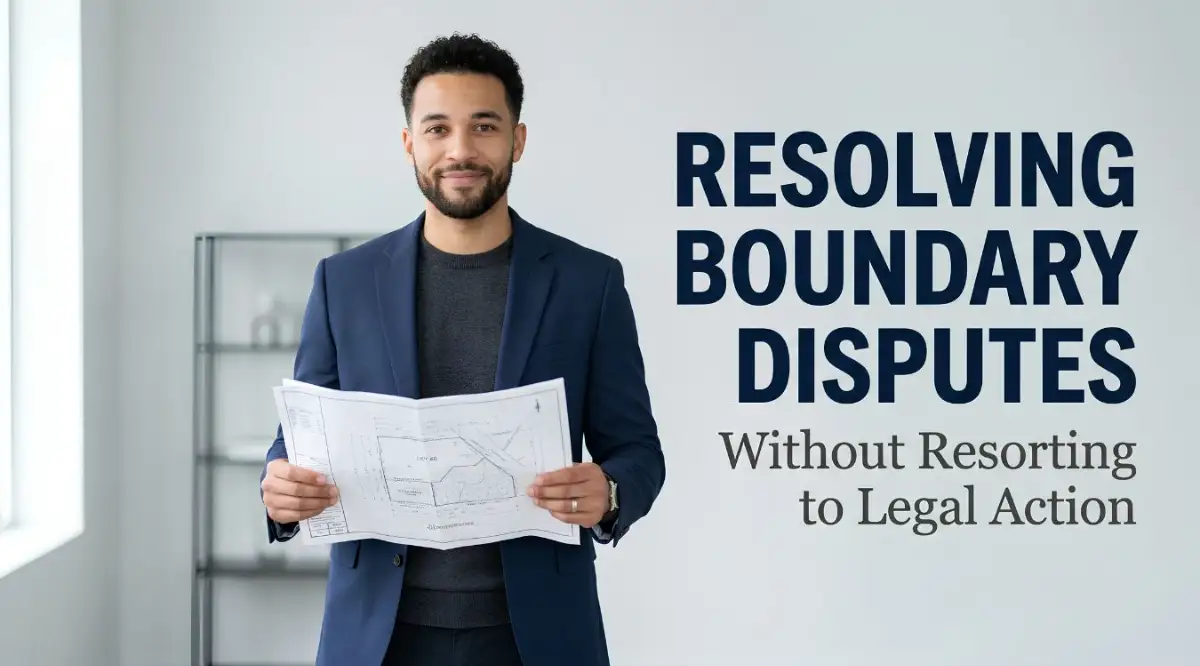
Having a physical map in your hands completely changes the dynamic of the upcoming conversation. It moves the discussion away from "I think you are on my land" to "Let's look at this official document together." This small shift in phrasing takes away the personal attack and focuses on facts.
The Power of a Fresh Professional Survey
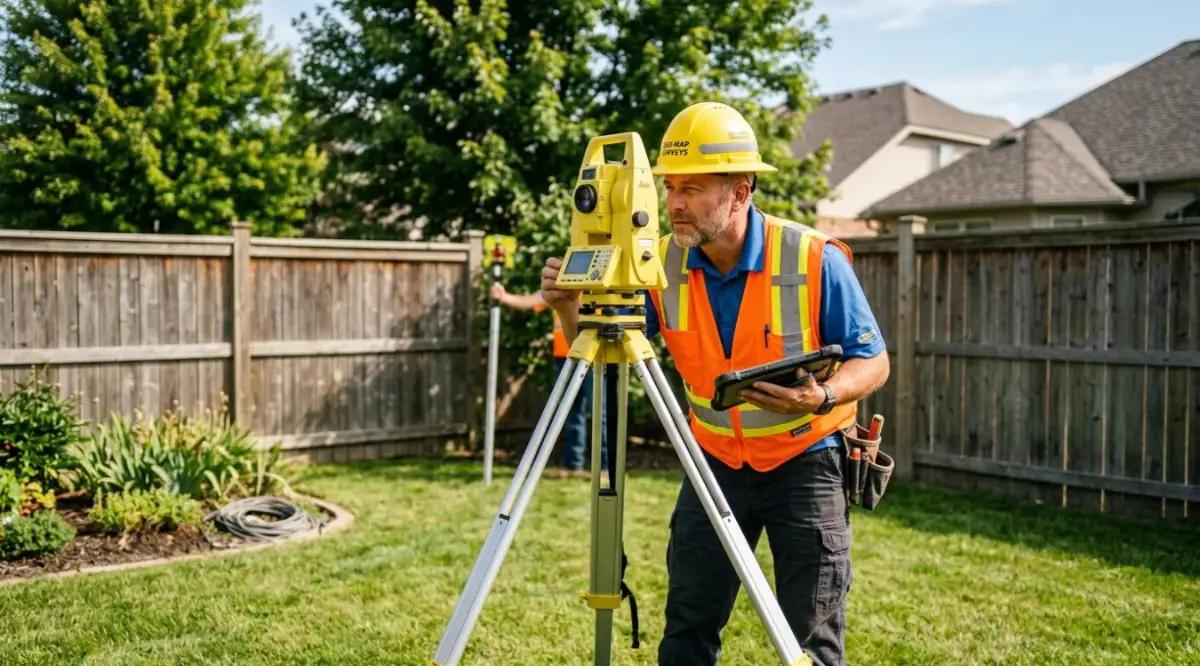
If there are no existing surveys available, getting a brand new one is your smartest move. Hiring a licensed land surveyor is a small investment compared to hiring a team of lawyers. A surveyor will come out, measure everything scientifically, and place visible markers in the ground.
I know paying for a surveyor might feel annoying when you are not the one who made the mistake.
Pro Tip: I originally tried to measure my own yard using a basic tape measure and an old smartphone app to save a few bucks. My measurements were completely wrong, which almost made me look foolish during the conversation with my neighbor! Always let a certified professional handle the exact measurements to ensure you have unbreakable proof.
When the surveyor places those bright little flags in the ground, the truth becomes undeniable. Often, simply seeing these professional markers is enough to make a stubborn neighbor realize their mistake. It completely removes the need for arguments because the math speaks for itself.
Mastering the Art of the Friendly Approach
Now that you have your hard evidence, it is time to actually talk to the person next door. The way you open this conversation will determine exactly how the rest of the process goes. You should never storm over to their house while you are feeling angry or frustrated.
Wait for a calm, quiet weekend afternoon when everyone is completely relaxed. Do not knock on their door holding a giant stack of aggressive legal papers. Instead, try inviting them over for a casual cup of coffee or a cold drink on your patio.
Choosing Your Words Carefully
When you finally bring up the topic, use a soft and collaborative tone. Instead of saying, "You built your fence on my property," try a much softer approach. You could say, "Hey, I was looking at some property maps recently and noticed something a bit confusing about our shared border."

If you want to see exactly how to phrase these difficult conversations without causing offense, check out this brilliant communication guide below.
Notice how using the word "our" makes it a shared problem rather than an attack. You want them to feel like you are both working together to solve a funny little puzzle. If you keep your voice calm and friendly, they are much more likely to match your calm energy.
Handling Defensive Reactions Like a Pro
Even if you are the nicest person on earth, your neighbor might still get upset or defensive. They might feel embarrassed that they made a mistake or worried about the cost of moving a structure. It is extremely important that you do not take their initial defensive reaction personally.
If they start raising their voice, simply stay quiet and let them finish their thoughts. Do not interrupt them, and do not try to match their loud volume. Once they finish talking, speak even softer than you did before to bring the energy back down.
You can calmly say, "I completely understand why this is frustrating, and I want to figure this out together." Give them time to process the information you just shared with them. Sometimes, walking away and letting them think about it for a few days works wonders.
Myth vs Reality: Common Property Misconceptions
There are so many strange myths out there about property rights that confuse homeowners. Let us break down a few of these silly rumors so you have the correct information.
Myth: If a neighbor uses a part of my yard for a long time, it legally becomes theirs.
Reality: While adverse possession laws do exist, they take a very long time and require specific conditions. Simply mowing a patch of grass does not instantly transfer ownership of the land.
Myth: The exact middle of a shared fence is always the exact property line.
Reality: Fences are very often built slightly inside one person's property line to avoid disputes during construction. You can never trust an old wooden fence to show you the true legal boundary.
Exploring Neutral Third-Party Mediation
Sometimes, despite your very best friendly efforts, you and your neighbor simply cannot reach an agreement. Before you even think about calling a lawyer, you should look into professional mediation services. A mediator is a neutral person trained specifically to help people solve disagreements peacefully.
Mediators do not act like judges, and they do not force anyone to do anything. Instead, they sit down with both of you and help guide the conversation in a healthy way. They are amazing at keeping emotions under control and keeping the focus strictly on finding a solution.
Real Talk: Mediator vs. Lawyer Cost Breakdown
If you are wondering whether to hire a lawyer or a mediator, just look at the numbers. Hiring a real estate attorney just to send a single warning letter can easily cost you $300 to $500 right out of the gate. On the flip side, many local community centers offer neighborhood mediation programs for under $100 per session, and sometimes they do it for completely free. You get to protect your wallet while actually fixing the problem.
Community mediation centers are often very cheap or sometimes completely free for local residents. Sitting in a neutral room with a helpful guide takes the pressure off both homeowners. It is a fantastic way to repair the relationship while fixing the actual property issue.
Drafting a Simple Lot Line Agreement
If you and your neighbor finally agree on where the line should be, you need to write it down. A friendly verbal agreement is nice today, but it will not help you if one of you sells your house. You need something on paper to protect both properties in the future.
You can create a very simple document called a lot line agreement. This document simply states that both of you agree on the exact location of the boundary. Both of you will sign it, and you can file it with your local county clerk.
Filing this agreement makes it an official part of both property records. This means any future buyers will clearly see exactly where the borders are. It completely prevents this same stressful situation from happening to the next family who moves in.
When a Boundary Adjustment Makes Sense
In some very rare cases, the mistake has been there for decades and moving the structure is impossible. For example, maybe half of their concrete driveway was poured onto your land long before either of you moved in. Forcing them to destroy a concrete driveway could destroy the neighborhood relationship forever.
In these unique situations, you might consider a formal boundary line adjustment. This means you officially agree to sell or give that tiny strip of land to your neighbor. You redraw the official map so the driveway is now legally on their property.
This process requires a bit of paperwork at the local planning office, but it solves the problem permanently. It shows incredible goodwill and turns a massive problem into a simple paperwork task. Plus, it keeps everyone out of a nasty, expensive courtroom battle.
Keeping the Peace Moving Forward
Once the issue is finally settled, you have to work on healing the relationship. Do not act smug or keep bringing up the mistake every time you see them. Treat the situation as completely closed and go back to being a kind, normal neighbor.
Start waving to them again in the mornings when you go to start your car. Maybe take over some baked goods or invite them to your next backyard barbecue. Showing them that you still value their friendship is the best way to secure long-term peace.
Living next to someone is a long-term commitment that requires patience and understanding. When we choose communication and kindness over lawsuits, everybody wins. Your home should always remain your peaceful sanctuary, free from unnecessary drama and conflict.
Why Ignoring the Problem Only Makes it Worse
Some people absolutely hate conflict and will try to simply ignore the boundary issue. They see a fence being built slightly on their land and just close their window blinds. Ignoring the problem is actually one of the worst things a homeowner can possibly do.
If you let someone build a permanent structure on your land, it becomes much harder to remove later. It also creates massive headaches if you ever decide to sell your house. Buyers do not want to purchase a property that has active boundary confusion attached to it.
Tackling the issue early and nicely is always better than letting resentment build up inside you. The sooner you bring it up, the easier it is for the neighbor to pause their project and check the facts. Quick, polite communication acts like a shield against future stress.
The Real Value of Good Neighbors
At the end of the day, having a good relationship with your neighbors is incredibly valuable. Good neighbors watch your house when you go on vacation and collect your packages. They help you shovel snow in the winter or lend you tools you might not own.
Taking a lawyer-free approach to boundary issues protects this amazing support system. It proves that you are a reasonable person who cares about the community just as much as your own property. It sets a positive example for the entire street on how adults should handle disagreements.
By following these practical, peaceful steps, you protect your land and your mental health at the same time. You save your hard-earned money and keep the neighborhood atmosphere light and friendly. Always remember that a calm conversation is the most powerful tool in any homeowner's toolbox.
Smart Strategies for Long-Term Neighborhood Harmony
Solving a simple property line issue is just the beginning of your journey. You also want to make sure this peaceful feeling lasts for as long as you both live there. One of the best expert secrets is to completely rethink how you view physical boundaries.
Instead of building a massive wooden wall that blocks out the sun, consider planting a living boundary. Natural markers like low hedges, flower beds, or decorative rocks soften the harsh lines between properties. A beautiful row of lilac bushes feels like a lovely garden feature rather than an aggressive barrier.
This approach completely changes the psychology of your shared space. Your neighbor gets to look out their window and see beautiful blooming flowers instead of a solid wooden wall. If you want to learn more about picking the right border plants, you can check out this excellent guide on landscape planting strategies by Penn State Extension.
The Power of a Shared Maintenance Plan
If you do decide to keep a shared fence or a border driveway, create a shared maintenance routine. You can agree to split the cost of power washing the fence every spring. Taking care of the boundary together turns a potential problem into a simple shared chore.
When you share these small responsibilities, you naturally keep the lines of communication wide open. You get a chance to chat about normal things, like the weather or your upcoming weekend plans. This casual chatting acts like a strong shield against future misunderstandings.
Taking the Conversation to Neutral Ground
If you feel nervous about having a difficult conversation in your own backyard, try moving it somewhere else. Standing on the exact piece of land you are arguing about can make people feel strangely territorial. Simply changing your physical location can dramatically drop the tension level.
Invite them to a local coffee shop or a quiet neighborhood park to discuss the property maps. Sitting across a small café table feels much more like a friendly partnership than a bitter rivalry. It is amazing how much calmer people act when they are in a public space surrounded by strangers.
Protecting Your Financial Future and Peace of Mind
Legal battles over tiny strips of land can easily drain your entire bank account in just a few weeks. You might find yourself stressing over court fees instead of building an emergency fund without ignoring your debt. Protecting your hard-earned savings should always be a top priority for any smart homeowner.
Going to court also creates a public record of your neighborhood fight. Future home buyers do not want to move onto a street known for nasty legal battles. You can actually read more about how neighborhood disputes impact home values directly through the National Association of Realtors.
Keeping things friendly and handling it privately protects your property value and your wallet. Just like you would read up on understanding health deductibles and co-pays to avoid surprise medical bills, you should understand simple boundary solutions to avoid surprise legal fees. Knowledge always gives you the power to make the best possible decisions.

The Worst Moves You Can Make Right Now
When emotions are running incredibly high, people often make highly irrational decisions. One of the most destructive things you can do is start a smear campaign against your neighbor. Gossiping with other people on the street forces everyone to unfairly choose sides.
Creating a Toxic Street Culture
Once you drag the rest of the neighborhood into your personal issue, the entire street dynamic changes. Block parties become incredibly awkward, and people start avoiding eye contact when they walk their dogs. You completely destroy the safe, welcoming community feeling for everyone who lives around you.
Another massive mistake is resorting to passive-aggressive behavior. Some homeowners will suddenly install extremely bright security lights pointing directly at their neighbor's bedroom window. Others might let their weeds grow totally out of control right along the disputed property line.
The Danger of the "Spite Fence"
This kind of behavior often leads to the infamous "spite fence." A spite fence is a wildly ugly or unusually tall structure built entirely to annoy the person next door. Some people will even paint their side of the fence a crazy neon color just to be mean.
Not only is this incredibly immature, but it can actually get you in serious trouble with your local city council. Many local governments have strict rules against building structures purely to annoy neighbors. If you want a deeper look at the legal definition of neighborhood nuisances, the American Bar Association offers excellent free resources on property rights.
Taking the Law Into Your Own Hands
Perhaps the most dangerous mistake is trying to destroy property yourself. Do not ever grab a chainsaw and cut down a shared tree just because you feel angry. Do not physically tear down their new wooden fence, even if you are absolutely sure it is on your land.
Taking physical action like this instantly transforms a civil property disagreement into a criminal property damage case. The police will get involved, and you might find yourself facing severe fines or even arrest. A calm paper trail is always your best defense, much like how documenting workplace discrimination before seeking legal help relies entirely on solid proof.
Ignoring Hidden Local Zoning Rules
Finally, be very careful when making friendly verbal compromises. Even if you and your neighbor agree to let a shed stay slightly over the line, the city might not agree. Local zoning boards have strict rules about how close structures can sit next to property lines to prevent fire hazards.
Always check with your local planning department before finalizing any permanent compromises. Getting a simple thumbs-up from the city clerk can save you from huge government fines later. It keeps your friendly agreement completely safe and above board.
Your Peaceful Blueprint for Tomorrow
You do not have to live with the heavy stress of a neighborhood dispute hanging over your shoulders forever. Taking that very first step toward a peaceful resolution is totally in your hands. You now have all the logical tools and friendly strategies you need to handle this beautifully.
Start by taking a really deep breath and simply gathering your official documents. Order that fresh property survey and let the certified professionals do the hard measuring work for you. Remember that facts always speak much louder than angry emotions or wild guesses.
Approach your neighbor with a warm smile and an open mind. Treat them like a valued partner in a shared community project rather than a strict opponent. When you show genuine respect and kindness, you will usually get the exact same energy right back.
It is entirely possible to protect your property rights while maintaining a wonderful friendship next door. By keeping the conversation out of a courtroom, you save thousands of dollars and endless sleepless nights. You are actively building a better, happier, and much more peaceful neighborhood for everyone.
I know exactly how scary it feels to knock on that neighbor's door for the first time. My own hands were shaking when I finally went over with my property maps, but being polite completely saved our friendship. I promise you that choosing simple kindness over legal threats will be the best homeownership decision you ever make.
Common Questions About Property Line Disagreements
Can I legally remove my neighbor's fence if it sits firmly on my property?
You should never tear down a fence yourself, even if you know they made a mistake. Destroying their property can lead to criminal charges or a nasty lawsuit against you. Always communicate directly first, and use professional mediation to have them remove it peacefully.
How much does a basic boundary survey usually cost?
The price heavily depends on your location and the total size of your yard. Most standard residential property surveys cost anywhere between a few hundred to a thousand dollars. It is a very small price to pay compared to the massive costs of hiring real estate lawyers.
Will an ongoing property line dispute actually affect my home's selling price?
Yes, active disputes can seriously scare away potential home buyers. Most real estate laws require you to honestly disclose any ongoing boundary issues before selling. Settling the problem now ensures your home value stays as high as possible.
Do I really need to write an official agreement if my neighbor and I are great friends?
Yes, you absolutely need to get your friendly agreement down on paper. If your friend ever sells their house, the new owners might not honor a simple verbal promise. Filing a quick written document with the county protects your yard permanently.
What happens if I accidentally build my garden shed on the property line?
If you realize you made the mistake, be completely honest and apologize to your neighbor immediately. Try to offer a practical solution, like moving the shed or signing a friendly land-use agreement. Being upfront about your honest mistakes builds massive trust and prevents unnecessary anger.
Looking back now, the scariest part was simply walking over to my neighbor's house, but taking that friendly first step saved me thousands of dollars and kept our street completely peaceful. You have the power to fix this issue today without panic or lawyers, so grab those property maps and start the conversation with a smile!
Disclaimer: The information provided in this article is strictly for educational and informational purposes only and does not constitute official legal, financial, or real estate advice. Property laws and local zoning regulations vary significantly by city, county, and state. Always consult with a licensed land surveyor, a qualified real estate professional, or a certified attorney before making any permanent decisions regarding property disputes or boundary agreements.