The Silent Struggle Inside Our Ears
Let’s be honest: shoving plastic tips into your ears for six hours a day is a nightmare. I used to deal with itchy ear canals and that weird "plugged up" feeling every single afternoon. It wasn’t just about the discomfort, though. I once nearly walked right into a car because my noise-canceling buds worked too well. That’s when I realized I needed a way to hear my music without losing touch with the real world. Here is how I fixed my ear pain and stayed safe at the same time.
I will never forget the evening I almost got hit by a speeding bicycle on my way home from the office. I was walking down the sidewalk, completely lost in my favorite podcast, wearing a pair of expensive noise-canceling silicone earbuds. Because the silicone tips were jammed deep inside my ear canals, my hearing was completely blocked off from the outside world. I did not hear the cyclist ringing his bell frantically right behind me. He swerved at the very last second, barely missing my shoulder, leaving me terrified and shaking. That specific moment made me realize how dangerous it is to completely isolate ourselves from our surroundings just to enjoy good audio.
My problem did not just stop at outdoor safety. Every single day, I was dealing with severe ear fatigue. After sitting through hours of virtual meetings and online classes, my ear canals felt incredibly sore, itchy, and physically exhausted.
I would constantly pull the earbuds out, rub my ears, and wait for the dull ache to go away. It felt like my ears were not designed to have plastic objects pushed inside them for eight hours a day.
You slowly start to feel disconnected from your family members in the house or your coworkers in the office. You have to constantly take one earbud out just to answer a simple question. It is highly frustrating, exhausting, and terrible for your long-term hearing health.
Before We Start: 3 Things You Must Know
- Stop the Pain: These devices sit on your cheekbones, not in your ears. No more infections or soreness.
- Stay Alive: You can hear your music AND the car horn behind you at the same time.
- Not for Everyone: If you want "studio-quality" deep bass, you might be disappointed. These are built for lifestyle and health, not professional music mixing.
Rethinking How We Actually Experience Sound
To fix this painful problem, we first need to understand that the human body has more than one way to process sound. For most of our lives, we only think about our ears as the single gateway for hearing. But what if I told you that your skull is actually a built-in speaker system?
This exact realization completely changed the way I look at premium tech gadgets today. We are so used to the traditional method of listening that we ignore the natural biology of our own bodies.
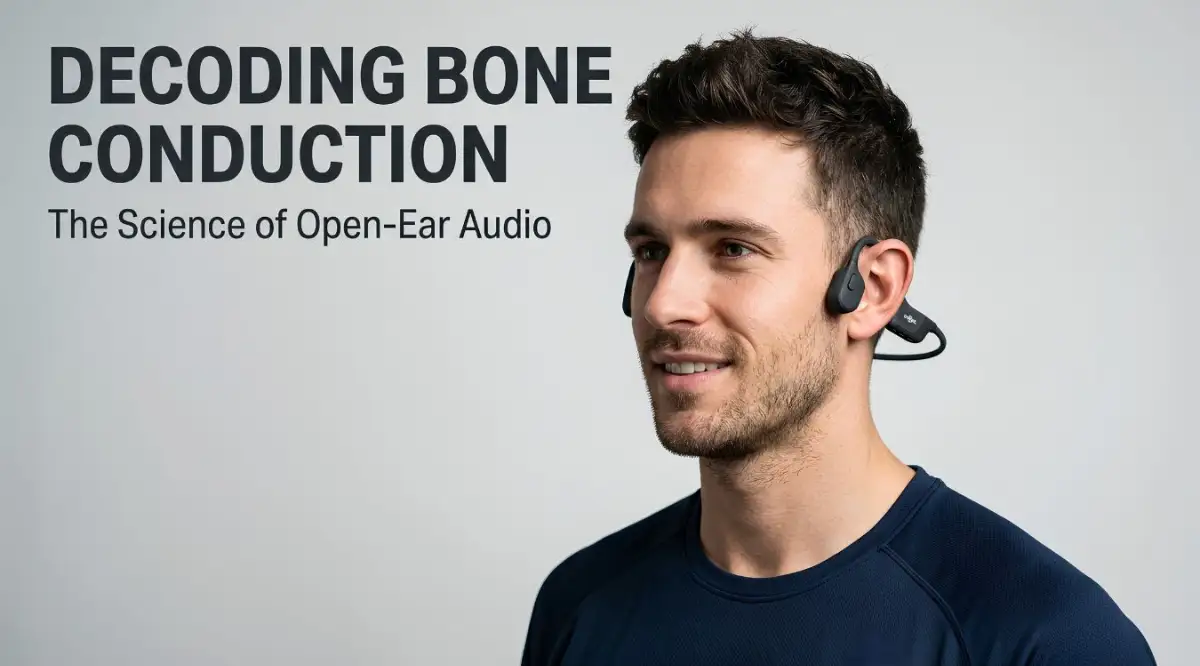
When you speak out loud and plug your ears with your fingers, you can still hear your own voice perfectly clearly. This happens because your vocal cords send vibrations directly through the hard bones of your skull straight to your inner ear. This natural biological process is the exact foundation of bone conduction technology.
Instead of pushing sound waves through the air and down your ear canal, these modern audio devices take a completely different physical route. They act like a secret back door to your brain's hearing center.
By understanding this science, we can easily protect our eardrums from heavy damage while still enjoying high-quality audio. Let us break down the exact mechanics of how this brilliant technology works in real life.
Quick Check: Is Bone Conduction Right for You?
- Do you have "wet" ears or wax buildup? Yes? These are a lifesaver.
- Do you run on busy roads? Yes? You need these for safety.
- Are you a bass-head who wants heavy thumping? No? Then stick to over-ear headphones.
- Do you wear hearing aids? Many models actually work perfectly alongside them!
The Mechanical Magic of Audio Transducers
Regular headphones use tiny speakers to move air. These air waves travel down your ear canal and crash into your eardrum, making it shake.
However, bone conduction devices completely skip the air and the eardrum. Instead of normal speakers, these premium gadgets use special components called transducers.
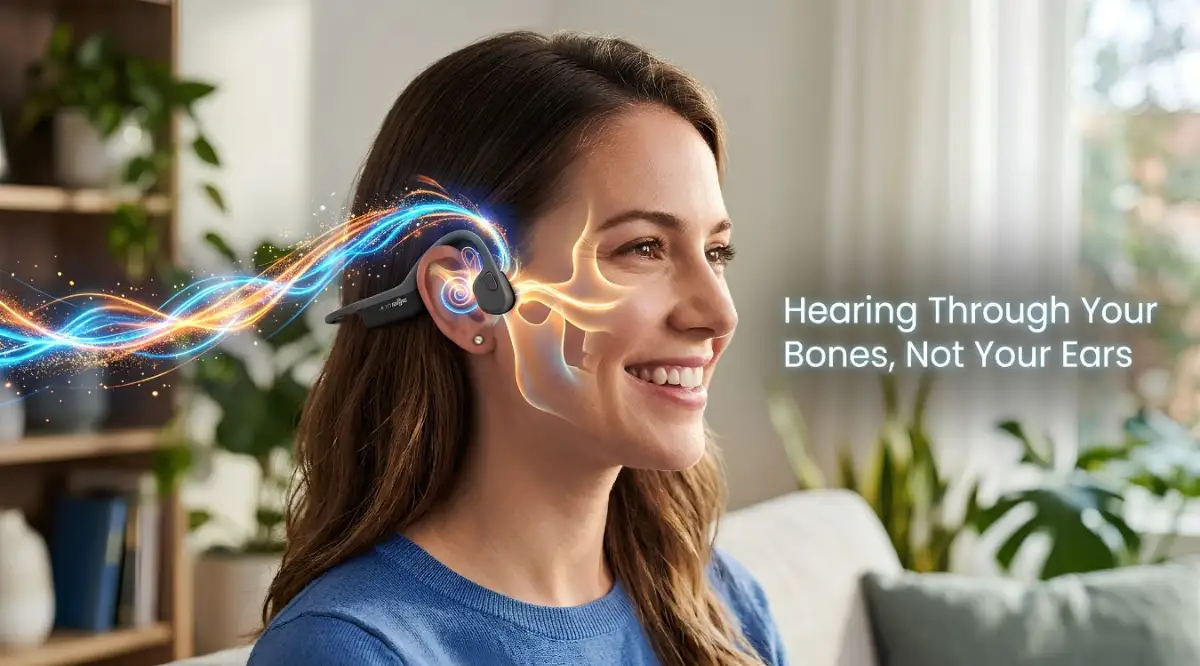
These transducers sit softly on the outside of your face, right on your upper cheekbones just in front of your ears. When you press play on your smartphone, the device turns the audio signal into physical, mechanical vibrations.
You can literally feel these gentle vibrations on your skin if you touch the device while music is playing. These micro-vibrations travel safely through your cheekbones and jawbones.
They bypass the delicate outer ear and the easily damaged middle ear completely. The vibrations travel directly to the cochlea, which is the fluid-filled hearing organ deep inside your inner ear.
Once the vibrations hit the cochlea, the tiny hairs inside it move, sending electrical signals to your brain. Your brain translates these signals into the beautiful sound of a guitar, a booming bass line, or a friend's voice on a phone call.
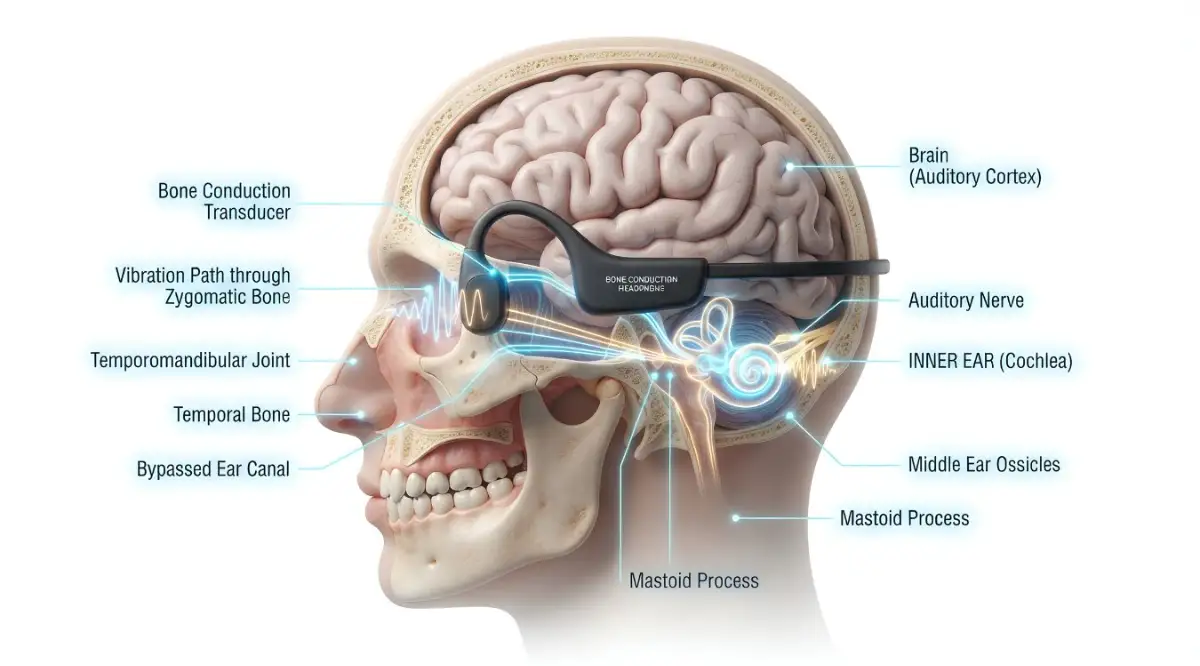
If you are having a hard time picturing how music travels through solid bone, just watch this short video below! It gives you a super clear visual breakdown of exactly how these tiny vibrations safely skip past your eardrum in real-time.
[Insert YouTube Video Link Here]
A Brilliant Lesson from History
Many people think this is a brand new, highly futuristic piece of technology. But the science of hearing through solid bone is actually centuries old.
Think about the legendary music composer Ludwig van Beethoven. When he started losing his hearing, he found a very clever physical workaround to keep making music.
He attached a solid metal rod to his piano and bit down on the other end of the rod with his teeth. When he played the piano keys, the physical vibrations from the instrument traveled up the metal rod, through his teeth, and into his skull bones.
Because of this, he could hear the music inside his head even though his outer ears were failing him. Modern premium tech companies simply took this exact same historical science and packed it into lightweight, beautifully designed wearable gadgets.
By using advanced materials like titanium, today's devices rest comfortably on your head and deliver crisp sound without needing you to bite on a metal rod!
Why Skipping the Eardrum is a Game Changer
You might be wondering why bypassing the eardrum is such a big deal for everyday users. The answer comes down to two major things: safety and long-term physical comfort.
When you use traditional in-ear monitors (IEMs), you are trapping air pressure directly against your eardrum. If you turn the volume up too high, that trapped pressure heavily damages the tiny, fragile structures inside your ear over time.
Because bone conduction tech leaves your ear canal completely open, that dangerous pressure build-up simply never happens. Your eardrum gets to rest, completely undisturbed by loud, direct sound waves.
This open-ear design also means zero ear wax build-up, zero sweaty ear canals, and zero painful friction from cheap silicone tips.
My personal realization: I noticed that when I switched to an open-ear audio gadget for my daily walks, my afternoon headaches completely vanished. I realized that my headaches were actually coming from the physical pressure of plastic earbuds stretching my ear canals for hours, not from stress!
| My Personal Comfort Test | In-Ear Buds | Bone Conduction |
| 3-Hour Wear Fatigue | High (Ears feel hot) | Zero (Forget they are on) |
| Wind Noise | Low | Medium (Can be a bit loud) |
| Safety in Traffic | 2/10 (Dangerous) | 10/10 (Perfect Awareness) |
| Sound Privacy | High | Medium (People nearby might hear a bit) |
To make things super easy to understand, let us look at exactly how these two methods compare in our daily lives.
Traditional In-Ear Monitors vs. Open-Ear Tech
This clear comparison shows exactly why the tech industry is shifting heavily towards open-ear designs for health-conscious consumers. It is not just about listening to music anymore; it is about merging digital audio with your physical environment seamlessly.
Mastering the Art of Situational Awareness
The biggest superpower of this technology is something called situational awareness. When your ear canals are physically completely open, you can hear two worlds at the exact same time.
You can clearly hear a podcast host explaining a new topic inside your head. But at the exact same moment, you can also hear the natural air sounds around you.
If you are a runner, you can hear a car engine approaching from behind you. If you are working in a busy office, you can listen to a relaxing instrumental playlist, but still perfectly hear your boss calling your name from across the room.
You no longer have to live in a restricted digital bubble. You can remain completely active and present in the real world while enjoying your favorite digital content.
This single feature has made bone conduction gadgets insanely popular among marathon runners, mountain bikers, and busy parents who need to keep an ear out for their children.

Demystifying Sound Quality: Myth vs Reality
Whenever I talk to people about hearing music through their cheekbones, they immediately question the sound quality. Let us clear up some major confusion using some basic science.
The Myth: People assume that bone conduction sounds exactly like listening to a cheap, tinny radio placed on a table. They think the audio will be weak and entirely lack depth.
The Reality: The sound profile is surprisingly rich and clear, especially for vocals and mid-range instruments. Because the vibrations are going directly to your inner ear, podcasts, audiobooks, and vocal-heavy music sound incredibly sharp.
However, we must be scientifically honest about the deep bass notes. Because bass relies heavily on moving large amounts of air, bone conduction devices cannot give you that heavy, thumping club bass.
If a device tries to push too much bass through your cheekbones, it will literally just tickle your face with heavy vibrations. Premium gadget makers carefully balance the audio frequencies to give you a clear, crisp sound without turning the device into an annoying facial massager.
Therefore, these devices are not meant for isolated studio mixing or extreme audiophiles looking for huge bass drops. They are perfectly engineered for active people who want a safe, comfortable, and healthy daily listening experience.
The Science of Multi-Tasking Your Senses
Our brains are deeply fascinating when it comes to processing information. When you wear regular earbuds, your brain focuses all its audio processing power on the digital sound.
But with open-ear technology, your brain naturally learns how to layer the audio. It perfectly blends the artificial vibrations from your cheekbones with the natural air vibrations entering your open ears.
Think of it like looking out of a clear glass window. You can easily focus on the beautiful tree outside (the real world). At the exact same time, you can also choose to focus on your own reflection on the glass (the digital audio).
Your brain seamlessly switches focus between the digital sound and the real-world sound without feeling overwhelmed. It is a highly natural, stress-free way to consume audio throughout a busy day.
This means you can wear these devices for eight to ten hours straight without experiencing any sensory overload or mental exhaustion. Your ears remain cool, dry, and perfectly relaxed, exactly the way biology intended them to be.
Maximizing Your Open-Ear Audio Experience Like a Pro
When I bought my first pair of cheekbone audio gadgets, I honestly had no idea how to use them properly. I simply threw them on my head, cranked up the volume, and hoped for the best.
It took me several weeks of trial and error to truly understand how to optimize this unique hardware. You see, bypassing your eardrum requires a slight shift in how you handle your listening habits.
I want to share some incredibly practical ways to get the absolute best performance out of your new gear. These are real-world strategies I use every single day to make my listening sessions perfect.
A quick pro tip from my own early mistakes: stop trying to push the volume to the maximum limit right out of the box! I used to crank it up trying to force out deep bass, but it just made the device buzz annoyingly against my face. Once I lowered the volume and let the music blend naturally with my surroundings, the whole experience became incredibly relaxing.
The Airplane Earplug Hack
One of the biggest complaints people have about open-ear devices is background noise on flights. Because your ear canals are physically open, the roaring sound of a jet engine easily drowns out your music.
However, there is a brilliant workaround that frequent flyers use all the time. You simply put cheap foam earplugs into your ears while wearing your cheekbone audio device.
This completely blocks out the loud engine noise from the outside world. At the exact same time, the audio vibrations still travel through your solid bones perfectly fine.
Your music will actually sound much richer and have significantly deeper bass when your ear canals are blocked off. According to the National Institute on Deafness and Other Communication Disorders, bone conduction works independently of your outer ear, making this trick scientifically possible.
It is honestly like having a private home theater inside your head while flying at thirty thousand feet. Just remember to take the earplugs out when the flight attendant comes by to ask for your drink order!
Navigating Thick Glasses and Safety Helmets
If you wear thick prescription glasses or heavy sunglasses, you might worry about the device fitting comfortably. Both the audio frame and your glasses need to rest behind the top of your ear.
My best advice is to put your glasses on first, exactly where they naturally sit on your face. Then, gently slide the audio transducers over the top of the glasses arms.
Most premium brands build their frames using highly flexible titanium memory wire. This material easily bends and molds around your glasses without causing any annoying pressure points on your skin.
The exact same rule applies to wearing bicycle safety helmets for outdoor riding. Always strap your helmet on first, and then position the audio frame underneath the rear helmet straps.
This creates a very secure lock, ensuring the device never bounces around while you are riding over rough dirt trails.
Fine-Tuning Your Equalizer Settings
Many modern audio devices come with a dedicated smartphone app. Inside these apps, you will usually find a custom equalizer feature.
Because we are dealing with physical vibrations instead of moving air, the default settings might not sound perfect to your specific ears. I highly recommend switching the profile to a "Vocal Booster" mode if you listen to a lot of audiobooks or business podcasts.
This specific setting lowers the heavy bass vibrations and pushes human voices straight to the front. The dialogue will sound incredibly crisp, just like someone is speaking clearly inside the same room.
Of course, buying premium tech gadgets requires smart financial planning. If you are saving up for high-end gear, managing personal budget effectively can help you grab the best models without stressing your wallet.
When it is time for a workout, you can switch the equalizer back to standard mode for high-energy music. Just play around with the settings until the vibrations feel perfectly natural on your face.

The Hidden Traps of Using Cheekbone Audio
Even though this technology is amazing, it is not completely foolproof. I have seen many people make small mistakes that completely ruin their daily listening experience.
It breaks my heart when someone returns a perfectly good device just because they did not understand how to wear it. Let us walk through the most frequent traps and exactly how you can easily avoid them.
Expecting Heavy Studio Bass
This is easily the biggest mistake new users make when unboxing their gear. People expect the chest-thumping bass drops they get from massive studio headphones.
When they do not hear that heavy bass, they immediately push the volume button to maximum. This does not magically create more bass in the air.
Instead, it forces the tiny transducers to vibrate aggressively on your cheekbones. It literally feels like a tiny, annoying electric toothbrush buzzing rapidly against your skin.
You must accept that this specific technology prioritizes situational awareness and safety over earth-shattering bass notes. Keep the volume at a moderate level, and you will totally avoid that weird tickling sensation.
Ignoring Loud Environmental Dangers
A lot of people think that because their eardrums are not trapped by silicone, their hearing is somehow invincible. This is a very dangerous assumption to make.
If you are standing next to a loud construction site or working in a noisy factory, your open ears are still taking heavy damage from the environment. Open-ear tech does not protect your eardrums from outside noises.
If you try to drown out a loud subway train by turning your device up to maximum volume, you are creating a bad situation. Your brain is now dealing with the loud train noise plus the loud audio vibrations simultaneously.
The World Health Organization highly recommends protecting your ears in loud environments to prevent permanent damage. If your environment is too loud, take the headphones off entirely or use proper safety earplugs.
Do not rely on cheekbone vibrations to magically cancel out heavy industrial noise. Treating your hearing poorly can lead to massive hospital bills, and navigating health expenses is a headache nobody ever wants to deal with. I once spent $50 on ear drops just to fix an infection caused by dirty earbuds.
The Poor Positioning Problem
You would be amazed at how many people simply slap the device on their neck or the center of their earlobe. I have seen people wearing them practically resting on their jawline.
For the sound to travel properly to your inner ear, the small oval pads must sit flat on the bone directly in front of your ear hole. This specific area provides the most direct, solid pathway straight to your cochlea.
If you place them too high near your temples, the sound will become very weak and muffled. If you place them too low on your jaw, the sound waves get lost in soft muscle tissue.
Take a few extra seconds in front of a mirror the first time you put them on. Once you find that sweet spot on the bone, your brain will instantly recognize how clear the audio can really be.
Your Blueprint for Healthier Listening Habits
We have covered a lot of ground today about changing the way we interact with daily sound. Moving away from traditional earbuds is a big step towards better long-term personal health.
You no longer have to isolate yourself in a dark digital tunnel just to enjoy a good song or a funny podcast. You can finally blend your favorite entertainment directly with the beautiful sounds of real life.
Building a Safe Daily Routine
Start by swapping out your tight earbuds during your safest daily activities. Use your new open-ear device while walking the dog, washing dishes, or working at your desk.
Notice how much more relaxed your ears feel after a long two-hour session. Pay attention to how quickly you can respond when a family member calls your name from the other room.
This simple switch will massively reduce the daily physical friction you experience with personal audio. Your ear canals will finally have the freedom to breathe, stay dry, and remain healthy.
Navigating Office Environments
Wearing these devices in a corporate office is an absolute superpower. You can quietly listen to your motivational playlist while remaining completely available to your boss or teammates.
Sometimes, strict corporate offices have confusing rules about wearing headphones on the floor. If you ever feel unfairly targeted for using open-ear accessibility devices, keeping a paper trail of documenting workplace discrimination is always a smart backup plan.
Most managers actually love these devices once you explain that your ears are completely open to instructions. It shows you care about staying productive while remaining totally approachable.
A Final Thought from My Own Journey
I know how scary it can be to spend good money on a totally unfamiliar piece of tech. But I promise you, once you experience the freedom of listening to your favorite songs while still hearing the birds singing outside, you will never look back. My mornings are so much brighter, safer, and entirely pain-free now. Go grab a pair, test them out on a quiet evening walk, and let the real world back in.
Frequently Asked Questions About Sound Without Eardrums
Can other people sitting next to me hear my music?
This is called sound leakage, and it is totally normal for earlier models of this tech. However, modern premium versions use highly advanced directional engineering to keep the sound completely private. If you are sitting on a quiet bus with the volume at a moderate level, the person next to you will barely hear a faint whisper.
Will these vibrations give me terrible headaches?
For the vast majority of normal users, the answer is no. The micro-vibrations are extremely gentle and designed to feel completely natural against your facial skin. If you do feel a slight headache, it usually just means you have the volume turned way too high for your specific bone density.
Are these gadgets completely safe for young children to use?
Yes, they are actually highly recommended for teenagers and kids who constantly blast loud music. Because they do not trap pressure against the delicate eardrum, they are a much safer alternative to standard earbuds. Parents also love them because kids can still clearly hear traffic while riding their skateboards.
Can someone with existing hearing loss use this technology?
Many people with outer or middle ear damage find amazing success with these specific devices. Because the vibrations travel straight to the inner cochlea, it completely bypasses many common physical blockages in the ear canal. Leading research from trusted audiology organizations supports the idea that healthy cochlear function is the only real requirement.
Do I need a special charger or adapter for them?
Most premium brands use a specialized magnetic charging cable to keep the device totally waterproof. This means you do not have to worry about sweat or rain getting into an open charging port. Just be sure not to lose the specific cable that comes inside the original box!
Taking the leap to open-ear audio was honestly one of the best choices I have ever made for my everyday comfort and health. Give your tired ears the break they finally deserve today, and I promise you will wonder how you ever managed to survive without this amazing tech!
Disclaimer: The information provided in this blog post is entirely for general educational purposes and personal experiences. It should never be considered professional medical or audiology advice. If you are experiencing severe hearing pain, tinnitus, or suspected ear infections, please consult a certified medical doctor immediately. We are not responsible for any personal health decisions made based on this content.