

The Silent Overload: Why Your Digital Life Feels Exhausting
Ever picked up your phone just to check a quick message, only to snap out of a trance 45 minutes later? You aren't losing your mind, and your attention span isn't broken. The apps we use every day are practically engineered to keep us hooked, turning our quick check-ins into endless scrolling sessions. Let's talk about how to take your time back without giving up the tech you love.
Imagine waking up on a regular Tuesday morning. You reach for your phone, turn off the alarm, and open your favorite social media app just for a quick five-minute scroll.
Suddenly, forty-five minutes have passed. You are looking at videos of custom mechanical keyboards, a topic you only spoke about with a friend yesterday.
You feel a strange mix of confusion and mental fatigue. How did the app know exactly what would keep your eyes glued to the screen?
This is not a rare coincidence. This is the exact moment when the invisible strings of modern technology pull your attention away from your actual life.
Every single day, ordinary people experience a heavy mental drain without even realizing why. You sit down to watch a movie to relax, but you spend thirty minutes just scrolling through endless recommendations.
This silent observation creates a subtle background anxiety in our lives. We start to wonder if our choices are truly our own anymore.
When your phone suggests the fastest route to work, plays the exact song you wanted to hear, and shows you the perfect pair of shoes to buy, life seems convenient. But deep down, this extreme level of predictability strips away the joy of natural discovery.
You lose your peace of mind because your brain is constantly processing information curated by machines. The struggle is real, and the mental exhaustion is a heavy price we pay for digital convenience.
What You Will Learn in the Next 3 Minutes:
- Why your social media feed feels like it is reading your mind (and how to reset it).
- A simple 24-hour rule to stop buying things you do not actually need.
- How creating a fake streaming profile fixes boring movie recommendations.
- The exact phone settings you need to tweak to stop silent background tracking.
Decoding the Invisible Brains: How Machines Learn Your Habits
We often think of artificial intelligence as big robots or sci-fi movie villains. The truth is much simpler and much closer to home.
The smartest systems in the world currently live right inside your pocket. They operate as silent observers, taking notes on every single tap, swipe, and pause you make.
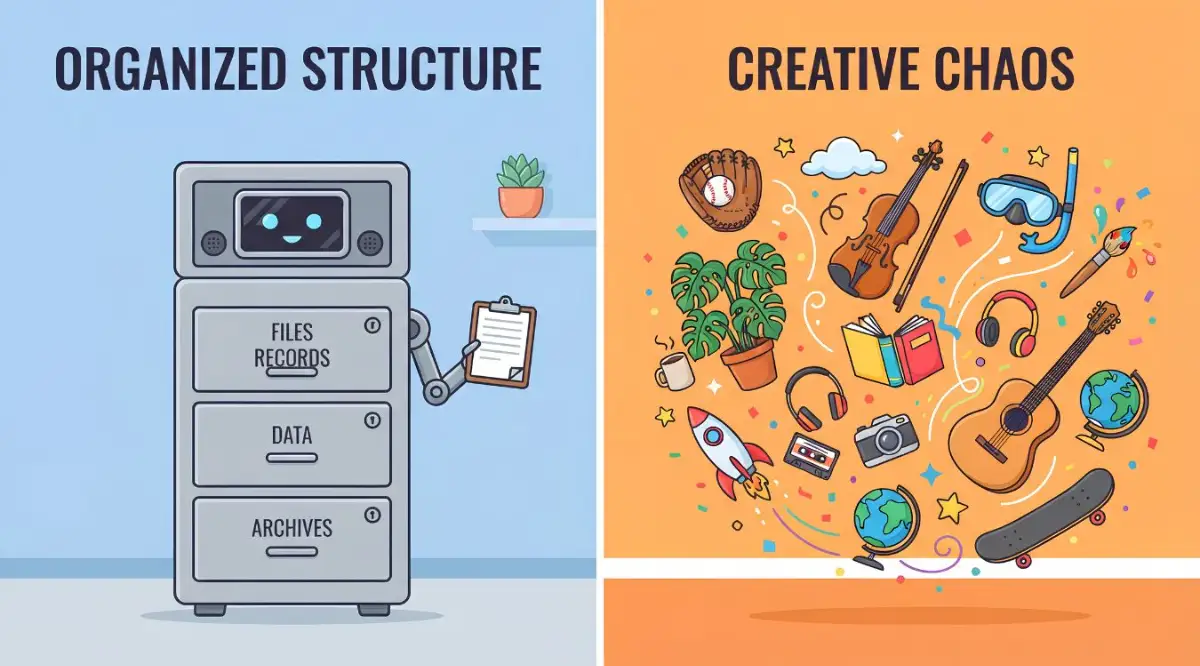
Let us break down exactly how these digital systems learn your habits and influence your daily routine. More importantly, we will look at practical steps you can take today to regain your peace of mind.
If you want to see exactly how these sneaky algorithms read your mind, check out this quick video below before moving on to the practical tips. It will completely change the way you look at your smartphone and make the rest of this guide even easier to follow!
YouTube video
The Recommendation Trap in Social Media Apps
Think of your favorite video app as a highly observant waiter at a restaurant. If you order a chocolate dessert once, this waiter will bring you five chocolate desserts the next time you visit.
Machine learning systems are designed to maximize the time you spend on their platforms. They do this by recognizing patterns in what makes you stop scrolling.
If you pause on a video of a cute dog for just three extra seconds, the system registers that tiny action. Within hours, your entire feed fills up with similar content.
Pro Tip to Regain Control:
You can actively train your social media feed to show you less distracting content. If you see a video that drags you down a rabbit hole, immediately click the "Not Interested" option.
Spend a few minutes each day intentionally liking educational or uplifting content. You will notice a dramatic shift in what the algorithm feeds you within just a few days.
My 3-Day Feed Cleanup Challenge:
- Day 1: Unfollow 5 accounts that make you feel anxious or annoyed.
- Day 2: Hit the "Not Interested" button on at least 10 suggested posts you don't actually care about.
- Day 3: Search for and engage with 3 completely new hobbies (like indoor gardening or watercolor painting). Watch how fast your feed shifts from stressful to inspiring!
Streaming Services and the Illusion of Choice
Have you ever felt like a movie streaming app only shows you the exact same types of movies over and over? This happens because of a system called collaborative filtering.
The machine looks at thousands of people who liked the same action movie as you. It then assumes you will like everything else those specific people watched.
This creates a comfortable bubble. However, it completely kills the fun of exploring completely new and different genres.
How to Break the Bubble:
Create a separate profile on your streaming account just for discovering new things. Use your main profile for your regular favorites.
On this new profile, randomly select movies or documentaries you would never normally watch. This completely confuses the machine and forces it to offer you a much wider variety of choices.

Quick Reality Check: Did you know that Netflix's recommendation engine drives about 80% of what people watch on the platform? When you create a wildcard profile, you completely bypass this massive filter. I tried this last month and ended up finding an amazing indie documentary I would never have seen on my main account.
The Reality Behind E-Commerce Personalization
Online shopping algorithms are incredibly aggressive. They do not just look at what you buy; they track what you almost bought.
If you leave an item in your digital shopping cart, the system notes your hesitation. It then follows you across the internet, showing you ads for that exact item everywhere you go.
They even track how long your mouse hovers over a specific product image. This level of tracking creates an intense pressure to spend money on things you might not actually need.

Myth vs Reality: How the Systems Actually Work
Smart Maps and Routine Predictability
When you open a GPS app, it usually knows exactly where you want to go before you type a single letter. On a Tuesday morning, it automatically suggests the route to your office.
This happens through predictive modeling. The system analyzes your historical location data, the current time, and even the current traffic patterns.
While this saves you a few seconds of typing, it also means your daily physical movements are fully mapped out on a server.
A Simple Privacy Fix:
Go into your phone settings right now and find the location permissions. Change the setting for your navigation apps from "Always Allow" to "Allow Only While Using the App."
This small change stops the system from silently tracking your trips to the grocery store or the park when the app is closed.
The Email Filtering Miracle
Not all algorithms are designed to distract you. Some are actually working hard to protect your digital sanity.
Think about your email inbox. Every day, hundreds of spam emails, phishing attempts, and junk promotions are sent to your address.
Yet, you only see a small fraction of them. Machine learning systems analyze the text, sender history, and hidden code inside every email.
If an email looks suspicious, the machine throws it straight into the spam folder. Without this background sorting, our digital communication would completely collapse under the weight of junk mail.
Reclaiming Your Digital Footprint: The Next Steps
Now that you understand how these hidden systems work, you can start making smarter choices. You do not need to throw your smartphone in the river to find peace.
You just need to become a conscious consumer of technology. Treat your attention like money.
Every time you give an app your time, you are paying them. Ask yourself if the content you are viewing is actually worth your payment.
Actionable Strategy: The 24-Hour Reset Rule
Before buying any item suggested to you by an online ad, enforce a strict 24-hour waiting period. Put the item in your cart, close the app, and wait a full day.
The algorithm will probably send you an email reminding you about the item. It might even offer you a small discount to complete the purchase.
However, after 24 hours, the initial emotional rush of seeing the targeted ad will fade away. You will clearly see if you actually need the item, or if the machine just successfully manipulated your current mood.
I used to buy so many random gadgets late at night just because a clever ad popped up on my feed. Once I forced myself to wait a full day before hitting the checkout button, I ended up deleting almost everything from my cart. It is amazing how much money you save when you let the emotional excitement cool down.
Embracing Intentional Technology Use
The goal is to make these intelligent systems work for you, not against you. We have the power to feed these machines better data.
If we intentionally search for positive, educational, and meaningful content, the algorithms will have no choice but to adapt. They will start serving us content that adds real value to our lives.
The machines only know what we tell them through our actions. It is time we start sending them the right signals.
Taking Back Control: Advanced Strategies to Outsmart Smart Systems
You do not have to be a computer scientist to regain control of your digital life. The secret lies in understanding that machine learning systems are essentially like very obedient, highly observant pets.
They only know what you teach them. If you passively accept everything your phone throws at you, the system will assume you love constant distractions.
However, if you start actively training these systems, you can completely change your digital experience. Let us look at some highly effective strategies to manipulate the algorithms so they start working to your advantage.
Practice Intentional Data Poisoning
Do not let the word "poisoning" scare you. In the tech privacy world, this simply means confusing the tracking systems by feeding them random, mixed signals.
Right now, your digital profile is extremely predictable. The machines know your favorite food, your political views, and even your bedtime.
You can break this predictability by randomly interacting with content you normally ignore. Watch a documentary about deep-sea marine biology even if you only care about sports.
Search for classical music artists even if your favorite genre is heavy metal. This intentionally mixes up your digital profile.
When the system cannot accurately guess your personality, it stops sending you highly manipulative, hyper-targeted advertisements. This gives you a much cleaner, more neutral browsing experience.
Audit Your Digital Ad Preferences
Most people do not realize that big tech platforms actually let you see the psychological profile they have built for you. You can go into the account settings of your favorite social media platforms and find the "Ad Preferences" section.
When you open this page, you will likely see a massive list of topics the machine thinks you care about. Some of these will be scarily accurate, while others might be completely random.
Take ten minutes this weekend to manually delete the topics you do not want to see ads for. By doing this, you are directly rewriting the code that dictates your daily digital experience.
You are telling the machine, "I am no longer interested in this, stop trying to sell it to me." This is a massive step toward digital freedom.
Protecting Your Financial Vulnerability
Algorithms are incredibly skilled at detecting emotional and financial stress. If you start searching for ways to save money, the system immediately flags you as a highly profitable target for financial products.
Suddenly, your feed will be flooded with aggressive credit card offers or quick cash schemes. These systems prey on your anxiety, hoping you will make a quick, emotional decision.
Instead of clicking on these manipulative ads, you should rely on independent research. If you actually need financial help, take a step back and read objective resources, like finding the true cost of your next loan, before signing anything.
Never let an automated ad dictate your major life decisions. The machine does not care about your financial health; it only cares about earning a commission on your click.
Limit Cross-App Tracking
Have you ever noticed how you search for a pair of sunglasses on a web browser, and suddenly those exact sunglasses appear on your social media feed? This happens because apps secretly talk to each other.
They share your data in the background to build a comprehensive map of your daily desires. You can easily stop this invisible data sharing.
Go into your smartphone settings and look for the privacy and security tab. Turn off the feature that allows apps to track your activity across other companies' apps and websites.
According to various research reports on human-centered AI and privacy, limiting this cross-site tracking significantly reduces the amount of manipulative content you encounter daily. It builds a digital wall between your different daily activities.
The Power of the "Incognito" Reality Check
We often think that private browsing modes make us completely invisible. While that is not entirely true, using private windows can be a great tool for a reality check.
If you are researching a sensitive topic, like a medical symptom or a major purchase, always use a private browser window. This prevents your temporary curiosity from permanently altering your daily algorithm.
If you search for "back pain remedies" on your normal browser, you will see ads for expensive mattresses and pain pills for the next six months. A private window keeps your temporary questions separate from your permanent digital identity.

The Hidden Traps: What Happens When We Blindly Trust the Machine
Even when we try to be careful, it is incredibly easy to fall into the invisible traps set by modern technology. These systems are designed by some of the smartest psychologists and engineers in the world.
Their main goal is to make using technology feel as frictionless and easy as possible. But this extreme ease comes with hidden dangers that can deeply affect our mental health and daily choices.
Let us explore the most common mistakes people make when interacting with smart technology. Avoiding these pitfalls is the only way to protect your peace of mind.
Falling for the Algorithmically Induced Impulse Buy
Online shopping platforms use machine learning to create a false sense of urgency. They know exactly which colors, words, and countdown timers will trigger your specific brain to panic-buy an item.
They might show you a message saying, "Only 2 items left in stock," right next to a product you were merely looking at out of boredom. This is a calculated algorithmic trick to bypass your logical thinking.
When we blindly trust these urgency signals, we end up spending money on things we never originally planned to buy. Over time, these small impulse purchases add up to massive financial stress.
If you let the algorithm control your spending habits, you might soon find yourself desperately needing a strategy for organizing multiple debt payments without feeling overwhelmed. Always remember that the machine wants you to act fast, but your wallet needs you to think slow.
The Danger of the Echo Chamber Effect
Perhaps the most dangerous mistake we make is relying on social media algorithms for our daily news and worldview. These systems are programmed to show you content that you already agree with.
If you like a post about a specific diet, the machine will flood your feed with videos claiming it is the only healthy way to eat. It will actively hide videos that present a different scientific perspective.
This creates a digital echo chamber. You start to believe that everyone in the world thinks exactly like you do, simply because that is all your screen shows you.
When we only see information that confirms our existing beliefs, we lose our ability to think critically. We become less tolerant of different opinions, which harms our real-world relationships.
Ignoring the Fine Print of "Smart" Convenience
We love smart home devices that turn on the lights or play our favorite music with a simple voice command. But we often forget that for these devices to work, they must constantly listen to our environment.
A common mistake is placing these smart devices in highly private areas of the home, like the bedroom, without adjusting the privacy settings. We trade our most intimate privacy for the convenience of not having to press a light switch.
Many people blindly click "Agree" on software updates without reading what new permissions the device is asking for. Over time, the machine learns your exact daily routine, knowing exactly when you wake up, leave the house, and go to sleep.
Q&A: Addressing Common Daily Tech Mistakes
Q: Is it a mistake to use auto-fill for all my passwords and credit cards?
Yes, relying entirely on browser auto-fill for highly sensitive financial data is risky. While algorithms make checkout faster, they also make it incredibly easy to make accidental purchases or fall victim to hidden subscription traps. Take the extra thirty seconds to type things out manually; this pause gives your brain time to reconsider the purchase.
Q: Should I care about "Cookie Consent" pop-ups?
Absolutely. Blindly clicking "Accept All Cookies" is like giving a stranger the keys to your house just because they offered to carry your groceries. Always take two extra seconds to click "Reject Non-Essential" options. Various consumer data privacy studies show that managing cookies is the first line of defense against aggressive daily tracking.
Q: Why do I feel exhausted after scrolling for an hour to relax?
Because you are not actually relaxing. The algorithm is constantly feeding your brain hyper-stimulating micro-content. Your brain is processing hundreds of different emotions, colors, and sounds every minute. This mental overload drains your energy, leaving you feeling more tired than before you picked up the phone.
The Illusion of Free Services
We must stop treating digital platforms as free public parks. They are highly commercial spaces.
When you do not pay money for an app, you are paying with your attention, your habits, and your personal data. The biggest mistake you can make is forgetting that you are the actual product being sold to advertisers.
Once you deeply internalize this reality, your entire relationship with your phone will change. You will start valuing your screen time as a precious currency that should not be given away cheaply.
Your Personal Blueprint for a Healthier Digital Life
Understanding the invisible forces behind your digital screens is an incredibly empowering experience. You are no longer a passive passenger on the digital highway; you are now firmly in the driver's seat.
Technology is a fantastic tool when we use it intentionally. It can connect us with loved ones, teach us new skills, and make our daily tasks significantly easier.
The goal is not to abandon modern conveniences or live in fear of your smartphone. The true goal is to establish healthy boundaries between your human mind and the machine's code.
You have the power to decide when the algorithms are allowed into your life, and when they need to be shut out. It all starts with small, conscious choices made every single day.
Your Action Plan for Tomorrow Morning
To help you turn these insights into immediate reality, I have put together a simple action plan. Try implementing these small changes tomorrow morning and notice how your mental clarity improves.
· &