
The Hidden Shock Inside Your Monthly Power Bill
Opening your power bill should not feel like stepping on a bathroom scale after eating a whole cake. Yet, month after month, most of us blindly hand over our hard-earned cash without knowing exactly what we are paying for. Instead of getting mad at my refrigerator or yelling at my kids to turn off the lights, I decided to stop guessing and figure out exactly where my money was leaking. The good news? You do not need a math degree to track your home energy. Let me show you exactly how I easily calculate my daily power usage so you can finally stop overpaying.
I spent hours walking from room to room, glaring at my ceiling fans and refrigerator like they were my biggest enemies. The frustration of not understanding where my hard-earned money was going left me feeling completely helpless. I tried asking friends for advice, but everyone just guessed and nobody had a real system to figure it out.
That experience pushed me to take matters into my own hands and finally learn how this entire system works. I realized that if I did not understand my own energy usage, I would always be a victim of surprise bills.
Every single day, ordinary families face this exact same anxiety when that envelope arrives in the mail or that text message hits their phone. We work so hard for our money, only to hand over a huge portion of it to the power company without really knowing why. This constant uncertainty destroys our mental peace and ruins our monthly family budget planning.
When you do not know how to measure your power usage, you end up feeling scared to even turn on your air conditioner on a hot summer day. You constantly yell at your kids to turn off the lights, creating a stressful environment inside your own home. It feels like an invisible monster is slowly eating away at your bank account while you sleep.

Key Takeaways: What You Are Going to Learn
- Find The Hidden Numbers: How to locate the wattage rating on your home appliances quickly.
- The Simple Math Formula: The exact way to turn basic watts into daily Kilowatt-hours (kWh) without getting confused.
- Stop The Silent Drain: How to identify devices that steal your money even when they are turned off.
- Track With Technology: The best cheap tools and smart plugs that do all the heavy tracking for you.
Decoding Your Home Power Usage Without a Math Degree
You do not need to be an engineer or an electrician to understand how much energy your home uses on a daily basis. The process is actually incredibly simple once you know what to look for and where to find the right numbers. We just need to break down the mystery into small, easy pieces that anyone can follow.
Think of electricity like water flowing through a pipe into your home. The wattage is the size of the water flow, and the time you leave it on decides how big the puddle gets. By learning how to measure that flow, you take all the guessing out of your monthly expenses.
Finding the Magic Numbers on Your Appliances
Every single device in your house that plugs into a wall comes with a secret cheat sheet provided by the manufacturer. This is usually a silver or black sticker located on the back, bottom, or inside the door of the appliance. You are looking for a number followed by the letter "W", which stands for Watts.
This wattage number tells you exactly how much power that specific device drinks when it is turned on. For example, a standard microwave might say 1000W, while a small table fan might only say 50W. Finding this number is the very first thing you must do for every major device in your house.
Quick Rule of Thumb for Appliance Wattage:
Before you spend hours checking every single item in your house, here is a simple trick I use to spot the biggest money-drainers quickly:
- Things that create heat or cold (High Drain): Water heaters, toasters, hair dryers, and air conditioners. These almost always pull over 1,000 watts.
- Things that create light or sound (Low Drain): LED bulbs, small radios, and phone chargers. These rarely pull more than 10 to 50 watts.
- Start your math with the heavy heating and cooling devices first, as they make up about 70% of your total bill!
Sometimes, manufacturers make things slightly difficult by only listing the Volts (V) and Amps (A) instead of Watts. Do not let this confuse you, because the math to fix this is incredibly easy. You just multiply the Volts by the Amps to get your total Watts. If your television says 120V and 2A, you just multiply 120 by 2, which gives you 240 Watts.
The Secret Formula to Calculate Energy
Once you have the wattage, you need to understand how the power company actually charges you for using it. Power companies do not charge you for Watts; they charge you for Kilowatt-hours (kWh). A Kilowatt is simply 1,000 Watts, just like a kilogram is 1,000 grams.
To find out how many Kilowatt-hours a device uses, you need to know how many hours it runs each day. You multiply the Watts by the hours used, and then divide that big number by 1,000.
For instance, if you run a 100-Watt light bulb for 10 hours a day, you multiply 100 by 10 to get 1,000. You then divide 1,000 by 1,000, which equals exactly 1 kWh. This simple formula is the golden key to unlocking the mystery of your power bill.
Here is a quick look at how different devices impact your daily math:
Are you still feeling a little confused about how to turn your appliance watts into daily kilowatt-hours? Watch this incredibly simple video breakdown to master the exact power math in under five minutes before you move on to the next step!
[Insert YouTube Video Link Here]
Uncovering the Silent Power Drainers
We often think that turning off a device means it stops using energy completely. However, many modern appliances keep drinking electricity even when they look completely dead. This is known as standby power, and it can quietly add a huge amount to your daily consumption.
Any device with a remote control, a digital clock, or a little red standby light is constantly sipping power from the wall. Your television, gaming console, and microwave are the biggest offenders of this silent energy drain. Even your phone charger continues to use a tiny bit of power if you leave it plugged into the wall without your phone attached.
To stop this from messing up your daily calculations, you need to factor in this standby usage. Alternatively, you can completely unplug these devices or use a smart power strip to cut the energy off completely.
My biggest mistake was leaving my old desktop computer plugged in 24/7, even though I only used it on weekends. I finally realized that this machine was quietly burning through my money while I slept! I highly recommend checking all your old electronics and unplugging anything you do not use every single day.
Navigating the Complexity of Cooling and Heating
Calculating the energy used by a light bulb is very easy because it uses the same amount of power the whole time it is on. But calculating heavy appliances like refrigerators and air conditioners takes a little more brainpower. These machines do not run continuously; they cycle on and off to maintain a specific temperature.
Your refrigerator might have a sticker that says 800 Watts, but the compressor only runs for about 8 hours a day. If you calculate it for a full 24 hours, your math will look terrifyingly high and completely wrong. The best way to calculate cycling appliances is to estimate that they run for about one-third of the day.
Air conditioners are heavily affected by the weather outside and the temperature you set on the remote. If you set your AC to a very low temperature on a blazing hot day, the compressor will run almost non-stop. To get an accurate daily calculation for an AC, you have to guess the actual running hours based on your room temperature.
Myth vs Reality in Daily Power Measurement
There are so many rumors about energy usage that confuse people who are trying to calculate their bills. One common myth is that leaving a light on uses less energy than turning it off and on repeatedly. This is completely false, as the tiny surge of power used to turn a light on lasts for a fraction of a second.
Another big myth is that small appliances do not use enough energy to care about. While a single small device might not matter, having twenty small devices plugged in adds up very fast. You must count everything during your calculation if you want a truly accurate daily number.
People also believe that new appliances automatically guarantee a lower bill without any effort. While modern devices are much more efficient, calculating their daily usage still depends entirely on your personal habits. A highly efficient television will still cost you a lot if you leave it playing to an empty room all day.
Creating Your Personal Home Energy Audit
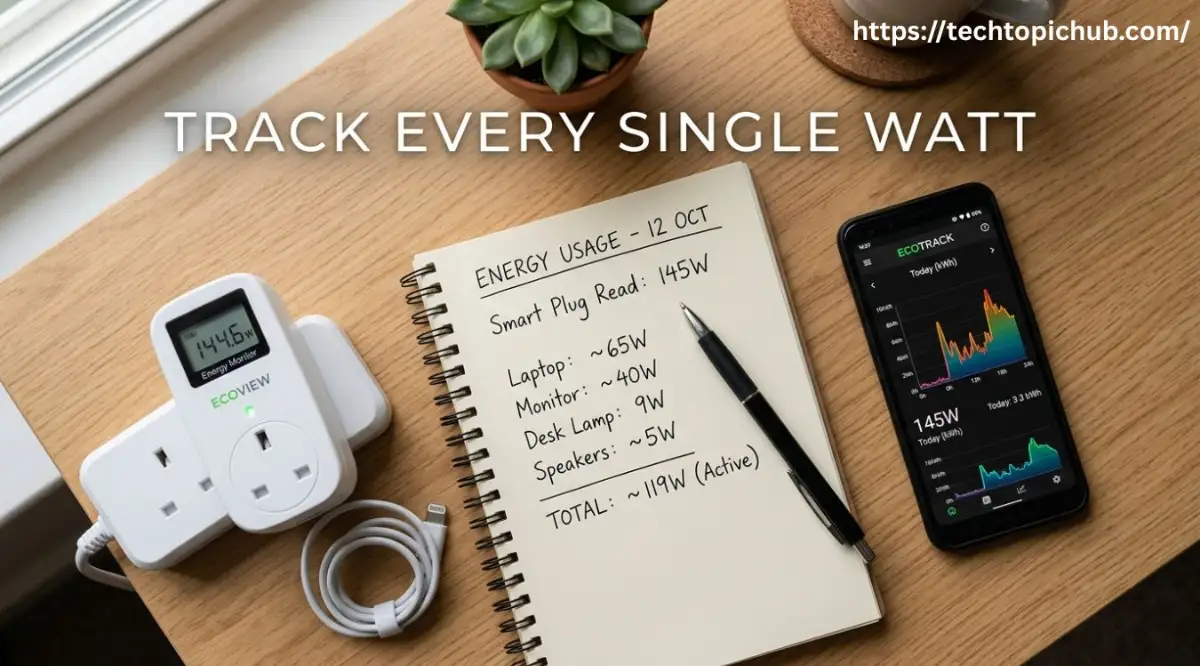
To accurately measure your daily power consumption, you need to walk through your house with a notebook and a pen. Start in the living room and write down every single thing that is plugged into a wall. Write down the name of the device, find its wattage, and honestly guess how many hours it runs per day.
Move to the kitchen next, as this room usually holds the most power-hungry monsters in your entire house. Pay special attention to things that heat up, like toasters, coffee makers, and electric ovens. Any device that creates heat will always have an extremely high wattage rating.
Finally, check the bedrooms and bathrooms for hidden energy users. Things like hair dryers, curling irons, and space heaters use a massive amount of power for the short time they are on. Once you have a complete list of your entire house, you can start doing the math for each item one by one.

When I did my very first home energy audit, I completely forgot to check the hidden appliances like my garage freezer and the old fan in the attic. I spent days wondering why my manual math was so far off from my actual bill until I finally counted those forgotten machines. My absolute best advice is to physically walk into every single space of your property, including the basement and garage, so you do not miss a single hidden plug.
Leveraging Modern Tools for Better Accuracy
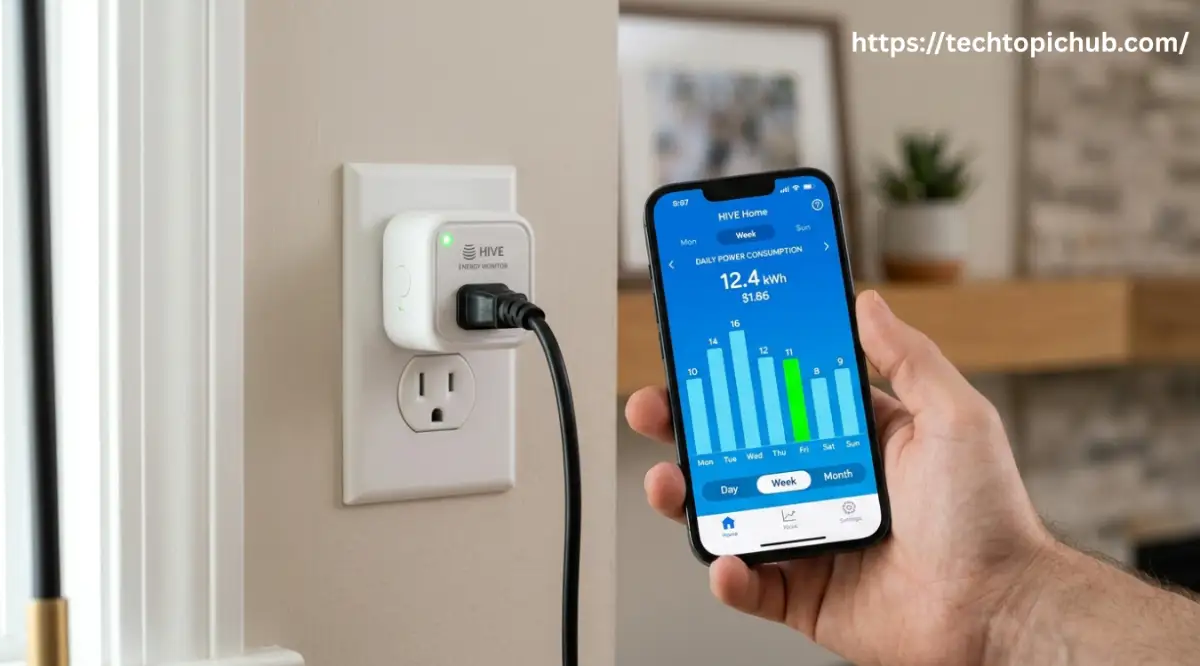
If doing the manual math sounds too stressful, technology has given us some amazing shortcuts. You can easily buy a cheap energy monitor plug from a local hardware store or online shop. You simply plug this device into the wall, and then plug your appliance directly into the monitor.
The screen on the energy monitor will instantly tell you exactly how many watts the device is pulling in real-time. If you leave it plugged in for a full 24 hours, it will do all the complicated math for you. It will show you the exact Kilowatt-hours used, making your daily calculation perfectly accurate without any guessing.
Smart plugs offer a very similar feature but send all the data directly to an app on your smartphone. You can sit on your couch and watch a graph showing exactly when your refrigerator uses the most power. Using these affordable tools completely removes the stress of manual calculation and gives you ultimate peace of mind.
Understanding Seasonal Shifts in Your Calculation
You cannot calculate your daily power usage one time and expect it to stay the same all year round. The weather changes your daily habits, which completely changes your mathematical totals. Your daily calculation in the middle of summer will look totally different from your calculation in the winter.
During the hot months, cooling devices like fans and air conditioners become the kings of your power bill. The days are longer, so you might actually use your indoor lighting much less than usual. You have to adjust your daily estimated hours for these specific items as the seasons change.
In cooler months, you might stop using fans entirely but start taking much longer hot showers. If you have an electric water heater, this change in habit will massively spike your daily energy usage. Being aware of these natural shifts helps you stay in control of your math every single month of the year.
My Personal Summer vs. Winter Reality Check:
To give you a real idea of how seasonal shifts mess with your math, here is what happens in my own home:
- July (Summer Peak): My AC runs for about 10 hours a day (around 15 kWh daily just for cooling). My daily bill spikes heavily.
- January (Winter Peak): The AC is off, but my family takes much longer hot showers. My electric water heater runs an extra 2 hours a day, pushing my heating costs up by 3 to 4 kWh daily.
- If I used my July math to predict my January bill, I would be completely wrong. Always update your tracking sheet when the seasons change!
Smart Tactics to Maximize Your Daily Power Savings
Taking control of your energy math is the first major step to saving hard-earned money. Once you know how to do the basic math, you can use advanced methods to keep your bills low forever. These strategies will help you track every single watt without losing your mind.
First, you should consider getting a professional home inspection if your bills remain mystery-high. The U.S. Department of Energy offers great resources on professional home energy audits to pinpoint exactly where air and electricity are escaping. These audits use cool tools like thermal cameras to find hidden issues behind your walls.
If you want to do this yourself, you can start by keeping a dedicated energy logbook on your phone or in a notebook. Write down the daily run times of your heavy appliances like your air conditioner, heater, and water pump. Over a few weeks, you will start seeing clear patterns in how your household uses power.
You can always find more helpful household tech tips on websites like Tech Topic Hub to keep your entire life running smoothly. Gathering this information helps you make smart decisions when buying new gadgets or changing your daily habits. It turns guessing into a science that saves you real money.
Another great trick is to use smart plugs that connect directly to your home wireless network. These smart plugs monitor the flow of electricity in real-time and send beautiful charts straight to your phone. You can quickly see if your old television is using more power than it should.
This kind of tracking is highly helpful because it takes all the guesswork out of your monthly budgeting. Understanding your home energy costs is just as important as building a solid emergency fund when you are managing your monthly household expenses. It helps you keep your hard-earned money in your bank account instead of sending it to the utility company.
If you are planning to move, showing low energy bills can actually be a helpful trick to attract buyers who want an efficient home. Modern buyers love seeing proof of low utility costs before they make an offer on a house. It gives them peace of mind that they will not face surprise expenses after moving in.
We should also talk about the power rating label on your appliances, which is often called the Energy Guide label. This bright yellow label tells you how much electricity the device uses compared to other similar models. Always look at these ratings carefully whenever you need to replace an old appliance in your home.
You can review official energy saving guidelines to see which high-efficiency upgrades will save you the most money over time. Buying an efficient appliance might cost a little more up front, but it pays for itself very quickly. The daily math will show a massive drop in your energy usage from day one[6].
Let us look at a simple scenario with an old refrigerator versus a new energy-saving model. An older fridge might run almost constantly and use about four kilowatt-hours of power every single day. A modern, certified efficient model might cut that daily usage completely in half.
Over a full year, that single upgrade can save you hundreds of dollars on your power bill[6]. This is why tracking your daily consumption is so powerful because it shows you exactly which older appliances need to be replaced[7]. You stop wasting money on outdated technology that eats up your electricity.
To make your math even more accurate, you should also learn about your local power company's rate structure. Many utility companies charge different rates depending on the time of day you use electricity. These are often called peak hours and off-peak hours, and they can make a huge difference in your final bill.
If you run your heavy washing machine during peak hours, you might be paying double the price for the exact same amount of power. By adjusting your schedule to run these appliances late at night or early in the morning, you instantly cut your costs. Your daily energy calculation will show the same kilowatt-hours but a much lower price tag.
You should also check the average household electricity statistics to see how your home compares to the national average. This data can give you a realistic target to aim for as you start reducing your power footprint. It is always nice to know if your household is running efficiently compared to your neighbors.
Remember that small daily adjustments can create massive long-term results for your wallet. Something as simple as lowering your water heater temperature by a few degrees can drop its daily energy consumption dramatically. You will never notice the difference in your shower, but your bank account certainly will.
We must also mention how your local climate impacts your daily math tracking throughout the year. You should create separate calculation sheets for your summer habits and your winter habits to keep things highly accurate. This simple step keeps you prepared for those seasonal shifts in your utility bills.
Avoid These Sneaky Math Blunders That Burn Your Cash
It is incredibly easy to make simple mistakes when you start tracking your home energy consumption. These blunders can lead to massive errors in your calculations, leaving you confused when your actual bill arrives. Let us talk about the most common traps that homeowners fall into every day.
The biggest mistake people make is simply guessing how many hours an appliance is actually running. We often think our air conditioner only runs for two hours, but in reality, it might be cycling on and off for eight hours. This incorrect estimate will completely ruin your daily calculations and make your predictions useless.
Another huge pitfall is ignoring the silent energy thieves that stay plugged into your walls all day. Many modern devices draw power even when they are turned off, which completely throws off your manual math[7][8]. If you do not count this standby power, you will miss a large portion of your daily usage[8].
We also see people using the wrong wattage numbers when they calculate their daily electricity consumption. They look up a general number online instead of checking the actual silver sticker on their specific device. Every model is different, and using generic numbers can make your calculations highly inaccurate.
Failing to adjust your daily calculations as the seasons change is another costly mistake that leads to bad math. Your heating and cooling needs change dramatically, meaning your old summer calculations will not work in the winter. You must update your tracking sheet regularly to reflect your actual daily habits.
Many homeowners also make the mistake of assuming that all power outlets deliver the exact same cost of electricity. They forget that peak pricing can make running a dryer in the afternoon incredibly expensive. If you calculate your bill using a flat rate, you might get a very nasty surprise at the end of the month.
We must also warn you about neglecting basic maintenance on your larger household appliances. A dirty air filter or a dusty refrigerator coil makes those machines work twice as hard to do their jobs. This extra effort spikes their wattage draw, making your original sticker calculations completely wrong.
If you do not clean your appliances, your daily power calculations will never match your actual utility bill. It is like driving a car with low tire pressure and wondering why you are burning through so much gasoline. Simple maintenance keeps your appliances running at their rated wattage and keeps your math accurate.
Lastly, do not let yourself get discouraged if your first few calculations do not match your utility bill perfectly. It takes time to learn the exact habits of your household and refine your daily run times. View this process as an ongoing experiment that gets more accurate and helpful every single week.
Taking Charge of Your Household Energy Future
Tracking and calculating your daily household electricity consumption is one of the most rewarding things you can do for your family budget. It gives you absolute power over an expense that used to feel completely out of your control. No more fear, no more guessing, and no more stressful surprises in your mailbox.
By taking just a few minutes each day to monitor your appliances, you can find the exact spots where your money is leaking[9][10]. You can turn this simple exercise into a fun family challenge to see who can save the most energy. It teaches everyone in your home to be more mindful of the resources we use every day.
Remember to start small by tracking just your top three most power-hungry devices first. Once you master the math for those big items, you can easily calculate the rest of your home. You will quickly see that saving money on your power bill is actually very simple and highly satisfying.
I remember when I finally matched my calculated energy math with my actual monthly power bill. It was such an amazing feeling to know that I had taken full control of my household expenses. I encourage you to grab a notebook today and start tracking your very first appliance because your future savings are waiting for you!
Quick Answers to Your Top Power Calculation Questions
Can I calculate my daily power usage without looking at my electric meter?
Yes, you can easily calculate your daily usage by multiplying the wattage of each appliance by the hours you use them[11]. This manual method is highly accurate if you are honest about your daily running times. It helps you understand exactly which devices are responsible for the bulk of your monthly utility bill.
Why does my calculated bill not match my actual utility bill perfectly?
Your calculations might differ slightly due to standby power draw, changing weather conditions, or variable utility rates[8]. Also, major appliances like your refrigerator cycle on and off, making their exact running hours a bit tricky to guess. Using a smart plug energy monitor can help you bridge this small mathematical gap easily.
Is standby power really worth including in my daily calculations?
Yes, standby power can easily account for up to ten percent of an average household's total energy bill[8]. While a single plugged-in charger uses very little power, having dozens of devices on standby adds up quickly[7]. Unplugging idle electronics is a simple habit that makes your daily math much easier to manage.
How do I find the wattage of an appliance if the sticker is missing?
If the sticker is gone, you can easily search for the appliance model number online to find the official manufacturer manual[12]. Alternatively, you can use a cheap smart plug energy monitor to read the real-time wattage draw directly[8][9]. This tool is incredibly helpful for older electronics that no longer have readable labels.
Will switching to LED light bulbs really show up in my daily power math?
Yes, switching to LED bulbs is one of the fastest ways to see a drop in your daily energy calculations. LEDs use up to eighty percent less electricity than old incandescent bulbs and last much longer. When you do the math for ten bulbs running all evening, the daily savings become very clear.
I used to be absolutely terrified of opening my monthly power bill, but now I actually look forward to seeing how much money my daily tracking habits have saved me. You have the exact same power to take control of your home energy right now, just by checking the sticker on your first appliance today. I promise that once you see those daily numbers start dropping, you will feel an incredible sense of relief and financial freedom.
Disclaimer: The energy calculations and tips provided in this article are for educational and informational purposes only. Actual electricity rates, appliance efficiencies, and household usage patterns vary widely depending on your location, utility provider, and specific habits. Always consult a certified electrician or your local power utility company for professional advice regarding your home electrical system and billing.