5 Proven Ways To Ruin Your Off-Grid Power System [Step-By-Step Fixes]
Going off the grid sounds like a dream until your heater shuts off on a freezing Tuesday night and you are left staring at a dead battery monitor. That is exactly how my first solar setup crashed and burned. Most beginners make the exact same math mistakes when planning their gear, costing them thousands of wasted dollars. Let me show you what actually breaks a household power system, and how you can size your setup properly so you never end up shivering in the dark like I did.
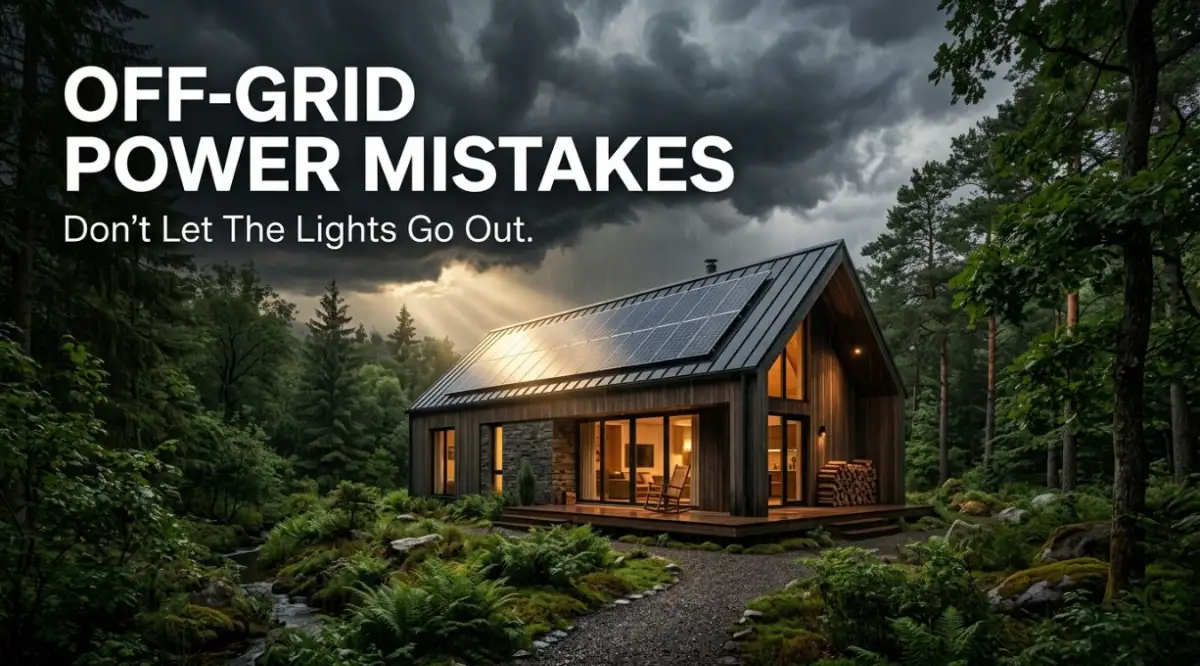
I still remember the exact moment everything went completely black. I was sitting in my living room on a freezing winter night, drinking hot tea, when the fridge suddenly stopped humming and the lights died instantly. I had spent thousands of dollars building my absolute dream off-grid solar setup, feeling completely independent and secure. But because I ignored some basic math and made a few amateur assumptions, my entire battery bank was completely drained after just three days of cloudy weather. I sat there in the dark, shivering and angry, realizing I had made some massive errors in my power calculations.
The reality of living completely disconnected from the traditional power grid is highly romanticized. People love the idea of producing their own clean energy, saying goodbye to monthly utility bills, and living a self-reliant lifestyle. But the actual day-to-day struggle of dealing with an poorly planned power system is an absolute nightmare.
For a normal family, this sudden lack of power creates a massive amount of daily stress and anxiety. You find yourself constantly staring at the battery monitor, shouting at your kids to turn off a single LED light bulb. You become obsessed with the weather forecast, feeling a deep sense of dread every time you see a dark cloud rolling in.
What You Will Learn In This Guide:
- The Surge Trap: Why your appliances actually need double the power you think they do to start up.
- Battery Illusions: How cold weather and simple chemistry can steal half of your stored energy.
- Sun Myths: Why 9 hours of daylight does not equal 9 hours of solar charging.
- Safety First: How proper wire sizing and fuses keep your off-grid setup from catching fire.
The Hidden Trap of Guessing Your Energy Load
If you want to solve this constant anxiety, the very first step is to stop guessing your numbers. Most beginners simply look at a pre-packaged solar kit online and assume it will run their entire house. They completely ignore the actual science of measuring energy consumption.
You cannot build a reliable off-grid system without knowing exactly how much electricity you consume in a 24-hour period. We measure this consumption in watt-hours. To find your true daily load, you need to list every single electrical item in your house, find its wattage rating, and multiply that by the number of hours you use it each day.
This sounds like basic math, but this is exactly where people fall into a massive trap. They only calculate the power their appliances use while running. They completely forget about the hidden "vampire loads" and starting surges.
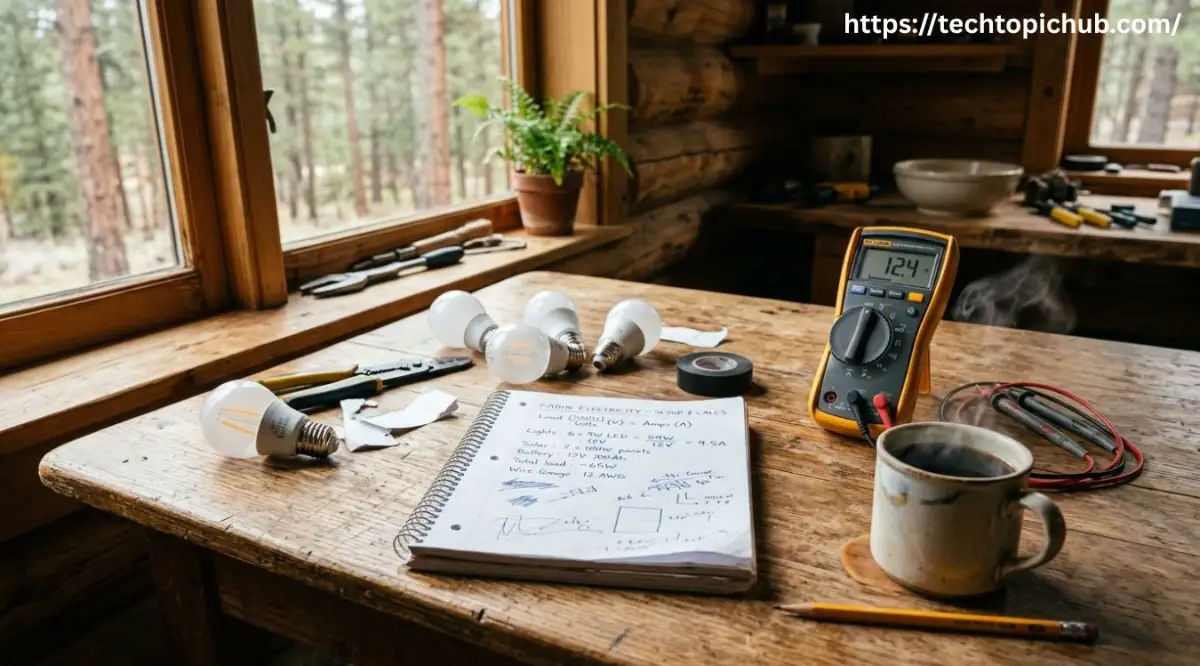
For example, your television might use power even when it is turned off just to keep the remote control sensor active. Over a full day, these small phantom loads add up to a huge amount of wasted battery power. You must account for every single watt if you want a reliable system.
Running Watts vs. Starting Watts
Let us look at a real-life scenario that ruins many beginner setups. A standard refrigerator might only need 150 watts to keep your food cold. However, when the compressor motor first kicks on, it can easily demand 1,200 watts for a split second.
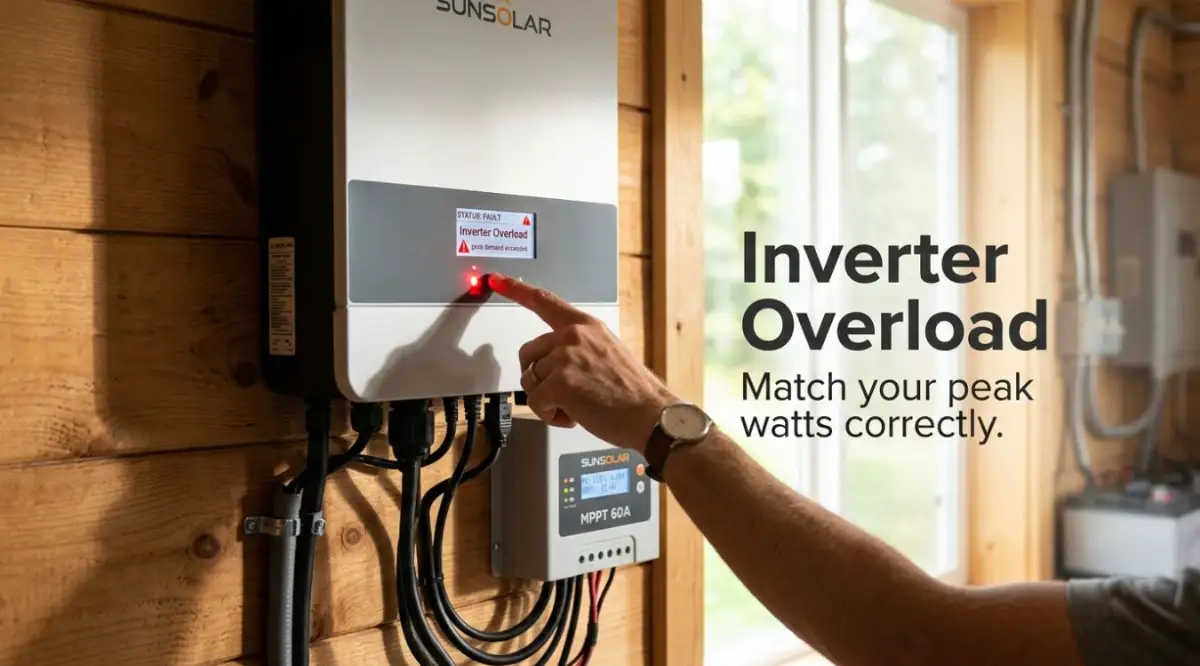
This massive spike in energy is called the "starting surge" or surge wattage. If you only plan your system around the running watts, your inverter will completely shut down the moment your fridge tries to turn on. You will hear an awful beeping sound, and your whole house will go dark.
A Quick Comparison to Keep You Safe:
LED Light Bulb: 10 Watts Running | 10 Watts Starting
Laptop Charger: 65 Watts Running | 65 Watts Starting
Well Water Pump: 750 Watts Running | 2,000+ Watts Starting
Air Conditioner: 1,000 Watts Running | 3,000+ Watts Starting
Pro Tip on Surge Limits: Here is a hard lesson I had to learn: always check your inverter's surge time limit. Many budget inverters advertise a 3,000-watt surge rating, but they can only hold that massive power for a few milliseconds. A heavy well pump might need that extra boost for a full two seconds just to get its motor spinning. If your inverter cannot handle the duration, your system will shut down completely, even if the math looks right on paper.
As you can see, anything with a motor or a compressor requires massive starting power. You must size your main equipment based on these surge numbers, not just the normal operating numbers.
If you are still a bit confused about how to actually do the math without blowing up your inverter, stop reading for a minute and watch this quick breakdown. The video below shows exactly how the pros size their gear, and it will make the rest of this guide so much easier to understand!
I learned this the hard way with my own well water pump during my first year off the grid. I bought a 2,000-watt inverter thinking it was plenty for my small cabin, but every time I flushed the toilet, the pump demanded 3,000 watts to start, tripping the entire system. I had to rip out the perfectly good inverter, lose money on the resale, and buy a much larger unit just to have basic running water.
The Illusion of Infinite Battery Storage
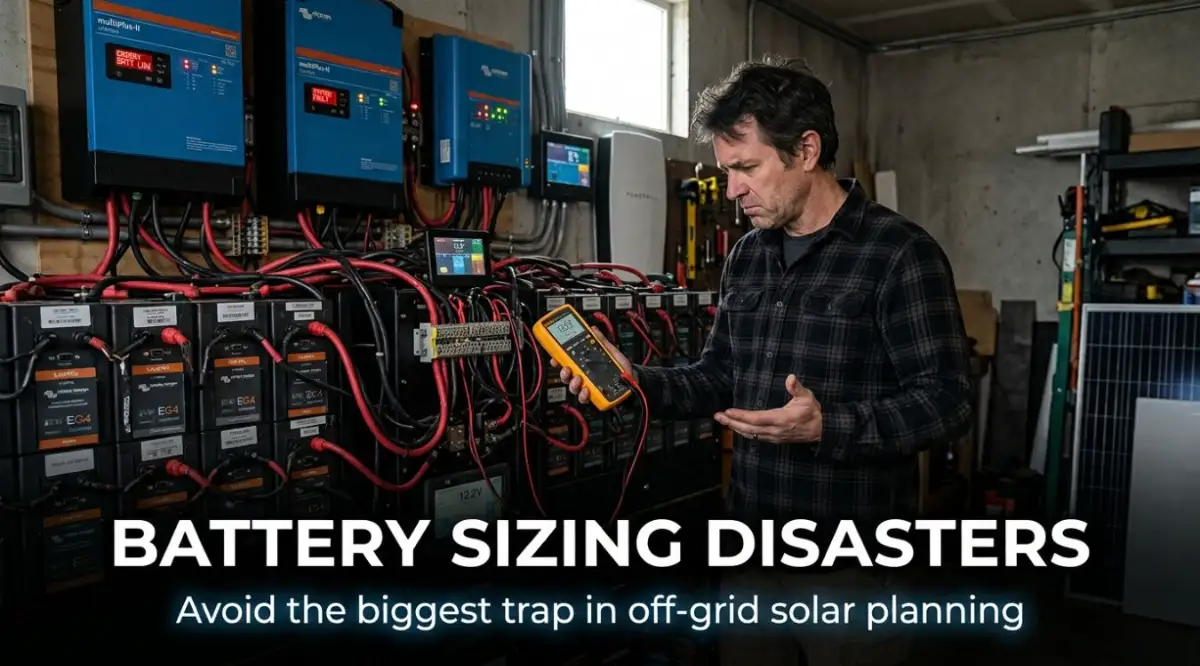
Once you figure out your energy load, the next massive hurdle is storing that energy. The single most expensive and easily ruined component of your household power system is the battery bank. Unfortunately, many homeowners completely misunderstand how batteries actually work in the real world.
There is a huge myth that if you buy a 200 amp-hour battery, you actually get to use all 200 amp-hours. This is mathematically and chemically false, especially if you are using traditional lead-acid batteries.
Deep cycle lead-acid batteries have a strict "Depth of Discharge" limit. If you drain them below 50% of their total capacity, you will permanently damage the chemical plates inside. This means a 200 amp-hour lead-acid battery only gives you 100 amp-hours of usable power.
Quick Math: Lead-Acid vs Lithium
Let us look at how this changes your wallet. If you buy two heavy 100Ah lead-acid batteries, you only get 100Ah of safe, usable power. But if you spend a bit more upfront on a 100Ah Lithium (LiFePO4) battery, you can safely use 80Ah to 90Ah of it without hurting the cells. In the long run, lithium actually saves you money because you do not have to buy twice as many batteries just to hit your target numbers.
Why Cold Weather is the Enemy
Another massive factor people ignore is the temperature of the battery room. Battery capacity is usually rated at a perfect room temperature of around 77 degrees Fahrenheit. When winter comes and the temperature drops near freezing, your batteries lose a massive chunk of their storage capacity.
If you keep your battery bank in an unheated garage or shed, a battery that easily ran your house in the summer will fail you by midnight in the winter. You are suddenly working with 30% or 40% less stored energy.
You must protect your batteries from extreme cold by placing them in an insulated box or a climate-controlled room. If you do not factor temperature into your initial math, you will constantly face low-voltage alarms on cold nights.
Myth vs. Reality in Energy Storage:
· The Myth: You only need enough battery power to get through one single night.
· The Reality: You need enough storage to power your house through at least three straight days of heavy rain or snow, known as "days of autonomy."
If you only plan for one night, what happens when it rains for a whole weekend? Your panels produce almost zero power, and your batteries drain completely dry. You absolutely must oversize your battery bank to survive bad weather systems without relying purely on a gas generator.
Misunderstanding Peak Sun Hours
Let us talk about how you collect energy in the first place. You can buy the most expensive, highly rated solar panels on the market, but they are completely useless if you do not understand the path of the sun.
Many beginners look at a 300-watt solar panel and assume it will generate 300 watts for 10 hours a day. They think, "The sun is up from 7 AM to 5 PM, so I will get maximum power all day long." This is a highly dangerous assumption that leads to massively underpowered homes.
In the solar industry, we use a metric called "Peak Sun Hours." This does not mean the total hours of daylight. It means the specific number of hours when the sun is hitting your panels perfectly straight at a high enough intensity to generate maximum power.
In many parts of the world, you might only get 3 or 4 peak sun hours during the winter months. Even if the sun is technically shining for 9 hours, the angle is too low and the intensity is too weak to charge your massive battery bank.
The Shading Disaster
You also have to look closely at your physical property. A single tree branch casting a tiny shadow over the corner of your solar array can severely drop the power output of the entire system.
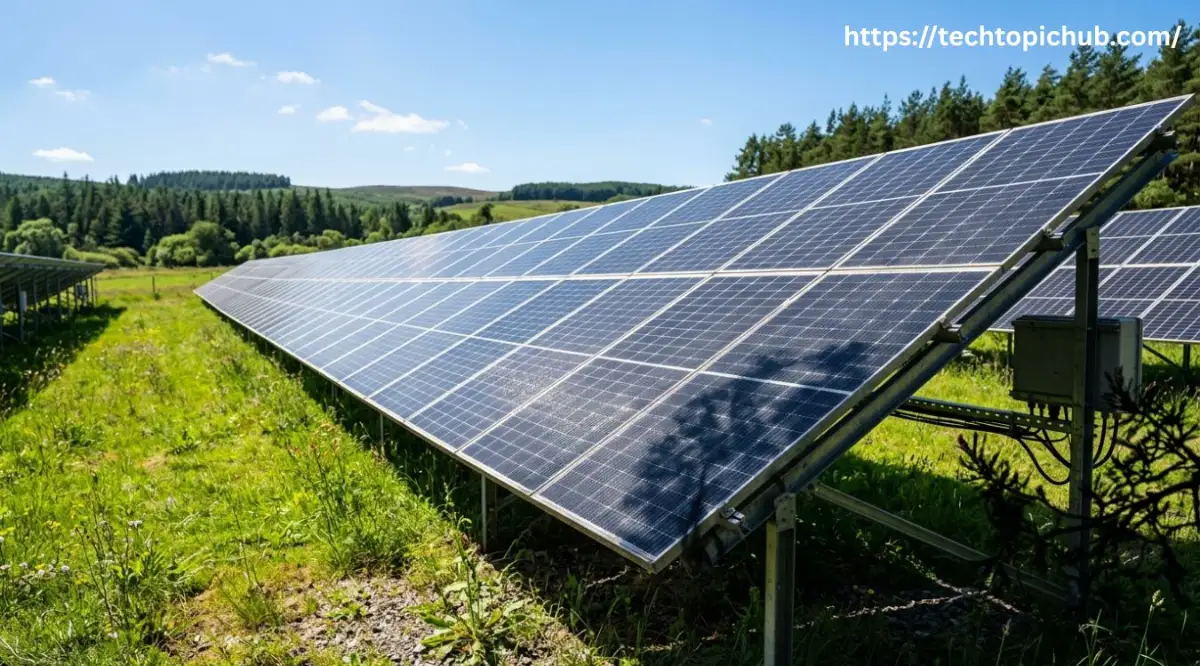
Solar panels are often wired together in a series. Think of this like water flowing through a garden hose. If you step on one section of the hose (the shadow on one panel), the water stops flowing for the entire line.
You must do a complete shading analysis of your roof or ground mount area before installing anything. Look at where the shadows fall in the morning, at noon, and in the late afternoon. You also have to consider how those shadows change in the winter when the sun sits much lower in the sky.
Falling for Cheap Components and Bad Wiring
Living completely independently requires equipment that can run 24 hours a day, 365 days a year. Your household power system is essentially a highly stressed power plant running in your backyard.
A major mistake homeowners make is buying cheap, unbranded electronics from random online marketplaces to save a few dollars. A low-quality charge controller might work fine for a weekend camping trip, but it will burn out quickly when managing massive daily household loads.
Your solar charge controller acts as the brain of your entire system. It protects your expensive batteries from getting overcharged and boiling over. If a cheap controller fails, it can send too much voltage to your battery bank, instantly destroying thousands of dollars worth of equipment.
The Dangers of Thin Wires
Even if you buy top-tier equipment, you can still ruin everything by using the wrong wire sizes. Moving high-amperage direct current (DC) power from your batteries to your inverter requires massive, thick copper cables.
Many beginners try to use standard household wiring or thin automotive cables to connect their off-grid components. This is not just a performance mistake; it is an extreme fire hazard.
When you push too much current through a thin wire, the wire creates massive resistance. This resistance turns into heat. Within minutes, the plastic insulation can melt, sparking a terrifying electrical fire inside your home.
You must use thick, heavy-duty battery cables (often 4/0 AWG or larger) for your main connections. You also need to install the correct heavy-duty fuses and DC breakers between every single major component. If a short circuit happens, the fuse will blow safely instead of catching your expensive inverter on fire.
Ignoring Energy Efficiency
The ultimate secret to a successful off-grid life is not just generating more power, but needing less of it in the first place. You can spend thirty thousand dollars on massive solar arrays and huge lithium batteries, but if your house is extremely inefficient, you will still struggle.
Before you even start sizing your panels and batteries, you need to ruthlessly audit how you use electricity. Replacing a highly inefficient old refrigerator with a modern, low-draw appliance is often much cheaper than buying three extra solar panels to support the old fridge.
You must shift your mindset from "How can I produce more?" to "How can I waste less?" Swap out every single light bulb for low-wattage LEDs. Unplug appliances that you are not actively using to kill those phantom loads.
Learn to run your heaviest appliances only during the middle of the day. If you need to run a washing machine or an electric oven, do it at noon when the sun is shining brightly. This way, the power comes straight from your solar panels instead of draining your precious battery reserves.
Building a reliable household power system is incredibly rewarding when done correctly. It requires patience, careful math, and a deep respect for how electricity actually behaves. By avoiding these common traps, you can finally enjoy true energy independence without constantly worrying about the lights going out.
Mastering Your Daily Off-Grid Energy Habits
Once you understand the basic math behind your equipment, you need to master how you actually interact with your system on a daily basis. Having great hardware is only half the battle. The other half is changing your personal habits to match the rhythm of the sun.
One of the smartest things you can do is practice a concept called "load shifting." In a normal grid-tied house, you probably do your laundry or run the dishwasher at night after work. If you do this off the grid, you will completely drain your battery bank before midnight.
Instead, you need to shift your heavy power usage to the middle of the day. When the sun is shining its brightest around noon, your solar panels are producing maximum energy. By running your washing machine or water pump at this exact time, you pull power straight from the sun, completely bypassing your batteries.
This simple habit change extends the life of your battery bank by years because you are avoiding deep discharges. It takes a little bit of planning, but running high-draw appliances during peak sunlight hours is an absolute game changer.
Why You Need a Smart Battery Monitor
Another massive secret to long-term success is knowing exactly what is happening inside your storage system. Most cheap solar kits come with a basic voltage meter. Relying on a basic voltage meter is like trying to guess how much gas is in your car just by shaking it.
Voltage fluctuates constantly based on what is turned on in the house. If your refrigerator kicks on, the voltage meter might suddenly drop, making you think your batteries are dying. The moment the fridge turns off, the voltage bounces back up.
To get true peace of mind, you must install a smart battery shunt. A shunt physically measures every single amp of electricity going into the battery and every single amp coming out. It gives you a highly accurate percentage, just like the battery icon on your smartphone.
Knowing your true battery percentage stops the constant panic. You can easily see if you have enough power stored up to watch a movie or if you need to turn off the lights and go to sleep.
Financial Planning for Quality Gear
We all know that buying top-tier solar equipment is an expensive journey. Trying to buy everything at once can completely drain your savings account. This is why figuring out how to create a realistic monthly budget is an extremely important first step before you start shopping for panels.
If you decide to take out a loan to fund your solar cabin build, you need to be very careful about the terms. The interest rates can easily sneak up on you. Understanding the difference between fixed vs variable personal loans will help you keep your monthly payments predictable.
Many people start their solar journey because they are buying a remote piece of land or building a new homestead. If you need a mortgage for that raw land, you must make sure your financial history looks perfect. You should definitely look into how to improve a low credit score before applying for a home loan so the bank actually approves your dream project.
Taking control of your finances gives you the freedom to buy high-quality solar components. For more practical advice on managing your everyday life and goals, you can always browse our homepage for helpful ideas.
The Importance of Temperature Compensation
Let us look at another advanced trick that beginners completely miss. Your solar charge controller needs to know how hot or cold your battery room is. Batteries charge very differently depending on the surrounding temperature.
If it is freezing cold outside, your batteries actually require a slightly higher charging voltage to get completely full. If it is extremely hot, they need a lower voltage to prevent boiling and permanent damage.
This is why you should always buy a charge controller that includes a battery temperature sensor. This tiny wire attaches directly to the side of your battery. It tells the controller exactly how to adjust the voltage perfectly based on the current weather.
Following proper Battery University charging principles ensures your expensive energy storage lasts for a decade instead of dying in two years. It is a tiny detail, but it makes a massive difference in your system's overall health.
The Most Dangerous Traps and Silent Killers
My biggest wake-up call was ruining a brand new set of expensive batteries because I tried to mix them with my old, worn-out ones to save a few bucks. Let me tell you a secret I learned the hard way: if you want to expand your storage, either do it right after your first purchase or buy a completely fresh set. Mixing old and new just drains the life out of your entire system.
Even with the best intentions, people often destroy their own systems by making extremely dangerous assumptions. The most common pitfall I see is what I call the "Frankenstein Battery Bank." This happens when someone buys two batteries, realizes they do not have enough power, and buys two more batteries six months later.
They wire the brand new batteries together with the old ones, thinking they just doubled their storage. This is a massive, incredibly expensive mistake. Batteries have internal resistance that changes as they age.
When you mix old and new batteries, the old ones act like a leaky bucket. They will literally pull energy away from the brand new batteries, dragging the entire system down to the performance level of the oldest, weakest battery. You just ruined your brand new purchase in a matter of weeks.
If you need to expand your battery bank, you must do it within the first few months of buying the original set. Otherwise, you have to buy a completely fresh, matching set to keep the system balanced.
Ignoring Voltage Drop Over Distance
Another silent killer is placing your solar panels too far away from your house without adjusting your wire size. Electricity acts exactly like water flowing through a garden hose. If you have a very long hose, the water pressure drops significantly by the time it reaches the end.
In the solar world, this is called voltage drop. If your panels are 100 feet away from your cabin and you use standard, thin wiring, a huge amount of your precious solar energy will be lost as heat before it ever reaches your batteries.
You might think your panels are producing 500 watts, but your charge controller is only receiving 350 watts. To fix this, you must look at proper National Renewable Energy Laboratory data or wiring charts to calculate the exact thickness needed for long distance runs. Always use thicker wire than you think you need when running cables across your yard.
Skipping Fuses and DC Breakers
This next mistake is not just about losing power; it is about keeping your family safe from a terrifying house fire. Many DIY beginners connect their solar panels directly to their controller, and their controller directly to their battery, without putting any fuses in between.
Direct current (DC) electricity from a large battery bank is incredibly powerful. If a wire accidentally rubs against a sharp piece of metal and creates a short circuit, the battery will dump all of its energy into that wire instantly.
The wire will glow red hot, melt the insulation, and start a fire in seconds. You must install proper heavy-duty DC breakers and fuses between every single major component.
Following strict National Fire Protection Association guidelines for your wiring is absolutely non-negotiable. A thirty-dollar fuse block can save your entire house from burning straight to the ground.
Confusing Car Batteries with Deep Cycle
Finally, never try to run your house on regular automotive starting batteries. People often buy cheap car batteries from the auto parts store, thinking they can save a ton of money on their solar setup.
Car batteries are designed to give a massive, split-second burst of energy to start an engine, and then immediately get recharged by the alternator. They have very thin sponge-like lead plates inside.
If you slowly drain a car battery over several hours to run your television and lights, those thin plates will warp, buckle, and completely fail. You must buy true "deep cycle" batteries that have thick, heavy lead plates designed for slow, continuous draining.
Your Blueprint for Uninterrupted Power
Planning your off-grid energy system does not have to be an overwhelming nightmare. The entire process becomes much easier when you stop guessing and start relying on hard numbers. You now know that identifying your true daily loads and massive starting surges is the foundation of everything.
Take the time to do a massive energy audit of your home. Write down every single appliance, figure out its daily running hours, and check the Department of Energy estimates to see where you can replace old, wasteful gadgets with high-efficiency models.
Remember to protect your equipment at all costs. Size your wires correctly to prevent dangerous voltage drops and extreme fire hazards. Keep your battery bank out of the freezing cold, and never mix old batteries with new ones.
If you respect the science behind electricity and refuse to cut corners on the most important components, you will build something incredible. You will experience the ultimate peace of mind when a massive storm rolls in and your lights stay perfectly bright.
I know exactly how scary it feels to take the leap into independent living, especially when you are worried about making an expensive mistake. But if you take your time, double-check your math, and focus on energy efficiency first, I promise you will build a safe and incredibly reliable power system for your home. You completely have the power to do this right!
Burning Questions About Off-Grid Sizing
Can a solar system completely replace my grid power?
Yes, it absolutely can replace your traditional power company. However, you have to build a system large enough to handle your peak winter loads. You also need a heavy-duty backup generator for extremely long periods of dark, stormy weather.
What happens to off-grid solar during heavy rain?
Solar panels can still produce a tiny bit of electricity during rain or heavy clouds, but the output drops massively. This is exactly why you need a perfectly sized battery bank to store energy on sunny days. Your house will run entirely off the stored battery power until the sun comes back out.
Do I need permission to build an off-grid system?
This depends entirely on your local city or county building codes. Many rural areas have very relaxed rules, but city limits often require strict permits, professional electrical inspections, and approved fire safety plans before you can install panels on a roof.
How often should I replace my solar batteries?
The lifespan of your storage heavily depends on the chemistry you choose and how well you treat them. Traditional lead-acid deep cycle batteries usually last between 3 to 5 years if properly maintained. Modern lithium iron phosphate (LiFePO4) batteries can easily last 10 to 15 years before needing a replacement.
Can I run an air conditioner on battery power?
Running an air conditioner off the grid is possible, but it requires a massive and very expensive system. Air conditioners pull a huge amount of continuous watts and have a massive starting surge. You will need a top-tier inverter and a very large lithium battery bank to keep a house cool through the night.
Going off the grid completely changed my family's life for the better, and I promise you can do this too if you just take the time to plan things out. Grab a pen right now, walk around your house, and start writing down what your main appliances really pull. You have the power to build a safe, reliable setup that will keep your lights on no matter what happens outside!
Disclaimer: The information provided in this article is for educational and informational purposes only. It does not constitute professional electrical, financial, or legal advice. Building and maintaining an off-grid power system involves handling dangerous electrical currents. Always consult with a licensed, certified electrician or solar professional before designing, wiring, or installing any power generation equipment. We are not responsible for any personal injury, property damage, or financial loss that may occur from following the general advice in this post.