
The Sudden Snap That Changed My Workout Routine
Ever tried a flashy gym move only to end up icing your knee for weeks? Yup, been there. Jumping into high-impact workouts without prepping your joints is a fast track to disaster. We obsess over our skin and beauty routines to keep our faces glowing, but we completely forget that our knees need that same level of daily maintenance. If you want to stay physically fit and maintain good health long-term, you have to treat your joints like gold. Let us fix your landing form before you get hurt.
I instantly dropped to the floor, grabbing my leg in complete agony. For the next three weeks, simply walking down the stairs felt like stepping on broken glass. That single, avoidable mistake cost me months of progress and totally shattered my athletic confidence. I realized the hard way that jumping without proper preparation is a fast track to disaster.
I will never forget how scared and embarrassed I felt sitting on that gym floor, holding my throbbing knee. I honestly thought my active days were completely over, and the fear of needing surgery kept me awake at night. However, going through that painful recovery became the exact wake-up call I needed to finally understand how my body actually works.
When you are deeply passionate about your health, nothing is more frustrating than a sudden joint injury. So many people try to upgrade their daily fitness routines by adding explosive movements, only to end up sitting on the couch with an ice pack. Knee pain does not just ruin your workout; it actively steals your daily peace of mind.
Most of us just want to enjoy good health without constantly worrying about snapping a tendon or twisting a ligament. We see professional athletes bouncing around easily and think we can just copy them right away. However, the reality is much harsher. High-impact exercises put a massive load on your lower joints, sometimes multiplying up to four times your body weight upon landing.
If your tendons and ligaments are not fully prepared, they will take the entire shock. This constant fear of injury creates a massive mental block, stopping everyday people from reaching true fit health. We end up stuck in a cycle of wanting to push harder but being too terrified to actually make the leap.
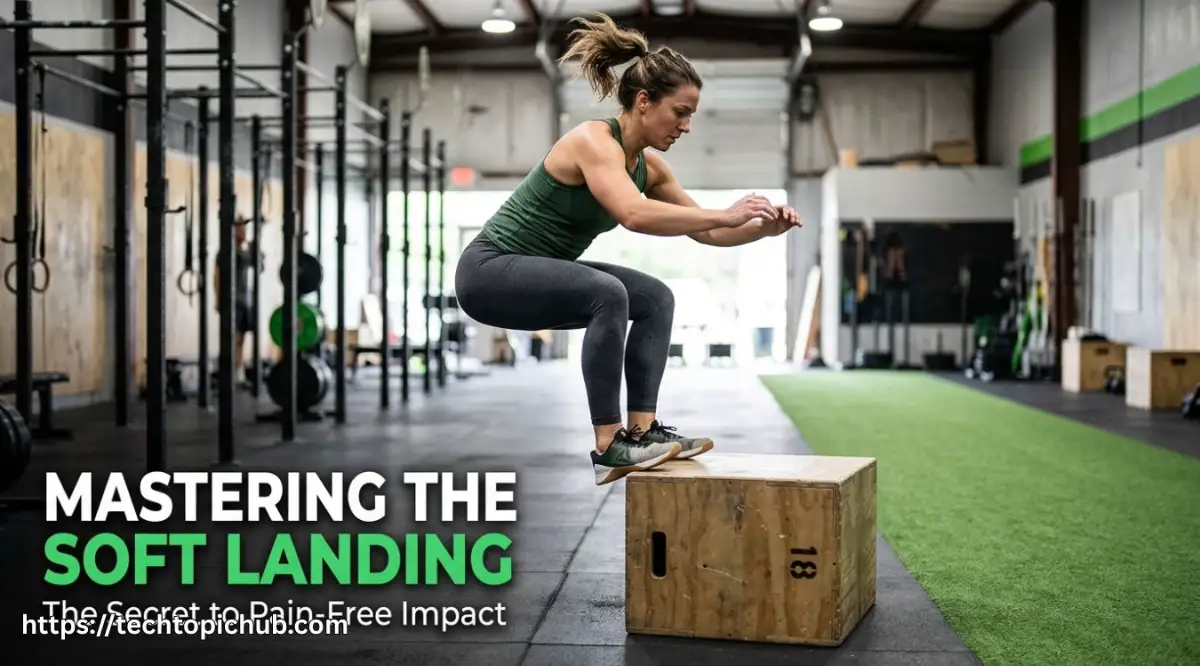
Cheat Sheet: How to Jump without Breaking Your Knees
- Master the "Quiet Ninja" Landing: If your feet make a loud thud, your form is completely wrong. Always land soft.
- Fix Your Hidden Muscles: Do not just focus on the mirror muscles. Train your hamstrings and glutes heavily for real health.
- Ditch the Spongy Shoes: Running shoes are terrible for jumping side-to-side. Grab flat-soled trainers instead.
- Start Tiny: Master small pogo jumps before you even look at a tall wooden box.
Rebuilding the Foundation Before You Take Flight
Let us break down exactly how to prepare your body for gravity-defying workouts without putting yourself in a wheelchair. Jumping is an amazing way to build explosive power, but you cannot just launch into it blindly. Think of your physical body like a high-performance car. You would never drive a sports car at top speed if the brakes were completely worn out. Your knees act exactly like those brakes, absorbing massive amounts of force every single time your feet touch the floor.
Mastering the Art of Shock Absorption
Before you even think about getting off the ground, you need to deeply understand how to land. Most joint injuries actually happen on the way down, not on the way up. When your foot strikes the gym floor with completely stiff, locked legs, the kinetic energy has nowhere to go. It travels straight up your hard shinbone and aggressively hits your fragile kneecap.
To protect yourself, you must learn to spread that physical force across your muscle fibers instead of your bone structure. Your glutes, hamstrings, and calves are beautifully designed to act like heavy-duty shock absorbers. When you actively bend your hips and knees smoothly upon landing, these large, powerful muscle groups take the hit safely.
Let me give you a very relatable real-life example. Imagine dropping a rigid glass bottle onto a concrete sidewalk. It instantly shatters into a million pieces. Now, imagine dropping a slightly deflated rubber ball. It compresses, absorbs the heavy impact, and stays completely intact. Your lower joints absolutely need to act like that soft rubber ball.
The 'Quiet Ninja' Landing Technique
If I could only give you one piece of advice for high-impact training, it would be this: silence is your absolute best friend. A loud, heavy thud means you are landing terribly. A soft, extremely quiet tap means your muscles are doing their job correctly and protecting your bones.
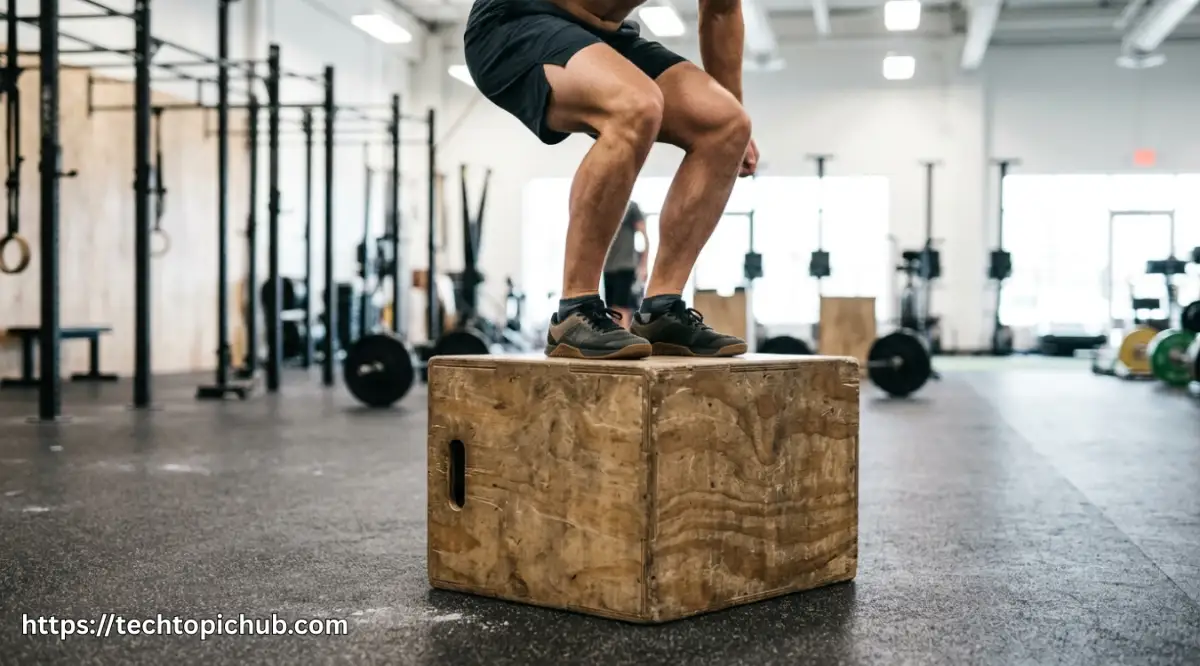 Try this simple physical test right now in your living room or office. Stand up and do a very small jump in place. Listen closely to the sound your feet make as they hit the floor. If it sounds like a heavy sack of potatoes dropping, you are putting your delicate joints at immense risk. Focus entirely on landing on the soft balls of your feet first, then smoothly rolling back to your heels while deeply bending your hips backwards.
Before you read the rest of this guide, watch this short visual breakdown to see exactly how a safe landing looks in real life—it will instantly change how you work out and save you from years of terrible knee pain.
Quick Reality Check: Impact Myths vs. Facts
- Myth: Hard landings build tougher bones over time.
- Fact: Loud, stiff landings just damage your cartilage. Your muscles should absorb the shock, not your bones.
- Myth: You need to do plyometric every day for health and fitness.
- Fact: Your central nervous system needs 48 hours to recover from heavy jump sessions. Rest makes you bouncier.
Strengthening the Hidden Support Cables
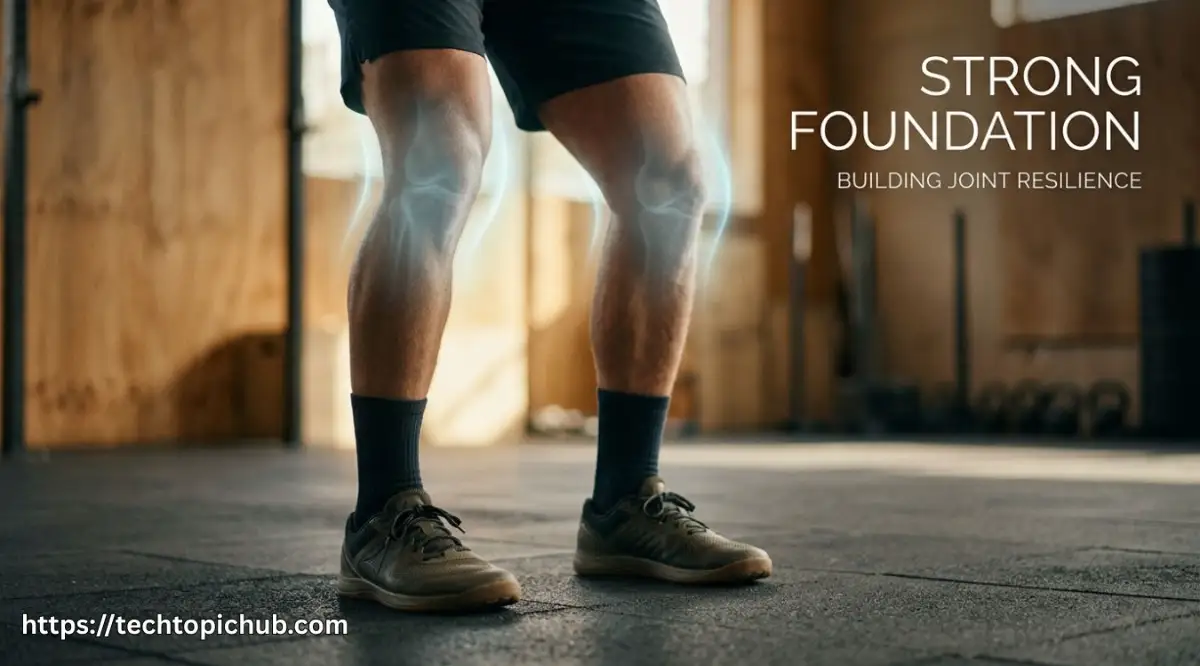
Your complex knee joint is basically held together by a tight network of ligaments and tendons. If the surrounding muscles supporting this network are chronically weak, the joint becomes highly unstable. You simply cannot build a tall, strong building on a weak, crumbling foundation.
Many gym-goers focus entirely on their quadriceps (the front of the thigh) because those are the muscles they see in the mirror. They completely ignore their hamstrings and glutes (the back of the leg). This creates a highly dangerous muscle imbalance over time. When your quads completely overpower your hamstrings, your kneecap actually gets pulled out of its proper tracking groove, causing a grinding pain.
To fix this issue right now, you need to dedicate serious weekly time to posterior chain exercises. Romanian deadlifts, heavy glute bridges, and stability ball hamstring curls are strictly non-negotiable. These specific movements act like thick steel cables, pulling your knee safely backward and keeping it perfectly stable during high-velocity gym impacts.
For a long time, I completely ignored the back of my legs and only trained the muscles I could clearly see in the mirror. That one silly mistake caused almost all of my knee pain! Once I started forcing myself to do hamstring curls and glute bridges twice a week, my joints finally stopped aching, and I realized how much balance really matters.
The Magic of Isometric Holds
Isometric exercises are the hidden secret weapon of professional athletes. These simply involve holding a specific, challenging position under tension without actually moving your body up or down. Wall sits and holding the absolute bottom of a split squat are perfect examples of this technique.
These stationary holds force your weak tendons to adapt over time and grow significantly thicker. Thicker tendons can naturally handle much more physical stress without snapping under pressure. Start by simply adding a basic 30-second wall sit to your daily morning routine. You will be genuinely amazed at how quickly your lower body starts to feel totally bulletproof.
My personal breakthrough finally happened when I stopped chasing extreme jump height and started focusing strictly on landing mechanics.
Pro Tip: I used to measure my daily gym progress by how high I could stack the heavy jump boxes, which constantly led to sharp joint aches. Once I forced myself to spend three full weeks practicing very low-level jumps with perfect, completely silent landings, my chronic knee pain completely vanished. I realized that true athletic power is about controlling your own body weight perfectly, not just throwing it around recklessly to show off.
The Gradual Bridge to Explosive Movements
You cannot successfully jump straight from lightly walking on a treadmill to doing intense, high-box depth jumps. Your central nervous system requires plenty of time to figure out the complex coordination required for jumping safely. We need to build a highly sensible progression ladder to get you there safely.
Start your new journey with very low-impact plyometrics. Simple pogo jumps are a fantastic, safe starting point. These are tiny, rapid bounces where your toes barely leave the ground. They safely condition your Achilles tendon and calf muscles to act like highly responsive, bouncy springs.
Once you feel totally comfortable and pain-free with pogo jumps, you can confidently move on to jumping rope. Jumping rope is incredible for naturally building rhythmic coordination. It actively teaches your feet to react incredibly quickly to the ground while keeping the overall impact incredibly low.
Moving Up to Box Jumps Correctly
When you finally feel ready for actual box jumps, pick a box that is ridiculously low. I am talking about something just six to eight inches off the ground. Your main goal here is not to challenge your ultimate vertical limit. Your primary goal is to practice jumping up smoothly and stepping down safely.
Never, ever jump backward off a high box. Jumping backward puts your fragile knees in an extremely awkward, highly vulnerable position. You cannot physically see where you are landing, and the backward falling momentum places a huge shearing force directly on your delicate patellar tendon. Always step down gently, one foot at a time, to protect your hard-earned fitness progress.
Creating a Bulletproof Warmup Sequence
A cold, tight muscle is a stiff muscle, and stiff muscles rapidly lead to nasty joint injuries. If you try to do explosive jumping movements within the first five minutes of entering the gym, you are basically asking for trouble. Your daily warmup routine needs to be highly strategic and focused.
Start by actively raising your core body temperature. A light five-minute jog or a fast walk on a steep treadmill incline is totally perfect. You really want to break a mild sweat before doing anything else. This literally warms up the thick synovial fluid inside your joints, making them glide smoothly like well-oiled machine gears.
Next, move straight into dynamic stretching. Walking lunges, active leg swings, and high knees are excellent, practical choices. They loudly tell your lazy nervous system that you are about to do some serious physical work. Skip the old-school static stretching where you just sit and hold your toes for a solid minute. That actually decreases your explosive muscle power right before a heavy workout.
Activating the Lazy Glute Muscles
Your glutes are the main, powerful engine for any type of jumping. If they are completely "asleep" from sitting in an uncomfortable office chair all day long, your lower back and knees will forcefully try to do the work instead. This exact issue is a primary cause of joint pain during any exercise.
Perform a few slow sets of banded lateral walks right before you start jumping. Place a small, tight resistance band around your ankles and take wide, deliberate steps side to side. You should quickly feel a deep, intense burn in the sides of your hips. This actively "wakes up" the lazy glutes and ensures they take the massive brunt of the landing force.
Recognizing the Red Flags of Overtraining
Your body is constantly sending you warning signals. The main problem is that most of us simply refuse to listen to them. There is a massive, highly important difference between normal muscle soreness and dangerous joint pain. You absolutely must learn to identify these early warning signs.
Normal muscle soreness usually feels like a dull, broad ache smoothly spread across the meaty part of your leg. It naturally goes away after a day or two of good rest. Joint pain, on the other hand, feels sharp, highly localized, and often gets significantly worse when you try to walk up or down stairs.
If you feel any kind of sharp, stabbing pain directly on or just below the kneecap, you must stop your workout immediately. Trying to push bravely through sharp joint pain is the absolute fastest way to earn a permanent, life-altering injury. Take a few days off entirely, focus heavily on gentle mobility work, and apply an ice pack if there is any noticeable swelling.
The Immense Importance of Recovery Days
Tendons and ligaments actually take much longer to recover than normal muscles because they have a very poor, limited blood supply. If you do heavy high-impact training every single day, you are slowly breaking down these fragile tissues without ever giving them proper time to rebuild.
Keep your explosive plyometric sessions strictly limited to two or three times a week. On your designated off days, focus solely on low-impact, friendly activities like swimming, light cycling, or gentle yoga. This active recovery safely pumps fresh, oxygenated blood into your tired legs, carrying essential nutrients that rapidly speed up the healing process.
My Go-To Active Recovery Menu (Pick One on Rest Days):
- The Pool Walk: 15 minutes of chest-deep water walking (zero impact on knees).
- The Yoga Flow: 20 minutes focusing heavily on hip openers and downward dogs.
- The Spin Out: 15 minutes on a stationary bike at very low resistance just to get the blood flowing.
Doing these guarantees, you stay on track with your fitness goals without breaking your body.
Why Proper Footwear Changes Everything
You would never logically attempt to run a full marathon in formal leather dress shoes. Similarly, you should never do high-impact jump training in soft, heavily squishy running shoes. I see this massive mistake in gyms all over the world every single day.
Thick running shoes are specially designed to propel your body forward in a straight line. They have thick, highly cushioned heels that make your entire foot completely unstable when moving side to side or landing firmly from a vertical jump. It is honestly like trying to balance on top of a soft marshmallow. Your ankle rolls slightly upon impact, and that dangerous instability travels straight up your leg to destroy your knee.
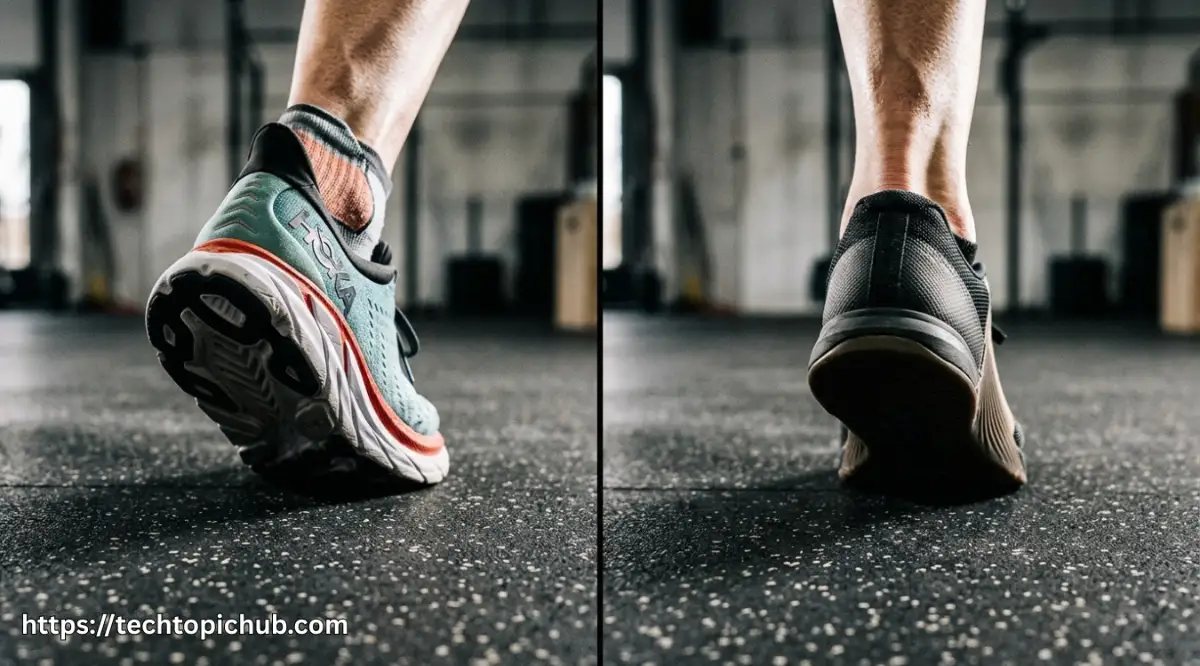 You desperately need a shoe with a flat, firm, and comfortably wide sole. Modern cross-training shoes are specifically built for this exact physical purpose. They effectively keep your foot safely locked into place and provide a rock-solid base so your entire leg can align perfectly. Investing right now in the correct pair of shoes is essentially buying cheap, effective insurance for your overall health.
Next-Level Joint Defense Strategies for High-Impact Athletes
Once you master the basic landing mechanics, you have to look at the bigger picture of your physical recovery. Many people successfully fix their jumping form but still experience nagging joint aches because their internal system is incredibly weak. Building bulletproof knees requires a comprehensive approach that goes far beyond just the gym floor. You need to actively nourish your connective tissues from the inside out every single day.
Interestingly, the way you care for your joints is heavily connected to your daily skin care routine. When we talk about anti-aging and getting beautiful, smooth skin, we almost always talk about collagen production. That exact same collagen protein is the primary building block of your tendons, ligaments, and knee cartilage. The expensive serums you buy for skin and beauty work on the outside, but eating a diet rich in vitamin C and amino acids heals you from within.
By prioritizing your internal nutrition, you naturally promote excellent skin health while simultaneously repairing the micro-tears in your lower body. Hydration is another massive factor that most gym-goers completely ignore. Your knee joint relies heavily on synovial fluid to keep the bones gliding smoothly without heavy friction. When you are severely dehydrated, this protective fluid actually becomes thick and sticky.
Drinking plenty of water acts like fresh motor oil for your biological engine. I highly recommend drinking at least half your body weight in ounces of water every single day. If you want to dive deeper into how proper hydration affects tendon elasticity, checking out clinical research on tendon adaptation is incredibly eye opening.
Another major pro-level secret is filming your own workouts using your smartphone. You might honestly believe you are landing softly, but your body awareness can easily trick you. Set up your phone camera against a water bottle and record your box jumps in slow motion. Watch closely to see if your knees violently cave inward the exact second your feet hit the floor.
If your knees are heavily buckling inward, this is a clear sign of weak hip abductors. You need to immediately add targeted hip-strengthening movements to your weekly routine before continuing with explosive jumps. Exploring modern lifestyle tips can often introduce you to new recovery tools like massage guns or specialized compression gear.
Sleep is the final, non-negotiable piece of the joint recovery puzzle. Your body literally cannot repair damaged connective tissue while you are awake and moving around. Deep, uninterrupted sleep is the only time your brain releases heavy doses of human growth hormone. Chronic sleep deprivation will leave your tendons incredibly weak and prone to snapping.
If outside life stress is keeping you awake at night, you have to manage those issues actively. For example, trying to balance a tight household budget or building an emergency fund without ignoring your debt can cause massive sleep anxiety. You must prioritize your mental peace just as much as your physical workouts.
 The Hidden Danger Zones Wrecking Your Lower Body
When people try to transition into advanced plyometric, they usually fall into a few highly predictable, dangerous traps. Instead of giving you a boring, generic list of mistakes, let us look at some real-life scenarios. The most common trap is what I call "The Exhaustion Finisher." Many athletes decide to add heavy box jumps at the very end of a brutal, hour-long leg day workout.
This is an absolute recipe for a catastrophic hospital visit. Jumping requires your central nervous system to be completely fresh and highly responsive. If your legs are already shaking from heavy squats, your muscles simply cannot absorb the heavy landing impact. All that massive, violent force bypasses your tired muscles and goes directly into your fragile knee joints.
Always place your most explosive, high-impact movements at the very beginning of your workout routine. You want your body to be warm, but very completely energized and fatigue-free. Another massive danger zone is completely ignoring the actual surface you are jumping on. The floor underneath your feet dictates exactly how much shock your body has to absorb.
I once watched a person do highly aggressive depth jumps on a solid concrete sidewalk outside his house. Concrete offers zero give, meaning the heavy shockwave travels instantly up your shinbones and attacks the patellar tendon. You should always look for specialized rubber gym flooring, fresh grass, or a slightly bouncy wooden basketball court.
You also have to strictly avoid the "Ego Jumping" mindset. Social media is heavily flooded with videos of fitness influencers jumping onto ridiculously high stacks of foam boxes. Normal people see this and immediately feel pressured to match that extreme height to feel successful. What they do not see is the years of quiet, boring foundational work those athletes put in behind the scenes.
When you jump onto a box that is excessively high, you are forced to pull your knees aggressively up to your chest just to clear the edge. This forces you to land in a deep, highly unstable squat position with your spine heavily rounded. It completely destroys your landing mechanics and places massive shearing force on your lower back. Focus on maximum explosive power, not just the physical height of the wooden box.
Finally, relying strictly on pain pills to push through joint discomfort is a terrible long-term strategy. Over-the-counter anti-inflammatory drugs only mask the painful symptoms; they do absolutely nothing to fix the weak tendon causing the issue. If you constantly mask your natural warning signs, you will eventually push your body completely past its breaking point.
Your Blueprint for a Pain-Free Athletic Future
Transitioning safely to high-impact exercise is very possible for anyone, regardless of your current athletic background. You just need to respect your body's natural adaptation timeline and completely drop your ego at the gym door. Think of this process as slowly turning up the volume dial on a stereo, rather than just flipping a heavy power switch.
For your next thirty days, I want you to commit entirely to the quiet landing rule. Whether you are doing simple jumping jacks or stepping off a small curb, focus heavily on making zero noise. This single, simple habit will forcefully teach your brain how to engage your glutes and hamstrings properly. You will be genuinely shocked at how much lighter and more athletic your feet begin to feel.
Make sure you are constantly feeding your body the right nutrients and spending adequate time on deep tissue recovery. Reading reliable sports medicine guidelines can give you a massive advantage over the average gym-goer. Keep expanding your knowledge by actively discovering new topics related to biomechanics and human longevity.
Remember that building strong, highly resilient joints is a marathon, not a short weekend sprint. Celebrate the small, quiet victories, like waking up without knee stiffness or comfortably playing a game of basketball with your friends. Your future self-will heavily thank you for taking the time to build a rock-solid, unbreakable foundation right now.
I personally spent years fighting frustrating knee injuries simply because I was too stubborn to slow down and learn the basics. My biggest turning point was realizing that true athletic power comes from immense control, not just reckless effort. I sincerely hope this guide helps you protect your body so you can confidently enjoy an incredibly active, pain-free life starting today.
Burning Questions about Impact Training and Joint Safety
Is it completely normal for my knees to pop during jump exercises?
A painless popping or cracking sound is usually just trapped gas bubbles releasing inside the joint fluid. However, if a sharp pain or sudden swelling accompanies the loud popping, it is a major warning sign. You should immediately stop jumping and consult a physical therapist to check for cartilage damage.
How long does it realistically take joints to get used to plyometric?
Unlike heavy muscles that can grow stronger in just a few weeks, tendons and ligaments take much longer to adapt. It typically takes about twelve to sixteen weeks of consistent, low-level training for connective tissue to physically thicken. Patience is highly required if you want to completely avoid sudden tendon ruptures.
Can I safely do jump training if I already have bad knees?
It highly depends on the exact medical cause of your specific knee pain. If you have severe osteoarthritis or a previous torn ligament, heavy jumping might permanently worsen your condition. You should definitely get full medical clearance from an orthopedic doctor before attempting any explosive gym movements.
What should I actually do right after a heavy jump workout?
Immediately after finishing your explosive movements, spend ten minutes doing light, active recovery like walking or slow cycling. This safely flushes out the heavy lactic acid buildup and slowly brings your heart rate down. Follow that up with gentle, static stretching of your tight calves and heavy hamstrings.
Should I use ice or heat on my knees after high-impact training?
If your joints feel highly swollen, hot, or sharply painful right after the gym, apply an ice pack for fifteen minutes to reduce the acute inflammation. If you are just dealing with normal, stiff muscles the next morning, use a warm heating pad. Heat safely increases local blood flow and rapidly relaxes tight, sore muscle fibers.
Are knee sleeves actually helpful for jumping workouts?
Thick neoprene knee sleeves provide excellent physical warmth and mild compression to the joint area. They do not magically prevent structural injuries, but they keep the synovial fluid perfectly warm during your rest periods. Many athletes find that this comforting warmth significantly reduces minor aches during heavy training sessions.
Looking back, going through those frustrating injuries was actually a blessing because it forced me to stop rushing and start training smarter. I promise you that if you take your time, drop your ego, and follow these simple steps, you can completely rebuild your body. Start practicing your quiet landings today and you will be amazed at how quickly your confidence comes back!
Medical Disclaimer: The information provided in this article is for educational and informational purposes only and does not constitute professional medical advice. Always consult with a qualified healthcare provider or physical therapist before starting any new high-impact exercise program, especially if you have pre-existing joint conditions or chronic pain.