
The Hidden Weight of Morning Stiffness: My Personal Battle
Do you start dreading your mornings the night before, just knowing how stiff your knees and hips will feel when you wake up? I get it. Rolling out of bed shouldn't feel like you're operating a rusty machine. After years of gripping my nightstand just to steady my shaking legs, I finally figured out how to stop the morning joint pain for good. Let me show you exactly what worked for me—no fluff, just real habits you can start today.
I still remember the exact morning I tried to get out of bed and almost fell flat on the floor. My knees felt like they were packed tightly with crushed glass. I had always considered myself an incredibly active and energetic person. But suddenly, just walking down my front porch stairs became a massive, terrifying challenge for me. I felt deeply scared that my own body was giving up on me way too soon. The simple things I loved doing, like gardening and playing with my dog, suddenly felt like impossible chores.
The mental toll of aching joints is often much worse than the physical feeling. You completely lose your natural physical confidence. You start overthinking and calculating every single step you take on a slightly uneven sidewalk. Getting down into a low chair or trying to sit on the floor becomes something you actively dread doing.
This silent struggle completely ruins your mental peace. You lie awake at night wondering if this is just what getting older is supposed to feel like. You worry about becoming a burden to your children or your spouse. That heavy fear of losing your independence is always sitting right there in the back of your mind.
But here is the good news I want to share with you today. You do not have to accept this pain as a normal part of getting older. I finally learned how to fight back, and I want to show you exactly how you can do it too.
Quick Summary: What You Are Going to Learn Today
- Morning Motion: Why tiny, gentle movements in bed are better than pushing through sharp pain.
- The Food Fix: How normal kitchen spices like turmeric block the exact same pain enzymes as pills.
- Water is Padding: Why treating your joints like a dry sponge is ruining your cartilage.
- The Fascia Secret: How spending 2 minutes with a soft foam roller before bed totally changes your mornings.
How to Rebuild Your Body's Natural Shock Absorbers
Most people completely misunderstand how their joints actually work. They think of their knees and hips like the tires on a car. They assume that with enough miles, the rubber simply wears away until there is nothing left. But your body is not a dead piece of rubber. It is a living, breathing system that desperately wants to heal itself.
To fix the problem, we need to treat the root cause of the friction. We are going to look closely at the exact habits that repair your cartilage.

The Rusty Hinge Analogy and Why You Hurt
Think of a door hinge that has been sitting in the rain. When you try to open that door, it screams, grinds, and fights back. Your joints work in the exact same way when they lack proper lubrication. Inside your knee, there is a special liquid called synovial fluid.
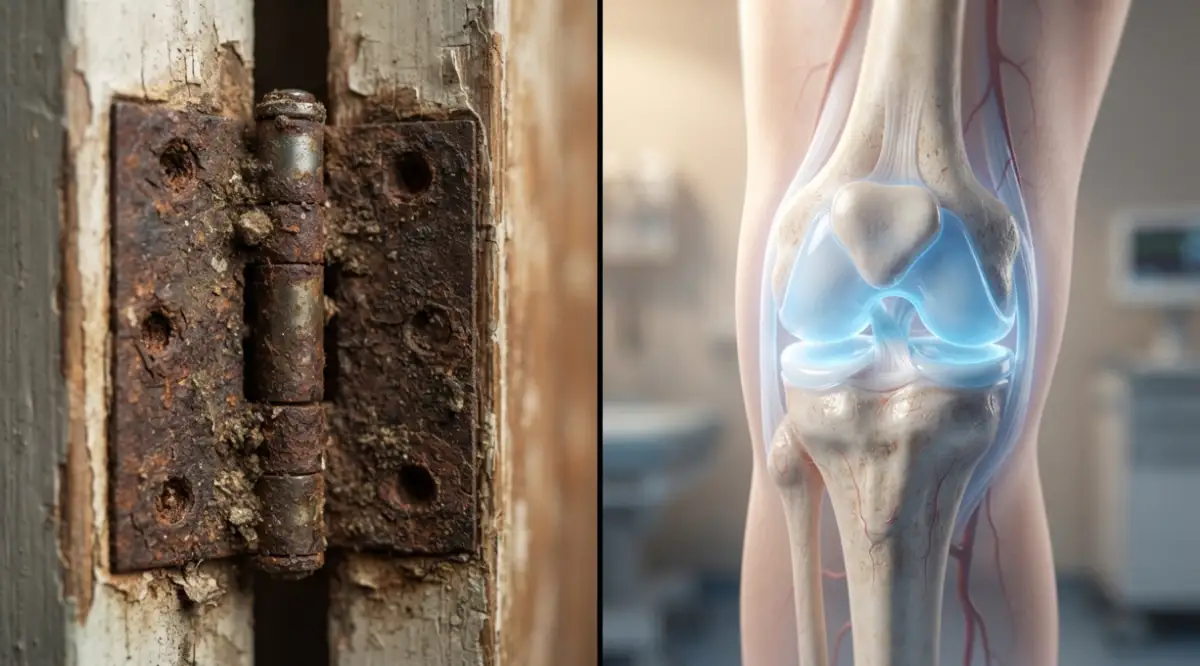
When you sit still for long hours, this fluid becomes thick, sticky, and useless. That is exactly why your first few steps in the morning are always the most painful. The fluid inside your body has turned into thick glue overnight.
The Secret Power of Daily Lubrication
The only way to thin out this fluid is through gentle, consistent movement. You do not need to run a marathon to fix this issue. You just need to tell your body to start pumping the natural oil back into the hinges.
Small, painless movements are the absolute best medicine for stiffness. Simply rotating your ankles or bending your knees while sitting on the edge of your bed changes everything. The goal is to warm up the machine before you put any heavy weight on it.
I used to think pushing directly through the sharp pain was the right thing to do. My biggest mistake was ignoring the sharp twinges in my left knee during long morning walks. Now, I always stop and switch to a low-impact activity like swimming the moment I feel that specific sting, and it has saved me so much grief.
A Routine to Start Your Day Right
If you want to feel a massive wave of relief right this second, hit play on this simple 5-minute morning stretching routine that literally saved my knees, and then keep reading below for my best secrets on keeping that joint pain away all day long.
Feeding the Cartilage: The Anti-Inflammatory Approach
Your daily diet plays a massive role in how much pain you feel. When you eat highly processed foods and sugar, your body creates internal inflammation. This inflammation travels straight to your weakest points, which are usually your knees, hips, and hands.
You need to start eating foods that naturally cool down this internal fire. Omega-3 fatty acids are basically liquid gold for your stiff joints. You can find high amounts of this natural medicine in fatty fish like salmon, sardines, and mackerel.
If you do not like eating fish, walnuts and chia seeds are amazing alternatives. You should also add colorful berries to your morning breakfast bowl. Blueberries, strawberries, and blackberries are packed with antioxidants that directly protect your joint tissues from breaking down.
Spices That Act Like Natural Painkillers
You probably have incredibly powerful medicine sitting right inside your kitchen cabinet right now. Turmeric and ginger are legendary for their ability to stop swelling. Turmeric contains an active compound called curcumin, which blocks the exact same pain enzymes that over-the-counter pills target.
My Go-To Anti-Inflammatory Cheat Sheet:
If you aren't sure how to mix these natural painkillers into your day, here is exactly how I do it:
- Morning: 1 cup of warm water with a pinch of turmeric and black pepper.
- Snack: A handful of raw walnuts (great for those Omega-3s).
- Dinner: Half a teaspoon of freshly grated ginger in my evening tea.
- Try sticking to this exact routine for just seven days. You will be surprised by how much lighter your knees feel.
Try adding a small pinch of black pepper when you use turmeric in your food. The black pepper helps your body absorb the healing compounds much faster. A warm cup of ginger tea in the evening can significantly reduce how stiff you feel the next morning.
The Heavy Truth About Body Weight
We need to have a very honest conversation about gravity and physics. Every single time you take a step, your knees absorb a force equal to exactly one and a half times your total body weight. This means if you are carrying just ten extra pounds, your knees feel fifteen extra pounds of crushing pressure with every single step.
Losing a small amount of weight creates a massive reduction in pain. You do not need to become extremely skinny to see amazing results. Losing just five percent of your current body weight can completely change how your hips and knees feel.
When you take that heavy pressure off the cartilage, the tissue finally gets a chance to breathe. The natural swelling goes down, and walking becomes enjoyable again.
My biggest mistake early on was thinking I had to starve myself or do crazy, exhausting workouts to drop those few extra pounds. I finally realized that simply swapping my late-night sugary snacks for a handful of berries did the trick, and my knees felt noticeably lighter within just two weeks. Do not overcomplicate this process; just focus on making tiny, easy food swaps that you can actually stick with every day.
Busting Common Aging Myths
There is so much terrible advice floating around on the internet. Let us clear up some of the biggest misunderstandings about aging bodies.
Hydration: The Forgotten Shock Absorber
People rarely connect their daily water intake to their aching knees. But you need to understand that your cartilage is made of almost eighty percent water. When you are mildly dehydrated, your body steals water from your joints to keep your main organs perfectly safe.
This leaves your internal shock absorbers feeling completely dried out and brittle. Imagine jumping up and down on a dry, crusty kitchen sponge. It provides absolutely zero protection and easily breaks apart.
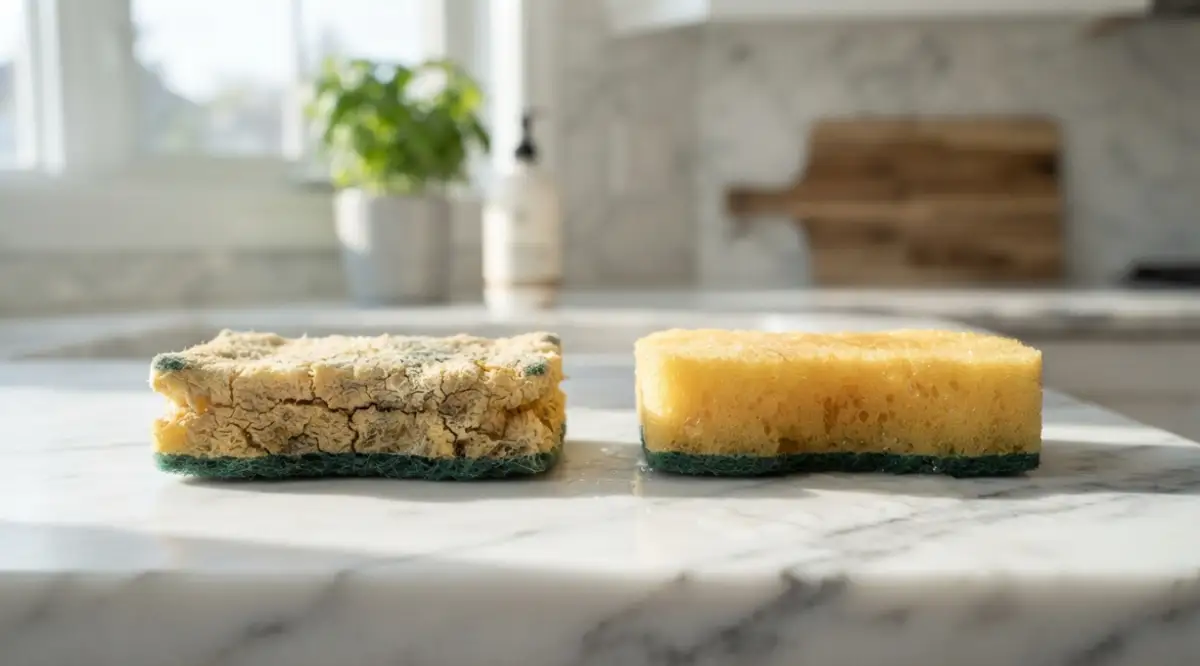
Now imagine jumping on a completely wet, soft sponge. It bounces right back into shape. That is exactly what drinking enough water does for your hips and knees.
How to Drink Enough Water for Your Joints
You should try to drink a large glass of water the absolute second you wake up. Your body has just gone eight hours without a single drop of moisture. Do not wait until you actually feel thirsty to start drinking water.
Carry a reusable water bottle with you wherever you go during the day. If plain water feels too boring for you, squeeze some fresh lemon or cucumber slices into the bottle. The main goal is to keep your urine a very light, clear yellow color all day long.
Building Muscle to Protect the Bones
Your bones do not operate entirely on their own. They are fully supported by a complex system of muscles and strong tendons. If your leg muscles are weak, your knee joint takes the full, brutal impact of every step you take.
By strengthening the muscles directly around the knee, you create a natural brace. The strong muscle absorbs the heavy shock before it ever reaches the delicate bone. Strong quadriceps and hamstrings are your best defense against daily pain.
You do not need to lift massive, heavy weights at a loud gym to build this protection. Simple bodyweight exercises like wall sits and straight leg raises work perfectly well. Doing these gentle exercises while watching television can make a massive difference in your stability.
The Power of Low-Impact Movement
High-impact activities like running on hard concrete can sometimes aggravate sensitive knees. If you love staying active, you just need to change the surface you play on. Swimming is often considered the absolute perfect exercise for an aging body.
When you are in the water, gravity is completely removed from the equation. You can move your legs through a full range of motion without any grinding pressure. The water also provides natural, smooth resistance to help build up your strength safely.
Cycling is another incredible option for building healthy legs. It forces your knees to bend and straighten thousands of times, pumping that healthy synovial fluid everywhere. Just make sure your bicycle seat is at the correct height to avoid straining the front of your knee.
Sleep: The Ultimate Healing Window
Your body does all of its major repair work while you are deeply asleep. If you are constantly tossing and turning, your joints never get the chance to truly heal. Poor sleep directly increases the inflammatory markers floating around in your blood.
When you are exhausted, your muscles are tight and tense all day long. This extra tension constantly pulls on your joints, causing even more friction. Getting seven to eight hours of solid rest is not a luxury, it is a medical necessity.
Try putting a thick pillow directly between your knees when you sleep on your side. This simple trick keeps your hips perfectly aligned and removes the pressure from your lower back. If you sleep on your back, putting a soft pillow under your knees will give you incredible relief.
Managing Stress to Stop Muscle Tension
Mental stress directly causes physical stiffness in the body. When you are constantly worried or anxious, your shoulders creep up to your ears. Your back tightens up, and your hips lock entirely into place.
This constant physical tension squeezes your joints together like a tight vise grip. You have to find natural ways to release this daily mental pressure. Deep breathing exercises can completely reset your nervous system in just a few minutes.
Simply breathing in deeply through your nose for four seconds and out through your mouth for six seconds works wonders. It signals to your brain that you are safe, allowing your tight muscles to finally relax. Adding a short meditation routine to your morning can keep your entire body feeling loose and flexible.
Knowing When to Seek Professional Help
While natural remedies are incredibly powerful, you must be smart about sharp pain. There is a huge difference between normal morning stiffness and an actual medical injury. If your knee suddenly swells up like a giant balloon, you need to see a doctor immediately.
If the joint becomes extremely hot to the touch or bright red, that is a warning sign of an infection. Do not try to treat severe, locking pain with just ice and turmeric. An expert physical therapist can look at exactly how you walk and pinpoint the mechanical issue perfectly.
Wearing the Right Shoes for Your Foundation
Your feet are the foundation of your entire physical house. If your shoes are worn out or lack proper arch support, your whole body suffers. A bad pair of shoes forces your ankles to roll inward with every step.
This poor alignment travels straight up your legs, ruining your knees and tweaking your hips. You should replace your daily walking shoes the moment the bottom tread starts to look smooth. Spending money on high-quality, supportive footwear is the cheapest joint insurance you can possibly buy.
Make sure your shoes have plenty of room in the toe box. When your toes can spread out naturally, your balance improves significantly. Better balance means less sudden, jerky movements that can easily tear a delicate ligament.
By completely changing how you move, eat, and sleep, you take full control of your physical health. The power to age beautifully and comfortably is completely in your own hands. You just have to make the choice to start taking care of your amazing body today.
Advanced Tactics to Keep Your Body Moving Freely
Once you master the basic habits of stretching and eating well, you need to look at the next level of physical care. Long-term mobility is not just about what you do today. It is entirely about how you protect your body from future damage.
Most people completely ignore the hidden systems inside their bodies until something loudly breaks. But if you want to walk easily in your later decades, you have to be incredibly proactive. Let us talk about some powerful expert strategies that most physical therapists only share during private sessions.
The Hidden Web Inside You: Understanding Fascia
Right directly under your skin, there is a massive, complex web of connective tissue called fascia. Think of it like a tight, flexible superhero suit that covers every single muscle and bone in your body.
When you sit at a desk or on a couch for too long, this suit shrinks and becomes incredibly sticky. It starts pulling aggressively on your knees, your hips, and your lower back. You might think you have a joint problem, but you actually have a tight fascia problem.
According to medical experts who study human anatomy, understanding how your fascia works is the golden secret to staying totally flexible. When this tissue dries out, it feels exactly like wearing a sweater that is three sizes too small. Every time you reach for something, the fabric sharply pulls back against you.
The Magic of Self-Myofascial Release
You can easily fix this sticky tissue issue at home using a simple tool called a foam roller. A foam roller is just a dense piece of foam shaped like a log. By slowly rolling your leg muscles over this tool, you act like a rolling pin smoothing out pizza dough.
This deep pressure forces fresh water and blood directly back into the dry tissue. At first, using a foam roller might feel a little bit uncomfortable. But after just two minutes, your legs will feel amazingly light and deeply relaxed.
You should make it a strict rule to foam roll your thighs and calves before you go to bed. This simple nightly habit completely releases the physical tension you collected all day. You will wake up the next morning feeling incredibly loose.
Quick Tip: Pick the Right Foam Roller
Don't just buy the first foam roller you see at the store. If you are a beginner, start with a smooth, soft-density roller. The ones with hard plastic spikes (grid rollers) will hurt too much if your fascia is super tight. Give your body a few weeks to adapt to the soft foam before moving up to anything firmer.
The Great Debate: Heat Therapy Versus Cold Therapy
Whenever someone twists an ankle or feels a sudden, sharp pain, they instantly ask if they should use ice or heat. Using the wrong temperature can actually make your healing process much slower. You need to memorize a very simple rule for pain management.
Ice is entirely for brand new, sharp injuries that are currently swollen and angry. The cold temperature directly shrinks your blood vessels and powerfully numbs the shooting pain. You should only use ice for the first two days after a sudden tweak.
Heat therapy is your absolute best friend for chronic, lingering stiffness. If you have been dealing with the exact same stiff hip for three months, put a warm heating pad on it. The gentle heat from a warm compress opens up the blood vessels, bringing fresh oxygen to the tired area.
The Timing Hack for Collagen Supplements
Many people spend a lot of money on collagen powder, hoping it will magically rebuild their cartilage. They just dump a scoop into their morning coffee and hope for the absolute best. But human biology requires a very specific setup to actually use that protein.
If you want the collagen to actually reach your achy knees, you need to take it roughly thirty minutes before you exercise. When you start moving, your blood pumps directly into the moving joints. The physical movement acts like a powerful sponge, pulling the floating collagen straight into the cartilage.
You also need to pair that protein with a high dose of Vitamin C. Your body physically cannot process or build new tissue without Vitamin C acting as the main builder. Simply drinking a small glass of orange juice with your supplement changes everything.
Balancing Your Wealth and Physical Health
We often spend endless hours worrying about our bank accounts while completely ignoring our physical bodies. A sudden injury can set you back just as painfully as figuring out how to manage your personal finances after losing a job. When you lose your mobility, your entire quality of life drops significantly.
You need to start treating your physical energy exactly like money. Just as you sit down to create a realistic monthly budget to protect your cash, you need a daily movement budget. Do not spend all your physical energy on Monday and leave yourself completely broken by Wednesday.
Making smart choices about your daily physical habits requires deep focus. Trying random, unproven health trends is a lot like unsecured borrowing against your future health. It feels easy today, but the long-term cost is always massive.
If you feel completely overwhelmed by different medical opinions, take a step back. Deciding between a million different treatments can feel just as confusing as choosing between fixed vs variable personal loans. Always focus on the basic, proven fundamentals first before trying complicated solutions.
Just remember that your body's recovery capacity matters deeply. Knowing your physical limits is just as important as understanding how a debt-to-income ratio affects your mortgage. If you ever need more guides on improving your lifestyle, feel free to explore our main resource hub for daily inspiration.

Silent Habits That Secretly Destroy Your Cartilage
Most people do not wake up one day and suddenly lose their ability to walk comfortably. The damage happens incredibly slowly, day after day, through tiny bad habits. If you want to protect your body, you have to stop making these very common, dangerous mistakes.
People often think they are doing the right thing by trying to act tough. But your body does not care about your ego. It only responds to friction, pressure, and proper alignment. Let us look deeply at the major traps you need to avoid entirely.
The "Weekend Warrior" Trap
This is probably the most common way active people completely destroy their knees and ankles. You sit at a cramped computer desk from Monday all the way through Friday. Your muscles get incredibly tight, and your brain is stressed.
Then, Saturday morning arrives, and you decide to play three hours of intense tennis or go on a massive hike. Your body is totally unprepared for this sudden explosion of aggressive movement. Your tight muscles fail to support your joints, and the delicate ligaments take all the brutal shock.
You have to maintain a steady, light level of activity throughout the whole week. Doing twenty minutes of gentle walking every single day is so much better than doing three hours of heavy exercise on Saturday. Consistency is the only thing that keeps your body safe from sudden tears.
Ignoring the Barefoot Danger
Walking completely barefoot inside your house feels completely natural and freeing. But if you have hardwood floors, stone tiles, or concrete under your carpets, you are doing massive damage. These totally unforgiving surfaces send a harsh shockwave straight up your heel into your lower back.
Every single time your bare heel strikes a hard floor, your knee absorbs the angry vibration. Over a few years, this daily micro-trauma grinds away the soft padding in your joints. You might not feel it today, but your future self will definitely suffer the painful consequences.
You must buy a dedicated pair of highly supportive indoor house shoes or thick recovery sandals. Put them right next to your bed and slide into them the absolute second your feet hit the floor. This tiny change creates a soft, protective cushion that your body will deeply thank you for.
The Posture Disaster of the Modern Couch
At the end of a very long, tiring day, we all love to sink deeply into a soft couch. We slouch down, pull our knees up, and completely round our lower spines. This relaxed position feels amazing for about ten minutes.
But staying in this collapsed shape for three hours while watching movies creates huge problems. It totally stretches out the ligaments in your back and forcefully tightens the front of your hips. When you finally try to stand up, your body screams because it is completely locked in the wrong position.
You need to place a firm pillow right behind your lower back when you watch television. Try to keep your feet totally flat on the floor so your hips stay neutrally aligned. If you want to relax deeply, it is actually much safer to lie totally flat on the floor than to sit twisted on a soft sofa.
The Danger of Ignoring a Slight Limp
Let us say you get a tiny, annoying blister on your left big toe. To avoid the sharp pain, you naturally start walking slightly on the outside edge of your foot. You probably do not even notice you are doing it.
But this tiny shift in your walking pattern throws your entire physical chain completely out of balance. Your left knee starts bending at a weird angle, which then twists your left hip sideways. Suddenly, three days later, your lower right back is in absolute agony.
Never try to aggressively push through a bad limp. If one part of your leg hurts, stop walking and rest until you can walk with a perfectly straight, normal stride. Ignoring a small alignment issue always creates a much larger, more expensive physical problem.
Falling for the Sugar Trap
You already know that drinking sugary sodas is bad for your waistline and your teeth. But highly refined sugar is actually the number one enemy of healthy, pain-free movement. Sugar directly feeds the exact enzymes that aggressively break down your cartilage.
When you eat a large piece of cake, your body floods with inflammatory chemicals within just a few hours. Many doctors strongly advise adopting a clean, anti-inflammatory dietary approach to protect your tissue. If your joints always ache loudly the morning after a big holiday meal, the sugary desserts are directly to blame.
Try swapping your sweet evening treats for a bowl of fresh cherries or dark grapes. These specific fruits have natural sugars, but they also contain powerful compounds that naturally fight swelling. You can easily satisfy your sweet tooth without setting your body on fire from the inside.
A Blueprint for Your Best Years Ahead
Taking total control of your physical health is the greatest gift you can ever give yourself. You are not a helpless passenger just waiting for your body to naturally break down. You are the active driver, and you have all the tools right in front of you.
Start by changing just one tiny habit tomorrow morning. Drink that big glass of water, do a three-minute stretch on the edge of your bed, and put on your supportive shoes. You do not have to fix every single problem in one day.
Small, incredibly positive choices stack up quickly over time. Within a few weeks, you will suddenly notice that standing up from a chair no longer requires a deep breath. You will find yourself walking faster, smiling more, and feeling that beautiful youthful energy returning.
I honestly know exactly how dark and frustrating it feels when your body refuses to cooperate. But I also know the incredible, warm joy of finally reclaiming your freedom and walking easily again. Take that very first step today, and proudly show the world that your best, most active days are still ahead of you.
Common Questions About Aging Joints
Can worn-out cartilage ever naturally grow back?
Cartilage does not have its own blood supply, so it cannot completely regrow like regular skin. However, you can significantly improve the health of the remaining cartilage by staying active and hydrated. Proper movement forces natural lubrication into the area, making the existing padding much thicker and softer.
Is walking on a treadmill bad for sensitive knees?
Walking on a treadmill is generally totally safe, but the hard, flat surface can become repetitive. If your knees hurt, try setting the treadmill to a very slight incline like one or two percent. This small angle changes the physical impact and gently shifts the load entirely to your stronger glute muscles.
What is the absolute best vitamin for stiff hips?
Omega-3 fatty acids and highly concentrated Curcumin (from turmeric) are considered the absolute best natural supplements. They directly target the internal swelling that causes a hip to feel completely locked up. Always make sure to take these supplements consistently, as they need time to build up in your system.
How long does it take for diet changes to reduce pain?
Most people notice a massive, positive difference in their morning stiffness within just two to three weeks of cutting out heavy sugar. Your body is incredibly fast at clearing out inflammatory chemicals when you stop feeding the fire. Stay completely consistent with your healthy eating, and your body will quickly reward you.
If someone like me, who used to cry just trying to walk down the front steps, can get back to a pain-free life, I promise you can do this too. Your amazing body is ready to heal the moment you give it the right daily habits and a little bit of patience. Take that very first step today, and I know you will look back a month from now so incredibly proud of the choice you made to fight back.
Disclaimer: The content provided in this blog post is completely for informational and educational purposes only. It is not intended to be a substitute for professional medical advice, proper diagnosis, or formal treatment. Always directly seek the advice of your physician or other qualified health providers with any specific questions you may have regarding a medical condition or physical pain.