

Have you ever spent half your paycheck on fancy night creams, only to wake up looking like you barely slept? I totally get it. For years, I blamed my dull, gray skin on genetics and bad luck, ignoring the fact that I was surviving on four hours of sleep and endless midnight scrolling. It turns out, you cannot buy your way out of a broken biological clock. Let's talk about why your bedtime habits are actually your most powerful skincare routine.
I still remember waking up on the morning of my best friend's wedding, looking in the mirror, and wanting to cry because my face looked so incredibly dull and aged. I was spending almost half my paycheck on luxury serums while secretly surviving on just four hours of sleep a night. It took me years of silent frustration to finally admit that my terrible late-night scrolling habits were the real reason my skin looked so exhausted.
The worst part was the quiet daily frustration that slowly ate away at my confidence. I would wake up feeling incredibly exhausted, with dark circles under my eyes that no amount of concealer could properly hide. My face felt puffy, and strange breakouts would appear right before important meetings or social events. It felt like I was fighting a losing battle against my own body. I was doing everything "right" according to beauty magazines, yet my appearance kept getting worse.
Eventually, I learned that my erratic bedtime habits were actively destroying the natural healing rhythm of my body. My expensive creams were just sitting on top of dead, exhausted cells that had zero energy to absorb them. Once I finally understood how my nighttime habits were connected to my physical appearance, everything completely changed for me. Let me share exactly how this biological process works and how you can naturally fix it.

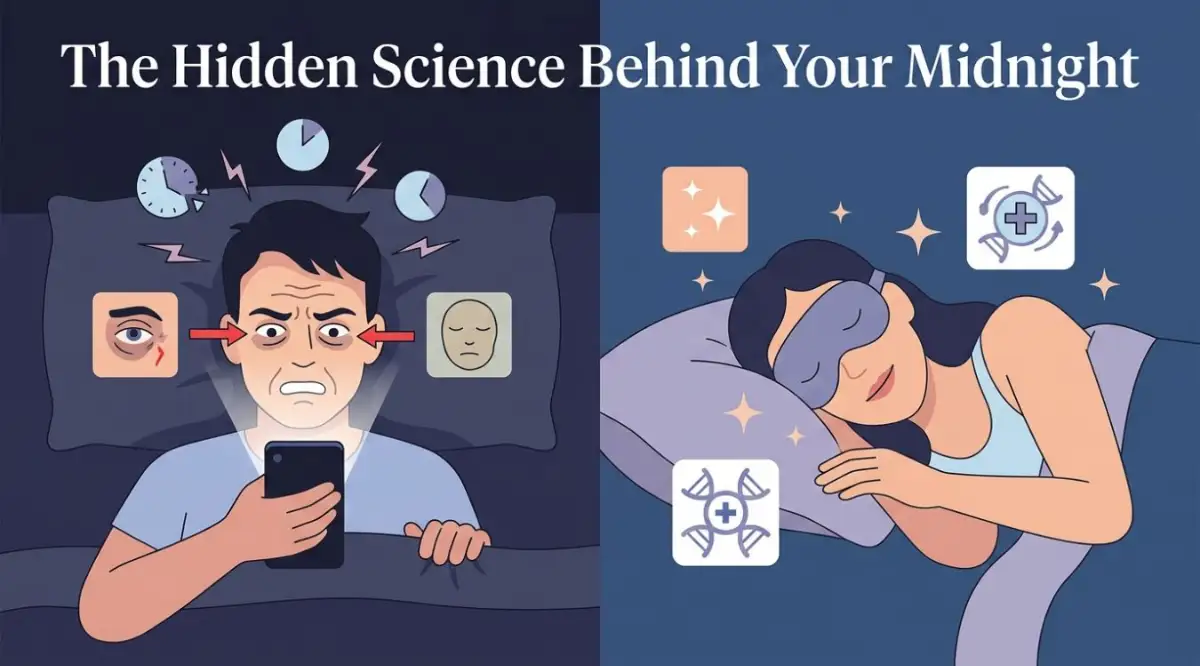
The Hidden Science Behind Your Midnight Glow
Before You Read On, Here Are The Quick Wins:
- Keep it cool: Set your room to 65°F to trigger deep, collagen-boosting rest.
- Block the blue light: Screens stop your body from making melatonin, which acts as a natural antioxidant.
- Sleep on your back: Smashing your face into a cotton pillow causes physical friction and early wrinkles.
- Consistency beats catching up: Sleeping 12 hours on Sunday will not fix the damage from staying up late all week.
Your body is incredibly smart and runs on a very strict internal schedule. When the sun goes down and your room gets dark, your brain sends out specific signals to start repairing the damage from the day. This is not just a myth created by beauty brands to sell you more night creams. It is a deeply documented biological process that determines how you will look the next morning.
Think of your body like a busy office building during the day. There is pollution, stress, UV rays, and endless tasks happening all at once. When you finally go to sleep, the daytime workers leave, and the night shift cleaning crew arrives. This cleaning crew is entirely responsible for fixing broken cells, clearing out toxins, and building new tissues. If you cut their shift short, the building stays dirty the next day.
The Role of Blood Circulation While You Rest
During the day, your blood flow is heavily directed toward your brain and your major muscles to keep you moving and thinking. But when you finally drift off into a deep slumber, your heart rate slows down and your blood pressure drops. This allows your body to redirect that rich, oxygenated blood straight to your outermost layers.
This massive boost in circulation is exactly what gives people that natural, healthy morning glow. The increased blood flow carries essential nutrients and oxygen directly to your damaged tissues, feeding them what they need to heal. When you stay up late watching television, you actively block this nutrient delivery system from doing its job.
Myth vs. Reality:
The Myth: You can just sleep three hours and drink extra water to get glowing skin.
The Reality: Without at least seven hours of rest, your blood circulation never fully shifts to your outer layers, leaving you looking pale and sick.
Why Slow-Wave Rest is Your Best Anti-Aging Tool
Not all rest is created equal when it comes to your physical appearance. The most important phase for healing is called slow-wave sleep, which usually happens in the first half of the night. During this specific time, your body goes into a deep state of paralysis and your brain waves slow down dramatically.
This is the exact moment when your pituitary gland starts pumping out human growth hormone (HGH). This hormone is the ultimate master key for maintaining a youthful, bouncy appearance. It literally commands your system to create fresh cells to replace the old, dead ones that make you look tired.
Without enough HGH flowing through your veins, your tissues cannot repair themselves fast enough to keep up with daily wear and tear. Your skin starts to thin out, losing its natural elasticity and firmness over time. You start noticing fine lines around your eyes and mouth that were not there a few months ago.
How Growth Hormones Rebuild Your Foundation
Growth hormones work very closely with the protein structures in your body. They speed up the production of collagen, which is the main building block that keeps your face looking plump and smooth. As we get older, our natural collagen production drops naturally, making deep rest even more important.
When you get a full, uninterrupted night of rest, you are essentially giving yourself a free, highly effective anti-aging treatment. The cells divide faster, repairing the micro-damages caused by sunlight and harsh weather conditions. It is a beautifully natural system that costs absolutely no money to maintain.
The Pro Tip:
I used to think catching up on sleep during the weekend would fix my dull complexion, but I was totally wrong. My biggest realization was that the body thrives on a strict routine, not random bursts of rest. I started going to bed at exactly 10:30 PM every single night, and within two weeks, my persistent cheek breakouts completely disappeared.
My biggest personal mistake was thinking I could just drink three strong cups of coffee the next morning to magically hide my exhaustion from the world. Once I finally stopped fighting my natural need for rest and stuck to a firm bedtime, my skin cleared up faster than it ever did with any expensive spa treatment.
Watch This Short Video to Understand How Stress Ruins Your Complexion Before Bed
Before you read the rest of this guide, watch this short video to see exactly how late-night stress and cortisol secretly eat away at your healthy skin cells. Understanding this simple biological process will completely change how you treat your face tonight!
The Destructive Power of Late-Night Stress
Let us talk about the absolute worst enemy of your nighttime healing process: a hormone called cortisol. Cortisol is your built-in alarm system, designed to keep you awake and alert when you are facing danger. In small amounts during the morning, it helps you get out of bed and start your day with energy.
Quick Look: The Hormones Controlling Your Face
| Hormone | What It Does at Night | How It Affects Your Face |
| Cortisol (The Stress Hormone) | Keeps you awake, anxious, and alert. | Breaks down collagen, triggers excess oil, and causes stress breakouts. |
| Melatonin (The Sleep Hormone) | Makes you sleepy and acts as an antioxidant. | Fights off free radicals, prevents fine lines, and promotes deep healing. |
However, when you are stressed out, anxious, or staring at bright screens late at night, your cortisol levels stay artificially high. This is a massive problem for your appearance because cortisol actively breaks down collagen and blocks new cell production. It acts like an acid, slowly eating away at the proteins that keep you looking young and fresh.
High cortisol levels also signal your sebaceous glands to produce way more oil than necessary. This excess oil mixes with dead tissues and clogs your pores while you are tossing and turning in bed. You wake up the next morning with new pimples and an incredibly oily forehead, wondering what went wrong.
Breaking the Cycle of Nighttime Anxiety
To lower your cortisol levels, you have to actively tell your brain that the day is over and you are safe. This means turning off the news, putting away your stressful work emails, and dimming the lights in your house. You have to create a buffer zone between your busy day and your bedtime.
Many people find success by reading a physical book or practicing simple, slow breathing exercises. When your breathing slows down, your heart rate drops, and your brain finally stops pumping out stress hormones. This peaceful state is exactly what your tissues need to begin their complex regeneration work.
The Magic of Melatonin: More Than Just a Sleep Aid
Most people only know melatonin as a supplement you take when you are dealing with bad jet lag. But your body naturally produces this powerful hormone every single night when your environment gets dark. While its main job is to make you feel drowsy, it serves a hidden secondary purpose that is incredibly important.
Melatonin is actually one of the strongest natural antioxidants your body can possibly produce. Antioxidants are the tiny defenders that fight off free radicals, which are unstable molecules that damage your healthy cells. During the day, UV rays and pollution flood your system with these dangerous free radicals.
How Darkness Triggers Deep Healing
When melatonin floods your system at night, it acts like a sponge, soaking up all the damage from the day. It neutralizes the free radicals before they can permanently mutate your cells and cause premature wrinkles. This is why sleeping in a completely pitch-black room is so necessary for maintaining a clear complexion.
If you have a street light shining through your window or a bright digital clock next to your face, your melatonin production drops significantly. Even a tiny amount of artificial light can confuse your brain into thinking the sun is coming up. This immediately stops the antioxidant defense system, leaving your face completely unprotected against cellular damage.
Protecting Your Internal Clock

To maximize this natural antioxidant defense, you need to completely block out all light sources in your bedroom. Blackout curtains are one of the best investments you can make for both your energy levels and your physical appearance. If you cannot change your curtains, a soft, comfortable eye mask works just as well.
You also need to pay attention to the temperature of your sleeping environment. Your core body temperature needs to drop slightly for melatonin to reach its peak levels effectively. Keeping your room cool, ideally around 65 degrees Fahrenheit, signals to your biology that it is time for deep repairs.
Fluid Balance and Waking Up Puffy
Have you ever wondered why your face looks swollen and puffy after a terrible night of tossing and turning? This happens because your body completely loses its ability to regulate fluids when you do not rest properly. Your lymphatic system, which is responsible for draining excess water and toxins, slows down dramatically.
When you fail to reach the deepest stages of rest, water pools in the delicate tissues under your eyes. This creates those heavy, dark bags that instantly make you look exhausted and sick. Proper rest acts like a natural pump, pushing these stagnant fluids back into circulation and out of your system.
The Importance of Nighttime Hydration
While you are resting, your core temperature rises slightly, causing you to lose a significant amount of moisture through sweat and breathing. This is a very natural process, but it can leave your outer layers feeling tight and dry by morning. To combat this, your cells rely on the water you drank heavily throughout the previous day.
If you go to bed dehydrated, your body will desperately hold onto whatever water it has left, causing major puffiness. It is a weird contradiction, but drinking enough water during the day actually prevents you from looking swollen the next morning. It keeps your lymphatic system flushed and moving smoothly while you dream.
Cell Turnover: Shedding the Old You
Every single day, you are constantly shedding millions of microscopic dead fragments from your outermost layer. This process is called cell turnover, and it is the main reason why young people have such bright, glowing complexions. In children and teenagers, this turnover process happens incredibly fast, keeping their appearance fresh.
As we age, this natural shedding process slows down significantly, causing dead materials to pile up on the surface. This buildup is exactly what makes your face look rough, dull, and completely lacking in radiance. The absolute best time for your body to push these old fragments away and bring new ones to the surface is during deep slumber.
Speeding Up Your Natural Exfoliation
During the peak hours of the night, your cell division rate increases by almost three hundred percent. Your body is working aggressively to push fresh, healthy tissues to the top layer to replace the damaged ones. If you interrupt this process by waking up constantly, the dead materials simply stay glued to your face.
This is exactly why high-quality sleep is the best natural exfoliator you will ever find. When you respect your biological clock, you wake up with a naturally smooth surface that reflects light beautifully. Your makeup will sit better, your natural glow will return, and you will feel infinitely more confident in your own skin.
Advanced Strategies for Long-Term Morning Radiance
Fixing your nighttime routine is completely different from buying a new bottle of face wash. You are essentially retraining your entire biological system to remember how to heal itself naturally. Once you get this right, you will never want to go back to your old, exhausting habits.
Most people try to fix their resting habits for three days, get frustrated, and immediately give up. The truth is, your cells need a consistent, reliable environment to properly divide and repair the outer layers of your face. Creating that perfect environment requires a few smart, daily adjustments to your lifestyle.
My Personal Try-This-Tonight Timeline:
- 8:00 PM: Finish dinner. Give your stomach plenty of time to digest so your body can focus entirely on skin repair later.
- 9:00 PM: Turn off overhead lights and switch to warm, dim lamps.
- 9:30 PM: Put the phone on the charger across the room. (No more blue light!)
- 10:00 PM: Wash your face, apply a simple moisturizer, and read a physical book.
- 10:30 PM: Lights out in a cool, dark room.
Let us look at some highly effective ways to lock in that natural glow and protect your nightly healing cycle. These are practical steps you can start taking tonight to see a massive difference in your morning reflection.
Syncing Your Internal Biological Clock
Your body operates on a strict 24-hour internal timer known as the circadian rhythm. Think of this rhythm as a highly organized factory manager who tells all your cells exactly when to start working and when to rest. According to the National Institute of General Medical Sciences, this internal clock is heavily influenced by the light and darkness in your environment.
When you wake up at completely different times every single day, you deeply confuse this internal factory manager. Your body stops knowing when to release the healing hormones because the schedule keeps changing randomly. This constant confusion is a massive reason why your face looks so tired even after sleeping for eight hours.
To fix this, you must wake up at the exact same time every morning, including on weekends. Yes, it sounds incredibly difficult at first, but your body will adapt much faster than you think. Within a week, your system will naturally start preparing for cell repair right on schedule.
The Temperature Trick for Faster Healing
Many people do not realize that their bedroom temperature plays a massive role in their physical appearance. For your brain to enter the deepest stages of rest, your core body temperature actually needs to drop slightly. If your room is too warm, you will spend the entire night tossing, turning, and sweating out valuable moisture.
When you lose too much moisture through night sweats, you wake up looking completely dehydrated with emphasized fine lines. Keeping your room cool, ideally around 65 degrees Fahrenheit, signals to your biology that it is time to shut down. This cooler environment acts as a natural trigger for your heavy, slow-wave rest phase.
If you cannot control your room temperature easily, try taking a warm shower about an hour before getting into bed. When you step out of the warm water, your body temperature rapidly drops as the moisture evaporates from your body. This sudden drop perfectly mimics the natural cooling process your brain needs to fall asleep faster.
Pre-Bedtime Digestion and Your Complexion
What you eat right before laying down has a direct, visible impact on how you look the next morning. When you eat a heavy, greasy meal late at night, your body has to send a massive amount of blood to your stomach. This digestion process requires a lot of energy and completely steals focus away from your nightly rep