
The Silent Stress of a Shifting Home
Look, spotting a tiny crack above your bedroom door can instantly make your stomach drop. I have been there—staring at the ceiling at 2 AM, worrying about a massive repair bill that might drain my bank account. But before you panic and imagine your house totally collapsing, let me share what actually matters when a home starts to shift, and how you can spot the real danger signs without spending a dime.
I still remember the sinking feeling I got when I first noticed a tiny, jagged crack crawling up my living room wall. At first, I brushed it off as just normal settling, thinking my home was simply aging naturally. But then my front door started sticking, and I had to push it hard with my shoulder just to get it open. I tried to ignore the issue because the thought of a massive repair bill terrified me.
Eventually, I learned the hard way that ignoring these tiny red flags only leads to massive, wallet-draining nightmares down the road. My delay ended up costing me thousands of dollars, a mistake I deeply regret making. Let me share what I learned so you never have to go through that same quiet panic.
But the mental toll of avoiding the problem is actually much heavier. Every time it rains heavily, a quiet sense of anxiety builds up inside you. You start wondering if water is seeping into the basement or if the soil is pushing against your fragile walls. That constant, nagging worry robs you of your peace of mind in the one place you are supposed to feel completely safe.
When a house starts to lose its grip on the earth, the financial fear is totally real. Families worry that their biggest financial asset is slowly losing its value. Instead of enjoying family dinners, parents catch themselves staring at the diagonal lines forming above their doorframes. They silently calculate how much money they might need to borrow to fix a problem they barely understand.
The 30-Second Summary
- Watch the Walls: Sideways cracks and "stair-step" patterns in brick are your biggest warning signs.
- Check the Water: Making sure rainwater flows safely away from your house is the best way to prevent damage.
- Track the Changes: Use clear tape and a marker to date and measure cracks so you know exactly how fast they are growing.
Decoding the Hidden Language of Your House
Every building has a specific way of telling you that it is in pain. A house does not just collapse overnight without dropping dozens of clues first. Your job as a smart property owner is to become a detective in your own living space.
You do not need an engineering degree to understand what is happening beneath your feet. You just need to know exactly where to look and what those strange little changes actually mean. Let us break down the physical symptoms of a struggling house using simple, scientific logic.
Quick Check: Is It Normal Settling or a Real Danger?
I always tell my friends to run this quick check before calling an expensive inspector:
- Normal Settling: Tiny, straight vertical cracks (thinner than a coin), doors that only stick during humid summer days, and minor popping sounds at night.
- Danger Signs: Cracks running sideways along the basement wall, bouncy floors that feel like a trampoline, and visible gaps between your floorboards and the baseboard.
- If you see the second list, it is time to take action.
The Real Story Behind Wall Cracks
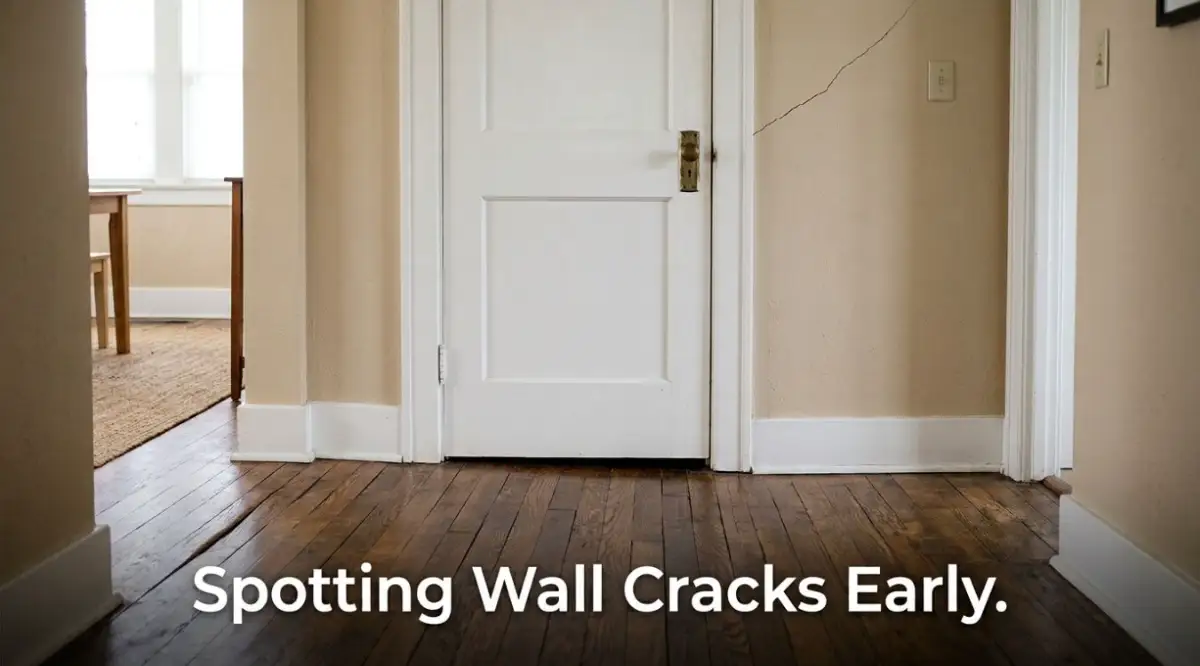
Many people panic the second they see a crack in their drywall or plaster. However, not all cracks are created equal. The direction, size, and location of the fracture tell a very specific story about the physics acting on your property.
When a house is just settling naturally, you will typically see very thin, hairline cracks that run straight up and down. These vertical lines happen because wood and concrete naturally expand and shrink as the temperature changes. They are annoying to look at, but they rarely mean your home is in immediate danger.
The Danger of Horizontal Lines
The real threat begins when you spot horizontal cracks, especially in your basement or lower-level concrete walls. These sideways fractures are a major red flag that you cannot afford to ignore. They happen due to something scientists call hydrostatic pressure.
When it rains heavily, the soil outside your house absorbs massive amounts of water and expands like a giant sponge. This wet, heavy soil pushes against your walls with thousands of pounds of pressure. Eventually, the concrete cannot handle the horizontal force and snaps.
Stair-Step Patterns in Brickwork
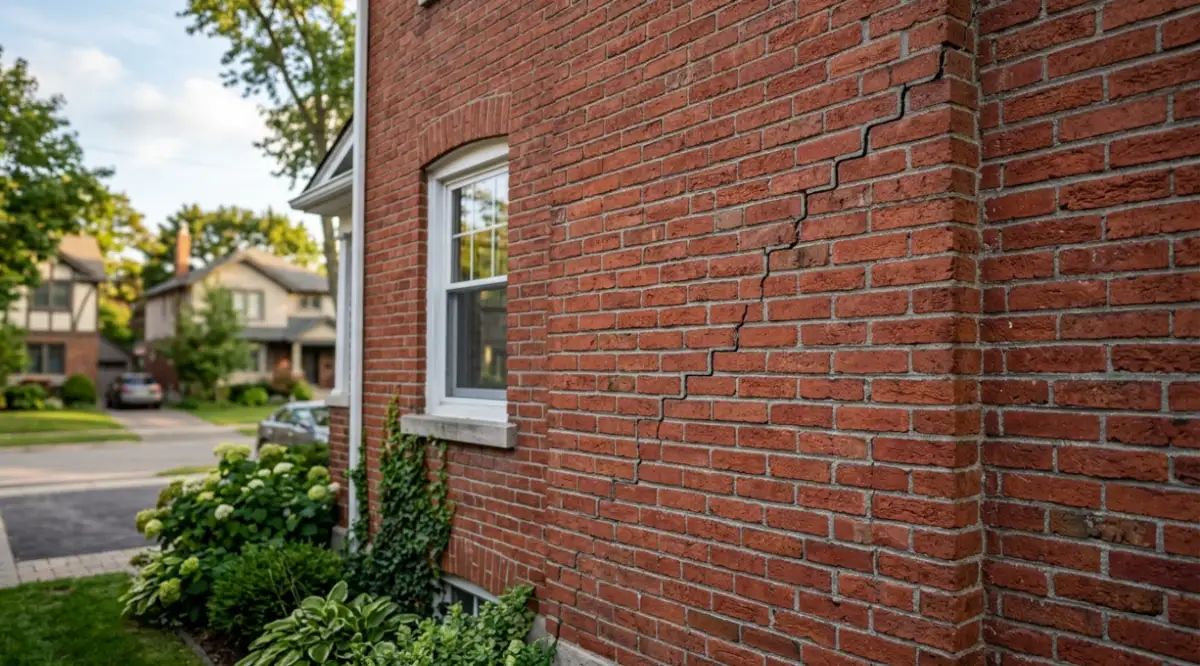
If your home has brick walls or cinderblocks, pay close attention to the mortar joints. Sometimes, you will notice a crack that looks exactly like a set of stairs climbing up the wall. This stair-step pattern means the ground beneath that specific corner of the house is sinking faster than the rest of the building.
As the dirt washes away or compacts, gravity pulls that section of the heavy brick wall downward. The rigid mortar breaks along the weakest points, creating that distinct jagged line. Catching this early can save you from having to rebuild an entire exterior wall.
If you are a visual learner, watch this quick breakdown of how heavy, wet dirt actually bends and breaks solid concrete. Seeing it happen makes the rest of these warning signs so much easier to spot around your own home!
The Mystery of the Sticking Doors
Have you ever noticed that a specific door in your house suddenly refuses to close properly? Maybe the lock no longer lines up with the hole, or the top of the door rubs against the frame. Most people assume the wood is just swollen from high humidity.
While humidity can cause minor sticking, a door that completely jams is screaming about a bigger issue. Your home is built on a wooden skeleton called framing, which rests directly on the base of your house. If the base sinks or shifts even half an inch, the entire wooden skeleton twists out of shape.
Because doors and windows are perfect rectangles, they instantly reveal when a room is no longer perfectly square. When the frame skews into a slight diamond shape, the rectangular door gets pinched inside it.
Bouncy and Uneven Floors
Walking across your living room should not feel like walking on the deck of a boat. If you drop a small round ball on the floor and it quickly rolls to one side of the room, you have a shifting problem. Sloping floors are a massive indicator that the center supports of your house are failing.
Sometimes the issue is not just a slope, but a bouncy or spongy feeling when you walk. This happens a lot in houses built over a crawl space. The wooden beams holding up your floor can rot from ground moisture or lose contact with their support pillars.
When a support pillar sinks into soft dirt, the floor above it physically drops. You might even notice a visible gap forming between the floor and the bottom of your baseboards. This gap proves the floor is literally falling away from the walls.
My Personal Mistake with Floor Gaps
I actually tried to fix a baseboard gap by just pumping it full of thick white caulking to hide the ugly shadow. I thought I was being a clever DIY master, saving myself a repair bill. My quick fix just masked the sinking floor for another six months, allowing the hidden rot below to spread even further. Please, never use cosmetic tricks to hide a structural warning sign.
External Separation and Gaps
You should regularly take a slow walk around the outside perimeter of your home. Start by looking at the areas where different materials meet. For example, look at the exact line where your brick exterior touches your wooden window frames.
If you see noticeable gaps forming between the bricks and the windows, the heavy masonry is pulling away from the lighter wood. You might also notice gaps around your exterior garage door or where the chimney meets the main roof. A chimney is extremely heavy, and if the dirt beneath it is weak, it will easily lean away from the main structure.
Another major external sign is soil pulling away from the base of the house. During very dry seasons, certain types of clay soil will shrink rapidly. If you see a deep trench forming naturally between your grass and your concrete base, the house is losing its lateral support.
Myth vs Reality: Reading the Signs Properly
It is easy to get confused by conflicting advice from neighbors and internet forums. Let us clear up some common misunderstandings using basic logic.
Moisture and the Smell of Danger
Sometimes, the earliest warning sign is not something you see, but something you smell. If your basement or crawl space constantly smells like a wet, musty towel, you have a severe water intrusion issue. Water is the absolute worst enemy of a strong house.
When water pools around the bottom of your home, it slowly eats away at the concrete. It also creates a perfect breeding ground for mold and wood-destroying insects like termites. The presence of constant moisture means your drainage system is failing to push rainwater away from the building.
Look closely at your bare concrete walls for a white, powdery substance. This powder is called efflorescence. It happens when water soaks completely through the wall, leaving behind natural minerals when it finally evaporates on the inside.
If you see this white powder, it is a scientific guarantee that water is traveling directly through your structural supports. Over time, this constant water movement weakens the internal strength of the materials. Fixing your exterior gutters and adding dirt to slope the yard away from the house can stop this silent attack.
Paying Attention to Your Cabinets and Tiles
Kitchens and bathrooms offer excellent clues about what is happening underneath the house. Wall-mounted kitchen cabinets are heavy and require a perfectly flat surface to stay secure. If your house twists, the wall behind the cabinets will bend slightly.
You might notice that the top corners of your cabinets are pulling away from the wall, leaving a visible shadow. Sometimes, the cabinet doors will suddenly refuse to stay completely shut, swinging open on their own. This is because the box of the cabinet is twisting right along with the wall behind it.
Ceramic floor tiles in your bathroom or kitchen are incredibly rigid and unforgiving. If the wooden floor beneath them shifts or bends even a tiny fraction of an inch, the tiles will instantly snap. A single dropped pan might crack one tile, but a long crack running across multiple tiles in a straight line points directly to a shifting floor beneath.
Master-Level Strategies to Protect Your Home's Base
Now that you know exactly what signs to look for, you are already way ahead of most property owners. But spotting a problem is only the first part of the equation. You need to know how to manage your property so these minor issues never turn into full-blown disasters.
Let us look at some highly effective, expert-level habits you can start practicing around your house today. These simple steps will help you maintain the physical strength of your home for decades. You do not need expensive tools to do this, just a little bit of time and observation.
The Magic of Positive Yard Grading
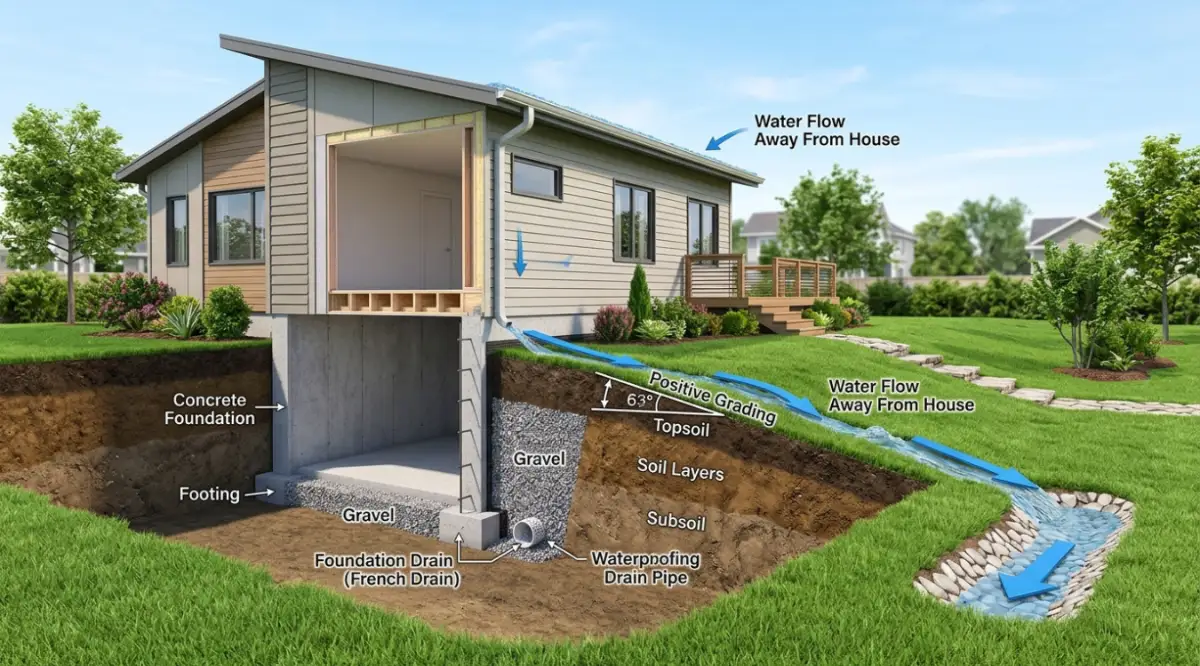
If I could give you only one piece of advice to save your home, it would be to control where your rainwater goes. Water pooling around the base of your house is the number one enemy of a stable structure. You must ensure the dirt around your house slopes away from your exterior walls.
Experts call this concept "positive grading." The rule of thumb is that the ground should drop at least six inches for every ten feet you move away from the house. When you have a solid slope, heavy rain naturally flows safely into your yard instead of soaking into the dirt against your concrete.
If your yard currently tilts toward your house, you can easily buy some topsoil from a garden center to build up that slope. Just be careful that the new dirt does not touch the wooden siding of your house. Keeping a gap between the dirt and the wood prevents termites from finding an easy path inside.
Create Your Own Crack Tracking System
When you spot a new fracture on your wall, your memory will naturally try to trick you. Two months later, you will wonder if the line actually got longer or if it always looked like that. You need a reliable way to track any physical changes happening in your rooms.
Grab a piece of clear tape and place it directly over the end of the crack. Take a marker and draw a small line exactly where the fracture currently stops, then write today's date next to it. This simple tracking method gives you undeniable proof of how fast your house is shifting.
Just like you need to keep accurate records before seeking professional legal support for workplace issues, you must document your home's physical changes. Take clear, well-lit photos of the crack every single month. If you ever need to hire an inspector, handing them this photo history will help them diagnose the problem instantly.
A quick pro tip from my own messy experience: do not just rely on your phone's photo gallery to remember these details. I actually bought a cheap fifty-cent notebook just to log the dates and exact measurements of every new crack, and that little habit saved me from a total mental breakdown when the repair guy finally showed up.
My Personal Money-Saving Hack:
Do you want a totally free way to check if your floors are actually sloping? Grab a regular golf ball or a heavy glass marble. Place it dead center in your living room. If it rolls quickly to one specific corner every single time, your floor is dropping. I used this exact trick in my hallway, and it helped my contractor find a rotting support beam in under five minutes!
Manage Your Greenery Carefully
We all love having big, beautiful shade trees around our property. They keep the house cool in the summer and look absolutely beautiful. However, massive trees act like giant natural straws, sucking thousands of gallons of moisture out of the dirt.
During a dry summer season, tree roots will aggressively pull water from the earth directly under your house. This causes the dirt to shrink and collapse, leaving your concrete base hanging in the air with zero support. Eventually, the heavy concrete snaps under its own weight and falls into the empty space.
To prevent this, you should never plant large trees right next to your exterior walls. If you already have huge trees nearby, you might want to look into installing a physical root barrier underground. You can check the guidelines provided by the Environmental Protection Agency (EPA) to learn more about managing heavy water flow and smart planting techniques safely.
Keep Your Gutters Clean and Extended
Your roof catches an unbelievable amount of water during a heavy rainstorm. All that water rushes into your gutters and pours out through the downspouts. If your downspouts drop the water right next to your house, you are essentially drowning your own property.
You need to buy cheap plastic downspout extensions and attach them to the end of your pipes. Make sure these extensions push the rushing water at least five to six feet away from your exterior walls. This tiny, inexpensive upgrade is heavily recommended by most government housing and safety standards to prevent basement flooding.
Also, make sure you clean the dead leaves out of your gutters at least twice a year. Clogged gutters cause water to spill directly over the edges, crashing down right where your house meets the dirt. Five minutes on a ladder can genuinely save you thousands of dollars in water damage repairs.

Heartbreaking Missteps That Will Drain Your Savings
When homeowners first notice something is physically wrong with their house, panic usually sets in immediately. Because we are scared of huge repair bills, we often make terrible, emotionally driven decisions. I have seen families make simple situations incredibly worse just because they tried to take the easy way out.
Understanding what not to do is just as important as knowing what you should do. Let us look at the most dangerous traps people fall into when dealing with a shifting house. Avoiding these specific blunders will save you from sleepless nights and empty bank accounts.
The Psychological Trap of Denial
The absolute worst thing you can do for your house is pretend the problem does not exist. A shifting house will never magically heal itself over time. The physical forces pushing against your walls are relentless, and they will only get stronger if left alone.
Many people convince themselves that a sticking door is just an old house showing its character. They ignore the sloping floors because calling an inspector feels too intimidating. By the time they finally ask for help, a minor fix has turned into a massive, full-scale reconstruction project.
When you wait too long, the financial shock can completely derail your family's future plans. This is exactly why learning how to handle money and manage your personal emergency fund is so essential for anyone who owns a property. Having savings ready means you can fix the small issues immediately without panicking.
The "Band-Aid" Cosmetic Fix
If you have a broken leg, putting a small sticky bandage over it will not help you walk again. The exact same logic applies to fixing a broken, sinking house. Sadly, many folks try to fix their major structural issues by taking a quick trip to the local hardware store.
They buy heavy-duty spackle, fill in the massive jagged lines on their walls, and apply a fresh coat of paint. For about two weeks, the room looks perfectly normal, and they feel like a DIY genius. But the immense pressure bending the house is still there, quietly working in the dark.
Within a month, the fresh paint tears open, and the gap comes back even wider than before. Cosmetic fixes just waste your hard-earned cash and give you a false sense of security. Always fix the underlying physical cause before you even think about buying a paintbrush.
Ignoring the Hidden Health Hazards
When a house starts cracking, it creates an open invitation for outside moisture to invade your living space. Damp, dark spaces inside your walls or basement create the ultimate breeding ground for toxic black mold. This is not just a problem for your house; it is a major threat to your family's lungs.
Breathing in heavy mold spores every single day can trigger severe asthma attacks and allergic reactions. Ignoring a damp basement could eventually force your family into multiple hospital visits. If that happens, you might suddenly find yourself heavily relying on your medical plans and trying to figure out insurance copays and hospital deductibles.
To learn more about the severe health risks associated with damp indoor spaces, you should read the official indoor air quality reports from the CDC. Do not let a simple concrete crack turn into a medical emergency for your kids. Fix the water leaks the moment you smell that terrible musty odor.
Changing the Dirt Carelessly
Sometimes homeowners decide to completely redesign their garden without thinking about how it affects the house. They build raised flower beds right against the exterior walls, trapping huge amounts of wet soil against the concrete. They think it looks gorgeous, but they are secretly destroying their own property.
Other times, people dig deep trenches right next to the house to install new pipes or cables. If you dig too close to the base, you accidentally remove the packed dirt holding the heavy structure in place. The soil can easily collapse into the empty trench, taking a section of your house down with it.
Always consult a professional before you do any heavy digging or landscaping near your walls. A beautiful garden is never worth sacrificing the safety and stability of the roof over your head.
Top Questions People Always Ask About Shifting Houses
How much does it typically cost to fix a shifting house?
The price entirely depends on how early you catch the problem. Minor fixes like adding support jacks or fixing drainage might just cost a few hundred to a thousand dollars. However, if you ignore the issue and need major steel piers installed underground, the bill can easily jump past ten thousand dollars.
Can I live safely in a house that has uneven floors?
In most early cases, yes, you can continue living there while planning for repairs. Uneven floors usually happen very slowly over many years, so the house is rarely in danger of sudden collapse. But you should always have an expert evaluate the space just to ensure your family remains completely safe.
Will my regular home insurance cover these massive repair bills?
Unfortunately, standard home insurance policies almost never cover normal earth movement or natural settling. They usually only pay out if the damage was caused by a sudden, covered disaster like a massive plumbing pipe bursting. You should read your specific policy carefully to see exactly what kind of water damage is actually protected.
Are hairline cracks in my new house something to worry about?
Small hairline cracks are completely normal in newly built homes during the first year. The fresh wood and concrete are simply drying out and naturally shrinking as they adapt to the local weather. Just keep an eye on them; if you can fit a thick coin into the gap, it is time to call a professional.
Does fixing the house base lower my overall property value?
Actually, a fully repaired and professionally certified house base is a massive selling point for future buyers. It proves that you took amazing care of the property and permanently solved a major risk factor. Buyers love seeing transferrable lifetime warranties from reputable repair companies because it gives them total peace of mind.
Your Blueprint for a Stronger, Safer Home
Taking care of a property can definitely feel overwhelming, especially when things start breaking down. But you now possess the exact knowledge needed to spot trouble long before it ruins your life. You know how to read the secret language of your walls, doors, and floors like a true professional.
Remember that your home is simply a physical structure reacting to the environment around it. By controlling the water flow, managing your trees, and keeping a close eye on small changes, you stay in total control. You do not have to live in fear of every little squeak or shifting floorboard anymore.
Start taking small, practical actions this weekend. Walk around your yard, check your gutters, and look at the soil sloping away from your walls. These tiny, five-minute habits are the ultimate secret to keeping your property strong, safe, and beautiful for generations to come.
I know how scary it feels to find that first jagged line on your living room wall. But my own stressful experience taught me that facing the issue head-on is the only way to protect your peace of mind. Take a deep breath, grab a flashlight, and confidently take charge of your beautiful home today!
You really do not need to let a shifting house steal your joy or your hard-earned money. Start small today by just walking around your yard to check where the rainwater goes, because taking that very first step is the best way to get your peace of mind back.
Disclaimer: The information provided in this article is for general educational and informational purposes only and does not constitute professional engineering, financial, or legal advice. Every home and structural situation is completely unique. Always consult with a licensed structural engineer or certified foundation repair specialist before making any major decisions or starting repairs on your property.