The Heartbreak of Lost Progress: A Personal Reality Check
Imagine opening your university portal only to find out that $5,000 worth of your community college classes just vanished. It’s a sickening feeling, and honestly, it’s a scam that happens to thousands of students every year. I lost nearly a full semester myself, but I eventually figured out the 'backdoor' ways to force a university to accept my credits. If you’re tired of being told 'no' by an advisor who barely looked at your transcript, this guide is your playbook to get your time and money back.
I felt a heavy knot form in my stomach almost instantly. I had spent countless late nights studying for those exact classes while balancing a demanding part-time job.
I paid for those credits out of my own pocket by working double shifts at a local diner. The thought of repeating those difficult courses made me want to break down in tears right then and there.
My heart sank as I realized my graduation date was now pushed back. I felt completely betrayed by an educational system that was supposed to help me move forward, not hold me back.
This is a devastating reality for thousands of transfer students every single semester. You work incredibly hard to save money at a community college, only to hit a massive, unexpected brick wall.
So many regular students face this exact nightmare when trying to transition to a four-year institution. You spend hours planning your schedule, thinking you are doing absolutely everything right.
But then you discover that the university has hidden, confusing rules about what transfers over and what gets rejected. The anxiety of potentially wasting thousands of dollars keeps ambitious students awake at night.
Every rejected credit is basically money thrown out the window and time you will never get back. This intense frustration often leads to severe burnout before the university semester even officially begins.
Families who stretch their budgets to afford higher education feel this financial strain the most. When credits do not transfer, students are forced to take on unexpected student loans just to cover the extra semesters.
We need to talk about how incredibly unfair this lack of transparency is for hardworking individuals. The sheer lack of clear communication between different colleges causes unnecessary emotional trauma for young adults trying to build their futures.
You deserve to have your hard work recognized and fully applied to your ultimate career goals. Nobody should have to pay twice for the exact same foundational education.
⚡ Your 'No-Credit-Left-Behind' Strategy
If you’re in a rush, here are the 4 things you need to do right now to protect your degree:
- Get the Contract: Find the 'Articulation Agreement'—it’s a legal promise between schools.
- Be a Digital Hoarder: Save every syllabus as a PDF on day one. Don't wait until the class is over.
- Ignore the Clerk, Find the Boss: If an advisor says 'no,' email the Department Chair of that specific subject directly.
- Check the Math: If you are moving from quarters to semesters, your 3-credit class might only count as 2. Calculate this early!"
Decoding the Academic Maze: Taking Control of Your Journey
You do not have to be a helpless victim in the confusing world of higher education. There are highly effective ways to protect your time and ensure your classes are actually accepted.
We are going to break down the exact strategies you need to defend your transcript. Let us look at some highly practical steps you can take starting right now to secure your future.

Busting the Biggest Transfer Myths
Before we look at the specific steps, we need to clear up some major misunderstandings. A lot of students fall into dangerous traps because they believe things that are simply not true.
Understanding these realities is the very first step toward protecting yourself from unexpected surprises. Now, let us dive into the actionable ways you can plan your transition smoothly.
Before you spend hours on paperwork, check where your courses fall on this 'Transfer Difficulty' scale. It helps you pick your battles:
Mapping Out the Articulation Agreements Early
One of the smartest things you can do is find out if your community college has an articulation agreement. This is basically a formal, legal contract between two schools that outlines exactly which classes transfer.
Think of an articulation agreement as a guaranteed roadmap for your specific major. If your chosen university has one of these with your community college, you have a massive advantage.
You need to search for this document on both of the schools' official websites as early as possible. Do not wait until your final semester to start looking for this specific paperwork.
Print out the agreement and keep it in a physical folder on your desk at home. Every time you register for a new semester, cross-reference your choices with this exact document.
If a class is not listed on that official agreement, you need to assume it might not transfer. This simple habit of checking the agreement will save you thousands of dollars in the long run.
Always remember that these agreements can sometimes change depending on the academic department. You should always look for the most updated version to ensure your information is completely accurate.
My Quick 'Syllabus Cheat Sheet' for you:
When you save your syllabus, don't just keep the first page. Universities specifically look for the Weekly Schedule of Topics and the Full Title of the Textbook (including the Edition). If your community college used the same textbook as the university, your appeal is almost 100% guaranteed to win. Highlight the textbook name in yellow before you send it to the department chair!
The Secret Weapon: Hoarding Every Single Syllabus
Most students throw away their class syllabus the moment they finish their final exams. This is actually one of the biggest mistakes you can make as a future transfer student.
When a university questions whether a community college class is equal to theirs, they do not just look at the title. They want to see the specific textbooks you used, the assignments you completed, and the exact topics covered.
The course syllabus is the only piece of concrete evidence you have to prove the depth of your education. It acts as your ultimate defense tool when a transfer evaluator denies your request.
My Personal Pro Tip: I learned this the hard way when my introductory statistics class was rejected by my new university. I spent three weeks tracking down my old professor just to get a copy of the syllabus, which eventually saved my credits. Now, I tell everyone to save a digital PDF copy of every single syllabus in a dedicated Google Drive folder on the very first day of class.
You should also keep copies of major research papers or large projects you complete. If an advisor wants proof that your writing skills are up to their standard, you can simply hand them your graded work.
Organize these digital files clearly by semester and class name so you can find them in seconds. Being highly organized makes you look incredibly professional when you eventually meet with university staff.

How to Build a Bulletproof Relationship With Advisors
Your academic advisors are the gatekeepers to a smooth transition between schools. Building a strong, respectful relationship with them early on can completely change your experience.
If you ever get nervous talking to school officials, watch this quick video to learn exactly how to confidently speak up for yourself and demand clear answers. Once you master these simple communication tricks, keep reading below to find out how a hidden database can save your schedule!
Do not wait for advisors to reach out to you, because they are usually managing hundreds of other students. You need to take the initiative and schedule an appointment during your very first semester.
When you walk into their office, come fully prepared with a list of specific questions. Showing up prepared proves that you are serious about your education and respects their limited time.
Ask your community college advisor to connect you with a transfer advisor at your target university. Having a direct contact at your future school is an absolute game-changer for getting accurate information.
Write down the names and email addresses of every single person you speak with regarding your credits. If someone gives you a promise verbally, follow up with a polite email summarizing what was said.
Having a written paper trail is incredibly important if someone tries to go back on their word later. Keep your communication friendly, but always ensure you have everything documented properly.
Navigating the Course Equivalency Database Like a Pro
Most modern universities have a hidden tool on their website called a course equivalency database. This is a digital system where you can look up exactly how past classes have transferred from your current school.
It is basically a massive historical record of decisions made by the university's transfer department. You can simply plug in your community college name and see a long list of approved classes.
Using this tool helps you avoid taking random electives that have a history of being rejected. It takes a lot of the guesswork out of building your schedule each semester.
However, you must understand that these databases are not always perfectly updated. If you see a class listed there, take a screenshot of the page just in case they change the rules later.
If a class you want to take is not in the database, it does not mean it will definitely be rejected. It just means nobody from your specific college has ever tried to transfer that exact class before.
In those situations, you can actually reach out to the university's transfer office and ask for a pre-evaluation. Many schools are willing to review a syllabus before you even pay for the community college class.
Filing a Successful Credit Appeal When Things Go Wrong
Even with perfect planning, you might still receive a letter stating that some credits were denied. When this happens, a lot of students just accept defeat and pay to take the class again.
You should never accept a rejection without fighting back through the official appeals process. Every single university has a formal system that allows you to challenge their initial decision.
The first step in a successful appeal is understanding exactly why the class was denied in the first place. Was it a lack of information, or do they truly believe the course content was completely different?
Once you know the reason, you can gather your saved syllabus and your major assignments. You will need to write a highly professional, objective letter explaining why the courses are fundamentally similar.
Do not use angry or emotional language in your appeal letter, as this will only hurt your chances. Keep your arguments strictly focused on educational facts, learning outcomes, and textbook similarities.
Submit your appeal package directly to the department chair of that specific academic subject. The department chair usually has the final say and understands the course material much better than a general admissions clerk.
Following up politely after a week shows that you are deeply invested in the outcome. Many students win their appeals simply because they provided enough clear evidence to prove their case.
Understanding the Difference Between Elective and Core Credits
There is a massive difference between credits transferring as electives versus credits transferring as core requirements. This is a trap that catches many transfer students completely off guard during orientation.
Sometimes a university will gladly accept your credits, but they only apply them to your general elective pool. This means the credits count toward your total graduation number, but not toward your specific major.
If your major requires an advanced biology class, and your transferred biology class only counts as an elective, you still have to take the advanced class. This is why paying close attention to course codes is so incredibly important.
You always want your classes to transfer as direct equivalents to specific university requirements. A direct equivalent means it checks off a required box on your official graduation checklist.
When reviewing your transfer evaluation, look specifically for terms like "direct match" or "general elective". If too many classes fall into the elective category, you need to start asking serious questions.
This is exactly where your hoarded syllabi become your best friend during an advisor meeting. You can use the syllabus to prove that your class was rigorous enough to count as a core requirement instead of just a random elective.
By understanding how these categories work, you can avoid taking classes you do not actually need. It keeps you on a fast, clear track toward finally holding that hard-earned degree in your hands.
Beyond the Basics: Master-Level Transfer Tactics
We have already covered the basic foundational steps to protect your hard-earned classes. Now, it is time to look at some highly advanced strategies that top-tier students use to secure their academic future.
Think of this process like building a massive bridge between two entirely different cities. You need a solid blueprint, proper materials, and clear communication with the engineers on both sides.
One of the smartest hidden strategies is creating a master transfer spreadsheet during your very first week of community college. Do not wait until your final semester to start organizing your potential pathway.
In this spreadsheet, list every single class you plan to take alongside the direct equivalent code at your target university. You can often verify these specific codes by checking the official National Center for Education Statistics guidelines for higher education reporting.
When you track everything visually, you spot missing requirements months before they become an actual problem. This level of organization makes you look incredibly professional when you eventually sit down with a university admissions officer.
Leveraging the Power of Dual Enrollment Agreements
Many students do not realize that some schools offer specialized dual enrollment or co-admission programs. This means you are technically admitted to both the community college and the university at the exact same time.
Being part of a co-admission program basically puts an invisible shield around your academic transcript. As long as you maintain the required grade point average, your classes are legally guaranteed to move over with you.
If your current school offers this option, you need to sign up for it immediately. It completely removes the anxiety of wondering if your final transcript will be accepted.
Furthermore, these programs often give you early access to the university campus facilities. You can start using their massive library, attending their career fairs, and meeting with their academic department heads early on.
Going Straight to the Department Chair
Sometimes, regular academic advisors do not have the authority to approve a highly specific, complex class. When a general advisor says no, that is rarely the final answer.
Every academic department has a dedicated chairperson who truly understands the deep mechanics of their specific courses. If your advanced programming class is rejected by the admissions office, you should email the computer science department chair directly.
Keep your email incredibly short, respectful, and highly focused on the course learning outcomes. Attach your saved syllabus and ask if they would be willing to review the material for a direct equivalency override.
These professors are often much more understanding because they actually teach the material themselves. They can easily see that the difficult textbook you used at your community college is the exact same one they use in their own lecture halls.
The Financial Strategy of Transferring
We cannot talk about higher education without discussing the massive financial impact of your choices. Every single credit that gets rejected is essentially money stolen directly from your future bank account.
When classes do not transfer, students are suddenly forced to pay for an extra semester of university tuition. This unexpected financial burden easily destroys even the most careful budgets and forces people into high-interest student loans.
If you are already struggling with your daily living costs, this sudden educational expense can be absolutely devastating. That is why managing sudden financial stress and balancing your budget early on is just as important as studying for your final exams.
You must treat your academic transcript like an active investment portfolio. Every A or B you earn is a financial asset that you must aggressively protect from being undervalued by a new institution.
Advocacy groups like the American Association of Community Colleges constantly fight for fairer policies, but you must be your own biggest advocate. Nobody cares about your time and money as much as you do.
Navigating Quarter Systems Versus Semester Systems
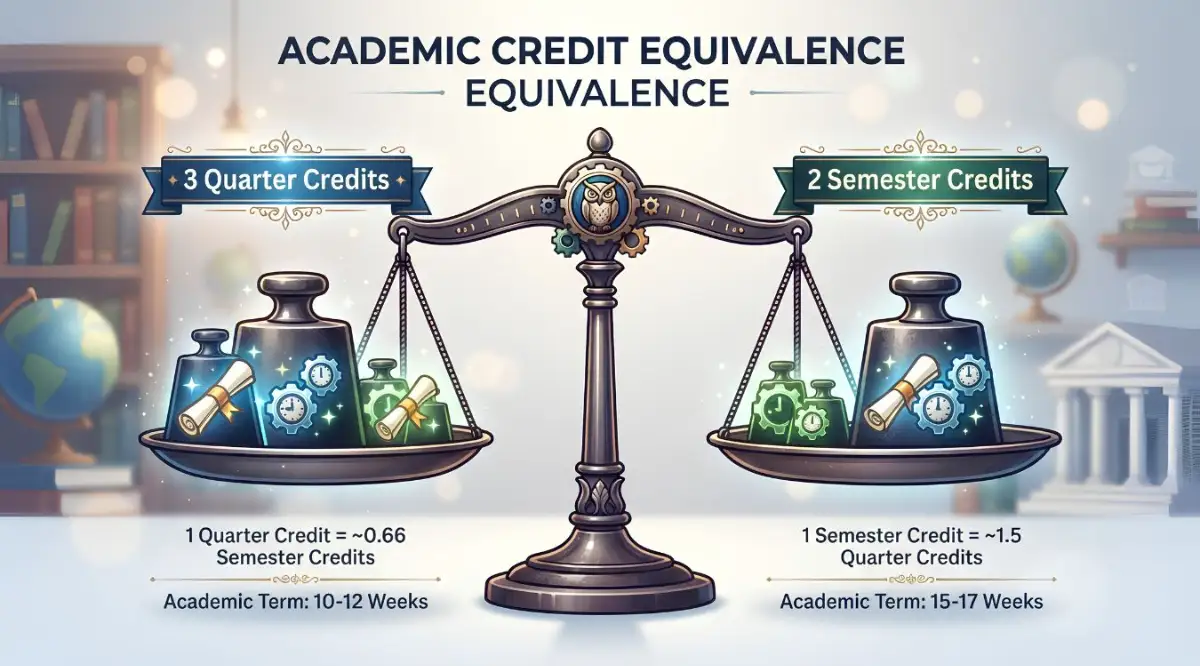
Here is a massive hidden trap that destroys many perfectly planned academic pathways. If you are moving from a school that uses a quarter system to one that uses a semester system, your math will get very complicated.
Quarter credits do not equal semester credits on a simple one-to-one basis. Usually, a single quarter credit is only worth a fraction of a traditional semester credit.
This means a class that felt incredibly heavy and demanding might only transfer over as a partial requirement. You might find yourself short by just one or two credits to officially enter your chosen major.
Always ask your target university exactly how they calculate conversion rates for different academic calendars. Getting this mathematical formula in writing helps you plan your final community college schedule perfectly.
The Most Dangerous Traps That Will Cost You Everything
Even with the best intentions, I constantly see incredibly smart students make devastating mistakes during this transition. These pitfalls are completely avoidable if you know exactly what to look out for.
The emotional toll of falling into these traps is heavy, leaving students feeling defeated before classes even begin. Let us break down exactly what you should never do when managing your academic journey.
Trusting Verbal Promises Over Written Proof
This is undoubtedly the biggest mistake I see young adults make every single academic term. You sit in an advisor's office, they look at your transcript, and they say, "Oh yeah, that class will definitely transfer over just fine."
You feel a wave of massive relief and walk out of the office completely satisfied with that answer. Fast forward eight months, that specific advisor has left the university, and the new staff member completely denies your credits.
You have absolutely zero proof that the promise was ever made to you. Without a written paper trail, the university will always side with their official written policies.
I once made the huge mistake of trusting a friendly advisor who swore my math class would transfer, but she left the school and her replacement completely denied my credits. Now, my golden rule is to immediately send a quick "thank you" email summarizing what we talked about so I always have solid digital proof.
The Golden Rule: If an advisor tells you something positive, follow up with a polite confirmation email the second you get home. It can be as simple as, "Thank you for confirming today that my Intro to Psychology class will satisfy the core requirement."
If they reply and agree, you now have a legally binding digital receipt. Keep this specific email printed out in a safe folder just in case you ever need to file an appeal.
Assuming Private and Public Schools Play by the Same Rules
Many students assume that because a class transferred to a local state university, it will easily transfer to a private college. This assumption leads to massive heartbreak and sudden panic.
Public state schools usually have very strict, government-mandated articulation agreements with local community colleges. They are legally required to accept certain foundational courses to keep the educational pipeline moving.
Private institutions do not have to follow these same government guidelines at all. They can be incredibly picky and will often reject a class simply because they want you to take their specific version of it.
You also have to understand the massive difference between regional and national accreditation. The Council for Higher Education Accreditation strictly outlines how different accrediting bodies view academic rigor.
If your community college and your target university do not share the exact same type of accreditation, your transfer journey will be incredibly difficult. Always verify accreditation status before you ever pay your first tuition bill.
Ignoring the Hidden Deadlines
Transfer students often focus so heavily on the main application deadline that they completely ignore the secondary deadlines. Every university has completely different deadlines for financial aid, housing, and official transcript evaluations.
If you submit your transcripts late, the university will simply register you for classes before evaluating your previous work. You might accidentally sign up for a class you have already taken and passed.
This leads to a nightmare scenario where you are paying university prices for a class you already finished at community college. Wasting money like this completely defeats the entire purpose of starting at a two-year school.
You need to set loud, aggressive calendar reminders on your phone for every single institutional deadline. Staying ahead of the paperwork is the only way to protect your mental peace.
Missing out on specific transfer scholarships because you were three days late submitting a form is a terrible feeling. By staying heavily organized, you ensure you are fully protecting your financial future while transitioning smoothly.
The "All or Nothing" Mindset Pitfall
When an evaluation comes back and denies several classes, many students completely shut down emotionally. They feel so disrespected that they consider dropping out of the university altogether.
This extreme emotional reaction is entirely normal, but it is highly counterproductive to your long-term goals. You have to treat a denied credit as a simple administrative hurdle, not a personal attack on your intelligence.
Sometimes, losing one or two classes is just the normal tax of switching schools. If they accept 85% of your work, you are still in a fantastic position to finish your degree on time.
Do not let a small setback ruin your excitement for this amazing new chapter in your life. Stay completely focused on the bigger picture and the incredible career you are actively building.
Your Academic Action Plan for Tomorrow
Transitioning between schools does not have to be a dark, miserable experience filled with endless anxiety. By taking proactive steps today, you completely change how the system treats you tomorrow.
You now possess the exact strategies needed to force universities to take your hard work seriously. You know how to track down syllabi, communicate with department chairs, and demand written proof from advisors.
Create your master tracking spreadsheet tonight and start matching your current classes to your future major. Make a list of three academic advisors you need to email by the end of this week.
Taking aggressive control of your transcript guarantees that you will never be caught off guard. It also ensures you are safely building a solid money strategy by not paying for identical courses twice.
Every single email you send and every meeting you schedule right now directly protects your graduation timeline. You have worked entirely too hard to let a simple administrative error slow down your dreams.
My Personal Message to You: I know exactly how overwhelming this messy paperwork can feel when you are already exhausted from studying. I fought tooth and nail for my own credits, and standing on that graduation stage made every single frustrating email completely worth it. Take a deep breath, organize your documents today, and go claim the exact degree you truly deserve.
Common Questions About Transferring Your College Credits
Do community college grades transfer to my new university GPA?
In most standard cases, your actual letter grades do not transfer over to impact your new university GPA. The university usually just gives you the raw credit hours to satisfy the requirement, allowing you to start with a fresh 0.0 GPA at your new school.
What happens if a university completely rejects my course syllabus?
If your syllabus is rejected, your very first step is to file an official written appeal with the department chair. You can also provide additional evidence like your graded essays, mid-term exams, or the specific textbook chapters you heavily studied.
Is there a maximum number of credits I can legally transfer?
Yes, almost every four-year university has a strict residency requirement outlining how many credits you must take directly from them. Usually, they cap community college transfers at around 60 to 64 credit hours, which equals about two full years of study.
How long does the official credit evaluation process normally take?
Once you submit your official sealed transcripts, the evaluation process usually takes between two to four weeks. However, during the busy summer months right before the fall semester begins, this process can easily stretch to six weeks or longer.
Can I still transfer my credits if I took a long break from school?
Most general education credits like basic English or History will transfer regardless of how much time has passed. However, highly technical classes like advanced nursing or computer science often expire after five to seven years because the industry standards change so rapidly.
Getting a rejection letter for your credits is deeply frustrating, but I am living proof that you can push back and win. Trust me, spending a few extra hours organizing your files and sending emails right now will save you thousands of dollars and months of stress. You have totally got this!
Disclaimer: The information provided in this article is for educational and informational purposes only. Academic policies, transfer agreements, and financial regulations vary heavily between different institutions and states. Always consult directly with a certified academic advisor and the official financial aid office at your chosen university before making any major educational or financial decisions.