The Hidden Nightmare On My Roof
I used to think my solar panels were a set-it-and-forget-it investment. That changed the morning I saw my energy bill spike while a family of pigeons turned the space under my panels into a messy, noisy hotel. If you’re hearing scratching sounds or seeing bird droppings on your roof, you aren't just looking at a nuisance—you're looking at a fire hazard and a money pit. Let me show you exactly how I reclaimed my roof and saved my solar system without breaking the bank.
It was early morning, and I was trying to get some much-needed sleep. Suddenly, I heard a strange, rhythmic scratching noise coming from right above my ceiling. At first, I thought it was just tree branches scraping against the shingles in the wind. But the noise grew louder, followed by a soft, constant cooing sound.
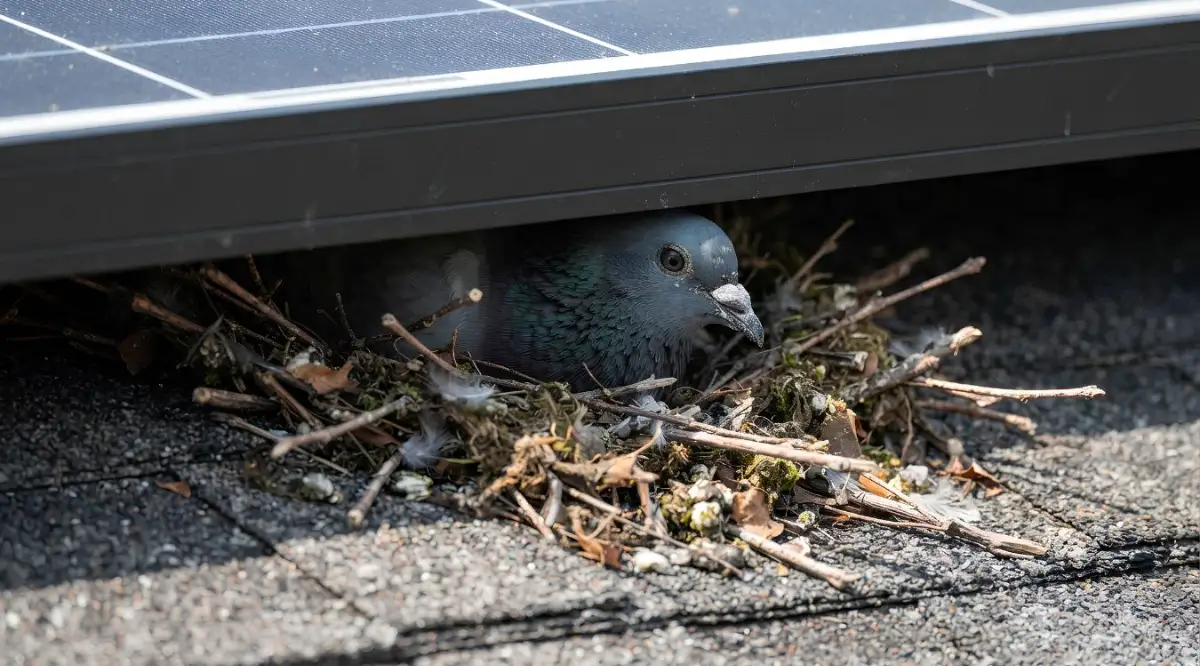
I quickly realized I had uninvited guests living on my roof. I grabbed my ladder, climbed up carefully, and peeked over the gutter to see what was happening. To my absolute horror, an entire family of pigeons had set up a massive nest right underneath my expensive solar panels.
The space between the panels and the roof shingles had become a luxury hotel for these birds. There were twigs, leaves, and an unbelievable amount of bird droppings everywhere. I just stared at the mess, feeling a heavy weight in my chest.
My immediate thought went straight to the money I spent installing this beautiful clean energy system. Pigeons and squirrels are not just annoying; they are highly destructive creatures. I worried about the wires getting chewed up and the system short-circuiting.
If you are dealing with this exact same nightmare right now, I completely understand the stress you are feeling. You just want your home to be safe, your solar panels to work efficiently, and your peace of mind restored.
What You Will Learn in 2 Minutes:
- The Threat: Pigeons and squirrels don't just make noise; their acidic droppings and chewing habits can kill your solar efficiency and start fires.
- The Fix: Physical barriers like PVC-coated steel mesh are the only permanent solution. Avoid plastic or 'fake owls.'
- Maintenance: Keep your trees trimmed and gutters clean to make your roof a 'no-fly zone.'
- Safety First: Cleaning a nest is dangerous. Always wear a mask to avoid breathing in bacteria from bird droppings.
Why Are Animals So Obsessed With Your Solar System?
Before we try to fix the problem, we need to understand why pests love solar panels so much. It is actually quite simple when you look at it from an animal's perspective. Your roof is already high up, keeping them safe from ground predators like cats or foxes.
When you add solar panels, you provide an extra layer of protection. The gap between the panel and your roof acts as a perfect, sturdy shelter. It protects them from harsh sunlight, heavy rain, and strong winds.
The Temperature Factor
Solar panels absorb sunlight and naturally produce a little bit of heat. During cold winter months, that tiny gap becomes a warm, cozy blanket for squirrels, rats, and birds.
In the summer, the panels cast a nice, cool shadow. It is essentially a temperature-controlled fortress for pests to raise their babies.
The Danger of Letting Them Stay
You might think, "They are just birds, let them stay." This is a massive mistake. Bird droppings, also known as guano, are highly acidic.
If they leave droppings on the surface of your panels, that acid will slowly eat away the anti-reflective coating. This drops your energy production significantly. Worse yet, animals like squirrels love to chew on things to keep their teeth sharp.
They will absolutely chew through your main DC cables. Exposed live wires on a roof can easily spark and start a dangerous fire. You cannot simply ignore this issue and hope they leave on their own.
The Most Effective Physical Barriers
To stop animals from living under your energy system, you have to block their access completely. Physical barriers are the absolute best way to handle this because they offer a permanent fix.
Installing a Quality Critter Guard
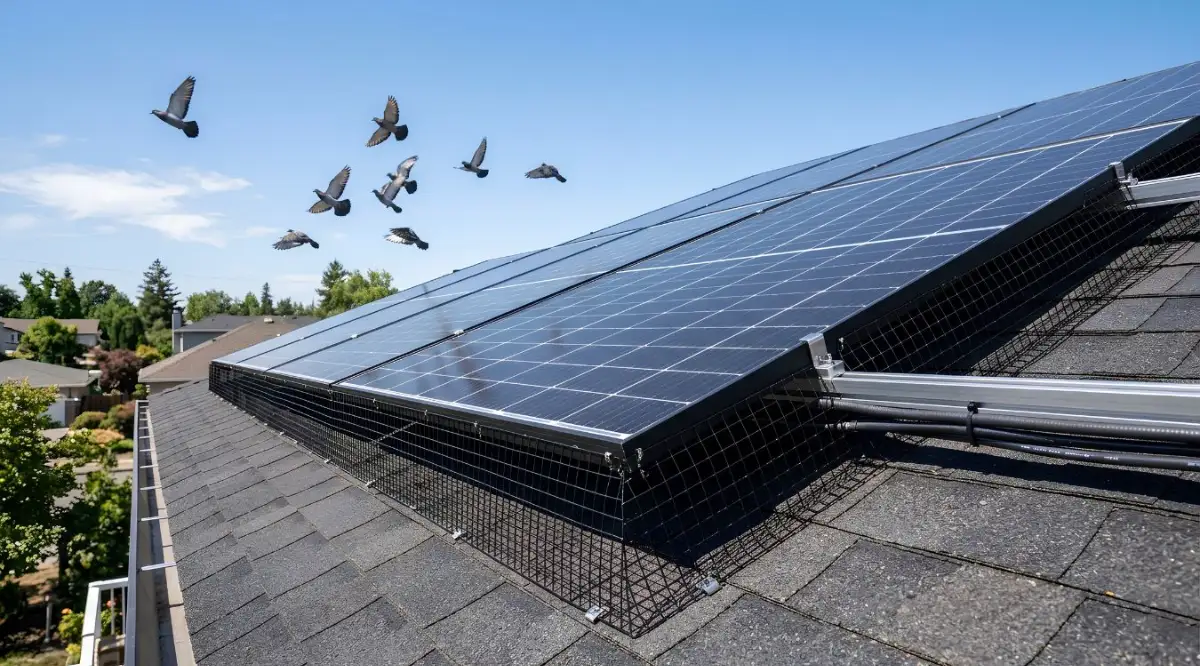
A critter guard is basically a roll of wire mesh that wraps around the entire perimeter of your solar array. It closes the gap between the edge of the panel and the roof surface.
When a bird tries to squeeze under the panel, it simply hits the mesh and flies away. This is a highly humane method because it does not hurt the animal at all; it just denies them entry.
Choosing the Right Material
You have to be very careful about the material you use. You might be tempted to use cheap chicken wire or plastic netting. I strongly advise against this.
Squirrels have incredibly sharp teeth and will chew right through plastic mesh in a matter of days. You should always look for PVC-coated galvanized steel mesh. The steel is too tough for pests to chew, and the PVC coating stops the metal from rusting when it rains.
| Material Type | Durability | Pest Resistance | Why Choose It? |
| Plastic Netting | Low (6-12 months) | Poor (Squirrels chew it) | Cheap, but a waste of time. |
| Chicken Wire | Medium | Fair (Can rust) | Hard to install and looks ugly. |
| PVC-Coated Steel | High (10+ years) | Excellent (Chew-proof) | Best protection and won't rust. |
How the Mesh is Secured
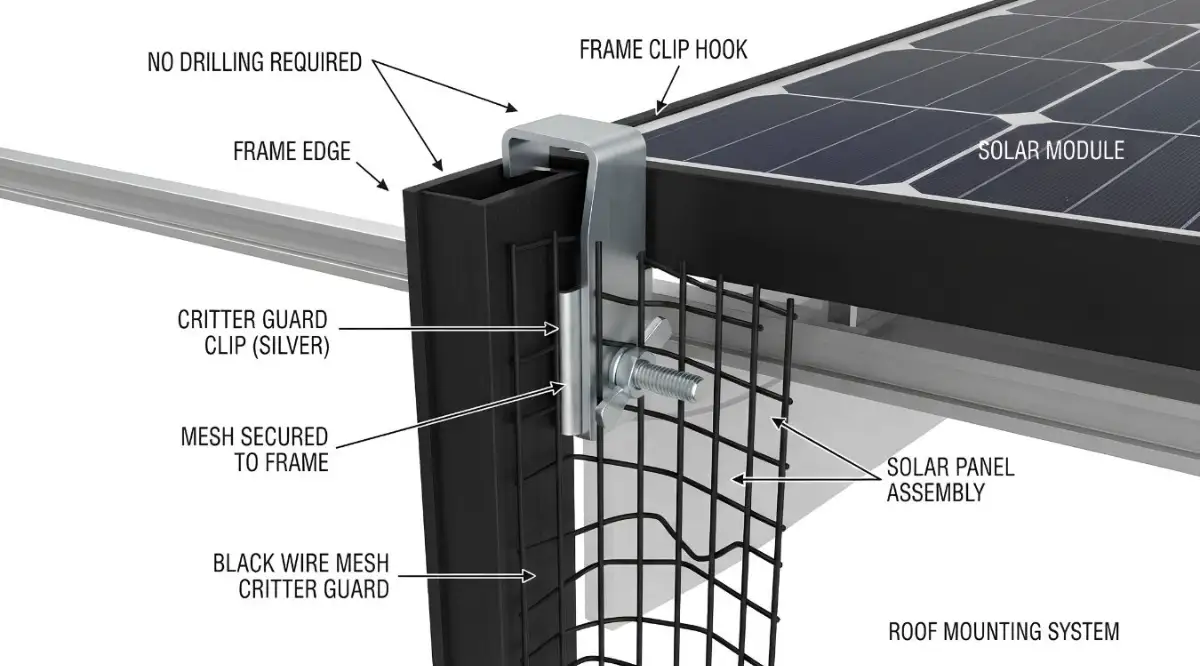
A big concern for homeowners is whether installing this mesh will void their equipment warranty. The good news is that you do not need to drill any holes into the solar frames.
The mesh is attached using specialized clips that hook onto the inner lip of the solar panel frame. These clips hold the wire tightly in place without causing any structural damage.
I actually made a huge mistake when I first tried to fix my bird problem. I thought I could just use regular plastic zip ties to hold a cheap mesh screen against the panels. After two months of harsh sun and heavy rain, those zip ties became brittle and snapped off completely. My whole DIY barrier fell apart, and the pigeons came right back, mocking my failed efforts. From then on, I realized that using proper metal solar clips and galvanized steel is the only real way to secure the perimeter permanently.
Watch This Complete Mesh Installation Process
Curious about how much hidden damage a tiny squirrel or bird can actually do to your thick solar cables in just a few days? Watch this short video below to see the shocking reality of chewed wires, and then keep reading to discover the ultimate physical barrier that locks pests out forever!
Visual and Audio Deterrents: What Actually Works?
Sometimes, a physical barrier is not enough, or you want an extra layer of defense. This is where visual and audio deterrents come into play. However, there is a lot of bad advice out there regarding these methods.
The Fake Owl Strategy
We have all seen those plastic owls sitting on roofs. The idea is that an owl is a natural predator, so smaller birds will stay away out of fear.
This works perfectly for about three days. Pigeons are actually quite smart. Once they realize the plastic owl never moves, never blinks, and never attacks, they will literally sit right on its head.
If you want to use visual decoys, you must move them around your roof every few days to keep the birds guessing.
Reflective Materials and Flash Tape
A much better visual deterrent involves using light. Birds have very sensitive eyes, and sudden flashes of light disorient them.
You can hang strips of holographic flash tape near your solar array. When the wind blows, the tape moves and reflects the sun directly into the eyes of approaching birds.
They hate this unpredictable flashing and will usually find another roof to land on. You can also use reflective pinwheels, which do the same job while adding a little movement.
Ultrasonic Sound Devices
Some homeowners try using electronic devices that emit a high-frequency sound. This sound is supposed to be incredibly annoying to birds and rodents, but completely silent to human ears.
Myth vs Reality Table on Sound Devices:
As you can see, sound devices are generally a waste of money when it comes to open outdoor spaces. Stick to physical barriers and reflective movement for the best results.
Safe Roof Maintenance Habits
Keeping pests away is not just about the panels themselves. Your entire yard and roof environment plays a huge role in attracting or repelling wildlife.
Keep Nearby Trees Trimmed
If you have large trees growing close to your house, you are essentially providing a natural bridge for squirrels and raccoons. They will climb the tree and easily jump right onto your roof.
Make sure all branches are trimmed at least eight to ten feet away from your roofline. This simple step makes it much harder for climbing animals to reach your solar array.
Remove Local Food Sources
Animals will not set up a nest unless there is a reliable food and water source nearby. Take a walk around your property and see what might be feeding them.
Do you leave pet food bowls outside on the patio? Do you have open trash cans that do not lock properly? Are there bird feeders in the front yard?
By removing these easy meals, your home becomes much less attractive to wild animals. They will naturally migrate to a different neighborhood where food is easier to find.
I honestly made a huge mistake by leaving my dog's food bowl on the back porch every night, which basically invited every squirrel in the neighborhood right to my house. Once I started keeping all pet food inside and bought a heavy-duty trash can with a locking lid, the animal traffic on my roof dropped by almost ninety percent. Sometimes the absolute best fix is simply removing the free backyard buffet!
Regular Gutter Cleaning
Your gutters collect a massive amount of leaves, twigs, and standing water. Pigeons absolutely love dirty gutters because it provides them with free nesting materials and a place to drink.
Make a habit of cleaning your gutters at least twice a year. If your gutters are clean and dry, birds have one less reason to hang around your roof.
What To Do If Pests Are Already Nesting
If you already have an active nest under your panels, you have to be very careful about how you handle the situation. You cannot just go up there and start ripping things out.
Understanding Local Wildlife Laws
Many bird species are protected by local and national wildlife laws. It is often illegal to disturb or remove a nest that contains eggs or baby birds.
You must wait until the babies have grown and left the nest on their own before you take action. If you are unsure what kind of bird is nesting, call a local wildlife professional for advice.
The Cleanup Process
Once the nest is completely empty, the real work begins. You have to remove all the debris carefully. Wear a good quality mask and gloves because dried bird droppings can release harmful bacteria into the air when disturbed.
Use a long brush to sweep out the twigs and leaves. Then, you need to sanitize the area using a mix of water and a safe, non-corrosive cleaning solution.
Why Cleaning is So Important
You might wonder why you need to clean it if you are just going to install a wire mesh anyway. Animals have a very strong sense of smell.
If you leave the scent of their old nest behind, they will constantly try to find a way back in. They will push against the mesh and scratch at your roof shingles trying to return home.
By sanitizing the area, you completely erase their scent. To the bird, the space smells brand new and unfamiliar, which heavily reduces their desire to break back in.
Why Professional Assessment is Recommended
While I always encourage homeowners to learn about their systems, getting on a roof is incredibly dangerous. Roofs are steep, slippery, and one wrong step can lead to a severe injury.
Working around electrical equipment also carries its own set of risks. If you accidentally tug on the wrong wire while trying to clear a nest, you could cause thousands of dollars in damage.
The Value of an Expert Eye
A professional solar maintenance team knows exactly how to move safely around an array. They have the proper safety harnesses and specialized tools to install critter guards quickly.
More importantly, they can inspect the wiring while they are up there. If a squirrel has already started chewing on a cable, a professional will spot the damage immediately.
They can replace the damaged wire before it turns into a complete system failure or a fire hazard. Paying for a professional cleaning and mesh installation gives you absolute peace of mind.
You will sleep soundly knowing the job was done safely, the panels were not damaged, and the pests are locked out for good.
Protecting Your Energy Savings
Your solar system is designed to save you money for decades. Every single day that your panels are covered in dirt or droppings, you are losing energy.
Every time a bird builds a nest under the frame, the panels lose their ability to cool down properly. Heat buildup causes the solar cells to drop in efficiency.
By investing a little bit of time and effort into pest prevention, you are actively protecting your financial investment. You keep your energy production high and your maintenance costs incredibly low.
Understanding The Scent Marker Phenomenon
Many homeowners clean out a pigeon nest, install a wire mesh, and think the job is completely done. A few days later, they see the same birds violently scratching at the new wire barrier.
This happens because animals leave invisible scent markers and pheromones behind. To a pigeon, that specific spot on your roof still smells exactly like home.
You must chemically break down those pheromones using a heavy-duty, enzyme-based outdoor cleaner. When you remove the familiar smell, the birds lose their emotional attachment to your roof and give up much faster.
Quick Tip: My 'Scent-Killer' Recipe
If you don't want to buy expensive enzymes, mix one part white vinegar with three parts water and a squirt of dish soap. Spray it generously where the birds were nesting (after removing the debris). It’s a cheap way to break down those pheromones that keep calling the birds back to your roof.
Mastering The Neighborhood Ecosystem
Your home does not exist in a vacuum. If your next-door neighbor has a massive, overgrown oak tree, that tree is feeding the local squirrel population.
You cannot control what your neighbors do, but you can heavily fortify the side of your house that faces their property. Consider installing reflective pinwheels on the exact corner where squirrels might try to jump over.
It is always smart to plan ahead for these types of unpredictable neighborhood variables. In many ways, preparing your home for unexpected pest invasions is a lot like building an emergency fund without ignoring your debt you must build a protective buffer before a crisis actually hits.
The Seasonal Maintenance Strategy
Pests do not attack your roof equally throughout the year. Spring is the absolute worst time for bird nesting, while late autumn is when rodents actively seek warm shelter.
You should schedule a professional visual inspection of your roof exactly one month before these peak seasons begin. Finding a tiny gap in your wire mesh in early March is a minor, inexpensive fix.
Finding that same gap in May usually means you already have a massive nest full of babies under your panels. Being proactive always saves you a tremendous amount of stress and money.
Dealing With Power Degradation
If you let dirt and bird droppings sit on your panels for too long, you will see a massive drop in your energy savings. The National Renewable Energy Laboratory has heavily documented how surface soiling creates localized hotspots that degrade power output.
A localized hotspot happens when one small section of a solar cell is blocked from the sun by a heavy bird dropping. The rest of the panel tries to push electricity through that blocked, inactive spot.
This causes the cell to overheat rapidly, which can permanently damage the silicon inside. Regular cleaning is not just about looking nice; it directly protects your financial return on investment.
The Most Dangerous Traps Homeowners Fall Into
When people get desperate to get rid of noisy animals, they often make terrible, impulsive decisions. I have seen homeowners cause thousands of dollars in permanent damage to their own equipment simply because they rushed the process.
Let us discuss the most expensive and dangerous mistakes you must avoid at all costs.
The Deadly Mistake of Chemical Poisons
Never use rat poison or toxic bird repellents on your roof. When you use poison outdoors, you trigger a chain reaction that harms the entire local environment.
A poisoned rat might stumble off your roof and get eaten by a neighborhood cat or a harmless garden snake. The Environmental Protection Agency provides extremely clear warnings about secondary poisoning caused by careless outdoor baiting.
Furthermore, when it rains, those toxic chemicals wash directly down your gutters and soak into your garden soil. Stick to humane physical barriers, which are incredibly safe and far more effective.
Destroying Your Own Warranty
I cannot count how many times I have seen someone use a power drill to screw a cheap plastic mesh directly into the aluminum frame of a solar panel. This is a massive disaster.
The moment you drill a hole into that factory-sealed frame, you completely void your equipment warranty. If water leaks into that hole and short-circuits the panel next year, the manufacturer will refuse to replace it.
Reading the fine print of a solar contract can feel as overwhelming as understanding health deductibles and co-pays, but ignoring those rules will cost you dearly. Always use specially designed, non-penetrating metal clips to attach your barriers.
Ignoring The Early Warning Signs
Many people hear a soft scratching noise above their bedroom ceiling and decide to ignore it for a few weeks. They assume the animal will just leave on its own when the weather changes.
This delay is a terrible idea. Squirrels possess teeth that never stop growing, so they constantly chew on hard objects to file them down.
They will easily chew right through the thick rubber insulation of your main solar power cables. This leaves live, high-voltage wires completely exposed to the elements.
The Horror of an Arc Fault
When an exposed wire touches your metal roof or a damp leaf, it creates a powerful electrical spark called an arc fault. This spark can easily ignite dry leaves and bird nests trapped under the array.
Ignoring a small pest problem today can literally result in a massive roof fire tomorrow. If your solar inverter starts beeping or showing an error code on the screen, shut the system down instantly and call an electrician.
Losing The Battle With Your HOA
Sometimes, you want to install a protective critter guard, but your Homeowners Association (HOA) denies the request for aesthetic reasons. You cannot simply give up and let the birds destroy your roof.
You need to take highly detailed photographs of the nesting materials, the acidic droppings, and any chewed wires. Just like you need a strict blueprint for documenting workplace discrimination before seeking legal help, you must carefully document property damage to fight an unreasonable HOA board.
When you present them with physical proof of an electrical fire hazard, they are legally forced to approve your protective installations.
Your Action Plan For A Quiet, Protected Home
You now have a complete, highly practical understanding of how to manage roof pests safely. The most important thing you can do right now is take immediate action before a small problem becomes an expensive disaster.
Start by walking out to your driveway tomorrow morning with a pair of binoculars. Take a close look at the edges of your solar array and check for twigs, leaves, or bird activity.
If you see any signs of a nest, do not panic. Simply call a local solar maintenance professional and ask them for a quote on a galvanized steel mesh installation.
A Personal Note on Moving Forward
I know exactly how stressful and exhausting it feels to wake up every morning to the sound of animals scratching at your roof. It made me feel like I was completely losing control over my own property. By installing a proper steel mesh and keeping my gutters clean, I successfully took back my home, and I know you can absolutely do the same.
People Also Ask: Resolving Your Biggest Pest Worries
Do pigeon droppings actually cause permanent damage to solar panels?
Yes, pigeon droppings are highly acidic and will quickly burn through the anti-reflective coating on the glass surface. If left uncleaned for too long, the glass becomes permanently etched and cloudy. This etching permanently reduces the amount of sunlight the solar cells can absorb.
Can I safely install a wire critter guard by myself?
While you can technically buy the materials online, I strongly recommend against doing this yourself. Walking on a slanted roof while handling sharp metal wire and working near high-voltage equipment is incredibly dangerous. Hiring an expert ensures the job is done perfectly without voiding any warranties.
Are there any natural smells that keep birds away from roofs?
Some homeowners have temporary success using strong scents like peppermint oil, cayenne pepper spray, or garlic. However, these smells wash away the very first time it rains. Because they require constant reapplication, scent repellents are not a practical long-term solution for a roof.
Will a standard pest control company clean under my solar panels?
Most traditional pest control companies will gladly trap and remove squirrels, but they usually will not touch your solar equipment. They do not want the liability of accidentally breaking an expensive glass panel. You should specifically look for a dedicated solar maintenance company to handle the cleaning and mesh installation.
Are squirrels more dangerous than pigeons for a solar energy system?
Both animals cause severe issues, but squirrels are definitely the more dangerous threat. Pigeons mostly cause massive messes and block airflow, which lowers system efficiency. Squirrels, on the other hand, actively chew through high-voltage electrical wires, which creates a very real risk of a house fire.
Dealing with pesky animals on your roof is incredibly annoying, but you absolutely have the power to fix this issue for good. Grab a pair of binoculars today, take a quick look at your panels from the driveway, and make that phone call to a local expert if you spot any trouble. Once that solid metal mesh is finally installed, you will sleep so much better knowing your home and your savings are completely safe!
Disclaimer: The information provided in this article is for general educational and informational purposes only and does not constitute professional roofing, electrical, or legal advice. Always consult with a licensed solar technician or certified wildlife control expert before attempting any repairs, cleaning, or pest removal on your property. Wildlife laws vary heavily by region, so please ensure you comply with local regulations before interacting with animal nests.