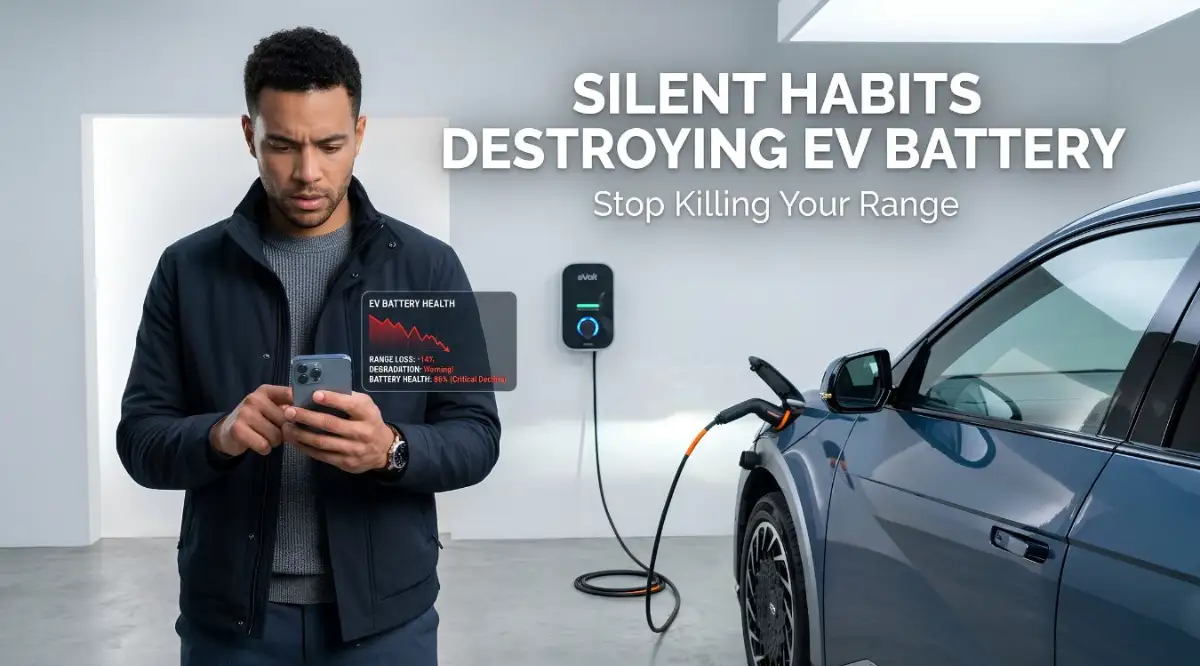
The Hidden Reality Behind Your Shrinking Electric Car Range
Let’s be honest: owning an electric car is amazing until you see your range dropping faster than a lead weight in water. I’ve been there—staring at my dashboard in a cold sweat, wondering if I’d actually make it home. It turns out, most of us are treating our high-tech car batteries like cheap smartphones, and that’s a huge mistake. Here is exactly how I stopped the range anxiety and started protecting my car’s most expensive part.
But a few months down the road, my daily driving range started dropping much faster than I ever expected. I found myself staring at the dashboard, wondering where those promised miles went. I thought I was doing everything perfectly right by treating my car like my smartphone.
It turns out, my well-intentioned daily routines were actually hurting the battery pack from the inside out. I was completely unaware of the daily mistakes I was making. These small, seemingly harmless actions were slowly draining the life out of my most expensive investment.
This exact situation is happening to thousands of new electric car owners every single day. You buy a premium vehicle expecting top-tier performance, only to face heavy stress when the battery percentage drops unexpectedly. Range anxiety becomes a real, daily struggle for regular people trying to get to work or drop their kids off at school.
Instead of enjoying a quiet, smooth ride, you end up constantly doing math in your head. You start sweating over whether you can make it to the next charging station without getting stranded on the highway. This constant worry completely destroys the peace of mind that comes with owning a modern, eco-friendly vehicle.
But you do not have to live with this anxiety anymore. The issues eating away at your battery are usually simple, everyday actions that you can easily change right now. By understanding how the technology inside your car actually works, you can easily protect your range and your wallet.
⚡ Quick Guide: Keep Your Battery Alive Longer
- The 80% Rule: Set your daily charge limit to 80% to avoid "stuffing" the battery cells.
- Avoid the "Deep Empty": Try to never let your car sit below 20% charge for more than a few hours.
- Heat is the Enemy: Use fast chargers only when necessary; slow home charging is much kinder to your battery.
- Pre-Conditioning: Use your app to warm up the car while it’s still plugged in to save range in winter.
The Science of Preserving Your Battery Health
To fix the problem, we first have to look at how we feed energy into our vehicles. The most common mistake happens right inside your own garage every single night. People treat their heavy-duty vehicles the exact same way they treat their laptops or cell phones.
You plug it in before bed, leave it charging all night, and wake up to a full "tank" of energy. It sounds like the most logical thing to do. However, this is one of the biggest factors behind early battery wear and tear.
The Problem with the 100% Charge Myth
Electric vehicles use large lithium-ion battery packs to store energy and move the wheels. These battery packs are highly sensitive to extreme states of charge. When you force a lithium-ion pack to sit at exactly 100% for long periods, it creates massive internal stress.
Think of your car battery like a human stomach after a massive Thanksgiving dinner. If you eat until you are completely stuffed, you feel tight, uncomfortable, and stressed. Your car's battery feels the exact same internal pressure when it is filled to maximum capacity and left sitting there.
Over time, this high voltage state causes the chemical components inside the battery cells to break down faster. You will slowly notice your total available range dropping month by month. The simple fix is to change your daily charging limits through your car's main screen or mobile app.
Most manufacturers recommend keeping your daily charge limit set anywhere between 70% and 80%. You should only push the slider up to 100% when you are planning a long road trip that same day. By giving the battery room to breathe, you dramatically increase its lifespan.
| Charging Scenario | Recommended Limit | Why? |
| Daily Commuting | 70% - 80% | Minimizes chemical stress and heat. |
| Long Road Trips | 100% | Use the full range only when you need it. |
| Long-term Storage | 50% | This is the "Goldilocks" zone for battery health. |
Deep Discharging
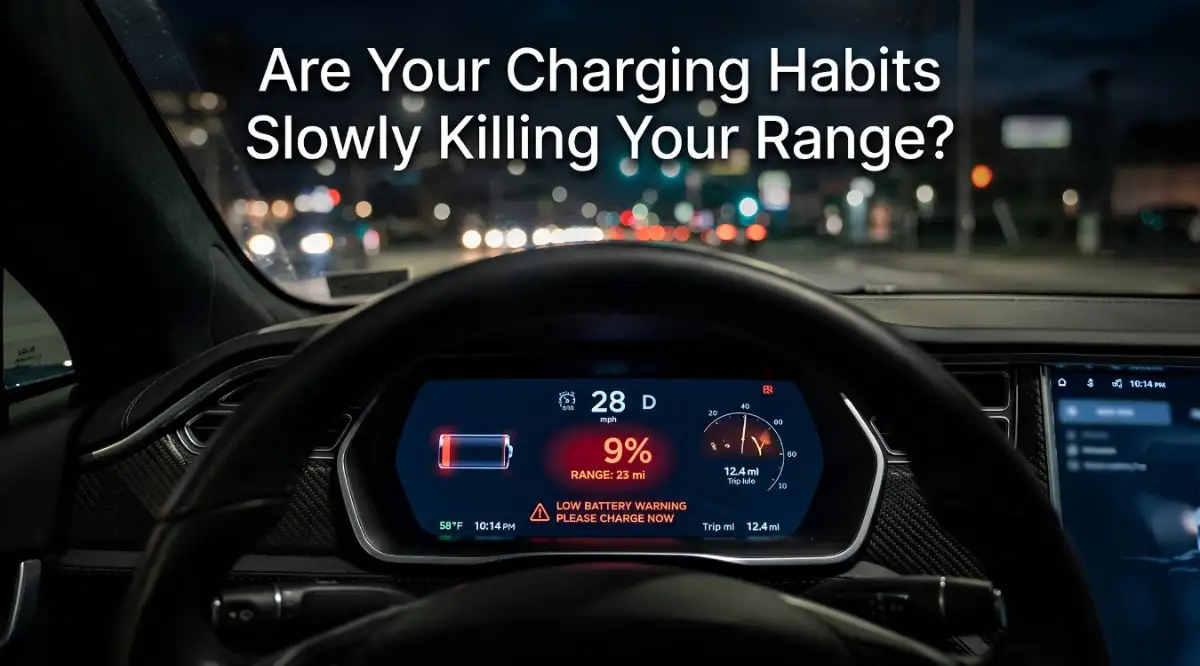
Just like eating too much is bad, starving your battery is equally damaging to its long-term health. Many drivers have a bad habit of driving their cars until the battery drops down to 1% or 2%. They wait for the low battery warning light to flash before they finally start looking for a plug.
Allowing the energy level to drop too low causes the battery cells to become deeply unstable. The chemical reactions inside the cells struggle to maintain the required power output to move a heavy car. This deep cycling slowly damages the cell structures, reducing their ability to hold energy in the future.
As a general rule, try to keep your charge level above 20% during your regular daily commutes. If you treat 20% as your new "empty," you will save your battery from extreme chemical stress. This simple mindset shift easily protects the long-term health of your vehicle.
I learned this lesson the hard way during a winter trip up to the mountains. I let my battery drop to 4% overnight, and the cold weather practically froze the remaining energy, leaving me completely stuck the next morning. Now, I always make sure to plug in the moment I drop below the 20% mark, no matter what.
The Truth About Constant Fast Charging
Public charging stations are popping up everywhere, making long trips incredibly easy and convenient. DC Fast Chargers can pump massive amounts of power into your vehicle in just thirty minutes. Because it is so fast and easy, many apartment renters rely entirely on these stations for their daily needs.
While fast charging is incredibly convenient, doing it every single day is a terrible idea for your car. Pushing extreme amounts of electricity into a battery very quickly generates a massive amount of heat. Heat is the absolute worst enemy of any lithium-ion battery pack.
The cooling systems in your car work hard to manage this heat, but they cannot stop all the internal wear. If you exclusively use DC fast chargers, your battery degrades significantly faster than a car charged slowly at home.
A Quick Breakdown of Charging Stress
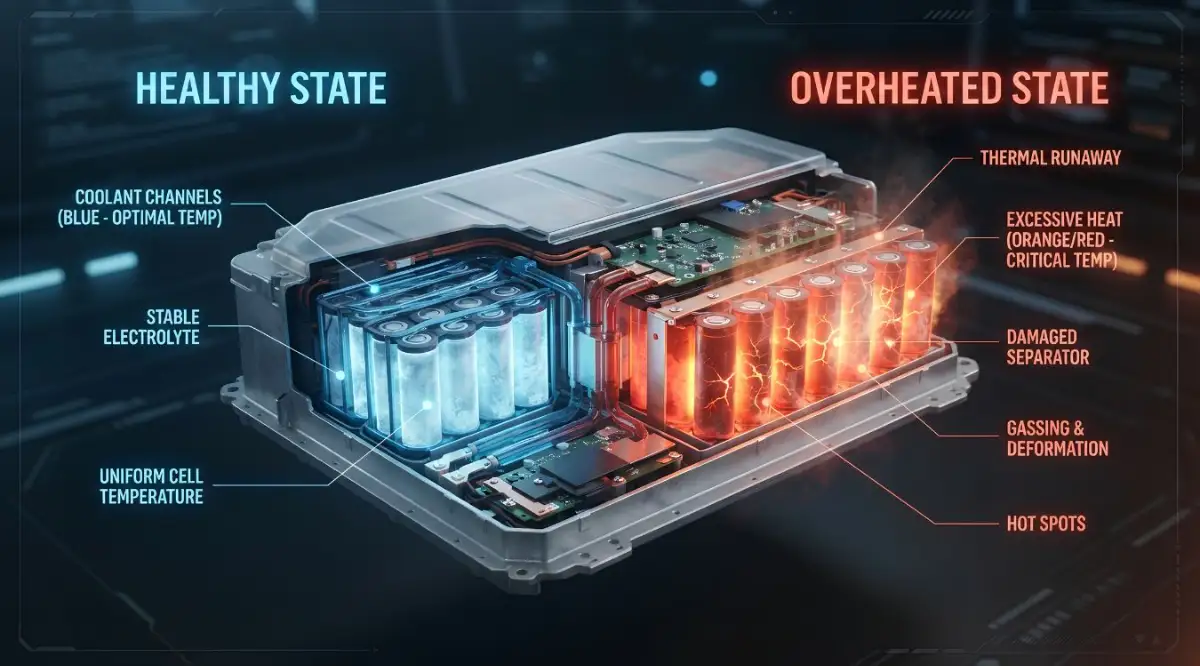
Here is a simple look at how different charging methods affect your car over time:
Whenever possible, try to do your daily charging using a Level 1 or Level 2 charger at home or at work. This slow, steady trickle of electricity generates very little heat. Reserve those super-fast public chargers for actual road trips where you really need the speed.
Parking Habits That Slowly Drain Your Range
Where you park your car during the day plays a huge role in how long your battery lasts. The temperature outside directly impacts the temperature of the cells underneath your floorboards. Leaving your car baking in a hot asphalt parking lot under the direct summer sun is a major mistake.
When the battery gets too hot, the car's computer has to turn on the internal cooling system to protect it. This means your car is actively using up battery power just to cool itself down while it is parked. Over weeks and months, this extreme heat exposure speeds up battery degradation.
The same rule applies to freezing cold winter weather. If you park outside in freezing temperatures for days, the battery fluid becomes thick and sluggish. The car then has to waste energy heating the battery back up before it can drive efficiently.
Myth vs Reality: Battery Care Edition
The Myth: You should always let your electric car die completely before charging it up to reset the battery memory.
The Reality: That rule only applied to old nickel-cadmium batteries from the 1990s. Modern lithium-ion batteries have zero "memory effect" and actually prefer short, frequent charging sessions rather than deep drains.
Whenever you have the option, park your car inside a garage or under a shaded structure. If you have to park outside in extreme heat or cold, try to leave the car plugged into a charger. When it is plugged in, the car can use power straight from the wall to heat or cool the battery, rather than draining its own reserves.
Understanding Regenerative Braking Settings
Electric vehicles have an amazing feature called regenerative braking, which captures energy when you slow down. Instead of just using physical brake pads, the electric motor runs in reverse to slow the car. This process sends free energy back into the battery, increasing your driving range.
However, many drivers do not know how to properly use this feature in their daily lives. Some people turn the regenerative braking completely off because it feels weird to drive with it. By turning it off, you are throwing away free electricity every time you stop at a red light.
Want to see exactly how regenerative braking captures free electricity and magically adds miles back to your car while you drive? Watch this short video below to see it in action, and then keep reading to learn the hidden software tricks that will easily double your battery life!
On the flip side, some drivers leave it on the most aggressive setting while driving on the highway. Aggressive regeneration at high highway speeds can cause the car to violently slow down the moment you lift your foot off the pedal. This jerky driving style actually wastes momentum and hurts your overall efficiency.
The smartest approach is to adjust your settings based on where you are currently driving. Use strong regenerative braking in stop-and-go city traffic to capture the most energy possible. When you are cruising on the highway, lower the setting so your car can coast smoothly without losing speed.
Learning to master these settings takes a little bit of practice and patience. But once you understand how your specific car handles energy, you become a much better driver. You will easily notice your estimated range numbers creeping up instead of always dropping down.
Taking care of your battery does not require a degree in electrical engineering. It mostly requires breaking old habits you learned from driving gas cars and using cell phones. By making a few small adjustments to your daily routine, you can easily keep your battery strong and healthy for a very long time.
Next-Level Strategies for Maximizing Your Battery Lifespan
Now that we have covered the basics of daily charging, we need to talk about the hidden settings inside your car. Most electric vehicle owners completely ignore the software side of their cars. They just plug in, drive away, and hope for the best.
But your car is essentially a giant computer on wheels. If you know how to talk to this computer, you can easily double the healthy lifespan of your battery pack. Let us look at some of the smartest, most effective habits that experienced owners use to protect their investments.
The Magic of Pre-Conditioning Your Cabin
One of the best features of any modern electric car is the ability to control it from your smartphone. You can turn on the heater or the air conditioning while you are still sitting inside your house. This is not just a fancy luxury feature meant to keep you comfortable.
Using this feature, known as pre-conditioning, is actually a massive benefit for your battery health. When you start your car in the freezing cold, the battery has to work incredibly hard to generate heat. It burns through a huge chunk of your stored energy just to warm up the cabin and the battery cells.
If your car is still plugged into the wall charger, you can use the smartphone app to warm it up before you unplug. This forces the car to pull electricity directly from your house instead of draining the battery. By the time you sit in the driver's seat, both the cabin and the internal battery fluid are at the perfect operating temperature.
This simple morning habit prevents extreme cold-weather stress on the lithium-ion cells. According to research on maximizing electric vehicle range, using grid power to warm the car can save you up to 20% of your daily range in the winter. It keeps the internal chemistry stable, happy, and ready for a long drive.
Beating the Silent Battery Killer: Vampire Drain
Have you ever parked your car with a 50% charge, only to wake up the next morning and see 46% on the screen? That missing 4% of energy did not just disappear into thin air. It was eaten by a frustrating issue known as "vampire drain" or phantom drain.
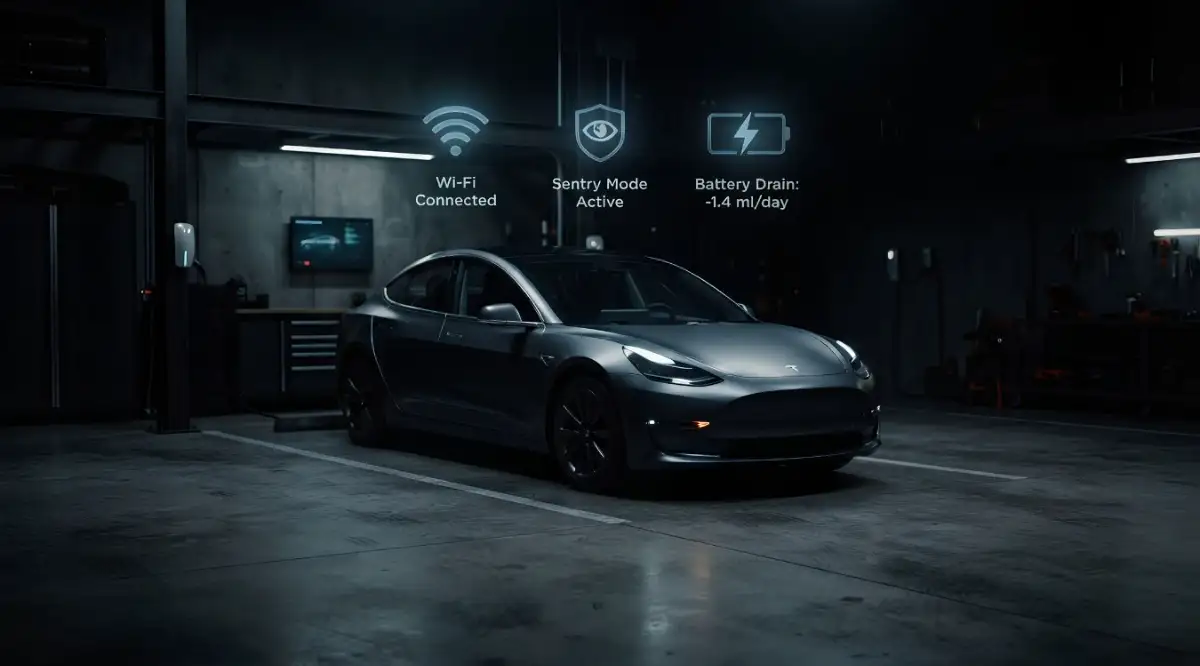
Even when your electric car is parked and locked, it never truly goes to sleep. The internal computers are constantly checking for software updates, maintaining battery temperatures, and running security cameras. Features like "Sentry Mode" or constant mobile app check-ins keep the main computer completely awake.
When the computer stays awake, it slowly siphons energy directly from your main battery pack. Over a single night, losing a few miles of range might not seem like a big deal. But if you leave your car at the airport for a two-week vacation, this phantom drain can completely kill your battery.
To stop this hidden waste, you need to turn off unnecessary features when your car is safely parked at home. Disable constant security recording if your car is locked inside a secure private garage. Also, stop opening the mobile app every twenty minutes just to check the battery percentage, as this forces the car to wake up every single time.
My biggest mistake was obsessively checking my car's mobile app while sitting at my office desk, thinking I was just being a responsible owner. I didn't realize that every single time I opened that app, I was waking the car's computer up and slowly killing my own daily range! Now, I only check the app when I actually need to, and it is amazing how much extra energy stays in the battery overnight.
Calibrating Your Battery Management System (BMS)
Sometimes, the battery percentage you see on your dashboard is actually lying to you. Your car relies on a Battery Management System (BMS) to guess how much energy is left inside the pack. Over time, if you always charge between 40% and 80%, this computer system gets confused about where the true "top" and "bottom" actually are.
When the BMS loses its calibration, you might notice sudden drops in your estimated range. You might think your battery is degrading rapidly, but it is just a software calculation error. To fix this, you occasionally need to teach the computer how to measure the energy levels again.
Don't forget your 12V battery! Even though you have a massive high-voltage pack, your car still uses a standard 12V battery for lights and screens. If you leave your car sitting at 0% main charge, it can actually kill this smaller battery too, leaving you completely locked out of your car.
Once every three or four months, let your battery drain down to around 10% during your normal driving. Once you get home, plug the car in and let it charge all the way up to a full 100%. Leave it plugged in for a few hours after it hits 100% so the internal cells can balance out completely.
This process resets the software and gives you a much more accurate reading on your dashboard screen. Just remember not to leave the car sitting at 100% for days at a time. The experts over at Battery University explain how to prolong lithium-based batteries by keeping the cells balanced without holding them at maximum voltage for too long.
Planning for the Unexpected Replacements
No matter how perfectly you treat your vehicle, mechanical and chemical things eventually wear out. A full battery replacement out of warranty can easily cost upwards of $15,000 to $20,000. This is a massive financial shock that most normal families are completely unprepared to handle.
This unexpected expense is exactly why understanding how to build an emergency fund without ignoring your debt is so deeply important for any car owner. You want to make sure you have a financial safety net in place long before your dashboard flashes a red warning light.
Treat your vehicle's health exactly like you treat your own physical well-being. Just like you need a solid grasp of understanding health deductibles and co-pays to protect yourself from medical debt, you need a clear strategy to handle expensive auto repairs. Staying financially prepared takes all the stress out of owning advanced technology.
The Dangerous Pitfalls of Electric Vehicle Ownership
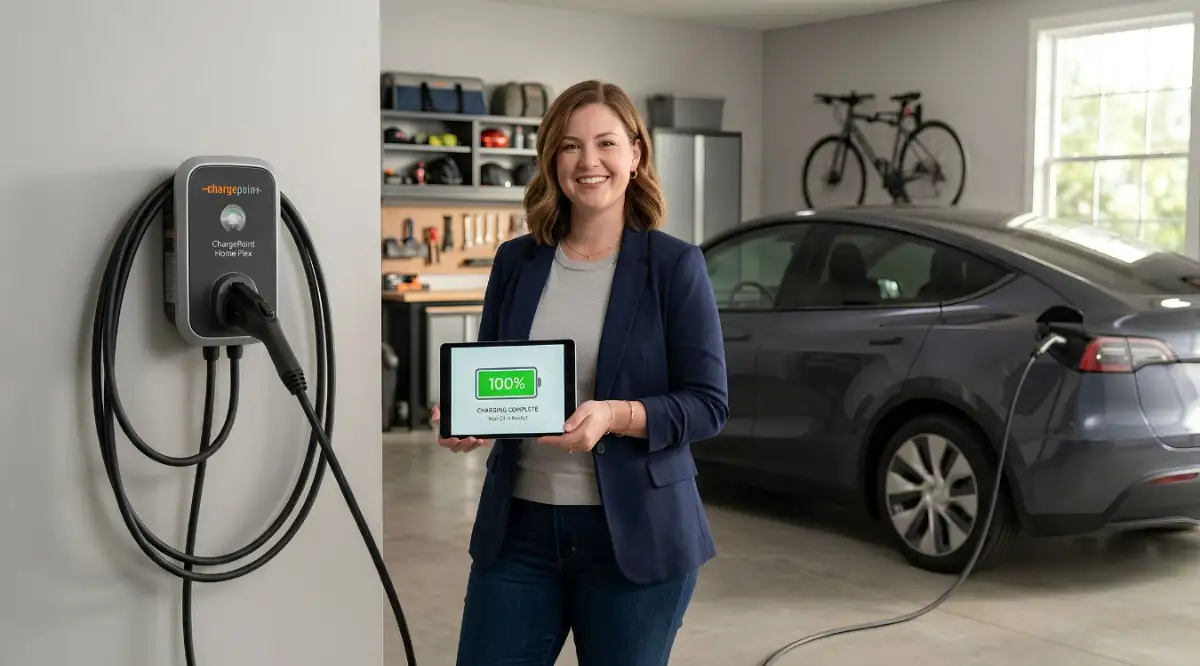
Taking care of an electric car is completely different from maintaining an old gas-powered truck. Many new owners accidentally bring their old gas station habits into the electric era. This lack of education leads to massive, expensive mistakes that ruin the driving experience.
Let us look at some of the most common traps that catch new drivers completely off guard. If you can avoid these everyday pitfalls, your car will easily outlast your monthly payments.
The Heavy Foot Habit
Electric motors provide instant, massive power the second you step on the accelerator pedal. Pushing that pedal to the floor feels like being launched on a roller coaster. It is incredibly fun to beat sports cars off the line at a red light.
But aggressive driving is absolutely terrible for your battery's internal health. When you demand maximum power instantly, the battery has to dump massive amounts of energy all at once. This massive energy dump generates intense heat deep inside the battery cells.
If you drive aggressively every single day, you are literally cooking your battery pack from the inside. The car's cooling system will struggle to keep up with the constant thermal spikes. Over time, you will watch your total range permanently drop because you wanted to show off your acceleration.
Save the hard launches for special occasions or safe highway merging. For your daily commute, try to drive as smoothly and gently as possible. A relaxed driving style not only saves your tires but also keeps your battery cool and happy.
Ignoring Critical Software Updates
Automakers now send updates to your car over the internet, exactly like an iPhone update. These updates often include massive improvements to how the car manages its own energy. Many drivers ignore the little update notification on their screen because they do not want to wait twenty minutes for the car to restart.
Ignoring these software updates is a huge mistake. Engineers are constantly discovering new ways to make the Battery Management System more efficient. Sometimes, an update will actually increase your total range or speed up your charging times at public stations.
Make it a solid habit to connect your car to your home Wi-Fi network and install updates as soon as they arrive. These free digital upgrades keep your battery protected using the absolute latest scientific data. Check out how the National Renewable Energy Laboratory tracks battery lifespan to understand why these software tweaks matter so much.
Failing to Keep a Paper Trail
When a battery pack starts failing prematurely, you will have to deal with the manufacturer's warranty department. Some shady dealerships will try to blame you for the battery degradation to avoid paying for the expensive replacement. They might claim you used the wrong chargers or neglected routine software checks.
This is where your personal documentation becomes your strongest weapon. You need to keep detailed records of your service appointments, charging habits, and any warning lights that pop up. If a dealership tries to unfairly deny your warranty claim, having a solid paper trail is your only defense.
This requires the exact same level of careful record-keeping as documenting workplace discrimination before seeking legal help. You have to prove that you followed all the rules perfectly. According to Federal Trade Commission guidelines on auto warranties, keeping excellent service records prevents dealers from legally denying your coverage.
Leaving the Car Empty in the Cold
This is perhaps the saddest scenario we see during the winter months. A driver comes home late at night with only 3% battery remaining. They are too tired to plug the car into the wall, so they just go straight to bed, thinking they will do it in the morning.
Overnight, the temperature outside drops below freezing. The extreme cold causes the chemical reactions inside the nearly empty battery to slow down to a crawl. The car's computer tries to use the last bit of energy just to keep the battery from freezing completely solid.
By morning, the battery is completely dead and the car refuses to turn on. In some severe cases, letting a completely empty battery freeze can cause permanent internal cell damage. Never play games with low battery percentages in extreme weather. Always plug your car in immediately when the range gets critically low.
Your Roadmap to a Healthier Electric Vehicle
We have covered a massive amount of ground today, but the core message is actually incredibly simple. Protecting your electric vehicle simply requires a tiny bit of daily mindfulness. You are completely in control of how long your battery pack will survive.
You now know that keeping your daily charge limit around 80% is the smartest thing you can do. You understand the dangers of relying heavily on massive DC fast chargers for your daily commute. You also know how to use pre-conditioning to save your range during those freezing winter mornings.
Most importantly, you understand that your battery needs to breathe. It hates sitting at a completely full 100%, and it absolutely panics when it drops below 5%. By treating your battery with a little bit of respect, you will save yourself thousands of dollars in unexpected repairs.
Owning an electric vehicle should be a fun, relaxing, and highly economical experience. Do not let range anxiety or bad habits steal the joy of driving the future of transportation. Take these simple steps, adjust your daily routines, and watch your car perform beautifully for years to come.
My journey with electric cars started with a lot of mistakes, stress, and unnecessary range anxiety on the highway. But once I started applying these exact charging habits, my stress completely vanished and my battery health stabilized beautifully. I know for a fact that if you start using these tips today, you will immediately feel more confident and in control of your car's future!
Common Questions About Managing Your EV Battery
Should I plug my electric car in every single night?
Yes, it is highly recommended to plug your car in every night if you have a home charger. Just make sure your car's software limit is set to 80% so you do not stress the battery. The car prefers to be plugged in so it can manage its own temperature using house power instead of its own energy.
Does fast charging permanently ruin my battery?
Using a fast charger on a road trip every now and then will not ruin your battery at all. The damage only happens if you use super-fast public chargers as your only source of electricity every single day. The extreme heat from constant fast charging will slowly degrade the internal cell chemistry over time.
At what exact percentage should I charge my EV?
For daily commuting, the sweet spot is keeping your battery between 20% and 80%. This middle zone creates the least amount of stress on the lithium-ion cells. Only charge all the way to 100% right before you leave for a long cross-country trip.
Will cold weather permanently damage my electric car?
Cold weather temporarily reduces your total driving range, but it rarely causes permanent damage unless the battery is sitting completely empty. To protect the battery in freezing weather, simply keep the car plugged into a charger. This allows the car's computer to keep the internal battery fluid warm and safe.
How much does it really cost to replace the battery pack?
If your car is no longer covered by the manufacturer's warranty, a full replacement can cost anywhere from $10,000 to $20,000. This highly expensive repair is exactly why preventative care is so incredibly important. By following smart charging habits today, you can avoid this massive bill entirely.
I know changing how you drive and charge can feel a bit overwhelming at first, but taking control of your battery health is incredibly rewarding. Go out to your garage tonight, change your daily charge limit to 80%, and enjoy the absolute peace of mind that comes with knowing your car is protected. You have the power to make your electric vehicle last for years, so take action right now and enjoy the ride!
Disclaimer: The information provided in this article is for educational and informational purposes only and should not be construed as professional mechanical or financial advice. Always consult your vehicle's specific owner's manual and speak with a certified dealership technician before making major changes to your vehicle's maintenance routine. Battery management systems and software vary heavily by manufacturer.