

Why My Random Nighttime Skincare Routine Was Actually Ruining My Face
You know that awful feeling when you spend half your paycheck on fancy skincare, only to wake up with angry red bumps? That was exactly me a little while back. I was layering expensive serums onto my face like a baker frosting a messy cake, completely ignoring the basic rules of skin biology. I had to learn the hard way that throwing five different strong formulas onto your face at once does not give you clear skin—it just gives you a ruined moisture barrier and a lot of frustration.
Instead of waking up looking refreshed, my face felt tight, dry, and covered in tiny, angry breakouts. I was doing everything people told me to do online. I was washing my face, applying my expensive products, and going straight to bed.
But I was completely missing the science behind how these powerful ingredients actually interact with each other. I thought slapping them on randomly would give me fast results. I assumed my skin would just figure out what to do with all that heavy liquid.
This random application method completely destroyed my moisture barrier. Everyday life became incredibly stressful because my face constantly burned whenever I sweat or stepped into the sun.
I felt like I was literally washing my hard-earned money down the bathroom sink every single night. After visiting a professional dermatologist and reading countless clinical studies, I realized skin absorption is a highly specific biological process.
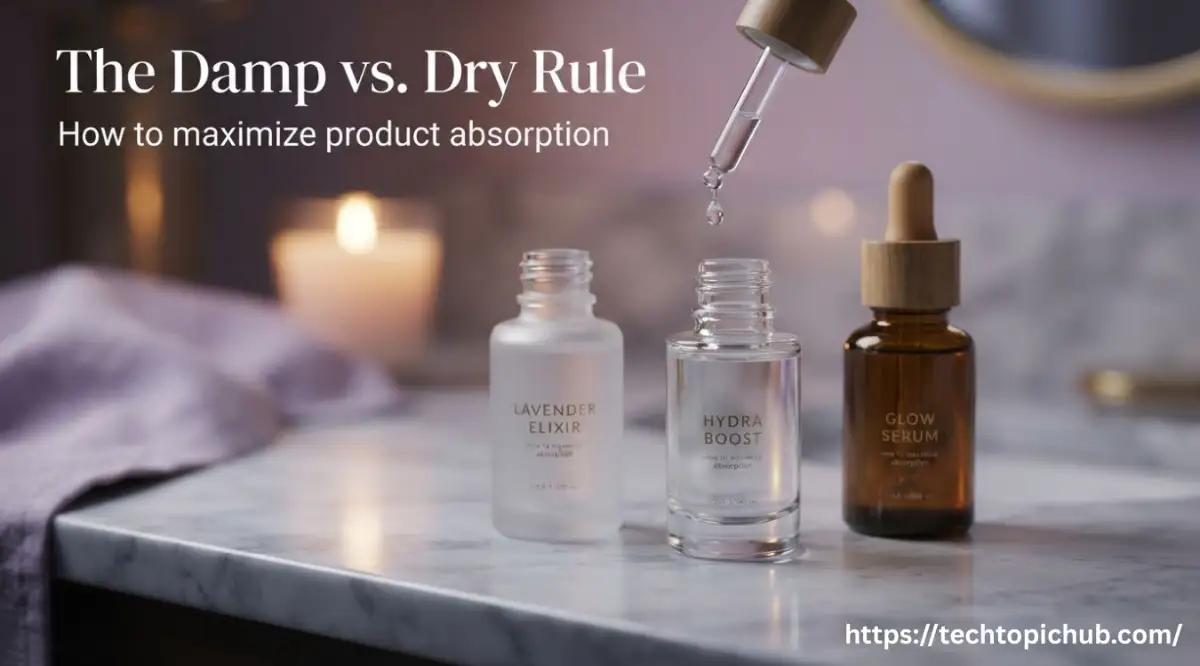
The Quick Nighttime Blueprint (If You Are in a Hurry)
- Clear the Canvas: Always double-cleanse at night to remove invisible oil and sunscreen blocks.
- Thin to Thick: Apply your watery, hydrating liquids first, then move up to your heavier creams.
- Mind the Dampness: Hydrating serums need damp skin; strong actives (like Retinol) need completely dry skin.
- Lock It Down: Never skip your final moisturizer—it acts as a physical roof to stop your expensive serums from evaporating while you sleep.
The Biology of Skin Absorption: Preparing Your Canvas
You cannot expect a beautiful painting if you start on a dirty, oily canvas. The exact same logic applies to your nighttime skincare application.
Throughout the day, your face collects a thick layer of invisible pollution, sweat, dead cells, and leftover sunscreen. If you apply an expensive serum directly over this daily grime, the active ingredients will simply sit on top of your face.
The molecules in your serums are specifically designed to penetrate the deepest layers of your skin. They need a completely clear pathway to travel downward without any physical roadblocks.
This is exactly why double cleansing at night is not just a trend, but a scientific necessity. You start with an oil-based cleanser to melt away the stubborn water-resistant layers like makeup and sunscreen.
Then, you follow up immediately with a gentle, water-based foaming cleanser. This removes the remaining dirt and ensures your pores are completely bare and ready to drink up your products.
The Damp Skin vs. Dry Skin Scientific Dilemma
One of the biggest mysteries in the beauty community is whether your face should be wet or completely dry before applying products. The answer completely depends on the molecular weight of the serum you are using.
Think of your skin exactly like a kitchen sponge. If you take a bone-dry sponge and drop a thick lotion on it, the lotion will just sit heavily on the surface.
However, if you slightly dampen that sponge first, it becomes highly permeable and quickly absorbs whatever you put on it. This is the exact scientific mechanism you want to use for hydration.
When you are using hydrating ingredients like Hyaluronic Acid or Glycerin, your face must be slightly damp. These specific ingredients act like moisture magnets, pulling water from the environment deep into your skin cells.
If your face is completely dry, they have no water to pull from, so they might actually pull water out of your deeper skin layers, causing more dehydration.
The 3-Second Towel Rule (A Quick Test):
How do you know if your face is the right amount of damp? Try the 3-second rule. After washing your face, gently tap it with a clean towel for exactly three seconds. Your skin should not have visible water droplets dripping down your chin, but it should still feel cool and slightly sticky to the touch. That is your perfect window to apply hydrating serums!
If you are wondering exactly how to press these watery liquids into your face without wasting a single drop, watch this quick visual guide. It perfectly shows the gentle patting motion you need to master before moving on to the next heavy layer.
Step 1: The Water-Based Hydration Layer (Lightest Molecular Weight)
Now that your face is properly cleansed and slightly damp, it is time for the very first step in the scientific sequence. You must always apply your products from the thinnest consistency to the thickest consistency.
Water-based serums have the smallest molecular structures. Because they are so tiny, they can travel the deepest into your skin layers at the fastest speed.
If you apply a thick, heavy cream first, it creates a thick wall on your face. Those tiny water-based molecules will never be able to pass through that heavy wall, making your expensive watery serums completely useless.
Always start with your hydrating formulas first. Drop a pea-sized amount into the palm of your hand. Gently press and pat the liquid directly into your damp cheeks, forehead, and neck.
Do not aggressively rub the product into your face. Aggressive rubbing causes unnecessary friction, which can stretch your skin and lead to premature wrinkles over time. Gentle patting encourages better blood circulation while helping the product sink in naturally.
Step 2: The Barrier Support and Calming Layer
Once your initial hydrating layer has fully absorbed, your skin is plump and ready for the next phase. This is the perfect time to introduce barrier-supporting ingredients.
Niacinamide is a fantastic example of a medium-weight serum that works wonderfully in this second step. It helps calm any natural redness and prepares your skin to handle stronger, more aggressive treatments later in the routine.
Because your skin has already taken in the watery hydration, this slightly thicker formula creates a comforting blanket over your face. It acts as a protective buffer.
I used to slap strong retinol right on top of freshly washed, damp skin without any buffer layer. My face turned bright red and peeled painfully for three days straight. I quickly learned that letting my skin dry completely and using a calming buffer serum first saved my skin barrier entirely.
Applying a calming serum before your strong actives reduces the chances of severe irritation by almost half. Your skin needs this gentle transition to stay healthy and strong over time.
Step 3: The Heavy Lifters and Active Treatments
Now we arrive at the most sensitive and powerful part of your nighttime routine. This step is strictly reserved for your active treatments, like Retinol, chemical exfoliants, or targeted dark spot correctors.
By the time you reach this stage, your face should be completely dry to the touch. Water actually increases the penetration speed of strong actives, which sounds good, but it often leads to severe chemical burns.
Retinol needs to enter your skin at a very slow, controlled pace to do its job without causing extreme flaking. The slightly thicker consistency of these treatment serums means they need extra time to process.
Take a very small amount—usually just the size of a green pea—and carefully distribute it across your face. Focus primarily on the areas where you have specific concerns, like fine lines around the mouth or dark spots on the cheeks.
Always avoid the incredibly delicate skin immediately around your eyes and the corners of your nose. These areas naturally collect excess product and are highly prone to burning and peeling.
Understanding the Chemistry of Wait Times
Many people quickly slap one product directly over another in less than thirty seconds. This fast application method completely messes up the pH levels of your carefully formulated products.
Every single serum has a specific pH level designed by chemists to keep the active ingredients stable and effective. When you mix a highly acidic serum with a neutral serum too quickly, they can cancel each other out.
Instead of getting glowing skin, you just get a sticky, useless mess on your face. You must give each distinct layer enough time to settle and adjust to your skin's natural temperature.
A good rule of thumb is to wait about sixty to ninety seconds between each different product application. Use this short waiting time to brush your teeth, comb your hair, or simply take a few deep, relaxing breaths.
You will physically feel when a product has dried down properly. Your face will no longer feel slippery or wet; instead, it will feel slightly tacky to the touch. This slight tackiness is exactly what you want before moving to the final step.
I used to completely rush through my routine because I was tired and just wanted to jump into bed as fast as possible. Now, I keep a small, cheap handheld fan right on my bathroom counter to gently speed up the drying process between my layers. It is such a simple trick, but it totally stopped my expensive products from pilling up and turning into a sticky mess on my cheeks.
Quick Reference: The Serum Wait Time Cheat Sheet
- Water-Based Serums (Hyaluronic Acid, Peptides): Wait 30 to 60 seconds. Let the skin drink it up.
- Calming Buffers (Niacinamide, Centella): Wait 1 full minute. Your face should feel slightly tacky, not wet.
- Active Treatments (Retinol, BHA/AHA): Wait 2 to 3 minutes. Your skin must be bone-dry before moving to the next step to avoid chemical burns.
Step 4: The Ultimate Seal and Protection
All the expensive serums in the world will not help you if they simply evaporate into the dry air while you sleep. This process is scientifically known as transepidermal water loss.
Throughout the night, your body naturally loses a massive amount of moisture as it works to repair damaged cells. Your final step must involve a moisturizer or night cream to build a physical roof over your serums.
Moisturizers contain larger, heavier molecules known as occlusives and emollients. These thick ingredients are not designed to penetrate deeply into the skin.
Instead, they are explicitly designed to sit on the very top layer of your face. They lock in all the watery hydration, the calming nutrients, and the powerful actives you just applied.
Think of your moisturizer as the heavy lid on a boiling pot of water. It keeps all the good stuff trapped safely inside where it can do the most structural good.
Common Myths vs Scientific Reality
You do not need a complicated, twelve-step routine to achieve a beautiful, flawless complexion. In fact, mixing too many different active ingredients often causes chemical confusion on your face.
When you overload your skin with five different acids and treatments, your skin's natural immune system goes into a state of panic. It responds by producing excess oil and painful cystic acne to defend itself.
Keeping your sequence minimal, scientifically ordered, and incredibly consistent is the true secret to long-term skin health.
Adjusting Your Sequence for Different Climates
Your skin does not stay the exact same throughout the entire year. The environment you live in plays a massive role in how your products perform at night.
If you live in a very hot, humid climate, the air already contains a lot of heavy moisture. In this environment, you might only need a very lightweight water-based serum and a thin lotion to seal it in.
However, when the dry, cold winter months arrive, your skin's natural barrier becomes weak and brittle. The indoor heating systems suck every drop of moisture directly out of your face.
During these harsh weather conditions, you must adjust your nighttime sequence accordingly. You will likely need to add a few drops of natural facial oil as the absolute final step over your moisturizer.
Facial oils have the largest molecular structure of all skincare products. They create an impenetrable shield that completely stops winter air from stealing your carefully layered hydration.
The Importance of the Overnight Repair Cycle
Why do we put so much intense focus on our nighttime routine anyway? The answer lies deep within your body's natural circadian rhythm.
During the daytime, your skin is in a constant state of defense. It is actively fighting off harmful UV rays, dirty pollution, and intense environmental stress.
But when you finally fall asleep, your skin switches into a highly active recovery and regeneration mode. Your blood flow increases significantly, bringing fresh oxygen and nutrients to the surface.
This nighttime biological shift means your skin is naturally highly receptive to active ingredients while you are sleeping. By applying your products in the correct scientific sequence, you are giving your skin the exact tools it needs, right when it is begging for them.
You are actively supporting the cellular turnover process rather than just guessing and hoping for the best. Consistency with this specific sequence will slowly transform your skin texture over a few short weeks.
Patience is incredibly important because healthy skin does not happen overnight, but following the proper biological steps guarantees you are moving in the right direction.
Mastering the Long-Term Strategy for Flawless Skin
Once you finally understand the basic scientific sequence of layering your skincare, you will naturally start seeing positive changes. But keeping those amazing results over several months requires a completely different level of strategy.
I used to get extremely frustrated because my skin would look absolutely perfect for two weeks, and then suddenly break out in tiny bumps all over again. I felt like I was doing everything right, but my face was completely unpredictable.
It turns out, your skin is a living, breathing organ that constantly changes based on your environment, stress levels, and internal chemistry. You cannot just force the exact same strong treatments onto your face every single night and expect perfection.
If you want to maintain a glowing complexion without randomly damaging your skin barrier, you have to learn how to actively listen to what your face actually needs. This means adjusting your routine slightly before major problems even have a chance to start.
The Magic of the Skin Cycling Method
One of the greatest secrets I ever learned from top dermatologists is the concept of giving your face a designated rest period. Your skin actually becomes incredibly exhausted if you blast it with strong active ingredients every single night.
Think about how you treat your muscles at the gym. You never train your legs intensely for seven days straight because they would eventually tear and break down completely.
Your face works in the exact same biological way. This is where a highly effective four-night skin cycling routine completely changes the game.
On night one, you use your gentle exfoliating acid serum to clear away the dead surface cells. On night two, you apply your powerful retinol serum to stimulate deep collagen production.
Then, nights three and four are entirely dedicated to simple, soothing hydration and intense barrier repair. During these rest nights, you completely avoid all strong treatments and just flood your face with calming water-based formulas and heavy moisturizers.
This simple rotation prevents extreme redness and gives your fresh cells enough time to safely rise to the surface. It is the absolute best way to get maximum results without suffering through the painful peeling phase.
Temperature Control for Unstable Formulas
Have you ever opened a brand-new, extremely expensive bottle of Vitamin C serum, only to find it has turned a strange, dark orange color just three weeks later? I used to just ignore the color change and rub it onto my face anyway.
I had no idea that this dark color meant the scientific formula had completely oxidized and died. Once an active ingredient oxidizes, it essentially becomes useless, acidic water that can heavily clog your pores.
Certain powerful ingredients are highly unstable when they are exposed to normal room temperature, heat, and bathroom humidity. This is exactly why you need to start treating your active serums like fresh groceries.
If you want your products to remain highly effective for months, you should store your sensitive antioxidants and retinol deep inside your refrigerator. The cold environment completely pauses the chemical breakdown process.
Plus, applying a perfectly chilled, hydrating serum to your face at night feels like an incredibly luxurious, swelling-reducing spa treatment.
Adapting to Your Monthly Biological Shifts
Your body goes through massive chemical changes every single month, and your face is usually the very first place it shows up. Hormonal shifts completely alter how much natural oil your pores produce on a daily basis.
During certain times of the month, your face might feel extremely tight, dry, and highly sensitive to the touch. During these specific days, you should completely skip your harsh chemical treatments and only focus on heavy, creamy moisture.
On the flip side, when your hormones cause massive spikes in thick oil production, heavy creams will only trap that oil and cause painful cystic acne. This is the exact time to switch back to your lightweight, fast-absorbing watery formulas.
Understanding this natural physical rhythm saves you an incredible amount of stress and confusion. It is honestly just as important to manage your beauty investments wisely as it is to focus on building an emergency fund without ignoring your debt.
You never want to waste your hard-earned money blindly buying more products when your body simply needs a temporary routine adjustment. When you feel overwhelmed by the beauty world, stepping back to read about general life management at our main technology and lifestyle hub can offer a great mental break.
 The Danger Zone: Skin-Ruining Application Mistakes
Even if you buy the most expensive, scientifically proven formulas in the entire world, applying them incorrectly will completely ruin your face. I have made nearly every single embarrassing mistake on this list, and I have the old acne scars to prove it.
It breaks my heart to see so many people struggling with severe redness when the solution is just a tiny adjustment in their physical habits. Avoiding these specific daily traps is exactly what separates a decent skincare routine from a truly transformative one.
When you damage your moisture barrier, healing it requires an incredible amount of patience and time. The recovery process feels heavily frustrating, almost exactly like trying to figure out a proven way to speed up the home selling process in a sluggish housing market.
You naturally want instant, overnight results, but your body simply refuses to be rushed. Let us break down the exact actions you need to stop doing immediately.
The Bacteria Trap on Your Glass Dropper
We have all seen those incredibly aesthetic social media videos where influencers touch the glass dropper directly to their flawless cheeks. It looks so beautiful and professional on camera, but it is actually a massive biological hazard.
Your face is naturally covered in invisible microscopic bacteria, dead skin cells, and leftover natural oils. When you drag that glass tip across your cheek and push it back into the bottle, you are directly contaminating the entire formula.
You are basically creating a warm, dark breeding ground for highly aggressive acne bacteria inside your expensive glass jar. Within just a few days, you will be pumping that concentrated bacteria directly onto your clean pores every single night.
Always hold the dropper at least one full inch away from your face or simply drop the liquid safely into the clean palm of your hand. Keeping your tools perfectly sanitary is the easiest way to prevent random, unexplained breakouts.

Chemical Warfare on Your Own Face
In our modern world, we naturally assume that more is always better. If one strong acid gives you a nice glow, then mixing three different acids together should give you glass skin by morning, right?
This thought process is completely wrong and incredibly dangerous for your cellular health. Mixing a highly acidic treatment directly with a strong alkaline treatment causes an invisible chemical war right on top of your face.
For example, applying strong salicylic acid at the exact same time as your prescription retinol will literally melt your protective top layers. Your face will feel like it is heavily sunburned, and it will physically sting just to splash plain water on it.
If you are determined to use multiple strong ingredients, you must separate them entirely by time of day. According to medical guidelines on safe product application, you should use your bright antioxidants in the early morning and save your heavy cell-turnover treatments strictly for the night.
The Forgotten Neck and Chest Warning
Most of us naturally assume our skincare routine magically stops directly at the bottom edge of our jawline. We spend hundreds of dollars treating our face, while leaving our poor neck completely naked and unprotected against the elements.
The skin on your neck and upper chest is actually significantly thinner and far more delicate than the skin on your cheeks. Because it has very few natural oil glands, it is usually the absolute first place to show severe signs of deep wrinkling and sun damage.
If you only treat your face for ten straight years, you will eventually have a glowing, youthful face sitting right on top of an incredibly textured, heavily aged neck. This creates a very unnatural, highly visible contrast that is extremely difficult to fix later in life.
Whatever liquid gold you apply to your cheeks must always be carried completely down your neck and across your upper chest. Think of your face, neck, and chest as one single connected canvas that requires the exact same level of daily respect.
Your New Blueprint for Morning Radiance
You finally have the complete scientific roadmap to completely transform how your skin behaves overnight. You now understand the deep biological reasons why we layer watery formulas first, lock them in with heavy creams, and protect our active ingredients from chemical chaos.
You do not need to rush out and buy an entire new shelf of luxury products to see these amazing changes. Start incredibly small tonight with the simple products you already have sitting in your bathroom cabinet.
A well-protected skin barrier works much like a solid financial emergency fund, acting as a physical shield against unexpected daily damage. When you treat your face with respect, patience, and scientific logic, your natural glow will finally return.
I know exactly how hopeless it feels to hate the reflection staring back at you in the mirror. But I promise you, taking control of your nighttime sequence will bring back your natural confidence faster than you ever thought possible. Go wash your face tonight with intention, layer your formulas correctly, and wake up ready to love your skin again!
Common Questions About Nighttime Serum Sequences
Can I use my bright Vitamin C serum right before I go to sleep?
While you technically can use it at night, it is highly recommended to use Vitamin C during the morning hours instead. This powerful antioxidant works wonderfully alongside your daily sunscreen to fight off invisible environmental damage and UV pollution. Saving your nighttime routine for deep cell repair ingredients is a much smarter strategy.
How long should I actually wait before my face hits the pillow?
You should always try to complete your final skincare steps at least thirty to forty-five minutes before your head physically touches the bed. This specific buffer window gives your heavy moisturizers enough time to fully sink into your pores. If you go to sleep immediately with a wet face, your expensive cotton pillowcase will drink up all the product instead of your skin.
Does my natural facial oil go before or after my thick night cream?
Your natural facial oil must absolutely always be the very last step in your entire sequence, going directly on top of your heavy night cream. Oils contain the largest molecular structures and act exactly like a heavy plastic wrap over your face. They completely seal the moisturizer underneath and prevent all your deep hydration from evaporating into the dry air.
What should I do if my face randomly starts burning and peeling?
If you feel intense burning or see severe flaking, you must immediately stop using all of your strong active serums and chemical exfoliants. Wash your face with plain, cool water and only apply a thick, basic healing ointment until the redness fully disappears. Pushing through the pain will only cause long-term chemical scarring on your delicate skin.
Do I really need to buy a completely different serum just for my under-eyes?
For most normal hydration needs, you can carefully gently tap your regular facial formulas directly onto your orbital bone without any issues. However, if your main face treatments contain highly aggressive acids or strong retinol, you definitely need a milder, specifically formulated product for your sensitive eyes. The eye area is extremely thin and absorbs heavy chemicals much faster than your thick cheeks.
Healing my damaged moisture barrier took a little bit of time, but seeing my face finally glow naturally without makeup was worth every single second of waiting. You completely deserve to feel amazing and confident when you look in the mirror every morning. Just take a deep breath, follow these simple steps tonight, and watch your skin slowly come back to life.
Disclaimer: The information provided in this blog post is strictly for educational and informational purposes only and does not constitute professional medical advice. Always consult with a certified board dermatologist or healthcare provider before starting any new treatments or if you experience persistent severe skin irritation.
![Hidden Papaya Hacks for Glowing Skin and Beauty [Read Before Bed]](https://techtopichub.com/storage/uploads/blogs/1789407194_hidden-papaya-hacks-for-glowing-skin-and-beauty-read-before-bed.webp)

![The Ultimate Chemical-Free Routine for Better Skin Care and Skin Health [Save Money]](https://techtopichub.com/storage/uploads/blogs/1789228392_the-ultimate-chemical-free-routine-for-better-skin-care-and-skin-health-save-money.webp)