

Why My Skin Felt Like Sandpaper (Even When I Drank Plenty of Water)
You just chugged your fourth glass of water for the day, slathered on the thickest moisturizer you own, and yet... your forehead still feels like rough sandpaper. Trust me, I know how incredibly frustrating it is to follow all the skincare rules and still end up with a tight, flaky face. If you are tired of your makeup separating by noon and your skin constantly fighting you, let's look at what is actually drying you out from the inside.
I will never forget the morning I looked in the mirror and barely recognized my own complexion. My face felt incredibly tight, dull, and completely stripped of life. I was chugging glass after glass of water every single day, trying to fix the problem. I bought the heaviest moisturizers I could find at the store.
Nothing seemed to work, and honestly, I felt completely defeated. My makeup would separate and flake off within just two hours of applying it. I avoided taking photos with my friends because my skin texture made me look exhausted and older than I actually was.
I kept asking myself why my skin was betraying me. I was following all the basic beauty rules. I washed my face twice a day and drank my eight glasses of water. Yet, my skin constantly felt like a barren desert.
Have you ever felt that exact same frustration? You do everything by the book, but your skin still looks completely drained. The truth is, our daily routines are filled with silent moisture thieves.
We often focus entirely on the outside, obsessing over serums and creams. We completely ignore what is happening on the inside of our bodies. These everyday habits silently pull water directly out of our skin cells.
By the time you notice the flakiness, the damage from the inside is already done. Today, I want to share the exact everyday mistakes that were ruining my complexion. You might be doing these things right now without even realizing the harm they cause.
Quick Fixes for Extremely Dry Skin:
- Balance your caffeine: For every cup of coffee, drink an equal amount of plain water.
- Turn down the heat: Hot showers literally melt your skin’s waterproof seal. Stick to lukewarm water.
- Add electrolytes: Drinking gallons of flat water won't help if your cells can't absorb it. A tiny pinch of salt changes everything.
- Apply serums on wet skin: Never use hyaluronic acid on a dry face; it will only make your flakiness worse.
The Hidden Culprits Stealing Your Skin’s Natural Moisture
Fixing extreme dryness requires a complete shift in how you look at your daily routine. We need to identify exactly what is draining your hydration levels. Let me walk you through some completely unexpected things that are making your face dry and tight.
The Comforting Morning Drink That Acts Like a Sponge
Most of us simply cannot function without our morning cup of coffee. I completely understand, because I used to drink three huge cups a day just to survive my workload. But caffeine is an aggressive diuretic, meaning it forces your body to lose water rapidly.
When your body loses excess water, it prioritizes your major internal organs first. Your skin is the very last organ to receive any leftover hydration. That means your beloved iced coffee is literally pulling water away from your face.
Does this mean you have to give up your favorite morning brew entirely? Not necessarily, but you do need to understand how it changes your internal balance. If you drink two cups of coffee, your body requires extra plain water just to break even.
Black tea and certain energy drinks have the exact same drying effect. They trick you into thinking you are drinking fluids, but they actually leave you with a net loss of water. Try replacing just one of your daily coffees with a warm cup of green tea or plain water with lemon.
Pro Tip from My Own Experience: I completely ruined my skin barrier during my college days by replacing regular water with energy drinks and strong coffee. I finally learned to use the "One-for-One Rule", where I drink a full glass of plain water immediately after finishing any caffeinated beverage. My skin’s texture completely changed within two weeks of starting this simple habit!
Quick Hydration Math: Morning Drink Swap Guide
- Drink: 2 Cups of Strong Coffee | Effect on Skin: High water loss | Action Needed: Drink 2 extra glasses of water.
- Drink: Energy Drink | Effect on Skin: High water loss + Sugar damage | Action Needed: Drink 3 extra glasses of water.
- Drink: Green Tea | Effect on Skin: Mild water loss + Antioxidant boost | Action Needed: Drink 1 extra glass of water.
- Drink: Warm Lemon Water | Effect on Skin: Zero water loss | Action Needed: Naturally hydrates your cells!

The Relaxing Evening Habit You Need to Stop Tonight
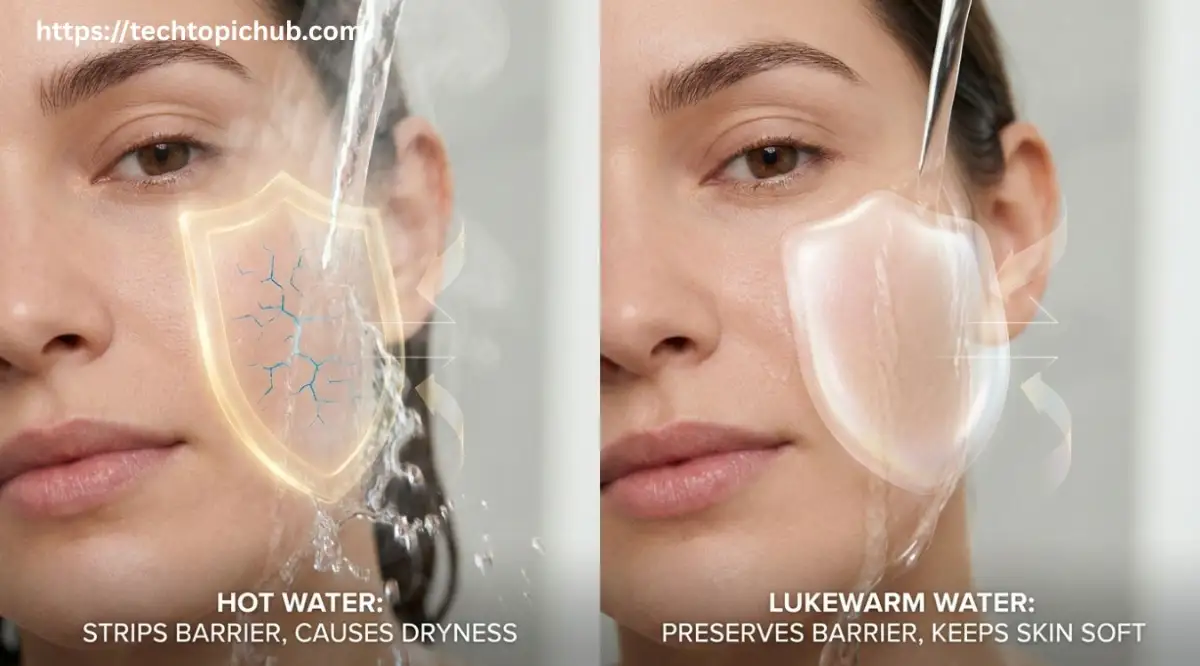
There is nothing quite like a steaming hot shower after a long, exhausting day at work. The heat feels amazing on tired muscles and helps you relax before going to bed. However, those long, hot showers are an absolute nightmare for your skin’s protective barrier.
Extremely hot water instantly melts away the natural oils and lipids that hold your skin cells together. These oils act like a waterproof seal that traps moisture inside your body. When you wash that seal away, the water inside your skin immediately evaporates into the air.
This process is scientifically known as Transepidermal Water Loss. It is the exact reason why your face feels painfully tight the moment you step out of the bathroom. You are literally washing your natural hydration down the drain every single night.
To fix this, you must lower the temperature of your shower to lukewarm. It might not feel as comforting at first, but your face will thank you within days. You should also try to keep your showers under ten minutes to prevent excessive moisture loss.
If you truly love hot showers, at least avoid letting the hot water hit your face directly. Wash your face separately at the sink with cool or lukewarm water. This tiny adjustment makes a massive difference in how soft your face feels the next morning.
The Sneaky Dietary Traps Hiding in Plain Sight
We often hear that sugar is bad for acne, but very few people talk about its effect on hydration. Consuming too much processed sugar triggers a process in your body called glycation. This process directly attacks and weakens your body's natural collagen and hyaluronic acid.
Hyaluronic acid is the natural substance in your body that holds onto water. When sugar damages it, your skin literally loses its physical ability to stay plump and moisturized. You can drink gallons of water, but without healthy hyaluronic acid, that water simply slips away.
Salt is another massive offender that ruins your internal hydration levels. Eating a large bag of salty chips pulls water out of your cells to balance the excess sodium in your blood. This leaves your cells completely shriveled, which shows up as puffy, dull, and dry patches on your face.
You do not have to eat completely bland food to have beautiful skin. Just try to balance your meals with water-rich foods like cucumbers, watermelon, and celery. These natural foods provide hydration that your cells can actually absorb and hold onto for a long time.
The "Healthy" Skincare Mistakes We All Make
Sometimes we dry out our faces by trying way too hard to fix them. The skincare industry heavily promotes strong chemical exfoliants like salicylic acid and glycolic acid. People buy these strong serums hoping to scrub away their dry, flaky patches.
This is actually the absolute worst thing you can do for a compromised skin barrier. When your face is peeling, it is begging for healing, not more aggressive scrubbing. Over-exfoliating strips away the healthy layers of cells before they are ready to shed naturally.
This leaves raw, exposed skin that cannot hold onto any moisture whatsoever. You end up trapped in a terrible cycle where your face feels dry, you scrub it, and it gets even drier. You have to step back and let your natural barrier rebuild itself.
Stop using all physical scrubs, cleansing brushes, and strong acid toners for at least a few weeks. Switch to a very gentle, non-foaming cleanser that does not leave your face feeling tight. Keep your routine incredibly simple with just a gentle wash, a hydrating serum, and a basic moisturizer.
Common Myths About Hydration (Let's Clear the Confusion)
There is so much conflicting advice online about how to properly moisturize. Let's break down some common misunderstandings using a quick comparison.
Understanding the difference between dry skin and dehydrated skin changes everything. Dry skin is a skin type that lacks natural oil production. Dehydrated skin is a temporary condition where the cells lack actual water content.
Most people suffering from dullness are dealing with severe dehydration caused by their environment. You can have naturally oily skin that is desperately begging for a simple drink of water.
The Invisible Enemy In Your Living Room
You might be staying indoors to protect your face from the harsh sun and wind. But the air inside your house or office could be your biggest enemy. Air conditioning units are quite literally designed to remove humidity from the air in the room.
When the air around you becomes completely dry, it starts looking for moisture from any available source. Unfortunately, that source is usually your beautiful face and hands. The dry air acts like a vacuum, pulling the water directly out of your pores hour after hour.
During the winter, central heating systems do the exact same thing to the indoor air. You might feel cozy and warm, but your skin is experiencing a massive drought. This continuous exposure to dry air makes it impossible for your cells to retain their natural plumpness.
The most effective way to fight this invisible enemy is by bringing moisture back into your room. Place a small, cool-mist humidifier right next to your bed or office desk. Running a humidifier while you sleep gives your skin a perfect environment to heal and rehydrate naturally.
If you do not have a humidifier, you can place a large bowl of fresh water near your heating vent. The water will slowly evaporate into the room, creating a much better atmosphere for your complexion. You should also consider keeping a gentle, alcohol-free facial mist on your desk to use throughout the day.
How High Stress Levels Secretly Ruin Your Glow
We rarely connect our mental state to the physical texture of our face. But high levels of daily stress trigger a massive release of the hormone cortisol in your body. When cortisol levels spike, your body's natural healing abilities slow down dramatically.
High cortisol weakens your skin’s immune system and damages the protective outer layer. A weakened outer layer cannot hold onto moisture, leading to instant dryness and irritation. This is why your face always looks so tired and hollow after a very stressful week at work.
Stress also negatively impacts the quality of your sleep, which is when your body naturally repairs itself. While you sleep deeply, your body balances its hydration and produces fresh collagen. If you are tossing and turning from anxiety, your skin misses its chance to recover.
Finding small ways to manage your daily anxiety is genuinely a powerful skincare step. Even just taking five minutes to practice deep breathing before bed can lower your cortisol levels. Taking care of your mind is directly tied to achieving that soft, supple glow you are looking for.
Next-Level Strategies to Lock In Moisture Permanently
Now that we know exactly what is quietly draining the life out of your face, it is time to build a solid defense. Fixing this issue is not about buying the most expensive cream on the shelf. It is about changing how your body actually handles and stores the water you consume.
You need to teach your cells how to hold onto hydration for much longer periods. If you only drink plain water, a lot of it simply passes right through your digestive system. Your body needs a special delivery system to push that water directly into your thirsty cells.
This is where understanding the science of electrolytes becomes an absolute game changer. Electrolytes like sodium, potassium, and magnesium act like tiny magnets for water inside your body. When you add a tiny pinch of sea salt and a squeeze of fresh lemon to your morning water, you create a natural hydration booster.
These minerals grab the water and force it into your cells, giving you that bouncy, plump look from the inside out. According to cellular water absorption mechanics, your body requires these essential minerals to maintain a proper fluid balance. Without them, you can drink a gallon of water a day and still suffer from a terribly tight, flaky face.
Watch this quick visual guide to see exactly how adding a tiny pinch of salt to your morning water forces your cells to soak up moisture! Once you see how this simple trick works, you will want to keep reading below to learn how fixing your sleep environment can save your face.
The Magic of Essential Fatty Acids
Another massive secret to a glowing complexion is feeding your face with healthy fats. Think of your skin cells like tiny water balloons stacked on top of each other. The rubber part of the balloon represents the healthy fats that keep the water safely locked inside.
If you do not eat enough healthy fats, the "rubber" becomes thin, brittle, and full of microscopic holes. This allows all the moisture to evaporate straight into the air around you. You must incorporate foods rich in Omega-3 fatty acids into your weekly meals.
Eating wild-caught salmon, sprinkling chia seeds over your breakfast, or snacking on walnuts makes a noticeable difference. These foods literally rebuild the fatty protective layer around your cells. You can even read more about clinical research on essential fatty acids to see exactly how they reduce internal inflammation and repair damaged tissues.
Change Your Sleep Environment
We spend about a third of our lives sleeping in our beds. If your sleeping environment is working against you, your morning complexion will always look dull and tired. One of the biggest unseen moisture thieves in your bedroom is your standard cotton pillowcase.
Cotton is highly absorbent, meaning it is designed to soak up liquids. While you sleep, your cotton pillowcase acts like a giant sponge, slowly pulling the moisture and natural oils directly off your cheeks. By morning, your face feels completely raw and dehydrated.
Switching to a pure silk or satin pillowcase is an incredibly easy upgrade that yields massive results. Silk does not absorb moisture, so your expensive nighttime serums actually stay on your face where they belong. It also reduces physical friction, which prevents those annoying sleep creases that take hours to fade.

This simple bedroom adjustment, combined with running a cool-mist humidifier, creates a perfect healing environment. You can explore our main tech and lifestyle hub for more innovative ideas on optimizing your living space for better health. Small environmental changes always deliver the most powerful, long-lasting results.

The Silent Habits That Ruin Your Progress (What to Stop Doing)
Even if you follow all the right steps, you might unknowingly self-sabotage your results with just one bad habit. I see people making the same heartbreaking mistakes every single day when trying to fix their flaky complexion. Let's look at the hidden traps you must avoid to keep your natural barrier healthy.
The "Squeaky Clean" Trap
One of the biggest lies we have been taught is that our face needs to feel "squeaky clean" after washing. If your face feels incredibly tight and completely smooth right after you dry it, you have made a terrible mistake. That squeaky feeling actually means you have completely stripped away your natural protective oils.
Many popular foaming cleansers contain harsh detergents that are meant for washing dishes, not delicate human faces. These aggressive soaps destroy your acid mantle, which is the invisible shield that keeps harmful bacteria out and moisture in. Once that shield is gone, your face becomes an open target for extreme dehydration and redness.
You should only wash your face with a product that leaves your skin feeling soft, calm, and perfectly balanced. Following the dermatologist guidelines on repairing dry skin means choosing cream or gel cleansers that do not produce a massive, bubbly lather. If your face feels like it might crack when you smile after washing, throw that cleanser in the trash immediately.
I used to scrub my face with a harsh, foaming wash twice a day because I thought that super tight feeling meant it was finally clean. It took me months of redness and pain to realize I was actually washing away my skin's natural armor. Once I swallowed my pride and switched to a boring, gentle gel cleanser, my face stopped feeling tight within just three days.
The Hyaluronic Acid Nightmare
Hyaluronic acid is heavily marketed as a miracle ingredient for severe dryness. It works by acting like a tiny sponge that pulls water toward it. However, most people apply it completely wrong, which actually makes their flakiness significantly worse.
If you apply hyaluronic acid to a dry face in a dry room, it has nowhere to pull water from. So, it turns around and pulls the deep water directly out of your lower skin layers instead! You are literally pulling the last remaining drops of moisture out of your own face.
You must always apply hydrating serums to a damp face, immediately after washing or misting. Then, you have to instantly seal that serum in with a thicker moisturizer to lock the hydration in place. Trying to force these active ingredients to work without a damp foundation is incredibly frustrating.
It feels just as impossible as trying to speed up the home selling process in a sluggish housing market. Unless you fix the underlying environment and prepare the foundation properly, your efforts will completely fail. Always remember the golden rule: damp face, then serum, then moisturizer.
Myth vs. Fact: The Hyaluronic Acid Trap
- The Myth: Hyaluronic acid adds moisture to dry skin.
- The Fact: Hyaluronic acid doesn't contain water. It acts like a magnet. If the air in your room is dry and your face is dry, this "magnet" will literally pull moisture up from the deeper layers of your skin and let it evaporate, leaving you flakier than before. Always trap it under a heavy cream!
Using the Wrong Drying Technique
How you dry your face after washing might be secretly causing microscopic damage to your barrier. Grabbing a rough, dirty body towel and aggressively rubbing your face is a massive disaster. Those thick towel fibers create tiny, invisible tears on your surface, allowing precious moisture to escape constantly.
Furthermore, bathroom towels hold a massive amount of hidden bacteria and leftover laundry detergent. Pressing these irritants into your freshly opened pores triggers instant inflammation and tightness. It completely ruins all the hard work you just put into cleansing gently.
Instead, invest in a set of extremely soft, dedicated face cloths or baby washcloths. You should only ever gently pat your face, leaving it slightly damp before applying your products. Better yet, let your face air-dry for just ten seconds and apply your routine while it is still wet.
This soft touch mimics the safe bathing habits for compromised skin recommended for severe skin conditions. Treating your face with extreme gentleness is the ultimate secret to retaining your natural bounce.
Misunderstanding Your Own Complexion
A huge percentage of people completely misdiagnose their own face. They see a shiny, oily forehead and immediately assume they have an oily complexion that needs strong, drying products. What they do not realize is that extreme oiliness is often a massive cry for hydration.
When your cells lack water, your body panics and tries to protect itself. It aggressively overproduces heavy oils to create a barrier and stop any more water from escaping. So, you end up with a face that feels tight and flaky underneath, but looks greasy and shiny on top.
If you attack this oil with harsh acne washes and strong alcohol toners, you just make the panic worse. Your body will simply respond by pumping out even more oil to compensate for the damage. You must treat this situation with lightweight, water-based hydration to calm the internal panic.
Once your body realizes it has enough water, it naturally stops producing so much excess oil. Balancing your routine requires exactly the same smart planning and consistency as managing your long-term goals. You have to look past the immediate symptoms and gently fix the root cause of the problem.
Your Fresh Start to a Plump, Hydrated Complexion
Healing your internal hydration is a highly rewarding journey that requires just a few thoughtful daily adjustments. You do not need a complicated, twenty-step routine to achieve that beautiful, natural glow. You just need to stop the silent habits that are secretly stealing your moisture from within.
Start by simply monitoring what you drink alongside your morning coffee. Switch your hot, steamy showers to a calming lukewarm temperature, and remember to gently pat your face dry. Add a few more healthy fats to your dinner plate, and never apply your serums to a bone-dry face.
These tiny shifts in your daily lifestyle will begin to repair your broken barrier almost immediately. Within just a few weeks, you will notice that your makeup sits smoother and your face feels soft the entire day. The days of feeling that horrible, tight sensation when you smile are officially over.
I promise you, taking control of your daily habits will completely transform how you feel looking in the mirror. I used to hide from the camera because of my flaky, dull texture, but now my face feels incredibly healthy and bouncy all day long. Start applying these gentle changes tonight, and watch how quickly your natural, beautiful radiance returns!
Real Questions About Internal Hydration Answered
Can drinking too much water actually dry out my face?
Drinking excessive amounts of plain water without adequate minerals can actually flush electrolytes out of your system. Without these essential minerals, your body cannot pull the water into your skin cells properly. Always aim for a healthy balance of fluids and naturally mineral-rich foods.
How long does it take to fix a damaged moisture barrier?
If you stop using harsh scrubs and stick to a gentle, hydrating routine, your barrier begins healing within a few days. However, fully restoring your internal moisture levels and shedding the flaky patches usually takes about three to four weeks. Consistency is your best friend during this healing phase.
Does running a fan at night damage my complexion?
Yes, having a fan blowing directly on your face all night constantly evaporates your natural surface moisture. It works exactly like a harsh wind, leaving you incredibly tight and dull by morning. Always point the fan away from your bed and run a cool-mist humidifier to keep the air perfectly balanced.
Why does my moisturizer just sit on top of my face?
If your dead surface cells are completely parched, they act like a hardened crust that blocks products from absorbing. Applying a heavy cream to this dry crust means the product simply sits on the surface feeling greasy. You must dampen your face first to soften the crust and allow the moisture to properly sink in.
Are natural oils enough to hydrate my severe dry patches?
Facial oils are fantastic for locking in existing moisture, but they do not actually contain any water themselves. If your cells are internally dehydrated, putting oil on top will not give them the drink they desperately need. You must apply a water-based hydrating serum first, and then use your favorite facial oil to seal it in.
Healing my skin did not happen overnight, but making these small daily changes finally gave me back my glow and my confidence. You do not need to spend a fortune to see a massive difference, so just pick one new habit from this list to start tonight. I promise your future self will thank you when you wake up with soft, happy, and bouncy skin!
Disclaimer: The information provided in this article is for educational and informational purposes only. It does not constitute medical advice or professional dermatological treatment. Always consult with a certified healthcare provider or a licensed dermatologist before making significant changes to your skincare routine, diet, or lifestyle, especially if you have sensitive or compromised skin.
![Hidden Papaya Hacks for Glowing Skin and Beauty [Read Before Bed]](https://techtopichub.com/storage/uploads/blogs/1789407194_hidden-papaya-hacks-for-glowing-skin-and-beauty-read-before-bed.webp)

![The Ultimate Chemical-Free Routine for Better Skin Care and Skin Health [Save Money]](https://techtopichub.com/storage/uploads/blogs/1789228392_the-ultimate-chemical-free-routine-for-better-skin-care-and-skin-health-save-money.webp)