My Freezing Wake-Up Call: Surviving the Winter Energy Battle
Waking up freezing because your solar batteries died overnight is a terrible feeling. You check the monitor, see zero power, and realize your roof is completely buried in a foot of snow. If you rely on off-grid power, winter can easily feel like your worst enemy. But what if I told you that freezing temperatures and snow can actually work to your advantage? After a few cold mistakes, I learned how to set up my system so it thrives in a blizzard. Let's fix your winter energy setup so you never have to sleep in a heavy coat again.
I still remember waking up in the middle of a massive blizzard, pulling my blanket tight, and staring at my battery monitor in absolute panic. The house was slowly getting colder, and my power reserves were dropping much faster than I ever expected. I honestly thought I had made a terrible mistake relying on the sun during a freezing winter storm.
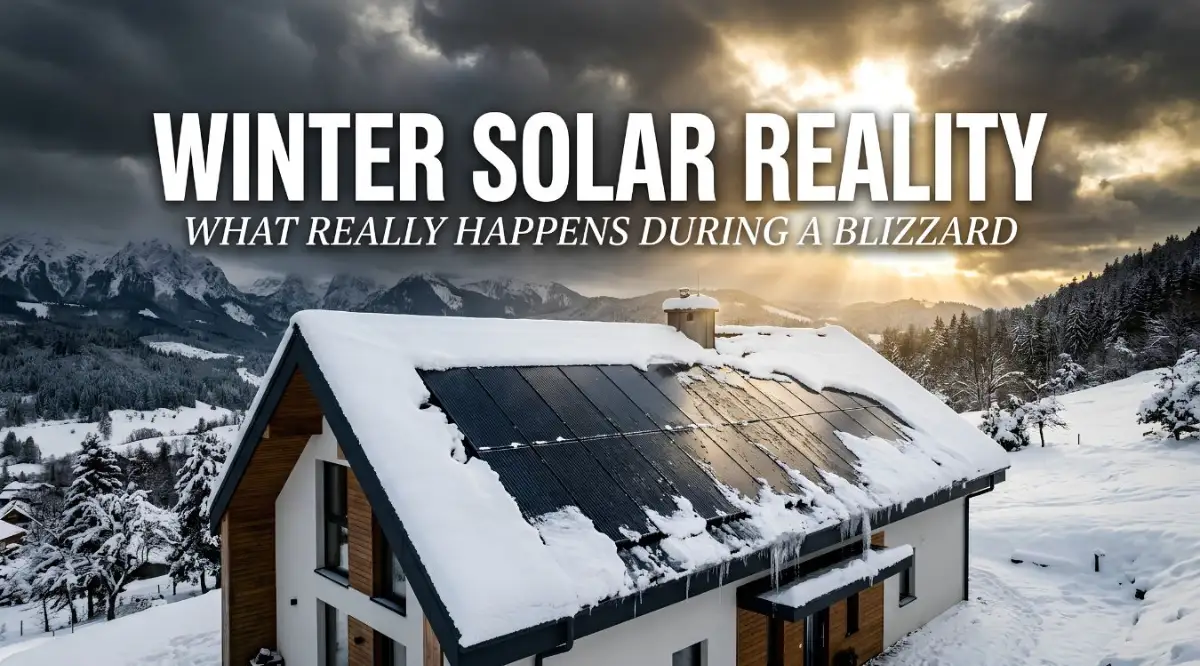
My entire roof was buried under a thick layer of heavy white snow, completely hiding the expensive equipment I trusted to keep my family safe. I felt completely helpless watching the ice pile up, not knowing if a single drop of energy was being generated. It is a terrifying feeling when your main source of everyday power suddenly seems to vanish under a massive blanket of frost.
You might be feeling that exact same deep anxiety as the freezing months approach your local area. It is incredibly stressful to look out the window at a raging snowstorm and constantly wonder if your lights will suddenly shut off. The fear of losing heat in the middle of the night can completely destroy your peace of mind and leave you extremely exhausted.
Many homeowners end up buying loud, smelly gas generators just out of pure fear and daily frustration. They spend their hard-earned money on expensive backup fuel because they simply do not trust their main electrical system to survive the heavy snowfall. But this constant worrying and double-spending is completely unnecessary once you understand how the technology actually interacts with extreme weather.
Let me assure you, you do not have to live with this freezing winter anxiety anymore. I want to share exactly what happens up on that roof and how you can confidently keep your home powered through the absolute worst blizzards. We are going to look at the real scientific facts together, so you can finally sleep soundly on those freezing, snowy nights.
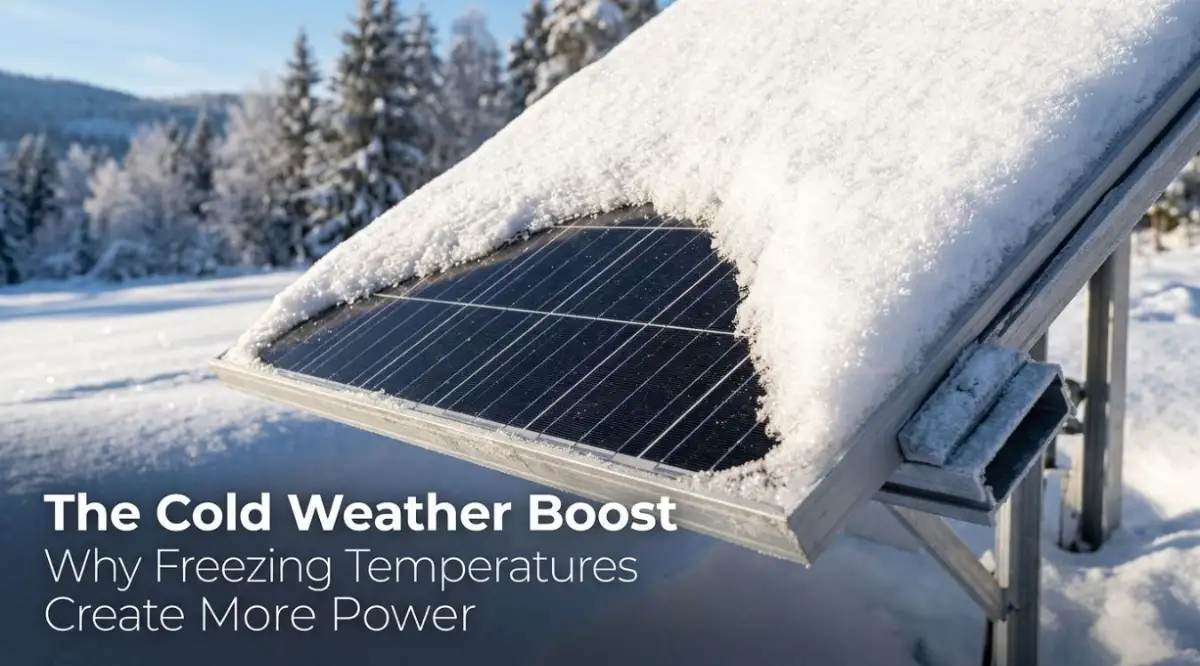
Quick Winter Survival Guide:
- Cold weather naturally boosts solar efficiency—extreme heat actually slows it down.
- Let the snow slide off naturally; scraping it with a broom or shovel will ruin the glass.
- The "Albedo Effect" uses the bright snow on your lawn as a giant mirror to bounce extra sunlight to your roof.
- Keep your battery bank inside an insulated box to stop cold-weather power drain.
The Surprising Science of Freezing Temperatures
The biggest misunderstanding about renewable home power is the idea that heat equals more electricity. Most people naturally assume that long, boiling hot summer days provide the absolute best conditions for maximum energy production. However, from a purely scientific standpoint, this assumption is completely backwards.
Solar modules generate electricity from direct light, not from the surrounding heat of the air. In fact, high temperatures actively create electrical resistance inside the sensitive silicon cells on your roof. When the weather gets incredibly hot, the tiny electrons inside the panel struggle to move efficiently, which actually lowers your overall daily output.
Think of your home wiring like a busy concrete highway during a massive traffic jam. In the blazing summer heat, the road gets soft, traffic slows down, and valuable energy gets lost as unnecessary heat. But on a freezing winter day, that same highway is perfectly paved and icy smooth, allowing electricity to race down the lines with almost zero resistance.
Myth vs. Fact: Winter Solar Power
- The Myth: Solar panels need hot, sunny summer days to generate the most power.
- The Fact: Cold weather actually boosts your voltage. Look at this quick breakdown:
- Summer (90°F): Your system loses roughly 10-15% efficiency because heat creates resistance in the wiring.
- Winter (30°F): Your system operates near 100% efficiency because cold silicon conducts energy much faster.
Understanding the Temperature Coefficient
Every piece of equipment comes with a specific technical rating called a temperature coefficient. This number explains exactly how much power your system loses for every degree the temperature rises above a standard testing level. When the local weather drops below freezing, this coefficient actually works in your favor, creating a noticeable boost in total performance.
Because of this cold weather efficiency, a crisp, sunny day in the dead of winter can actually create a massive spike in raw voltage. Many off-grid homeowners are completely shocked to see their charge controllers hitting maximum capacity on a freezing January afternoon. The cold air acts as a natural cooling system for the dark silicon, keeping it running at absolute peak performance.
I used to panic when I saw the thermometer drop to zero, thinking my system would simply freeze up and stop working entirely. Now, I actually look forward to those brutally cold, clear mornings because I know my daily energy harvest will be incredibly strong. You will notice that your batteries charge significantly faster when the air is biting cold compared to a humid, sweaty afternoon.
The Reality of Heavy Snow Accumulation
Of course, the cold air only helps if the actual sunlight can physically reach the sensitive silicon surface. Heavy snow storms bring a unique challenge because a thick white blanket can block the light and temporarily halt your power production. But the way these systems handle heavy snowfall is actually quite fascinating and designed specifically for these harsh environments.
First, you need to understand that light can actually penetrate through a surprisingly thick layer of fresh, powdery snow. Unless the accumulation is incredibly dense and several inches thick, a small amount of radiation still reaches the dark surface below. This tiny bit of sunlight is often enough to wake up the system and start generating a very small trickle of warmth.
As soon as those dark cells begin working, they naturally generate a small amount of physical heat along the tempered glass. Because the glass surface is incredibly smooth and naturally slippery, the bottom layer of snow begins to melt almost immediately. This creates a thin layer of water between the glass and the heavy snowpack, acting exactly like a natural water slide.
Why You Should Never Interfere with Nature
Here is a quick lesson I learned the hard way after trying to manually brush off my roof during a massive storm. I once used a regular household broom to push the ice off, thinking I was helping, but I actually ended up badly scratching the protective glass on two of my expensive modules. My advice to you is to just let nature do its job, because the dark surface will naturally warm up and melt the snow right off as soon as the sun comes out.
If you still think a thick layer of snow means zero power, watch this quick video below to see exactly how sunlight magically cuts through the ice and forces your system to clean itself. Check it out, and then keep reading to discover the hidden winter secret that can actually double your daily energy harvest!
[Insert YouTube Video Link Here]
When the heavy snow finally decides to slide, it usually falls off in massive, satisfying sheets all at once. Within a few hours of the storm breaking, your entire array can clear itself completely without you ever climbing a dangerous ladder. This self-cleaning feature is exactly why you see these setups thriving in some of the coldest, snowiest regions on the entire planet.
The Magical Benefit of the Albedo Effect
Once the snow completely clears off your glass, you get to experience one of the best hidden secrets of winter energy production. The fresh white snow covering your yard and the surrounding trees acts exactly like a giant, naturally occurring mirror. This highly reflective environment bounces massive amounts of indirect sunlight straight back up onto your roof.
Scientists refer to this specific phenomenon as the "Albedo Effect," and it can drastically increase your daily energy harvest. Instead of just catching light from the direct sky, your system is now absorbing bright radiation from the glowing ground below. This double exposure can easily compensate for the shorter daylight hours that we normally experience during the deep winter season.
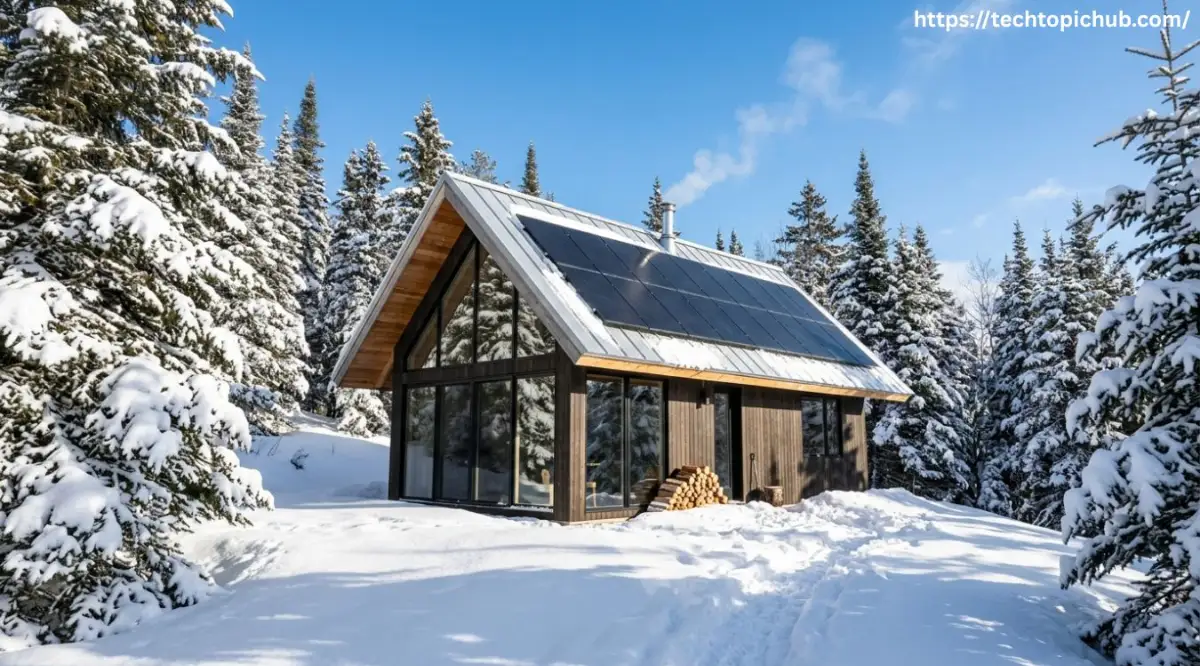
If you have highly advanced bifacial modules, which can absorb light from both the front and the back, the Albedo effect becomes even more powerful. The bright white snow reflects light underneath the mounting racks, feeding the back side of the cells for a massive power surge. This is why many experienced homeowners purposely clear the snow off their equipment but leave the bright white snow perfectly untouched on the ground below.
Smart Equipment Choices for Blizzard Conditions
How your system handles a heavy winter storm also heavily depends on the specific type of technology you chose to install. Not all wiring configurations react the same way when a giant pile of heavy snow covers exactly half of your roof. Understanding these technical differences will help you manage your daily expectations and avoid sudden blackouts.
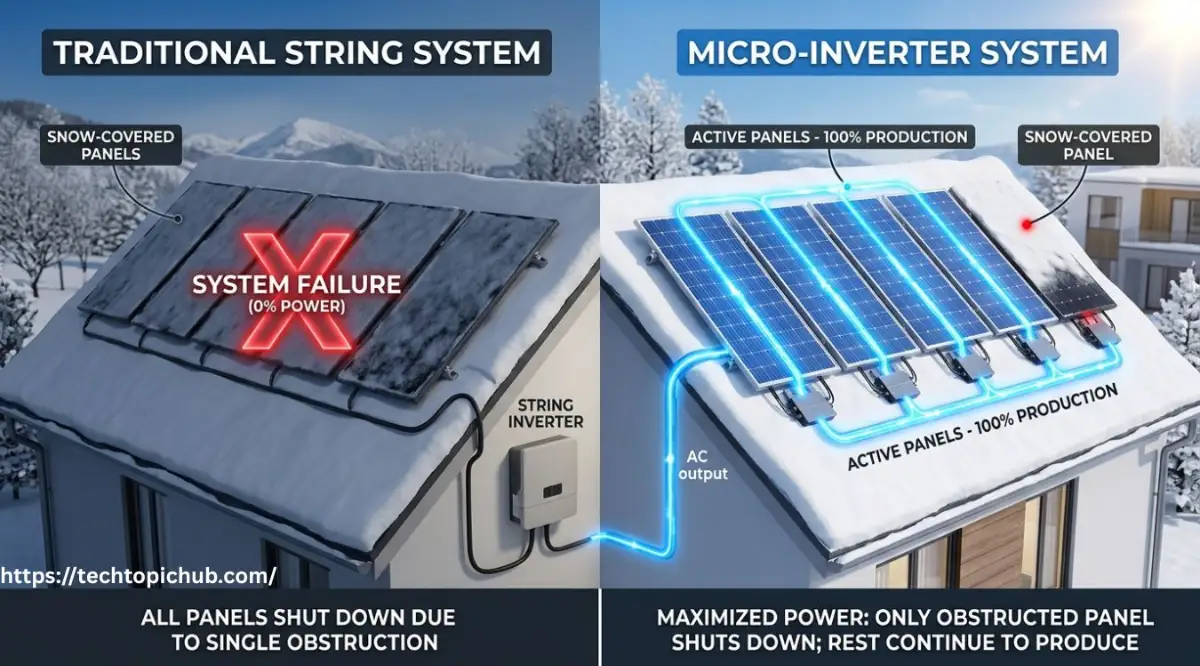
Micro-Inverters vs. Traditional String Systems
Imagine a long string of old-fashioned holiday lights decorating your living room wall. If just one single bulb burns out, the entire string goes completely dark until you find and replace the broken piece. That is exactly how a traditional string setup reacts if a heavy pile of snow covers just the bottom corner of your array.
However, if you utilize modern micro-inverters, every single module operates completely independently from the others next to it. If the top row of your roof clears off first, those specific units will immediately start pumping high-voltage power into your house. The bottom row can stay completely buried under heavy ice, and it will not negatively impact your active energy production at all.
This independent operation is an absolute game changer for families living in areas with heavy, unpredictable blizzard conditions. You never have to worry about a single stubborn patch of ice completely ruining your entire day of energy harvesting. As soon as the bright sun hits even a small section of clear glass, you immediately start gaining your valuable power back.
Tactical Angles and Mounting Strategies
The physical angle at which your equipment sits on the roof plays a massive role in how quickly the snow slides off. Many standard residential installations follow the natural slope of the roof, which is often too flat to shed heavy ice efficiently. When the angle is extremely shallow, the freezing snow simply piles up and freezes into a solid, unmoving block of heavy ice.
If you are planning an installation in a heavy snow region, you should strongly consider using adjustable ground mounts instead of fixed roof mounts. A ground mount allows you to physically change the tilt angle of your array as the seasons naturally shift throughout the year. By tilting the glass to a much steeper angle in the winter, gravity easily pulls the heavy snow down before it can completely freeze over.
A steeper angle also perfectly aligns your equipment with the much lower position of the winter sun in the southern sky. When the sun hangs low on the horizon, a sharply tilted surface catches the direct rays much better than a completely flat roof. This simple physical adjustment can sometimes double your total daily input during the shortest, darkest months of the year.
Managing Ice Dams and Dangerous Freezing
Even with a perfectly steep angle, you must always be aware of where the sliding snow is actually going to land. If there is not enough empty space directly below the mounting rack, the falling snow will eventually pile up and block the bottom edge. This heavy pile can quickly turn into a solid ice dam, permanently covering your bottom row of sensitive cells.
You should always ensure there is a clear, open drop zone below your array to handle massive amounts of falling winter debris. If you notice an ice dam starting to form, you can carefully clear the snow away from the ground level to give the new snow a place to fall. Just remember to never physically strike the glass or the metal frames with heavy metal shovels, as this can instantly void your expensive warranty.
Living with off-grid technology during a raging blizzard does not have to be a stressful, anxiety-filled nightmare. By understanding how the cold naturally boosts your voltage, letting the slippery glass clear itself, and utilizing the bright Albedo reflection, you can easily conquer the freeze. You simply need to trust the incredible science behind the technology, make smart mounting decisions, and let nature do the heavy lifting for you.
Smart Tactics to Maintain Maximum Winter Power Production
Now that you understand exactly how the freezing air interacts with your glass, we need to focus on keeping that energy flowing safely. Relying on sunshine during a severe blizzard requires a bit of strategic thinking and some smart daily habits. It is not just about having the best equipment on your roof; it is about how you actively manage the power once it enters your house.
I remember the first winter I tried to run my entire home on stored electricity without planning ahead. I treated my energy usage exactly the same as I did during the bright summer months, which was a massive mistake. My batteries drained completely before midnight, leaving me wrapped in three blankets and shivering until the morning sun finally appeared.
You can easily avoid this freezing nightmare by shifting your heavy power usage to the middle of the day. Whenever the sun is actively hitting your panels, you should run your heaviest appliances directly from the incoming solar radiation. By doing your laundry, running the dishwasher, and heating your water during peak daylight, you save your precious battery reserves for the dark night.
This strategy is known in the industry as "load shifting," and it is an absolute lifesaver during unpredictable winter weather. It forces you to become actively aware of your consumption habits instead of just blindly flipping switches on and off. Managing your household energy requires exactly the same discipline as how to create a realistic monthly budget and crush your debt, because both require tracking what comes in versus what goes out.
Protecting Your Sensitive Battery Bank
Your energy storage system is arguably the most sensitive part of your entire off-grid winter setup. Most modern lithium iron phosphate setups are incredibly efficient, but they absolutely hate freezing cold temperatures. If the internal temperature of these cells drops below freezing, trying to charge them can cause permanent internal damage.
Think of your battery bank exactly like your personal smartphone on a freezing winter day. Have you ever pulled your phone out of your pocket in the freezing snow, only to watch the battery drop from fifty percent to zero in just a few minutes? The exact same chemical reaction happens to your expensive home storage system if you leave it sitting in an uninsulated garage.
Here is a quick pro tip from my own painful experience: I once ruined a brand-new set of batteries because I thought my unheated shed would be "good enough" for the winter. Take my advice and spend a little extra time building a heavily insulated box for your power bank, because it will literally save you thousands of dollars in the long run.
To prevent this sudden power loss, you must build a highly insulated box around your storage units. Many experienced off-grid homeowners even install small, low-wattage heating pads directly underneath their battery banks to keep them warm. According to research published by the National Renewable Energy Laboratory (NREL), maintaining a stable indoor temperature ensures your cells will release their stored power evenly throughout the long winter night.
The Secret of Weather Forecasting Integration
One of the smartest daily habits I ever developed was treating my local weather app like my best friend. If I see a massive, three-day blizzard approaching on the radar, I immediately change my power strategy. I stop doing unnecessary laundry and strictly minimize my entertainment usage to keep my batteries at a full hundred percent.
If you are tied to a hybrid grid system, you can actually force your batteries to charge directly from the local power company right before the storm hits. This guarantees you have maximum backup power ready if the heavy snow suddenly takes down the neighborhood power lines. You can learn more about how utility companies handle these severe weather grid impacts through resources provided by the U.S. Department of Energy.
My Personal 48-Hour Rule for Blizzards
If my weather app shows a big storm hitting on a Friday, I start my "load shifting" on Wednesday. I wash all the clothes, run the dishwasher, and charge every portable power bank we own. By Thursday night, my main battery bank sits comfortably at 100%, and we just coast through the storm using bare-minimum electricity.
You should never wait until the snow is actively falling to start thinking about your power reserves. Preparedness is the ultimate key to feeling relaxed while the wind howls outside your living room window. As we constantly emphasize across our main platform at techtopichub.com, having a solid plan in place eliminates almost all of your daily anxiety.
The Hidden Traps That Will Destroy Your Winter Setup
Even with the best preparation, people still make emotional mistakes when they panic during a severe winter storm. When you look outside and see your primary power source buried under heavy ice, it is incredibly tempting to take aggressive action. However, rushing to fix the problem often leads to catastrophic damage that will cost you thousands of dollars to repair.
I once watched a panicked neighbor completely ruin his entire roof setup because he tried to aggressively clear the ice by himself. He grabbed a heavy metal snow shovel and started violently scraping the frozen blocks directly off the glass. He ended up leaving deep, permanent scratches across every single module, which permanently reduced their ability to absorb sunlight.
Even worse, some desperate homeowners attempt to use hot water to melt the stubborn ice off their roof quickly. Pouring warm water on freezing cold solar glass creates an instant thermal shock that will literally shatter the panels into thousands of tiny pieces. It sounds exactly like a loud gunshot, and it will instantly void every single warranty you have on the equipment.
The Financial Danger of Deep Discharging
Another massive mistake people make during long storms is refusing to change their comfortable lifestyle habits. They keep all the lights on, leave the television running, and slowly drain their battery bank completely dry over several days. Pulling a battery down to absolutely zero power is known as a deep discharge, and it severely shortens the lifespan of the equipment.
Replacing an entire ruined battery bank because you abused it during a blizzard is incredibly expensive. Most people simply do not have five or ten thousand dollars sitting around in cash just for emergency electrical repairs. This sudden financial shock often forces families to seek emergency financing just to get their heat turned back on.
Beware of the "Vampire Loads"
During a massive winter storm, every single drop of electricity matters immensely to your family's safety. Unfortunately, most modern houses are filled with hidden electronics that secretly drain power even when they are technically turned off. These are called "vampire loads," and they are absolute silent killers during a dark, snowy week.
Your smart television, your microwave clock, and your unused phone chargers are constantly pulling small amounts of current. While this might seem completely harmless on a normal sunny day, these tiny drains add up to a massive loss over a three-day blizzard. By the end of the weekend, those plugged-in devices might have stolen enough electricity to run your emergency heater for an entire night.
The easiest way to stop this hidden energy theft is to plug your entertainment centers into simple power strips. When the storm hits and the sun disappears, you simply physically switch off the entire power strip. According to the experts at the Energy Saving Trust, completely unplugging idle devices is one of the fastest ways to stretch your emergency battery reserves.
Your Personal Action Plan for a Stress-Free Winter
Surviving a heavy blizzard with your solar power intact is entirely possible if you stop fighting nature and start working with it. You now know that freezing cold air is actually a massive advantage that pushes your equipment to perform at its absolute peak. The terrifying white snow is no longer an enemy; it is simply a natural mirror that bounces bright light right back onto your roof.
You do not need to constantly worry about climbing dangerous icy ladders with a broom in your hand. You can simply relax inside with a hot cup of coffee, knowing the slippery tempered glass will naturally shed the ice as soon as the sun breaks through the clouds. This knowledge alone should take a massive weight off your shoulders during the darkest months of the year.
The next time the weather forecaster predicts a massive winter event, you will not feel that familiar knot of panic in your stomach. Instead, you will proactively charge your batteries, shift your heavy laundry loads to the sunny afternoon, and unplug your vampire electronics. You are now fully equipped to keep your house warm, bright, and completely functional while the rest of the neighborhood goes dark.
My final piece of advice for you is to simply trust the amazing science behind your home energy setup. I used to let winter weather control my mood, but once I implemented these smart daily habits, the snowy season actually became my favorite time of the year. Take a deep breath, let the sun do its heavy lifting, and enjoy the beautiful, quiet peace of a freshly snow-covered afternoon.
Common Questions About Winter Solar Setup
Do solar panels still generate power while fully covered in thick snow?
No, a thick blanket of dense snow will temporarily block the necessary sunlight from reaching the silicon cells. However, even a tiny sliver of exposed glass can jumpstart the system and begin melting the rest of the ice naturally.
Will heavy freezing ice permanently damage the glass on my roof?
Modern modules are manufactured with highly tempered, incredibly durable glass specifically designed to hold massive amounts of weight. As long as you do not hit them with a heavy metal shovel or pour hot water on them, the freezing ice will not break the surface.
What is the safest way to remove snow from my panels after a storm?
The safest method is to simply let the sun warm the dark surface and allow the snow to slide off naturally. If you absolutely must intervene, only use a very soft-bristled roof rake specifically designed for solar glass to avoid permanent scratches.
Do freezing winter temperatures drain solar batteries much faster?
Yes, extreme cold drastically slows down the internal chemical reactions inside your battery storage system. This is why it is highly recommended to keep your battery bank inside an insulated space or use a controlled heating pad to maintain stable performance.
Can I actually run an electric heater on solar power during a blizzard?
Running a standard space heater requires a massive amount of continuous electricity, which can drain your batteries extremely fast during a dark storm. It is much smarter to use highly efficient heating methods, like a wood stove or a thermal heat pump, to conserve your stored energy.
Looking back at my own journey, going from a stressed-out beginner to a confident winter off-gridder was one of the most rewarding things I have ever done. If I can learn to conquer the freezing cold and keep my family warm, I know for a fact that you can do this too. Start small, trust the science, and get ready to enjoy the peace of mind you truly deserve!
Disclaimer: The information provided in this article is for educational and informational purposes only and does not constitute professional electrical or financial advice. Always consult with a certified solar installer and a licensed electrician before making any physical modifications to your home energy system. Extreme winter weather carries inherent safety risks, and proper precautions should always be taken.