
The Hidden Trauma of the Sudden Blackout
You are sitting in the dark, just waiting for the lights to come back on after a sudden power outage. But the real danger actually starts the exact second the power returns. That massive, invisible voltage spike can fry your expensive smart TV or ruin your new fridge before you even blink. Let me show you exactly what to unplug right now, so you do not waste hundreds of dollars replacing burned-out electronics tomorrow.
I will never forget the evening the lights suddenly flickered and died in my living room. I was right in the middle of watching a movie, and my immediate reaction was pure annoyance. I just sat on the couch in the dark, assuming everything would be completely fine once the grid came back online.
I did not bother getting up to check my electronics. I simply waited for the electricity to return, completely unaware of the invisible danger building up in the power lines outside my home. But when the electricity roared back to life an hour later, I heard a loud, terrifying pop coming from the kitchen.
My incredibly expensive refrigerator was completely dead. It got instantly fried by a massive power spike that flooded my home the second the grid reconnected. That single lazy mistake cost me hundreds of dollars in repairs. It completely ruined my weekend and left me feeling incredibly helpless and frustrated.
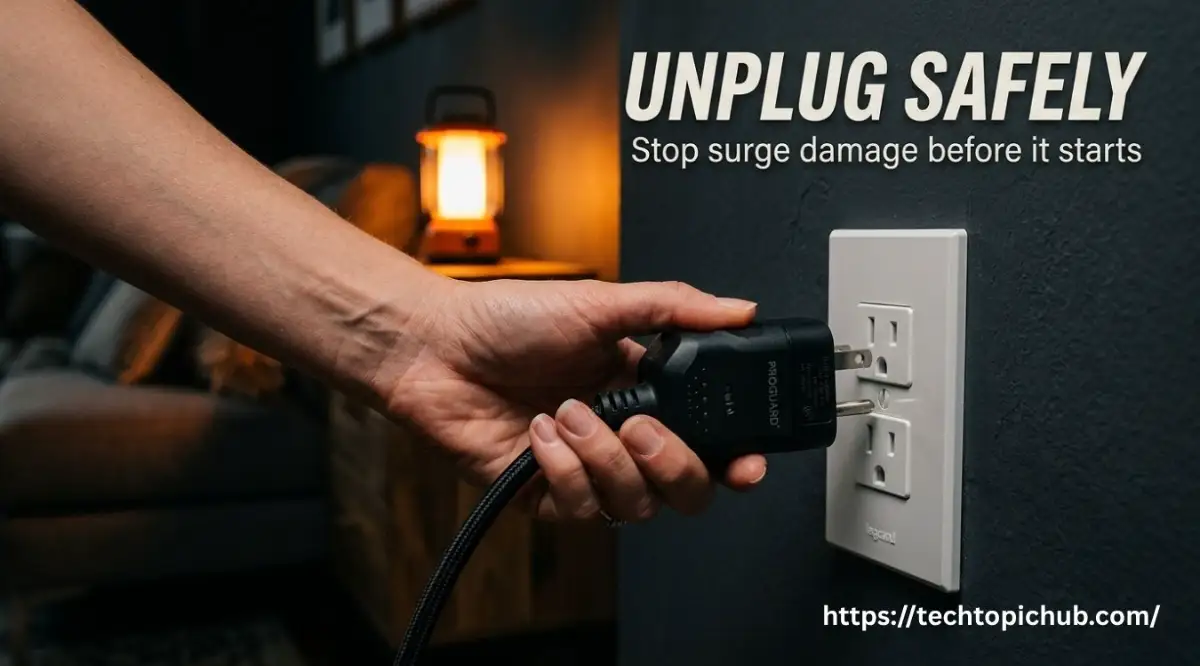
Many families are forced to replace expensive washing machines, smart televisions, and desktop computers because they did not know how to react in time. The financial burden of replacing a burned-out appliance is incredibly stressful for anyone on a tight budget. Beyond the money, losing your primary refrigerator means all your fresh food will spoil in a matter of hours.
Quick Survival Guide: Before You Read On
- Don't wait it out: Sitting in the dark doing nothing leaves your expensive items fully exposed to grid spikes.
- Unplug the heavy hitters: Immediately disconnect your PC, TV, and refrigerator right at the wall.
- Fake safety: Cheap power strips won't save you from a hard power surge; only heavy-duty, high-Joule protectors or a physical unplug will work.
- The 20-minute rule: Never plug your devices back in the exact second the lights come on. Wait 20 minutes for the grid to balance out.
Real-Life Cost Check: Why Unplugging Matters
If you still think a power surge won't hit your home, just look at the average replacement costs you might face in a single night.
- Smart TV Mainboard Repair: $200 - $400
- New Refrigerator Compressor: $300 - $600
- Gaming Console Replacement: $400 - $550
- Cost of simply unplugging the cord: $0.00
- Taking three minutes to pull a plug keeps that money right in your pocket.
⚡ Quick Action Summary
- Never just wait in the dark: Physically unplug your heavy and expensive electronics immediately.
- Know your targets: Focus on smart TVs, computers, and refrigerators first.
- Pull the plug: Relying on the TV remote or a cheap plastic power strip will not stop a massive power spike.
- The 20-Minute Rule: Wait at least 20 minutes after the lights come back on before plugging your expensive items back into the wall.
Why the Return of Power is So Dangerous
To truly fix this massive problem, we first need to look at what happens behind the walls of your house. When a widespread blackout ends, the electricity does not return softly and smoothly. It rushes back into the neighborhood grid with a massive, aggressive spike of energy.
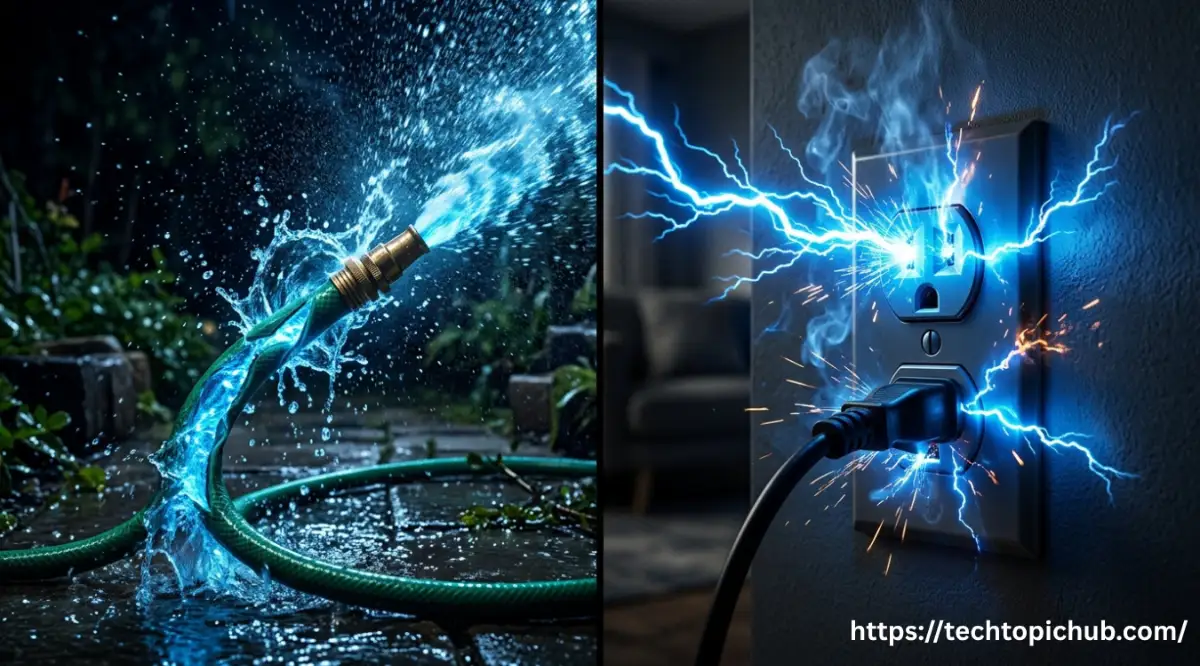
Think of electricity like water flowing through a giant garden hose. When someone suddenly turns off the main valve, the water stops immediately. But when they turn that valve back on, the water bursts forward with extreme pressure before finally settling down to a normal flow.
That massive burst of pressure is exactly what happens to your home wiring. Your sensitive electronics are designed to handle a very specific amount of voltage. When that sudden spike of energy hits your television or microwave, the delicate internal circuits simply cannot handle the pressure and they burn out instantly.
The Psychology Behind Our Mistakes
Why do we fail to protect our things? Most of us are naturally trained to just sit and wait during a blackout. We scramble to find candles, check our phones, or look out the window to see if the neighbors have lights.
In the middle of all that confusion, our brains completely forget about the silent appliances plugged into the walls. We falsely believe that if a device is turned off using the remote control, it is completely safe from harm. This is a very common misconception that costs homeowners thousands of dollars every year.
As long as the physical metal plug is touching the wall socket, your appliance is directly connected to the danger zone. Even if the screen is black and the machine is asleep, a massive spike can easily travel up the cord and destroy the internal motherboard.
The Smart Appliance Triage System
To solve this massive headache, I developed a highly effective strategy that you can start using today. I call it the Appliance Triage System, and it takes the guesswork completely out of the equation. Just like a hospital prioritizes patients based on risk, you must prioritize your devices when the grid fails.
You do not need to run around your entire house unplugging every single bedside lamp. You just need to focus on the items that are highly sensitive and extremely expensive to replace. Let us break down exactly how you should organize your home for maximum safety.
For a long time, I made the terrible mistake of trying to unplug every single thing in my house while running around in the dark. My biggest realization was that focusing only on a few big-ticket items instantly makes blackout situations way less stressful. Now, I keep a simple mental list of my heavy appliances so I know exactly where to go first without panicking.
Understanding High-Risk Devices
The most vulnerable items in your home are devices that contain delicate microprocessors and computer chips. Your smart TV, gaming consoles, desktop computers, and internet routers should always be your top priority. These delicate machines are highly allergic to sudden voltage changes.
Next on the high-risk list are your heavy motorized appliances. This includes your refrigerator, deep freezer, washing machine, and air conditioning units. These large machines require a massive amount of stable power to run their heavy compressors safely.
When the power fluctuates wildly upon returning, these heavy motors can easily overheat and melt from the inside out. You must learn to separate these high-risk items from your low-risk items in your mind. Low-risk items include basic LED lamps, simple fans, and old-school toasters that do not have digital screens.
The Simple Priority Breakdown
Here is a simple way to visualize your action plan the next time your house goes completely dark. Memorize this specific order of operations so you never have to panic again.
Quick Reference: Appliance Triage Risk Table
Priority Level 1: The Entertainment and Work Zone
Your desktop computers and smart televisions must be disconnected immediately. They are incredibly fragile and represent a massive financial investment. Unplug them straight from the wall without any hesitation.
Priority Level 2: The Kitchen Lifelines
Your refrigerator and microwave come next. The fridge is heavily insulated, so keeping the doors closed will trap the cold air inside for hours. Carefully pull the heavy plug from the wall to save the expensive compressor from frying.
Priority Level 3: Climate Control and Cleaning
Finally, focus on your air conditioning units and washing machines. If your AC is running when the blackout happens, it will try to aggressively restart the moment power returns. This aggressive restart is a guaranteed way to blow a fuse or ruin the machine entirely.
Step-by-Step Educational Guide for Maximum Protection
Now that we deeply understand the hidden dangers and have organized our priorities, we need to take action. Disconnecting your electronics might sound incredibly simple on the surface. However, there is actually a science to doing it safely without harming yourself in the dark.
Many people accidentally trip over wires, shock themselves, or damage the physical wall sockets out of sheer panic. Follow these highly practical steps to safely secure your entire home in under three minutes.
Step 1: Establish an Immediate Safety Perimeter
The very first thing you must do when the lights go out is stop moving completely. Let your eyes naturally adjust to the darkness for at least thirty seconds. Rushing wildly toward your electronics in the pitch black is a recipe for a physical disaster.
Once your eyes have adjusted, safely grab your emergency flashlight or use the bright light on your smartphone. Never use an open flame like a candle when working near electrical sockets. A tiny mistake in the dark could easily start a catastrophic house fire.
Keep your hands completely dry before you touch any electrical cords or power strips. During summer storms, you might be sweating, or you might have been washing dishes when the grid failed. Touching a wall socket with wet fingers in the dark is an absolute gamble with your personal safety.
Step 2: Attack the High-Value Targets Safely
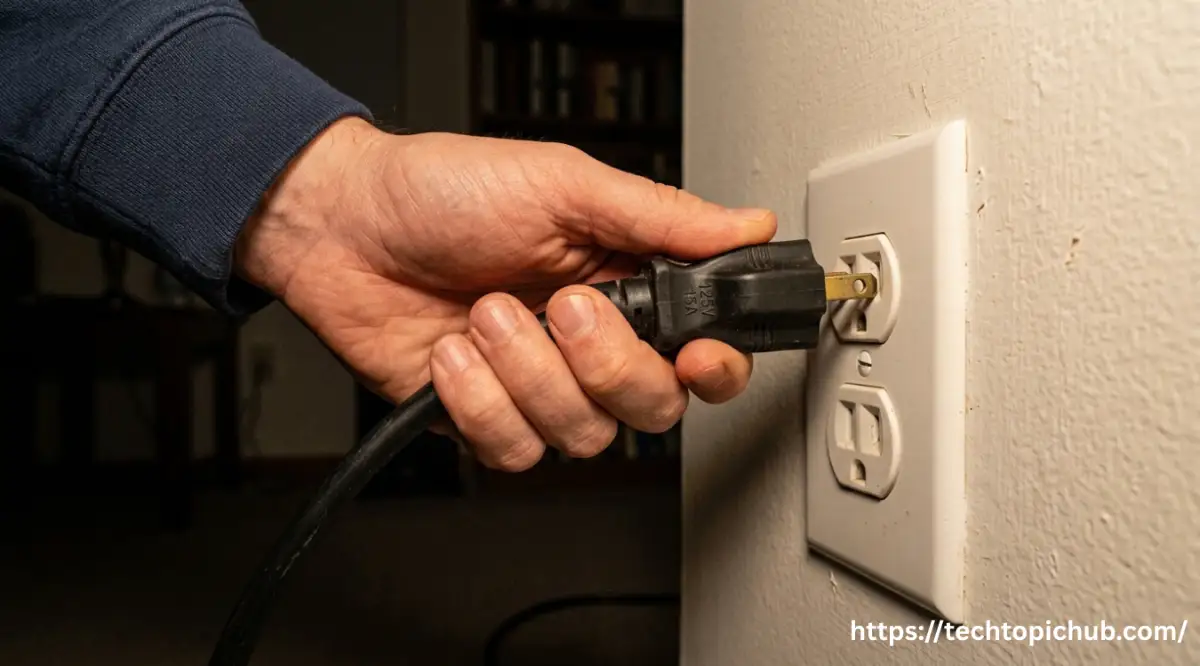
Walk calmly to your most expensive electronics first. When you reach your television or computer, do not just yank the cord from a distance. Yanking the wire from three feet away will bend the metal prongs and completely ruin the physical wall socket over time.
Get up close to the wall and firmly grip the thick plastic head of the plug. Pull it straight out with a smooth, steady motion. Once the cord is free, gently rest it on the floor away from any foot traffic so nobody trips over it in the dark.
If your devices are plugged into a large power strip hidden behind a heavy entertainment center, do not break your back trying to reach it. Simply find where the main power strip connects to the wall and unplug that single main cord. This will instantly disconnect everything attached to it in one smooth motion.
"If you want to see exactly how a silent power surge can completely fry an expensive TV in just seconds, you have to watch this quick video. Check it out right below to see the hidden danger, and then keep reading to learn my easy 3-minute safety drill!"
[Insert YouTube Video Link Here]
Step 3: Secure the Heavy Kitchen Machines
Moving into the kitchen requires a bit more physical effort and strategy. Refrigerators are heavy, and the sockets are usually hidden deep behind the bulky machine. You must act carefully to avoid pulling a muscle or damaging your kitchen floor.
Gently grab the sides of the refrigerator and wiggle it forward just enough to slide your arm behind it. You do not need to pull the entire heavy machine into the middle of the room. Just make enough space to comfortably reach the socket and pull the heavy plug free.
Here is a small realization from my own experience. I used to think simply turning off the main switch on a cheap power strip was enough to keep my kitchen appliances safe. But during a massive summer storm, a strong power spike easily jumped right across the tiny gap inside the switch and completely fried my microwave. Now, I physically pull every single plug entirely out of the wall socket, every single time.
Step 4: Protect the Heating and Cooling Systems
Your home climate control systems are highly vulnerable to grid fluctuations. Window air conditioning units are notorious for drawing a massive amount of power when they first turn on. If the electricity flickers on and off rapidly, your AC compressor will eventually seize up and die.
Locate the heavy cord attached to your window unit and pull it firmly from the wall. If you have a large central heating and cooling system, things work a little bit differently. You cannot easily unplug a massive central system because it is hardwired directly into the house.
Instead, you need to quickly find your main digital thermostat on the living room wall. Switch the thermostat completely to the "Off" position immediately. This simple press of a button ensures that the massive outdoor compressor will not try to suddenly restart when the neighborhood grid aggressively comes back online.
Debunking Common Electrical Myths
There is a massive amount of bad advice floating around the internet regarding blackout safety. We need to clear up these dangerous myths right now so you do not make a costly mistake. Relying on bad information will give you a false sense of security.
Myth 1: Basic Surge Protectors Are Bulletproof
Many homeowners buy cheap, five-dollar power strips from the local grocery store and assume they are fully protected. A basic power strip is nothing more than an extension cord with multiple holes. It offers absolutely zero protection against a heavy electrical spike.
Even if you buy a high-quality, expensive surge protector, it is still not a magical shield. Massive lightning strikes or extreme grid fluctuations can easily overpower even the most expensive commercial protectors. The absolute safest method in the world is simply creating a physical gap by pulling the plug completely out of the wall.
⚡ Myth vs. Reality Check:
- The Myth: "My power strip has a switch, so I'm totally safe."
- The Reality: A standard power strip switch just creates a tiny millimeter gap inside the plastic casing. A massive lightning storm surge can easily jump right over that tiny gap and fry your electronics anyway. Physically pulling the plug is your only 100% guaranteed shield.
Myth 2: Leaving One Light On is Dangerous
Some people run around aggressively turning off every single light switch in the house out of pure fear. While turning off most lights is actually a smart move, you should purposely leave exactly one lamp turned on in your main living area.
This single lamp acts as your personal notification system. When the electricity finally stabilizes and returns to the neighborhood, that lamp will turn on to let you know the danger has passed. It saves you from constantly checking the windows or flipping switches in the dark to see if the grid is back.
What to Do If You Are Not Home
One of the biggest sources of anxiety is wondering what happens if the grid fails while you are at the office. You obviously cannot rush home in traffic to manually unplug your smart television or expensive gaming console. This requires a completely different type of defensive strategy.
You must develop a strong habit of unplugging highly sensitive devices when they are not in active use. Before you leave for a long vacation or a simple day at work, walk through your home and disconnect your valuable electronics. Leaving your laptop charger plugged into the wall all day while you are gone is simply asking for trouble.
For the heavy appliances that must stay running, like your refrigerator, you should invest in specialized appliance-level surge protectors. These are heavy-duty blocks that plug directly into the wall, and your fridge plugs into the block. They act as a strong sacrificial barrier, happily taking the damage so your expensive kitchen machines survive the hit.
Taking these highly proactive steps completely removes the fear of the unknown. You will no longer feel terrified when you see dark storm clouds gathering on the horizon. By mastering these incredibly simple habits, you transform yourself from a helpless victim into a prepared homeowner.
This level of preparation guarantees your hard-earned money stays safely in your pocket instead of going to appliance repair shops. We will explore exactly how to safely reconnect everything once the power returns in the next detailed section.
Next-Level Strategies for Total Electrical Security
Once you master the basic habit of unplugging your devices, you might start wondering if there is an even better way to protect your home. Physically walking around the house in the dark is highly effective, but it can sometimes feel a bit stressful. This is exactly where advanced preparation completely changes the game.
I want to share some incredibly smart techniques that professionals use to secure their own properties. These are not overly complicated tricks that require a degree in electrical engineering. They are completely practical steps you can set up this weekend to sleep peacefully through the next nasty storm.
The Magic of the Main Breaker Panel
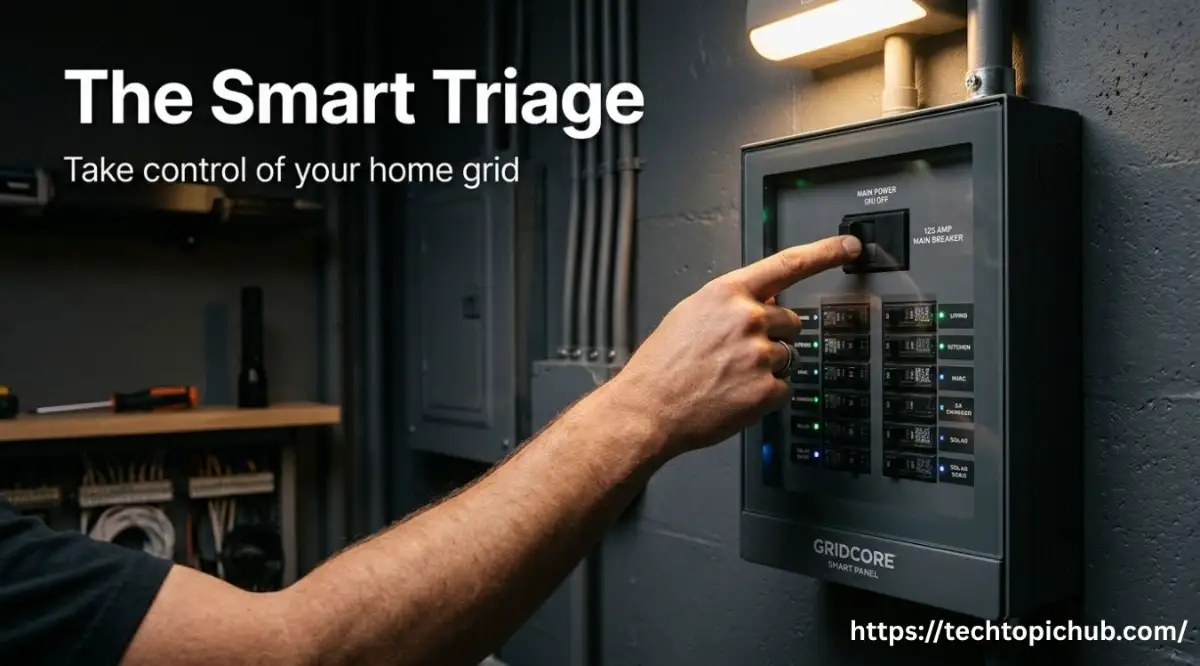
The absolute fastest way to cut the connection to your entire house is by using your main electrical panel. You probably walk past this dull gray metal box in your garage or utility room every single day. Most people are completely terrified to touch it, but it is actually your best friend during a neighborhood blackout.
Instead of running around pulling a dozen individual cords out of the wall, you can simply flip one single master switch. Open the heavy metal door and look for the largest switch at the very top of the panel. Flipping this master switch completely disconnects your entire home wiring from the outside city grid.
This creates an massive, invisible wall that no dangerous energy spike can cross. When the city electricity finally returns, that massive burst of aggressive energy will simply bounce off your disconnected main panel. Your television, your expensive kitchen equipment, and your smart lights remain perfectly safe behind that physical barrier.
Why You Need an Uninterruptible Power Supply (UPS)
If you work from home like I do, a sudden loss of electricity can completely ruin your productivity. You might lose hours of unsaved computer work in the blink of an eye. This is why investing in an Uninterruptible Power Supply, or a UPS, is absolutely a non-negotiable step.
A UPS is basically a massive, heavy-duty battery backup that sits quietly under your computer desk. You plug your desktop computer and internet router directly into the UPS, and then plug the UPS into the wall socket. If the neighborhood grid suddenly dies, the internal battery instantly takes over without skipping a single beat.
Your computer screen will stay bright, and your internet connection will remain perfectly active. This gives you a solid ten to twenty minutes to safely save your work and shut down your expensive machines properly. According to the latest disaster preparedness recommendations, having this buffer time prevents severe digital data corruption.
Quick Q&A: Getting the Right UPS
- Q: How long will a standard UPS keep my PC running?
- A: A basic consumer UPS usually gives you about 10 to 15 minutes of backup power. That is just enough time to save your files and safely shut down Windows.
- Q: Does a UPS also block power surges?
- A: Yes! A good UPS acts as a heavy-duty battery and a strong surge blocker at the same time.
Whole-House Surge Defenders
If you want the absolute highest level of protection, you should seriously consider installing a whole-house surge protector. This is a small but incredibly powerful device that a certified electrician connects directly to your main breaker box. It acts like a silent security guard watching over every single wire inside your walls.
When a massive surge tries to sneak into your house, this clever device instantly detects the extreme pressure. In a fraction of a second, it grabs that dangerous extra energy and dumps it safely into the earth outside. The aggressive spike never even reaches the metal wall sockets inside your living room.
These heavy-duty devices are highly recommended by strict electrical safety standards for protecting modern smart homes. They cost a little bit of money upfront, but they act as an amazing physical insurance policy. If you are serious about saving cash for surprise expenses, preventing a sudden thousand-dollar repair bill is the smartest financial move you can make.
Creating a Reconnection Waiting Period
One of the biggest secrets that professionals know is exactly when to plug everything back in. Most regular people eagerly rush to reconnect their televisions the absolute second the lightbulbs flicker back on. This eager behavior is incredibly risky because the neighborhood grid is rarely perfectly stable in those first few minutes.
When the local power company tries to fix a broken grid, the electricity will often flicker on, turn off again, and then return aggressively. These rapid on-and-off cycles are exactly what cause heavy compressor motors in refrigerators to melt down. You must practice extreme patience when the lights finally return to your street.
I always force myself to wait at least fifteen to twenty full minutes after the electricity comes back. I watch that single lamp I left turned on to see if the light remains bright and steady without any flickering. Waiting out this dangerous stabilization period is a simple trick that practically guarantees your equipment will survive.
Destructive Habits That Will Ruin Your Equipment
Even with the best intentions, I constantly see homeowners making terrible decisions in the dark. Panic makes us do highly irrational things, and those bad decisions can easily destroy your most valuable possessions. You need to clearly understand these common traps so you do not accidentally fall right into them.
Recognizing these dangerous habits will totally change how you react during an emergency. Let us closely examine the worst possible mistakes you can make when the neighborhood goes dark.
Believing "Turned Off" Means Completely Safe
I hear this specific excuse all the time, and it always leads to a massive disaster. People assume that because their smart television screen is completely black, the internal computer is totally safe. They think pressing the red power button on the plastic remote control creates a protective barrier.
This is arguably the most destructive lie you can tell yourself. Modern electronics actually never completely turn off; they just enter a low-power sleep mode so they can wake up quickly. As long as that thick copper cord is touching the metal wall socket, the physical path for destruction remains wide open.
An aggressive voltage spike does not care if your television is actively playing a movie or sleeping quietly. The aggressive energy will simply travel up the wire, bypass the simple power button, and fry the internal motherboard instantly. You absolutely must create a solid physical gap by pulling the actual plug out of the wall.
Yanking Cords from Across the Room
When the lights suddenly fail, the human brain often switches into a rushed, chaotic state. You might try to unplug a floor lamp by aggressively yanking the wire from three feet away. While this technically unplugs the machine, it completely destroys your home infrastructure over time.
Pulling a cord from a sharp angle bends the tiny metal prongs and rips the plastic casing right open. Even worse, it severely damages the internal metal contacts hidden inside your expensive wall sockets. A damaged wall socket becomes extremely loose, which can eventually lead to a highly dangerous electrical fire.
You must stay calm, walk directly up to the wall, and pull the thick plastic head straight out. Protecting your home is not just about saving your televisions; it is about maintaining a highly safe physical environment. Upgrading your habits is just as important as exploring modern tech solutions for your daily life.
Trusting Fake Protection Blocks
Another terrible mistake is putting your blind faith in cheap, plastic power strips. Many people buy a flimsy power strip from a local discount store and assume it offers heavy-duty surge defense. These cheap plastic blocks are completely hollow inside and offer zero actual protection.
They are basically just extended wires designed to give you more places to plug things in. When a massive blast of voltage travels down the street, that cheap plastic strip will practically melt instantly. The aggressive energy will blast right through it and easily destroy everything connected to it.
You should only trust heavy-duty surge protectors that explicitly display a specific "Joule rating" on the actual box. The higher the Joule rating, the more aggressive energy the block can safely absorb before it completely fails. The official American Red Cross safety steps highly advise double-checking all your protective gear before storm season actually begins.
Reconnecting the Whole House at Once
Let us imagine you successfully flipped your main master breaker to the "off" position when the storm started. The grid has finally returned, the lights are stable, and you are ready to get back to normal. The worst thing you can possibly do right now is flip that massive master switch directly back to the "on" position.
If you do this, every single appliance in your home will try to grab massive amounts of energy at the exact same second. Your heavy air conditioner, your refrigerator, and your heating system will all roar to life simultaneously. This aggressive, simultaneous demand can instantly trip your internal safety fuses and cause a secondary blackout inside your own home.
Instead, you must gently ease your home back into normal operation step by step. Leave the heavy appliances physically unplugged from the wall, turn the master breaker on, and then plug your machines in one by one. This highly controlled method keeps the electrical pressure totally balanced and perfectly safe.
Your Action Plan for a Resilient Home
We have covered a massive amount of highly practical ground together today. You now completely understand exactly why returning electricity is so dangerously aggressive toward your sensitive items. You also have a clear, easy-to-follow system for physically disconnecting your equipment without getting hurt in the darkness.
By applying these smart triage methods, you take complete ownership of your personal property. You no longer have to sit quietly in the dark crossing your fingers and hoping for the absolute best. You are actively building a strong defensive shield around the expensive comforts you worked incredibly hard to buy.
The Financial Peace of Mind
If you ever decide to pack up and move, having a highly secure, well-maintained electrical system is a massive bonus. Buyers absolutely love homes that are protected from severe grid failures. In fact, maintaining a safe and resilient home is keeping your property highly attractive to buyers no matter what the local housing market is doing.
You do not need to buy incredibly expensive gear to start protecting your family immediately. The simple act of pulling a single plug from the wall is totally free, yet it provides the most effective defense in the world. Being highly proactive always beats being reactive when your hard-earned money is on the line.
A Quick Word from My Own Experience
I used to be totally terrified of the heavy silence that comes with a sudden blackout. But once I implemented this strict unplugging routine, my fear completely disappeared, and I felt entirely in control. I highly encourage you to walk through your house right now, identify your most expensive appliances, and plan exactly how you will protect them tomorrow.
Common Questions About Managing Electrical Blackouts
Do I really need to unplug absolutely everything during a storm?
You do not need to aggressively unplug every single basic lamp or simple clock radio in your house. Focus your strict attention entirely on high-value digital electronics and massive heavy motor appliances. Protecting your computer, smart television, and kitchen refrigerator will save you the most money by far.
How long should I wait to plug my electronics back in?
You should always practice extreme patience and wait a full fifteen to twenty minutes after the lights return. This extended waiting period allows the neighborhood grid to completely balance out and stabilize. Plugging things in too eagerly exposes your machines to secondary, aggressive voltage spikes.
Will a sudden grid failure permanently ruin my heavy refrigerator?
The absolute loss of power does not actually hurt your insulated refrigerator at all. The heavy damage only occurs when the massive electricity violently rushes back into the compressor motor. Pulling the plug effectively stops that aggressive returning energy from melting the delicate internal parts.
Can turning off the main electrical panel truly save my appliances?
Yes, flipping the master switch on your breaker box is an incredibly effective defensive strategy. It completely severs the physical connection between your private home wiring and the dangerous outside street wires. This clever method is especially helpful if you simply cannot reach the hidden wall sockets behind heavy furniture.
What exactly happens if I simply leave my computer plugged in?
If you leave a delicate computer plugged directly into a standard wall socket, a returning energy spike will easily bypass the power button. That massive blast of aggressive voltage will immediately fry the delicate internal motherboard and totally wipe out your digital memory. Even if the machine seems turned off, the physical wire acts as a direct highway for total destruction.
Taking just a few extra minutes to learn these simple safety steps honestly changed how I handle bad weather. You have the complete power to keep your expensive items safe, so I highly encourage you to make a quick action plan for your home today. Trust me, waking up to perfectly working appliances after a nasty storm is the best feeling in the world!
Disclaimer: The information provided in this article is for educational and informational purposes only. Dealing with household electricity can be extremely dangerous if proper safety protocols are not closely followed. Always consult with a licensed, certified electrician before modifying your home breaker panel or attempting any complex wiring changes. Never touch exposed wires, and completely avoid interacting with wall sockets if your hands or surroundings are wet. We assume no responsibility for any property damage or personal injury resulting from the practical application of these general safety tips.